@ Lexus / Toyota Motor Corporation
@ Toyota Motor Corporation
VS

Lexus NX vs Toyota Yaris Cross – Which car suits you better?

Compare performance, boot capacity, efficiency and price at a glance.
Find out which car is the better choice for you – Lexus NX or Toyota Yaris Cross?

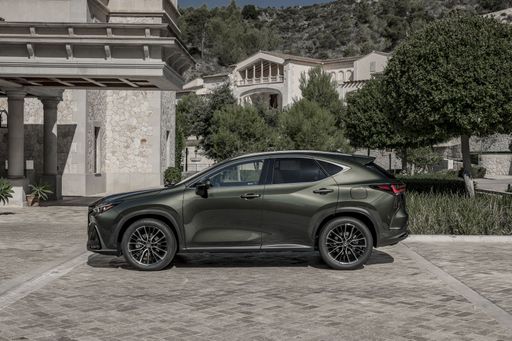
NX @ Lexus / Toyota Motor Corporation

Introduction: A Tale of Two SUVs

In the ever-evolving world of SUVs, the Lexus NX and the Toyota Yaris Cross stand out as two compelling choices for those seeking style, performance, and efficiency. While both models share a common heritage, their distinct characteristics cater to different preferences and lifestyles. This article delves into a detailed comparison between the two, focusing on technical specifications, innovations, and the unique features that each vehicle brings to the table.
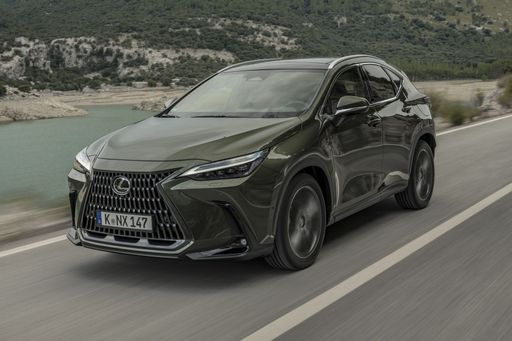
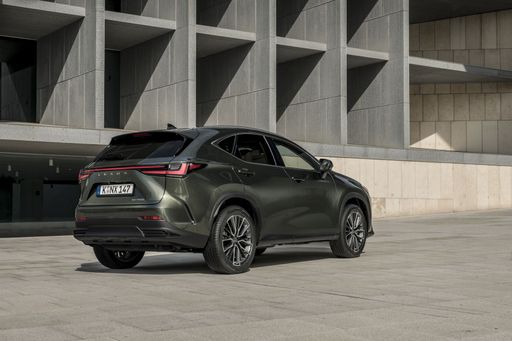
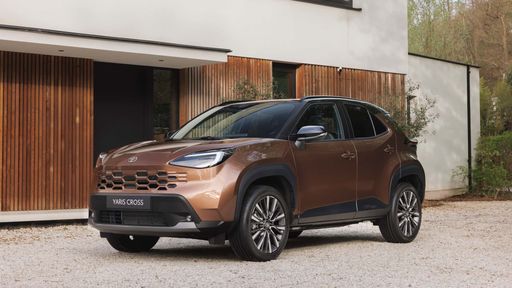
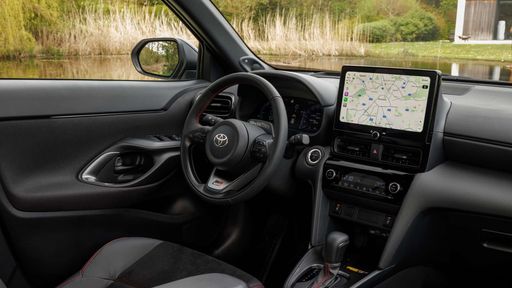
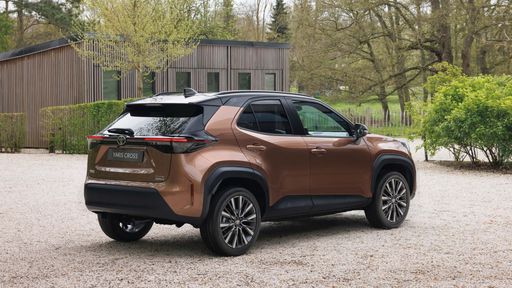
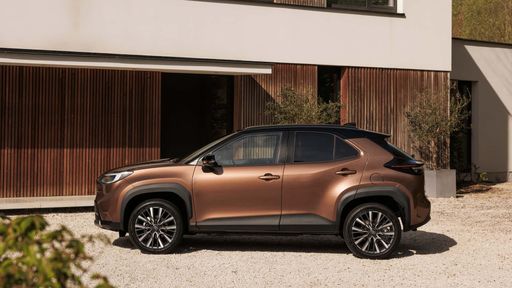
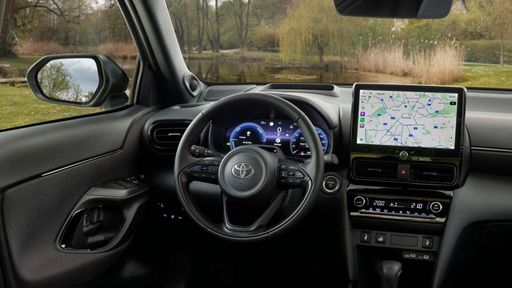
Yaris Cross @ Toyota Motor Corporation

Performance Powerhouses

The Lexus NX offers two hybrid options: a Full Hybrid and a Plugin Hybrid. With a power output ranging between 244 and 309 HP, the NX is designed for those who value both performance and environmental efficiency. It accelerates from 0-100 km/h in a mere 6.3 seconds for its top variant, showcasing its powerful capabilities.

In contrast, the Toyota Yaris Cross provides a more modest performance with a Full Hybrid engine that delivers between 116 and 130 HP. Its acceleration from 0-100 km/h takes around 10.7 seconds, positioning it as a more accessible option for urban driving and light adventures.

NX @ Lexus / Toyota Motor Corporation

Efficiency and Economy

Fuel efficiency is a crucial aspect for today's environmentally conscious drivers. The NX boasts a fuel consumption of approximately 5.7 to 6.1 L/100 km, making it relatively efficient for a vehicle of its class. Moreover, the plugin variant allows for an electric range of up to 68 km, offering the possibility of lower emissions for short commutes.

On the other hand, the Yaris Cross shines in terms of fuel efficiency, consuming just 4.5 to 4.8 L/100 km. With CO2 emissions as low as 101 g/km, the Yaris Cross is ideal for drivers looking to minimize their carbon footprint while enjoying a versatile SUV experience.

Yaris Cross @ Toyota Motor Corporation

Size, Comfort, and Practicality

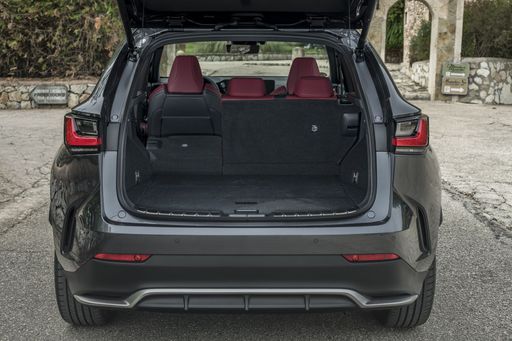
In terms of dimensions, the Lexus NX is the larger vehicle at 4,660 mm in length, 1,865 mm in width, and 1,670 mm in height. It features a spacious trunk capacity of 545 liters, making it suitable for family outings and long trips. The NX also accommodates five passengers comfortably, providing ample legroom and headspace.

Conversely, the Toyota Yaris Cross measures 4,180 mm long, 1,765 mm wide, and 1,595 mm high. With a trunk capacity ranging from 320 to 397 liters, it is more compact, which can be advantageous for city driving and parking. Like the NX, it comfortably seats five passengers, though the space may feel a bit tighter compared to its Lexus counterpart.

NX @ Lexus / Toyota Motor Corporation

Technology and Innovations

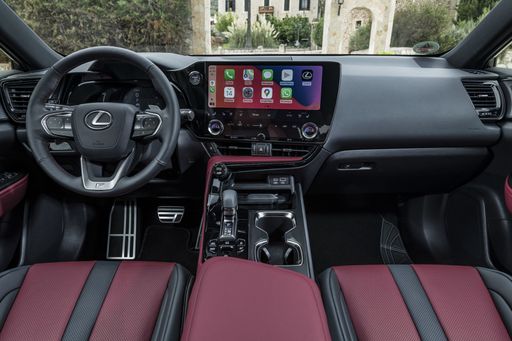
Both vehicles come equipped with advanced technology features that enhance the driving experience. The Lexus NX is known for its premium infotainment system, featuring a larger screen size, intuitive interface, and enhanced sound systems that provide an immersive audio experience. Additionally, it includes a host of safety features such as adaptive cruise control, lane-keeping assist, and blind-spot monitoring.

The Yaris Cross, while more compact, does not fall short in technology. It comes equipped with essential features like a touchscreen infotainment system, smartphone integration, and Toyota’s Safety Sense package, which includes adaptive cruise control and pre-collision systems. These features make the Yaris Cross a modern, user-friendly option for tech-savvy drivers.

Yaris Cross @ Toyota Motor Corporation

Conclusion: Finding Your Perfect Fit

Ultimately, the choice between the Lexus NX and the Toyota Yaris Cross hinges on individual preferences, lifestyle needs, and budget considerations. The NX appeals to those seeking a luxurious experience with more power and space, while the Yaris Cross captures the essence of urban practicality and fuel efficiency. Both models showcase the best of what their brands have to offer and are worthy contenders in their respective segments.

Here’s where it gets real: The technical differences in detail

NX @ Lexus / Toyota Motor Corporation

Costs and Efficiency:

Looking at overall running costs, both models reveal some interesting differences in everyday economy.

Toyota Yaris Cross has a convincingly advantage in terms of price – it starts at 23700 £, while the Lexus NX costs 46000 £. That’s a price difference of around 22337 £.

Fuel consumption also shows a difference: Lexus NX manages with 2.90 L and is therefore clearly more efficient than the Toyota Yaris Cross with 4.50 L. The difference is about 1.60 L per 100 km.

Yaris Cross @ Toyota Motor Corporation

Engine and Performance:

Power, torque and acceleration are the classic benchmarks for car enthusiasts – and here, some clear differences start to show.

When it comes to engine power, the Lexus NX has a significantly edge – offering 309 HP compared to 130 HP. That’s roughly 179 HP more horsepower.

In acceleration from 0 to 100 km/h, the Lexus NX is significantly quicker – completing the sprint in 6.30 s, while the Toyota Yaris Cross takes 10.70 s. That’s about 4.40 s faster.

In terms of top speed, the Lexus NX performs a bit better – reaching 200 km/h, while the Toyota Yaris Cross tops out at 170 km/h. The difference is around 30 km/h.

NX @ Lexus / Toyota Motor Corporation

Space and Everyday Use:

Whether family car or daily driver – which one offers more room, flexibility and comfort?

Both vehicles offer seating for 5 people.

In curb weight, Toyota Yaris Cross is convincingly lighter – 1180 kg compared to 1805 kg. The difference is around 625 kg.

In terms of boot space, the Lexus NX offers noticeable more room – 545 L compared to 397 L. That’s a difference of about 148 L.

In maximum load capacity, the Lexus NX performs clearly perceptible better – up to 1436 L, which is about 339 L more than the Toyota Yaris Cross.

When it comes to payload, Lexus NX minimal takes the win – 515 kg compared to 510 kg. That’s a difference of about 5 kg.

Who wins the race?

The Lexus NX proves to be wins the duel decisively and therefore becomes our DriveDuel Champion!
Lexus NX is the better all-rounder in this comparison.

from about £46,000
NX @ Lexus / Toyota Motor Corporation

Lexus NX

  • Engine Type : Full Hybrid, Plugin Hybrid
  • Transmission : Automatic
  • Drive Type : Front-Wheel Drive, All-Wheel Drive
  • Power HP : 244 - 309 HP
  • Consumption L/100km : 2.9 - 5.9 L
  • Electric Range : 72 km

Lexus NX

5 (3)
rate

The Lexus NX wraps striking, chiseled styling around a cabin that feels more crafted living room than utility vehicle, with soft materials and user-friendly tech that give it genuine premium cachet. On the road it's composed and quietly confident, trading sporty pretensions for a refined, easygoing personality that will suit buyers who want luxury without fuss — with a little Lexus flair to make daily commutes feel special.

details

Toyota Yaris Cross

5 (1)
rate

The Toyota Yaris Cross takes the jaunty personality of the Yaris and gives it a taller stance and a bit more practicality, so you get city-friendly agility with added SUV presence. It’s easy to live with, economical on the daily grind, and smartly packaged — a sensible pick for buyers who want fuss-free transport with a touch of character.

details
Lexus NX
Toyota Yaris Cross
NX @ Lexus / Toyota Motor Corporation
Yaris Cross @ Toyota Motor Corporation

Costs and Consumption

Price
46000 - 64300 £
Price
23700 - 34300 £
Consumption L/100km
2.9 - 5.9 L
Consumption L/100km
4.5 - 4.8 L
Consumption kWh/100km
-
Consumption kWh/100km
-
Electric Range
72 km
Electric Range
-
Battery Capacity
-
Battery Capacity
-
co2
65 - 134 g/km
co2
101 - 108 g/km
Fuel tank capacity
55 L
Fuel tank capacity
36 L

Dimensions and Body

Body Type
SUV
Body Type
SUV
Seats
5
Seats
5
Doors
5
Doors
5
Curb weight
1805 - 2065 kg
Curb weight
1180 - 1290 kg
Trunk capacity
545 L
Trunk capacity
320 - 397 L
Length
4660 mm
Length
4180 mm
Width
1865 mm
Width
1765 mm
Height
1670 mm
Height
1595 mm
Max trunk capacity
1436 L
Max trunk capacity
1097 L
Payload
475 - 515 kg
Payload
485 - 510 kg

Engine and Performance

Engine Type
Full Hybrid, Plugin Hybrid
Engine Type
Full Hybrid
Transmission
Automatic
Transmission
Automatic
Transmission Detail
CVT
Transmission Detail
CVT
Drive Type
Front-Wheel Drive, All-Wheel Drive
Drive Type
Front-Wheel Drive, All-Wheel Drive
Power HP
244 - 309 HP
Power HP
116 - 130 HP
Acceleration 0-100km/h
6.3 - 8.7 s
Acceleration 0-100km/h
10.7 - 11.3 s
Max Speed
200 km/h
Max Speed
170 km/h
Torque
-
Torque
-
Number of Cylinders
4
Number of Cylinders
3
Power kW
179 - 227 kW
Power kW
85 - 96 kW
Engine capacity
2487 cm3
Engine capacity
1490 cm3

General

Model Year
2025
Model Year
2024 - 2025
CO2 Efficiency Class
D, B
CO2 Efficiency Class
C
Brand
Lexus
Brand
Toyota
Is the Lexus NX offered with different drivetrains?

The Lexus NX is available as Front-Wheel Drive or All-Wheel Drive.

The prices and data displayed are estimates based on German list prices and may vary by country. This information is not legally binding.