VS

Lynk & Co 02 vs Toyota C-HR+ comparison

Compare performance (272 HP vs 343 HP), boot space and price (30,900 £ vs 36,000 £ ) at a glance. Find out which car is the better choice for you – Lynk & Co 02 or Toyota C-HR+?

Lynk & Co 02 vs Toyota C-HR+: Key differences

Lynk & Co 02

4.8 (2 Reviews)
rate
  • somewhat cheaper
details

Toyota C-HR+

  • noticeably more power
  • markedly more efficient
  • markedly more electric range
  • marginally quicker 0–100 km/h
  • marginally lighter
  • only slightly more trunk space
details

By Achim Sedelmaier

02

Quick take: Lynk & Co 02 and Toyota C‑HR+ face off

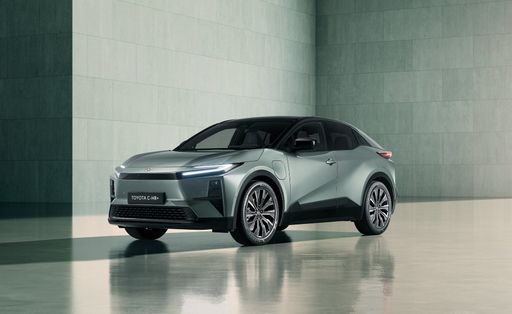
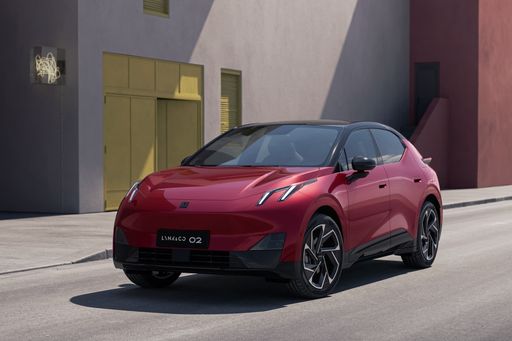
Lynk & Co 02 and Toyota C‑HR+ could not be more different in intent: the 02 arrives as a roomy, comfort-first electric crossover while the C‑HR+ arrives as a style-led, highly efficient hybrid/PHEV for urban life. In plain terms, Lynk pitches value and usable space for families and commuters who want comfort and charging flexibility, while Toyota asks you to trade some usable volume for lower running costs and a sharper in-town experience. Price and equipment also separate them — the 02 undercuts the Toyota on sticker while the C‑HR+ stacks on tech and hybrid efficiency. Those basic choices — space versus efficiency, relaxed ride versus urbane nimbleness — set the tone for everything that follows in this Lynk & Co 02 VS Toyota C‑HR+ comparison. Below we unpack how those trade-offs play out in daily life, from cabin feel to long-distance behavior.
C-HR+

Character and driving feel

The Lynk & Co 02 is unmistakably tuned for composure: suspension soaks up bumps and the cabin stays hushed, which makes it a calming companion on congested commutes and long motorway stints. That calm comes at the expense of steering precision and body control; the 02’s steering feels somewhat synthetic and the car leans more in corners, so drivers who enjoy direct feedback will notice the compromise. The Toyota C‑HR+ feels tighter and more planted at a steady cruise and is noticeably more agile through town, but its PHEV/CVT drivetrain can sound strained under brisk acceleration and gives a different, less refined shove than a purely electric setup. Put simply, choose the Lynk if you prize relaxed, quiet progress and the Toyota if you want sharper urban manners and better real-world efficiency when you’re not carrying lots of luggage.

Comfort, cabin feel and perceived quality

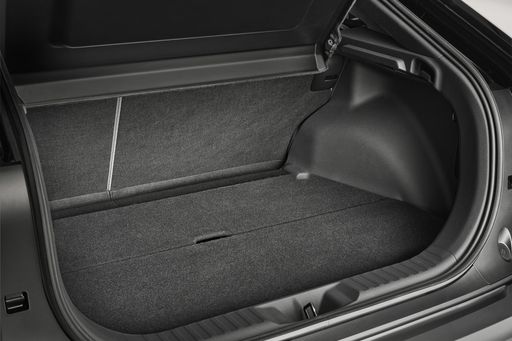
The Lynk & Co 02 wins on usable interior space: rear-seat passengers get more knee room and the 02’s luggage area — plus a practical frunk for charging cables — makes day-to-day logistics easier for families. Interior materials lean functional rather than luxurious in the 02, with some visible plastics that remind you it’s a value-focused package rather than a premium one. The Toyota C‑HR+ ups the perceived quality with a more polished cabin and thoughtful tactile controls, so occupants feel they’re in a more refined car even if rear headroom and window area are tighter. In short, the 02 feels roomier and more pragmatic, the C‑HR+ feels better put together but demands you accept smaller rear space and a fiddlier boot on PHEV variants.

Practicality, long-distance behavior and charging

When trips extend beyond the daily run, the two cars diverge clearly: the Lynk & Co 02 offers stronger charging flexibility and a larger usable trunk, which favours longer journeys and multi-day family use — but its energy consumption climbs noticeably at sustained motorway speeds. The Toyota C‑HR+ compensates with excellent real-world efficiency and the PHEV’s ability to cover many daily commutes on electric power alone, yet the PHEV layout reduces boot practicality and it doesn’t have rapid DC charging to lean on. For motorway touring the Lynk’s calm cabin is welcome, provided you’re okay with more frequent stops; for mixed urban/highway duty where fuel economy is king, the C‑HR+ stretches your range and running costs lower if you use its electric mode regularly. That trade-off — charging convenience and space versus hybrid efficiency and fewer stops — is central to real ownership costs and route planning.

City manners, infotainment and driver aids

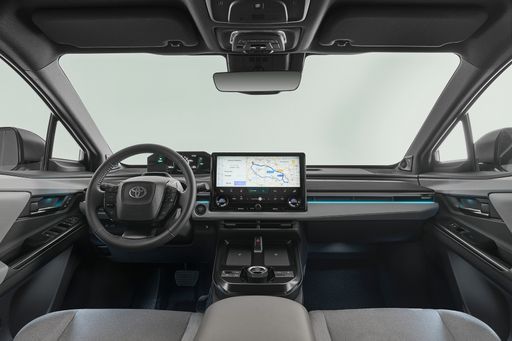
In tight urban environments the Toyota C‑HR+ feels purpose-built: compact external proportions, a small turning circle and a suite of intuitive driver aids make parking and manoeuvring straightforward. The Lynk & Co 02 is comfortable in the city too — it’s quiet and supple at low speeds — but cramped rear visibility and a larger turning footprint mean you’ll rely more on cameras and planning in tight spaces. Infotainment on the 02 has improved and now supports smartphone mirroring reliably, but menu depth and frequent assistant warnings can frustrate until you tame the settings; the C‑HR+ keeps things simple with physical climate controls and a clear touchscreen, plus numerous driver-assist features that feel polished and easy to use. If urban convenience and single-foot driving efficiency are priorities, the C‑HR+ has the edge; if you prefer a quieter ride and more carrying space in town, the 02 still makes strong sense.

Who should buy which car — buyer-fit and trade-offs

If you need space, a calming cabin and the flexibility to charge quickly at home or on the move, the Lynk & Co 02 is the practical, cost‑conscious choice — particularly for families and commuters who value luggage room and a softer ride. If your daily life is city-centric, you want class-leading real-world efficiency, and you prize a sharper interior and tech‑heavy safety kit, the Toyota C‑HR+ is tailored to that pattern even though its PHEV packaging limits boot and rear-space usability. Neither is objectively superior across the board; the split comes down to whether you prioritise usable space and charging convenience or urban efficiency and perceived cabin quality. Read on to the technical comparison that follows for the concrete differences in charging, range, power delivery and load capacity that make those trade-offs real in day‑to‑day ownership.

Here’s where it gets real: The technical differences in detail

02

Costs and Efficiency:

Price and efficiency are key factors when choosing a car – and this is often where the real differences emerge.

Lynk & Co 02 is somewhat cheaper – starting at 30,900 £ , while the Toyota C-HR+ costs 36,000 £ . That’s a price difference of around 5,139 £.

In terms of energy consumption, the Toyota C-HR+ is markedly more efficient: consuming 13.4 kWh/100km compared to 17.1 kWh/100km for the Lynk & Co 02. That’s a difference of about 3.7 kWh/100km.

As for electric range, the Toyota C-HR+ offers markedly more range – reaching up to 607 km, about 162 km more than the Lynk & Co 02.

C-HR+

Engine and Performance:

Power, torque and acceleration are the classic benchmarks for car enthusiasts – and here, some clear differences start to show.

When it comes to engine power, the Toyota C-HR+ offers noticeably more power – delivering 343 HP compared to 272 HP. That’s roughly 71 HP more horsepower.

When accelerating from 0 to 100 km/h, the Toyota C-HR+ is marginally quicker – completing the sprint in 5.2 s, while the Lynk & Co 02 takes 5.5 s. That’s about 0.3 s quicker.

There’s also a difference in torque: the Toyota C-HR+ delivers only slightly more torque with 338 Nm compared to 323 Nm. That’s about 15 Nm more.

Space and Everyday Use:

Whether family car or daily driver – which one offers more room, flexibility and comfort?

Both vehicles offer seating for 5 people.

In terms of curb weight, Toyota C-HR+ is marginally lighter – 1,810 kg compared to 1,895 kg. The difference is around 85 kg.

Looking at boot space, the Toyota C-HR+ offers only slightly more boot space – 416 L compared to 410 L. That’s a difference of about 6 L.

When it comes to payload, the Toyota C-HR+ carries considerably more – 655 kg compared to 375 kg. That’s a difference of about 280 kg.

Who wins the race in the data check?

The Toyota C-HR+ is clearly superior overall in the objective data comparison.
This result only shows which model scores more points on paper – not which of the two cars feels right for you.

from £36,000
C-HR+

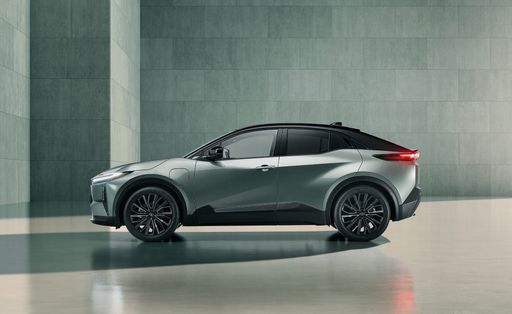
Toyota C-HR+

  • Engine Type : Electric
  • Transmission : Automatic
  • Drive Type : Front-Wheel Drive, All-Wheel Drive
  • Power HP : 167 - 343 HP
  • Consumption kWh/100km : 13.4 - 15.5 kWh/100km
  • Electric Range : 458 - 607 km
Lynk & Co 02
Toyota C-HR+

Costs and Consumption

View detailed analysis

Engine and Performance

View detailed analysis

Dimensions and Body

View detailed analysis

Lynk & Co 02

The Lynk & Co 02 wears its attitude like a leather jacket—bold styling and a youthful cabin that punches above its class, appealing to buyers who want personality as well as practicality. It's a genuinely engaging compact with everyday usability, offering enough flair and refinement to stand out in a crowded market without trying too hard.

details

Toyota C-HR+

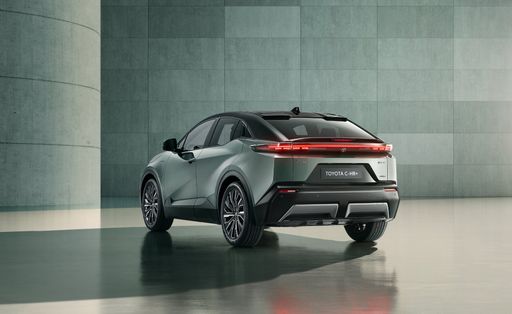
The Toyota C‑HR is a distinctive crossover that pairs bold, coupe‑like styling with a comfortable, composed ride suited to daily city and suburban driving. It appeals to buyers who value standout design, practical cabin packaging and a refined, easy‑to‑use experience rather than outright performance or rugged off‑road ability.

details
Lynk & Co 02
Toyota C-HR+

Costs and Consumption

Price
30,900 - 34,300 £
Price
36,000 - 46,300 £
Consumption L/100km
-
Consumption L/100km
-
Consumption kWh/100km
17.1 - 17.6 kWh/100km
Consumption kWh/100km
13.4 - 15.5 kWh/100km
Electric Range
435 - 445 km
Electric Range
458 - 607 km
Battery Capacity
-
Battery Capacity
-
co2
0 g/km
co2
0 g/km
Fuel tank capacity
-
Fuel tank capacity
-

Dimensions and Body

Body Type
SUV
Body Type
SUV
Seats
5
Seats
5
Doors
-
Doors
-
Curb weight
1,895 kg
Curb weight
1,810 - 2,010 kg
Trunk capacity
410 L
Trunk capacity
416 L
Length
-
Length
-
Width
1,845 mm
Width
1,870 mm
Height
-
Height
-
Max trunk capacity
-
Max trunk capacity
-
Payload
375 kg
Payload
550 - 655 kg

Engine and Performance

Engine Type
Electric
Engine Type
Electric
Transmission
Automatic
Transmission
Automatic
Transmission Detail
Reduction Gearbox
Transmission Detail
Reduction Gearbox
Drive Type
Rear-Wheel Drive
Drive Type
Front-Wheel Drive, All-Wheel Drive
Power HP
272 HP
Power HP
167 - 343 HP
Acceleration 0-100km/h
5.5 s
Acceleration 0-100km/h
5.2 - 8.4 s
Max Speed
-
Max Speed
-
Torque
323 Nm
Torque
268 - 338 Nm
Number of Cylinders
-
Number of Cylinders
-
Power kW
200 kW
Power kW
123 - 252 kW
Engine capacity
-
Engine capacity
-

General

Model Year
2024
Model Year
2026
CO2 Efficiency Class
A
CO2 Efficiency Class
A
Brand
Lynk & Co
Brand
Toyota
DriveDuel uses data analysis and artificial intelligence to evaluate vehicle data and create content. Content is regularly reviewed and improved. The displayed prices are estimates based on German list prices, adjusted to the respective country’s VAT. Country-specific registration taxes are not included. This information is not legally binding.