VS

Mazda 2 Hybrid vs Ford Puma comparison

Compare performance (116 HP vs 168 HP), boot space and price (22,300 £ vs 23,900 £ ) at a glance. Find out which car is the better choice for you – Mazda 2 Hybrid or Ford Puma?

Mazda 2 Hybrid vs Ford Puma: Key differences

Mazda 2 Hybrid

  • only slightly cheaper
  • significantly more efficient
  • slightly lighter
details

Ford Puma

3 (11 Reviews)
rate
  • clearly more power
  • visibly quicker 0–100 km/h
  • significantly more trunk space
details

All details on performance, efficiency, range and trunk space can be found in the technical comparison below – including user reviews for both models.

By Achim Sedelmaier

2 Hybrid

The automotive market today offers a plethora of options, particularly in the hybrid and SUV segments. The Ford Puma and Mazda 2 Hybrid provide intriguing alternatives for drivers looking for efficiency, performance, and practicality. This article compares these two models, highlighting their technical specifications and innovations. Let's dive deeper into what each vehicle brings to the table.
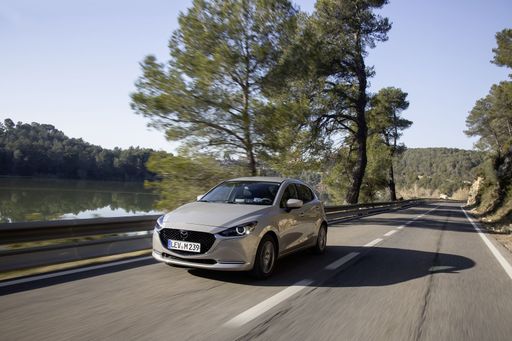
Puma

Design and Dimensions

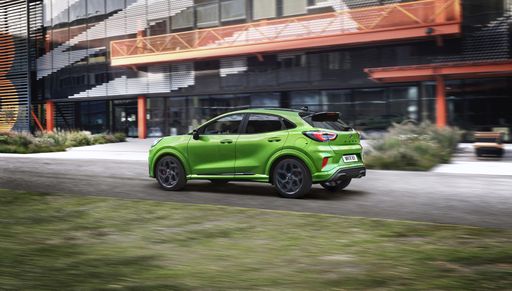
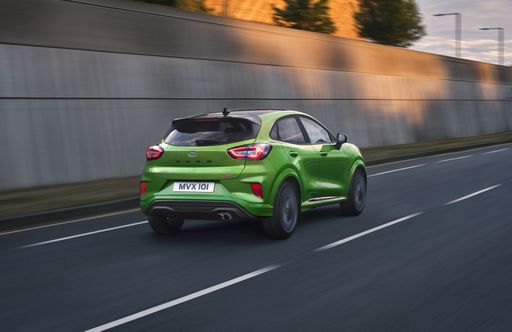
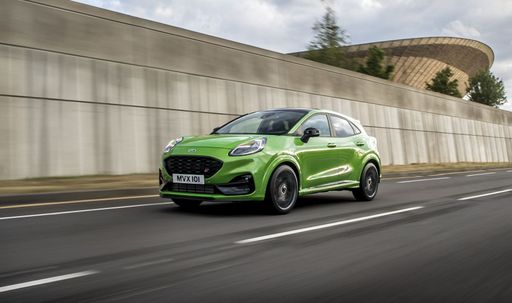
The Ford Puma is designed as a compact SUV, exuding an athletic stance with its bold lines and modern aesthetics. Measuring approximately 4186 mm in length, 1805 mm in width, and standing at 1550 mm tall, it offers a spacious interior perfect for city driving and longer journeys alike. With a trunk capacity ranging from 456 to 523 liters, the Puma is well-equipped to handle shopping trips or weekend getaways.

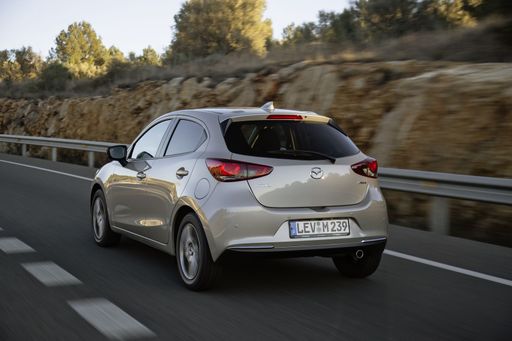
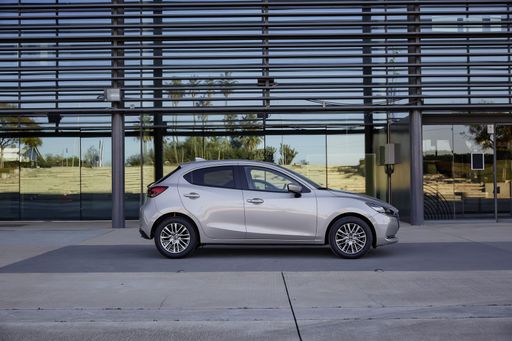
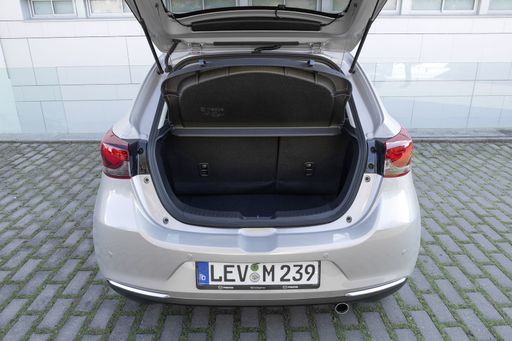
On the other hand, the Mazda 2 Hybrid adopts a more traditional hatchback form, measuring 3940 mm in length and 1745 mm in width. Its compact dimensions make it an ideal choice for urban environments, promising ease of parking and maneuverability. While its trunk capacity of 286 liters is smaller than the Puma's, it still offers sufficient space for everyday use.

2 Hybrid

Engine and Performance

Under the hood, the Ford Puma features a versatile lineup of engines, including petrol MHEV (Mild Hybrid Electric Vehicle) options. With power outputs ranging from 125 to 168 HP, the Puma excels in performance, accelerating from 0 to 100 km/h in as little as 7.4 seconds, depending on the engine variant. The vehicle also boasts a top speed of up to 210 km/h, making it a spirited performer on highways.

In comparison, the Mazda 2 Hybrid relies on a full hybrid engine, producing 116 HP from its 1490 cm3 engine capacity. It sprints from 0 to 100 km/h in about 9.7 seconds, slightly slower than the Puma but still competitive for its class. The Mazda 2's max speed caps at 175 km/h, which may appeal to drivers looking for a combination of efficiency and adequate performance.

Puma

Fuel Efficiency

One of the standout features of both vehicles is their fuel efficiency. The Ford Puma achieves a consumption of between 5.4 to 6 L/100 km, depending on the engine variant. For hybrid models, the electric range can reach up to 376 km, complemented by a robust battery capacity of 43 kWh. This hybrid technology allows for reduced emissions and better fuel economy, aligning with eco-conscious driver preferences.

In contrast, the Mazda 2 Hybrid shines in this department, with a frugal consumption rating of approximately 3.8 to 4 L/100 km. This efficient powertrain also results in low CO2 emissions, ranging from 87 to 93 g/km. Mazda's commitment to sustainability is clear here, as the 2 Hybrid caters to a market increasingly focused on reducing their carbon footprint.

2 Hybrid

Interior and Technology

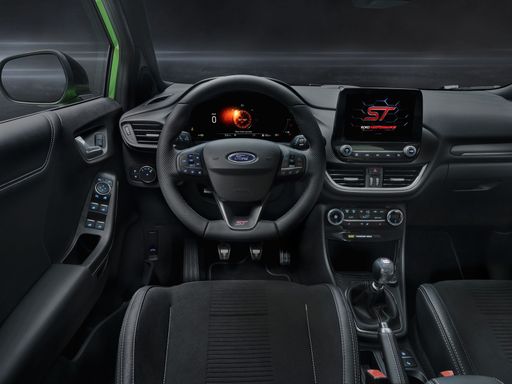
The interior of the Ford Puma combines practicality and style. With seating for five and a user-friendly layout, it caters to both drivers and passengers beautifully. A key highlight is the advanced infotainment system, which includes smartphone integration, allowing for seamless connectivity on the go. Additionally, the innovative use of space such as the MegaBox feature – a hidden storage compartment in the trunk – sets the Puma apart in its class.

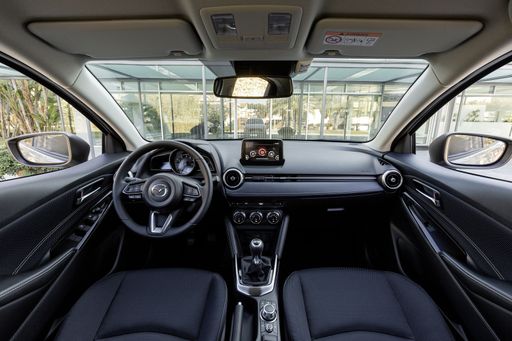
Meanwhile, the Mazda 2 Hybrid's cabin is known for its driver-centric design and high-quality materials. The layout is intuitive, with an emphasis on ergonomics and comfort. Though the technological offerings are slightly less extensive than those of the Puma, the Mazda still features a competent infotainment system with modern connectivity options, further enhancing the driving experience.

Puma

Conclusion

In conclusion, the choice between the Ford Puma and Mazda 2 Hybrid ultimately comes down to personal preferences and priorities. The Puma excels in space, performance, and hybrid technology while providing ample practicality for families. Alternatively, the Mazda 2 Hybrid stands out for its exceptional fuel efficiency and compact nature, making it an ideal choice for urban dwellers.

Both vehicles represent their brands well, embodying the spirit of sustainable driving without compromising on performance and comfort. As the automotive landscape continues to evolve, the Ford Puma and Mazda 2 Hybrid are excellent examples of how innovation can meet the needs of today’s drivers.

Here’s where it gets real: The technical differences in detail

2 Hybrid

Costs and Efficiency:

Price and efficiency are often the first things buyers look at. Here it becomes clear which model has the long-term edge – whether at the pump, the plug, or in purchase price.

Mazda 2 Hybrid is only slightly cheaper – starting at 22,300 £ , while the Ford Puma costs 23,900 £ . That’s a price difference of around 1,637 £.

Fuel consumption also shows a difference: the Mazda 2 Hybrid uses 3.8 L/100km and is significantly more efficient than the Ford Puma with 5.4 L/100km. The difference is about 1.6 L/100km.

Puma

Engine and Performance:

Power, torque and acceleration are the classic benchmarks for car enthusiasts – and here, some clear differences start to show.

When it comes to engine power, the Ford Puma offers clearly more power – delivering 168 HP compared to 116 HP. That’s roughly 52 HP more horsepower.

When accelerating from 0 to 100 km/h, the Ford Puma is visibly quicker – completing the sprint in 7.4 s, while the Mazda 2 Hybrid takes 9.7 s. That’s about 2.3 s quicker.

2 Hybrid

Space and Everyday Use:

Cabin size, boot volume and payload all play a role in everyday practicality. Here, comfort and flexibility make the difference.

Both vehicles offer seating for 5 people.

In terms of curb weight, Mazda 2 Hybrid is slightly lighter – 1,180 kg compared to 1,316 kg. The difference is around 136 kg.

Looking at boot space, the Ford Puma offers significantly more boot space – 523 L compared to 286 L. That’s a difference of about 237 L.

When it comes to payload, the Ford Puma carries only slightly more – 469 kg compared to 435 kg. That’s a difference of about 34 kg.

Who wins the race in the data check?

The Ford Puma stands well ahead of its rival in the objective data comparison.
This result only shows which model scores more points on paper – not which of the two cars feels right for you.

from £23,900
Puma

Ford Puma

  • Engine Type Petrol MHEV, Electric
  • Transmission Manuel, Automatic
  • Drive Type Front-Wheel Drive
  • Power HP 125 - 168 HP
  • Consumption L/100km 5.4 - 5.9 L/100km
  • Consumption kWh/100km 13 - 13.9 kWh/100km
  • Electric Range 404 - 417 km
Mazda 2 Hybrid
Ford Puma

Costs and Consumption

View detailed analysis

Engine and Performance

View detailed analysis

Dimensions and Body

View detailed analysis

Mazda 2 Hybrid

The Mazda 2 Hybrid brings Mazda’s trademark driving flair to the city, combining smooth, efficient running with unexpectedly eager handling that keeps short trips engaging. Compact, nicely finished and sensible on running costs, it’s a clever choice for buyers who want the economy of a small car without sacrificing cabin quality or personality.

details

Ford Puma

The Ford Puma blends sporty styling with practical everyday usability, making it a smart choice for drivers who want flair without sacrificing versatility. Its engaging driving character and clever interior packaging give it a more dynamic and useful feel than many rivals.

details
Mazda 2 Hybrid
Ford Puma

Costs and Consumption

Price
22,300 - 28,300 £
Price
23,900 - 36,300 £
Consumption L/100km
3.8 - 4 L/100km
Consumption L/100km
5.4 - 5.9 L/100km
Consumption kWh/100km
-
Consumption kWh/100km
13 - 13.9 kWh/100km
Electric Range
-
Electric Range
404 - 417 km
Battery Capacity
-
Battery Capacity
-
co2
87 - 93 g/km
co2
0 - 135 g/km
Fuel tank capacity
-
Fuel tank capacity
-

Dimensions and Body

Body Type
Hatchback
Body Type
SUV
Seats
5
Seats
5
Doors
-
Doors
-
Curb weight
1,180 kg
Curb weight
1,316 - 1,563 kg
Trunk capacity
286 L
Trunk capacity
456 - 523 L
Length
-
Length
-
Width
1,745 mm
Width
1,805 mm
Height
-
Height
-
Max trunk capacity
-
Max trunk capacity
-
Payload
435 kg
Payload
367 - 469 kg

Engine and Performance

Engine Type
Full Hybrid
Engine Type
Petrol MHEV, Electric
Transmission
Automatic
Transmission
Manuel, Automatic
Transmission Detail
CVT
Transmission Detail
Manual Gearbox, Dual-Clutch Automatic, Reduction Gearbox
Drive Type
Front-Wheel Drive
Drive Type
Front-Wheel Drive
Power HP
116 HP
Power HP
125 - 168 HP
Acceleration 0-100km/h
9.7 s
Acceleration 0-100km/h
7.4 - 9.8 s
Max Speed
-
Max Speed
-
Torque
-
Torque
170 - 290 Nm
Number of Cylinders
3
Number of Cylinders
3
Power kW
85 kW
Power kW
92 - 124 kW
Engine capacity
1,490 cm3
Engine capacity
999 cm3

General

Model Year
2025
Model Year
2,025 - 2,026
CO2 Efficiency Class
B
CO2 Efficiency Class
D, A
Brand
Mazda
Brand
Ford
DriveDuel uses data analysis and artificial intelligence to evaluate vehicle data and create content. Content is regularly reviewed and improved. The displayed prices are estimates based on German list prices, adjusted to the respective country’s VAT. Country-specific registration taxes are not included. This information is not legally binding.