VS

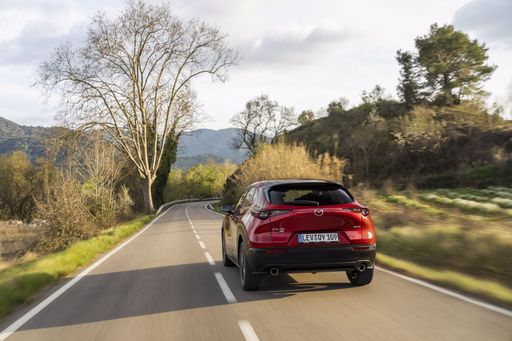
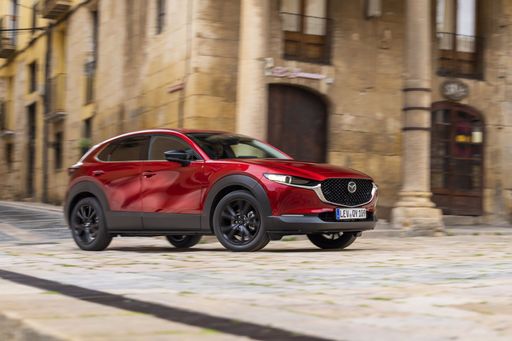
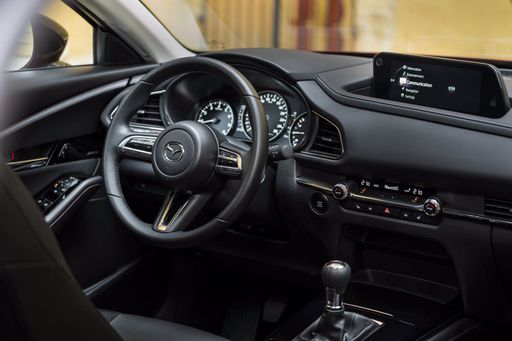
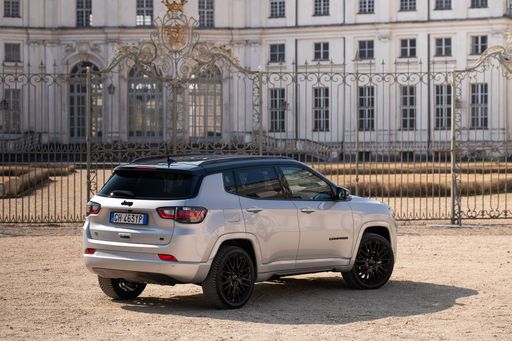
Mazda CX-30 vs Jeep Compass comparison

Compare performance (186 HP vs 225 HP), boot space and price (25,200 £ vs 34,200 £ ) at a glance. Find out which car is the better choice for you – Mazda CX-30 or Jeep Compass?

Mazda CX-30 vs Jeep Compass: Key differences

Mazda CX-30

4.6 (3 Reviews)
rate
  • noticeably cheaper
  • moderately lighter

Jeep Compass

2.4 (4 Reviews)
rate
  • moderately more power
  • substantially more efficient
  • barely quicker 0–100 km/h
  • markedly more trunk space

All details on performance, efficiency, range and trunk space can be found in the technical comparison below – including user reviews for both models.

CX-30

The Jeep Compass VS Mazda CX-30: A Battle of Compact SUVs

Today’s SUV market is brimming with choices, but two models stand out for their blend of style, performance, and practicality. The Jeep Compass and the Mazda CX-30, both from the 2024 model year, compete fiercely in the compact SUV category. This article dives into a head-to-head comparison, exploring technical specifications, innovative features, and everyday usability to help you decide which one might be the perfect fit for your lifestyle.
Compass

Engine Options and Performance

The Jeep Compass offers a varied powertrain lineup, featuring both Petrol MHEV and Plugin Hybrid options. Its power output spans from 130 to 240 horsepower, depending on the variant, with torque figures peaking at 240 Nm. Models equipped with All-Wheel Drive (AWD) add versatility, suitable for off-road adventures and challenging weather conditions. Jeep's commitment to providing strong performance is further highlighted by the impressive dual-clutch and automatic transmissions available within its lineup.

The Mazda CX-30 also introduces Petrol MHEV engines but opts for a simpler approach with power outputs of either 140 or 186 horsepower. Torque figures are similarly robust at up to 240 Nm. Although it lacks a hybrid option, the CX-30 promises a natural driving experience with manual gearbox options alongside the traditional automatic transmission. Mazda’s dedication to driving pleasure is evident in their manual transmission choice, offering purists a more engaging driving experience.

CX-30

Fuel Efficiency and Environmental Impact

On the efficiency front, the Jeep Compass offers standout consumption figures, especially with its Plugin Hybrid variant, boasting an impressive 2 L/100 km. Furthermore, it offers an electric range of 36 km, making it a suitable option for those looking to economize on fuel and minimize emissions. For relevant CO2 emissions, the Compass holds a strong position with a low figure of 48 g/km in its plugin hybrid form.

Conversely, the Mazda CX-30, while not hybrid, offers commendable fuel consumption ranging from 5.7 to 6.6 L/100 km. This results in CO2 emissions from 129 to 148 g/km, which align with typical non-hybrid petrol standards, placing it in CO2 efficiency classes D and E. It's a choice that serves those prioritizing straightforward petrol reliability without the added complexity of hybrid systems.

Compass

Dimensions and Practicality

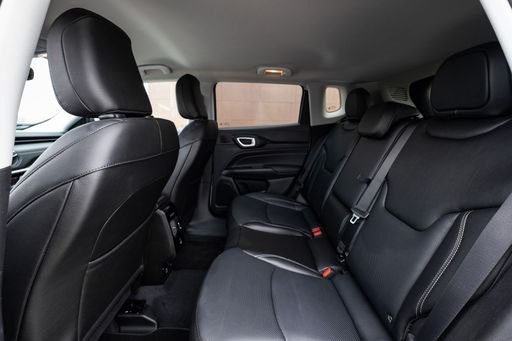
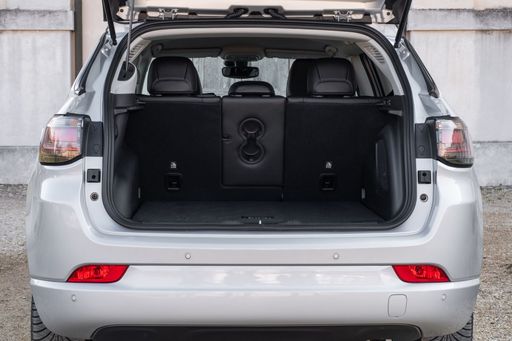
When it comes to size and practicality, the Compass measures slightly larger, offering a length of 4404 mm compared to the CX-30's 4395 mm. This translates into a rear passenger space and cargo capacity of 438 to 420 liters in the Compass, while the CX-30 provides a trunk capacity between 430 to 422 liters, reflecting a well-thought-out use of space within a compact footprint.

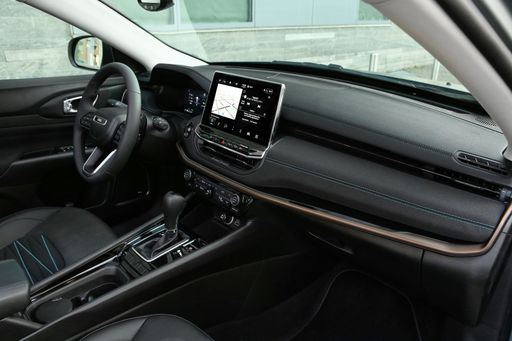
In terms of interior tech and comfort, both SUVs seat five comfortably, albeit with different philosophies. The Compass lends itself to a sense of rugged adventure with its off-road capabilities. In contrast, the CX-30 emphasizes Mazda’s hallmark of sleek design and driver-focused interiors, offering a more urban-oriented atmosphere.

CX-30

Driving Dynamics and Innovations

The Jeep Compass accelerates from 0 to 100 km/h in times ranging between 10.3 to 7.3 seconds, showcasing versatility from practical to sprightly performance levels across the range. Its maximum speed spans from 183 to 200 km/h, highlighting a balance between everyday usability and highway performance.

Meanwhile, the Mazda CX-30 delivers a similar 0 to 100 km/h acceleration performance between 8.3 to 10.3 seconds. This is paired with maximum speeds reaching up to 204 km/h, displaying Mazda’s focus on providing an agile road experience rooted in their Zoom-Zoom philosophy.

Compass

Conclusion: Which SUV Is Right for You?

In selecting between the Jeep Compass and the Mazda CX-30, consider your driving preferences and lifestyle needs. If you favor hybrid efficiency, occasional off-road adventures, and diverse driving conditions, the Jeep Compass might be your best bet. However, if you lean towards a more traditional driving experience with a focus on sleek design and direct handling, the Mazda CX-30 stands out as a strong contender.

Ultimately, both SUVs represent excellent choices within the compact segment, each bringing its brand's strengths and innovations to the table. Whether trailblazing with Jeep or savoring the refined road feel of Mazda, these models serve as exemplary choices for the modern driver.

Here’s where it gets real: The technical differences in detail

CX-30

Costs and Efficiency:

Price and efficiency are key factors when choosing a car – and this is often where the real differences emerge.

Mazda CX-30 is noticeably cheaper – starting at 25,200 £ , while the Jeep Compass costs 34,200 £ . That’s a price difference of around 8,966 £.

Fuel consumption also shows a difference: the Jeep Compass uses 3 L/100km and is substantially more efficient than the Mazda CX-30 with 5.7 L/100km. The difference is about 2.7 L/100km.

Compass

Engine and Performance:

Power, torque and acceleration are the classic benchmarks for car enthusiasts – and here, some clear differences start to show.

When it comes to engine power, the Jeep Compass offers moderately more power – delivering 225 HP compared to 186 HP. That’s roughly 39 HP more horsepower.

When accelerating from 0 to 100 km/h, the Jeep Compass is barely quicker – completing the sprint in 8 s, while the Mazda CX-30 takes 8.3 s. That’s about 0.3 s quicker.

There’s also a difference in torque: the Jeep Compass delivers clearly more torque with 345 Nm compared to 240 Nm. That’s about 105 Nm more.

CX-30

Space and Everyday Use:

Beyond pure performance, interior space and usability matter most in daily life. This is where you see which car is more practical and versatile.

Both vehicles offer seating for 5 people.

In terms of curb weight, Mazda CX-30 is moderately lighter – 1,455 kg compared to 1,667 kg. The difference is around 212 kg.

Looking at boot space, the Jeep Compass offers markedly more boot space – 550 L compared to 430 L. That’s a difference of about 120 L.

Who wins the race in the data check?

The Jeep Compass is decisively ahead in the objective data comparison.
This result only shows which model scores more points on paper – not which of the two cars feels right for you.

from £34,200
Compass

Jeep Compass

  • Engine Type : Petrol MHEV, Electric, Plugin Hybrid
  • Transmission : Automatic
  • Drive Type : Front-Wheel Drive
  • Power HP : 145 - 225 HP
  • Consumption L/100km : 3 - 5.8 L/100km
  • Consumption kWh/100km : 17.5 kWh/100km
  • Electric Range : 95 - 500 km
Mazda CX-30
Jeep Compass

Costs and Consumption

View detailed analysis

Engine and Performance

View detailed analysis

Dimensions and Body

View detailed analysis

Mazda CX-30

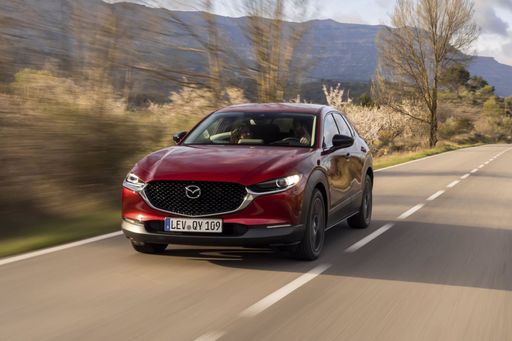
The Mazda CX-30 blends sleek coupe-like lines with the practicality of a compact crossover, feeling more premium than its price tag suggests. It’s a joy to drive for anyone who likes a taut chassis and an interior that treats daily commutes like a small luxury escape.

details

Jeep Compass

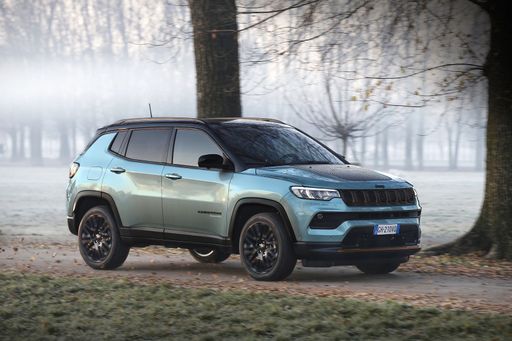
The Jeep Compass packs classic Jeep styling with a surprisingly composed demeanor, equally at home turning heads in the city or tackling a weekend dirt track. Inside it's a pragmatic, user-friendly compact SUV that prioritizes comfort and versatility — a smart pick if you want a dose of adventure without giving up everyday sense.

details
Mazda CX-30
Jeep Compass

Costs and Consumption

Price
25,200 - 36,800 £
Price
34,200 - 43,200 £
Consumption L/100km
5.7 - 6.6 L/100km
Consumption L/100km
3 - 5.8 L/100km
Consumption kWh/100km
-
Consumption kWh/100km
17.5 kWh/100km
Electric Range
-
Electric Range
95 - 500 km
Battery Capacity
-
Battery Capacity
74 kWh
co2
129 - 148 g/km
co2
0 - 130 g/km
Fuel tank capacity
-
Fuel tank capacity
55 L

Dimensions and Body

Body Type
SUV
Body Type
SUV
Seats
5
Seats
5
Doors
-
Doors
5
Curb weight
1,455 - 1,587 kg
Curb weight
1,667 - 2,198 kg
Trunk capacity
422 - 430 L
Trunk capacity
550 L
Length
-
Length
4,552 mm
Width
1,795 mm
Width
1,928 mm
Height
-
Height
1,675 mm
Max trunk capacity
-
Max trunk capacity
1,561 L
Payload
458 - 496 kg
Payload
-

Engine and Performance

Engine Type
Petrol MHEV
Engine Type
Petrol MHEV, Electric, Plugin Hybrid
Transmission
Manuel, Automatic
Transmission
Automatic
Transmission Detail
Manual Gearbox, Automatic Gearbox
Transmission Detail
Dual-Clutch Automatic, Reduction Gearbox
Drive Type
Front-Wheel Drive, All-Wheel Drive
Drive Type
Front-Wheel Drive
Power HP
140 - 186 HP
Power HP
145 - 225 HP
Acceleration 0-100km/h
8.3 - 10.3 s
Acceleration 0-100km/h
8 - 10.3 s
Max Speed
-
Max Speed
180 - 188 km/h
Torque
238 - 240 Nm
Torque
230 - 345 Nm
Number of Cylinders
4
Number of Cylinders
3 - 4
Power kW
103 - 137 kW
Power kW
107 - 165 kW
Engine capacity
1,998 - 2,488 cm3
Engine capacity
1,199 - 1,596 cm3

General

Model Year
2,025
Model Year
2,025 - 2,026
CO2 Efficiency Class
D, E
CO2 Efficiency Class
D, A, B
Brand
Mazda
Brand
Jeep
DriveDuel uses data analysis and artificial intelligence to evaluate vehicle data and create content. Content is regularly reviewed and improved. The displayed prices are estimates based on German list prices, adjusted to the respective country’s VAT. Country-specific registration taxes are not included. This information is not legally binding.