VS

Mazda CX-6e vs Toyota C-HR+ comparison

Compare performance (258 HP vs 343 HP), boot space and price (42,800 £ vs 36,000 £ ) at a glance. Find out which car is the better choice for you – Mazda CX-6e or Toyota C-HR+?

Mazda CX-6e vs Toyota C-HR+: Key differences

Mazda CX-6e

  • a bit more trunk space
details

Toyota C-HR+

4.4 (1 Reviews)
rate
  • a bit cheaper
  • visibly more power
  • significantly more efficient
  • noticeably more electric range
  • significantly quicker 0–100 km/h
  • markedly lighter
details

All details on performance, efficiency, range and trunk space can be found in the technical comparison below – including user reviews for both models.

By Achim Sedelmaier

CX-6e

Overview: Toyota C-HR+ VS Mazda CX-6e

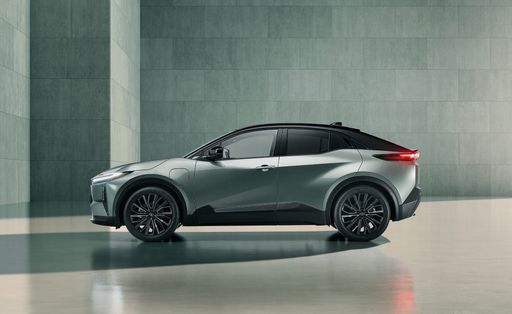
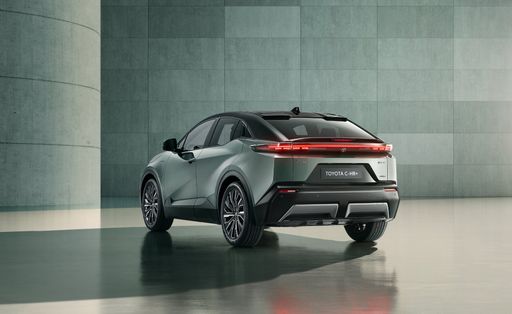
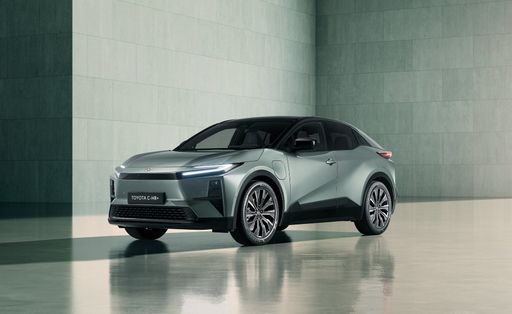
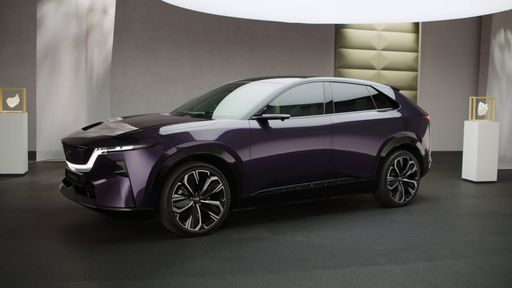
Toyota C-HR+ VS Mazda CX-6e present two distinct philosophies in the compact SUV segment: the Toyota pushes efficiency, punchy hybrid-electric drive and a bold, urban-first personality, while the Mazda opts for a calmer electric experience wrapped in a more traditionally premium cabin. The C-HR+ feels like a city commuter with strong assist systems and a design that draws attention; the CX-6e behaves more like a composed highway companion that rewards relaxed driving. That contrast creates an immediate trade-off between usable space and everyday economy. Buyers will quickly notice whether they value a frugal, punchy drive or a roomy, quietly refined interior. The rest of this comparison unpacks how those choices play out in real life.
C-HR+

Character and driving feel

The Toyota C-HR+ drives with a livelier edge — brisk responses at take-off and a drivetrain tuned to keep you moving efficiently in mixed urban traffic — but that eagerness comes with typical hybrid/CVT vocalness when you ask for hard acceleration. The Mazda CX-6e, by contrast, is composed and steady: heavier in feel but quieter and smoother when cruising, which makes it less tiring on long runs. In town the C-HR+ rewards short blasts and quick overtakes, while the CX-6e encourages a calmer, more confident cadence that masks speed. Steering on the C-HR+ feels tighter and more urban-minded, whereas Mazda’s setup leans toward relaxed precision. Those differences mean the C-HR+ suits drivers who want immediacy and economy; the CX-6e suits those who prize serenity over sprinting thrills.

Comfort and long-distance behavior

Mazda CX-6e aims for a settled, comfortable ride with seats and suspension that smooth motorway miles and reduce fatigue over long trips; its acoustic tuning keeps highway noise low. The Toyota C-HR+ also cruises quietly at steady speeds, but its suspension and the packaging of the hybrid layout make it feel firmer over sharp bumps and less generous in rear headroom. On long journeys the CX-6e’s calm demeanor and seating comfort win out for passengers, whereas the C-HR+ impresses with its ability to cover commutes economically when you can make use of the electric mode. If you regularly alternate town driving with long stretches, the C-HR+ rewards disciplined charging and efficient driving; if your typical day is long distances and passenger comfort, the CX-6e’s composure is more convincing. Both handle motorway work well, but they deliver different kinds of fatigue resistance.

Practicality, daily usability and family fit

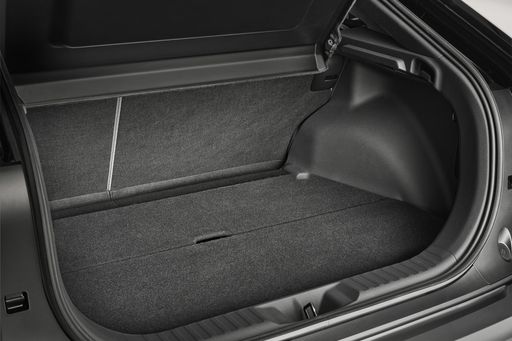
When it comes to moving people and luggage the Mazda CX-6e gives the cleaner, more usable cargo layout and extra small-storage tricks that make packing for a weekend easier, while the Toyota C-HR+ forces you to think about what you carry because its plug‑in architecture eats into boot ergonomics. Rear-seat comfort follows the same split: CX-6e is generally roomier and easier for installing child seats, whereas the C-HR+ can feel tight behind taller adults and its narrower door apertures make transfers fiddlier. City drivers will appreciate the C-HR+’s compact manners and easier manoeuvrability, but suburban families and tow-users get more everyday flexibility from the CX-6e’s packaging and load options. In short, C-HR+ favours urban convenience and economy; CX-6e favours usable space and family practicality. Those trade-offs are the practical heart of the decision for real buyers.

Cabin feel, tech and perceived quality

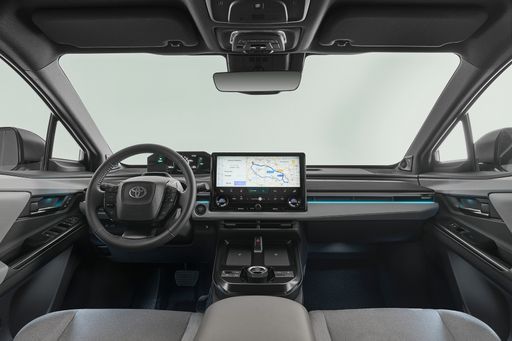
Mazda CX-6e presents a calmer, more premium interior impression with rich materials and a dramatic wide-screen treatment that gives the cabin theatre, even if the heavy reliance on touch and gesture controls can be distracting in day-to-day use. The Toyota C-HR+ counters with a more driver-focused cockpit: simpler menus, physical climate controls and a layout that feels quicker to operate when you’re juggling navigation, calls and city traffic. Both cabins show improved fit and finish versus older rivals, but the CX-6e leans into a luxury‑lite presentation while the C-HR+ prioritises intuitive ergonomics and visible assistive technology. Buyers who prize tactile control and straightforward interfaces will prefer the C-HR+, while those after a museum‑quiet, upscale ambience will lean toward the CX-6e. The choice here is between usability under stress and the comfort of a more luxurious mood.

Buyer fit: who should choose which?

Pick the Toyota C-HR+ if your life is a mix of short commutes and city driving, you value low running costs and lots of driver aids, and you’re willing to accept tighter rear space and a smaller boot for those gains. Choose the Mazda CX-6e if you prioritise cabin quality, relaxed long-distance comfort, a more usable luggage area and an interior that feels premium on everyday drives, while accepting a wider footprint and a more display‑centric control scheme. The C-HR+ trades packaging for efficiency and urban agility; the CX-6e trades a bit of city nimbleness for passenger comfort and perceived quality. If you want to see how those real‑world differences map onto chargers, range, acceleration and load figures, the technical comparison that follows translates these impressions into the numbers that matter.

Here’s where it gets real: The technical differences in detail

CX-6e

Costs and Efficiency:

When it comes to price and running costs, the biggest differences usually appear. This is often where you see which car fits your budget better in the long run.

Toyota C-HR+ is a bit cheaper – starting at 36,000 £ , while the Mazda CX-6e costs 42,800 £ . That’s a price difference of around 6,857 £.

In terms of energy consumption, the Toyota C-HR+ is significantly more efficient: consuming 13.4 kWh/100km compared to 18.9 kWh/100km for the Mazda CX-6e. That’s a difference of about 5.5 kWh/100km.

As for electric range, the Toyota C-HR+ offers noticeably more range – reaching up to 607 km, about 123 km more than the Mazda CX-6e.

C-HR+

Engine and Performance:

Power, torque and acceleration are the classic benchmarks for car enthusiasts – and here, some clear differences start to show.

When it comes to engine power, the Toyota C-HR+ offers visibly more power – delivering 343 HP compared to 258 HP. That’s roughly 85 HP more horsepower.

When accelerating from 0 to 100 km/h, the Toyota C-HR+ is significantly quicker – completing the sprint in 5.2 s, while the Mazda CX-6e takes 7.9 s. That’s about 2.7 s quicker.

There’s also a difference in torque: the Toyota C-HR+ delivers slightly more torque with 338 Nm compared to 290 Nm. That’s about 48 Nm more.

Space and Everyday Use:

Whether family car or daily driver – which one offers more room, flexibility and comfort?

Both vehicles offer seating for 5 people.

In terms of curb weight, Toyota C-HR+ is markedly lighter – 1,810 kg compared to 2,205 kg. The difference is around 395 kg.

Looking at boot space, the Mazda CX-6e offers a bit more boot space – 468 L compared to 416 L. That’s a difference of about 52 L.

When it comes to payload, the Toyota C-HR+ carries significantly more – 655 kg compared to 385 kg. That’s a difference of about 270 kg.

Who wins the race in the data check?

The Toyota C-HR+ stands well ahead of its rival in the objective data comparison.
This result only shows which model scores more points on paper – not which of the two cars feels right for you.

from £36,000
C-HR+

Toyota C-HR+

  • Engine Type Electric
  • Transmission Automatic
  • Drive Type Front-Wheel Drive, All-Wheel Drive
  • Power HP 167 - 343 HP
  • Consumption kWh/100km 13.4 - 15.5 kWh/100km
  • Electric Range 458 - 607 km
Mazda CX-6e
Toyota C-HR+

Costs and Consumption

View detailed analysis

Engine and Performance

View detailed analysis

Dimensions and Body

View detailed analysis

Mazda CX-6e

The Mazda CX-6e blends Mazda’s flowing coupe‑SUV silhouette with electric propulsion to deliver a surprisingly engaging and polished driving experience that feels more premium than its price suggests. Inside, the cabin is quietly refined and ergonomically smart, with modern tech and practical space that make it a stylish, sensible choice for drivers who want EV manners without the fanfare.

details

Toyota C-HR+

The Toyota C‑HR is a distinctive crossover that pairs bold, coupe‑like styling with a comfortable, composed ride suited to daily city and suburban driving. It appeals to buyers who value standout design, practical cabin packaging and a refined, easy‑to‑use experience rather than outright performance or rugged off‑road ability.

details
Mazda CX-6e
Toyota C-HR+

Costs and Consumption

Price
42,800 - 45,400 £
Price
36,000 - 46,300 £
Consumption L/100km
-
Consumption L/100km
-
Consumption kWh/100km
18.9 - 19.4 kWh/100km
Consumption kWh/100km
13.4 - 15.5 kWh/100km
Electric Range
468 - 484 km
Electric Range
458 - 607 km
Battery Capacity
-
Battery Capacity
-
co2
0 g/km
co2
0 g/km
Fuel tank capacity
-
Fuel tank capacity
-

Dimensions and Body

Body Type
SUV
Body Type
SUV
Seats
5
Seats
5
Doors
-
Doors
-
Curb weight
2,205 kg
Curb weight
1,810 - 2,010 kg
Trunk capacity
468 L
Trunk capacity
416 L
Length
-
Length
-
Width
1,935 mm
Width
1,870 mm
Height
-
Height
-
Max trunk capacity
-
Max trunk capacity
-
Payload
385 kg
Payload
550 - 655 kg

Engine and Performance

Engine Type
Electric
Engine Type
Electric
Transmission
Automatic
Transmission
Automatic
Transmission Detail
Reduction Gearbox
Transmission Detail
Reduction Gearbox
Drive Type
Rear-Wheel Drive
Drive Type
Front-Wheel Drive, All-Wheel Drive
Power HP
258 HP
Power HP
167 - 343 HP
Acceleration 0-100km/h
7.9 s
Acceleration 0-100km/h
5.2 - 8.4 s
Max Speed
-
Max Speed
-
Torque
290 Nm
Torque
268 - 338 Nm
Number of Cylinders
-
Number of Cylinders
-
Power kW
190 kW
Power kW
123 - 252 kW
Engine capacity
-
Engine capacity
-

General

Model Year
2026
Model Year
2026
CO2 Efficiency Class
A
CO2 Efficiency Class
A
Brand
Mazda
Brand
Toyota
DriveDuel uses data analysis and artificial intelligence to evaluate vehicle data and create content. Content is regularly reviewed and improved. The displayed prices are estimates based on German list prices, adjusted to the respective country’s VAT. Country-specific registration taxes are not included. This information is not legally binding.