VS

Mercedes A Class vs VW T-Roc comparison

Compare performance (421 HP vs 150 HP), boot space and price (32,600 £ vs 26,400 £ ) at a glance. Find out which car is the better choice for you – Mercedes A Class or VW T-Roc?

Mercedes A Class vs VW T-Roc: Key differences

Mercedes A Class

2.7 (1 Reviews)
rate
  • significantly more power
  • clearly more efficient
  • considerably quicker 0–100 km/h
  • barely lighter
details

VW T-Roc

4.8 (6 Reviews)
rate
  • visibly cheaper
  • markedly more trunk space
details

All details on performance, efficiency, range and trunk space can be found in the technical comparison below – including user reviews for both models.

By Achim Sedelmaier

A Class

The Compact Clash: Mercedes A-Klasse vs. VW T-Roc

As the automotive world continues to evolve, the demand for versatile, efficient, and innovative vehicles has never been higher. In the compact car segment, the Mercedes A-Klasse and VW T-Roc represent two popular choices, each with its own set of strengths. Here, we compare the two to help you decide which vehicle might be the better fit for your lifestyle.
T-Roc

Design and Body Type

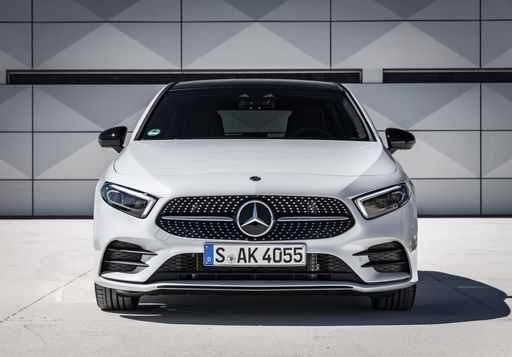
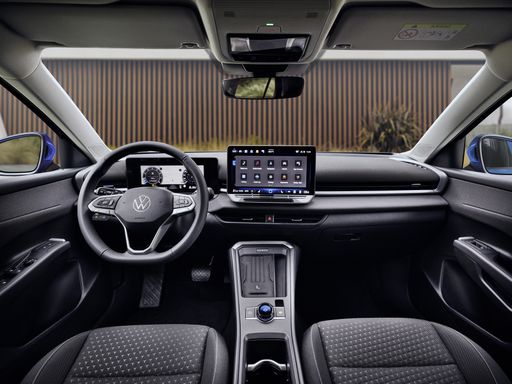
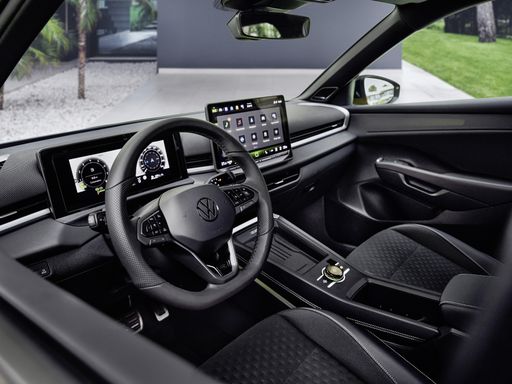
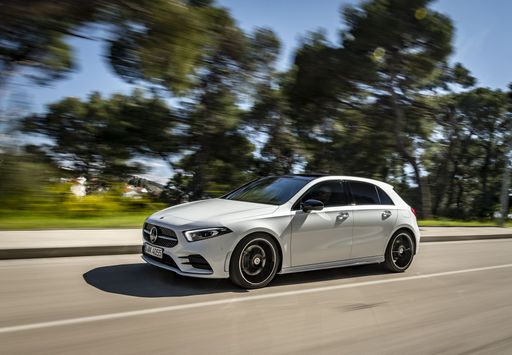
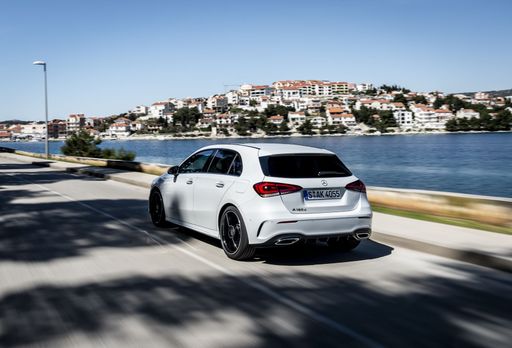
The Mercedes A-Klasse offers a sleek, modern hatchback design, appealing to those who prefer a sporty and premium aesthetic. Its dimensions suggest a compact yet sophisticated look, with a length ranging from 4428 to 4453 mm, width of 1796 mm, and height between 1407 to 1423 mm.

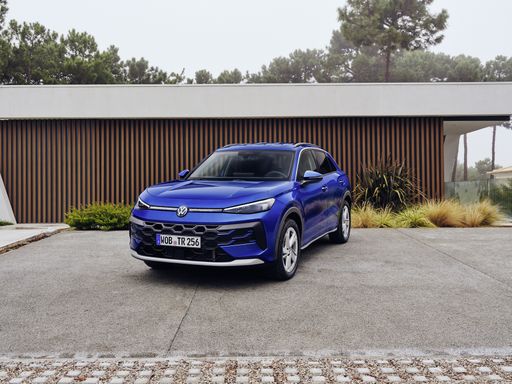
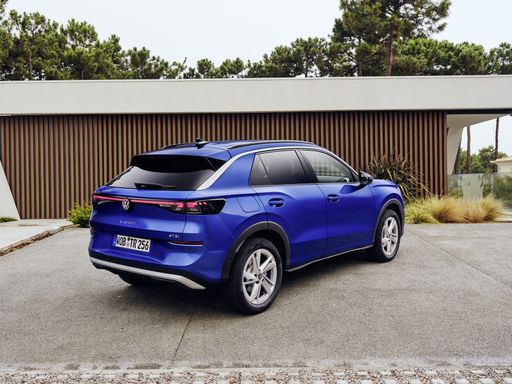
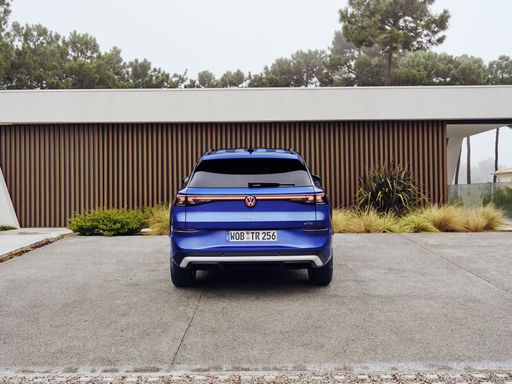
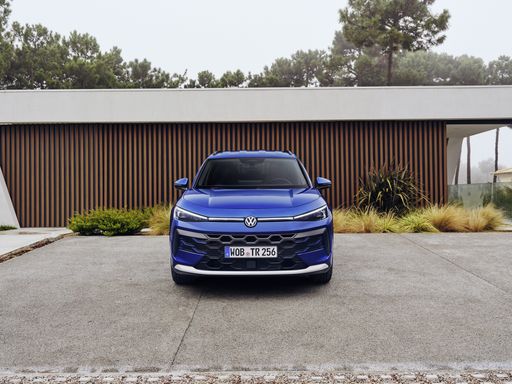
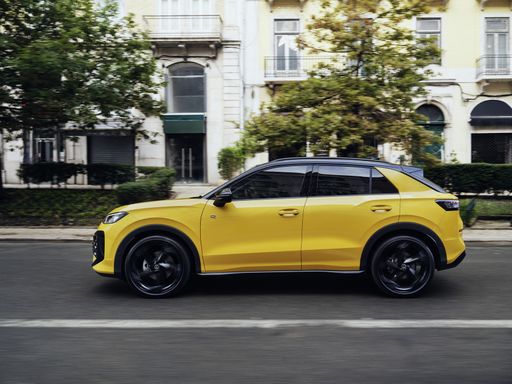
On the other hand, the VW T-Roc stands as a stylish SUV, providing a bold and robust presence on the road. Its dimensions – length from 4236 to 4271 mm, width of 1819 mm, and height between 1527 to 1584 mm – reflect its stance as a more commanding vehicle with a higher ride position.

A Class

Performance and Engine Options

Under the hood, the A-Klasse presents a diverse array of engine choices including Petrol, Diesel, Plug-in Hybrid, and Petrol MHEV. With power outputs ranging from 116 HP to an impressive 421 HP, this model caters to a broad spectrum of driving preferences. Notably, the acceleration can vary significantly from 9.7 seconds to sprinting from 0-100 km/h in just 3.9 seconds, satisfying performance seekers.

VW's T-Roc offers fewer engine configurations, predominantly Petrol and Diesel, with power between 115 HP and 300 HP. Its performance maintains respectable acceleration figures from 0-100 km/h ranging between 12.3 seconds and a rapid 4.9 seconds for those looking for agility in an SUV.

T-Roc

Transmission and Drive Systems

The A-Klasse exclusively provides an automatic dual-clutch transmission, along with the choice of Front-Wheel or All-Wheel Drive. This ensures a focused yet versatile driving experience catering to different terrain requirements.

VW offers variety with both manual and dual-clutch automatic transmissions in the T-Roc. Similarly versatile, its models can also be equipped with Front-Wheel or All-Wheel Drive, appealing to those who prefer more control over their driving style.

A Class

Technical Innovations and Efficiency

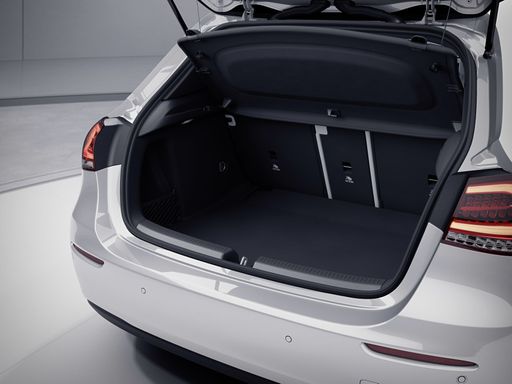
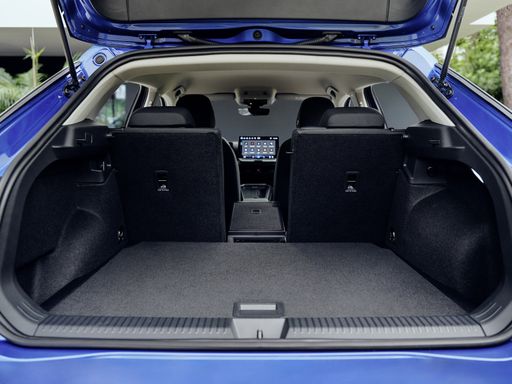
Significantly, the A-Klasse's innovation includes a Plug-in Hybrid option boasting an electric range of 86 km and a CO2-efficient drive. The model demonstrates a commitment to environmental responsibility with CO2 emissions starting from as low as 17 g/km. Trunk capacity, although slightly smaller, provides a functional 350 L space.

The T-Roc, with its larger seating capacity option, offers trunk space up to 445 L, accommodating more cargo. Fuel consumption varies but begins at an efficient 4.7 L/100km, with CO2 emissions of 125 g/km, making it a practical choice for those prioritizing cost-effective driving without compromising on style.

T-Roc

Overall Experience

Choosing between the Mercedes A-Klasse and VW T-Roc narrows down to your priorities. The A-Klasse excels in high-tech features and engine diversity, particularly appealing if you seek a luxurious yet eco-conscious vehicle. Conversely, the T-Roc provides a rugged SUV flavor with practicality in cargo space and budget-friendly efficiency, a match for urban adventurers and family use.

While both vehicles boast outstanding qualities, your ultimate decision hinges on the balance of style, power, and practicality against your everyday needs. If you're after cutting-edge technology wrapped in a sportier package, the A-Klasse shines. Yet, for those who lean towards a versatile and family-friendly SUV with flexible driving options, the T-Roc offers compelling reasons to consider it your next automotive companion.

Here’s where it gets real: The technical differences in detail

A Class

Costs and Efficiency:

Price and efficiency are key factors when choosing a car – and this is often where the real differences emerge.

VW T-Roc is visibly cheaper – starting at 26,400 £ , while the Mercedes A Class costs 32,600 £ . That’s a price difference of around 6,130 £.

Fuel consumption also shows a difference: the Mercedes A Class uses 2.3 L/100km and is clearly more efficient than the VW T-Roc with 5.5 L/100km. The difference is about 3.2 L/100km.

T-Roc

Engine and Performance:

Power, torque and acceleration say a lot about how a car feels on the road. This is where you see which model delivers more driving dynamics.

When it comes to engine power, the Mercedes A Class offers significantly more power – delivering 421 HP compared to 150 HP. That’s roughly 271 HP more horsepower.

When accelerating from 0 to 100 km/h, the Mercedes A Class is considerably quicker – completing the sprint in 3.9 s, while the VW T-Roc takes 8.9 s. That’s about 5 s quicker.

There’s also a difference in torque: the Mercedes A Class delivers significantly more torque with 500 Nm compared to 250 Nm. That’s about 250 Nm more.

A Class

Space and Everyday Use:

Cabin size, boot volume and payload all play a role in everyday practicality. Here, comfort and flexibility make the difference.

Both vehicles offer seating for 5 people.

In terms of curb weight, Mercedes A Class is barely lighter – 1,440 kg compared to 1,465 kg. The difference is around 25 kg.

Looking at boot space, the VW T-Roc offers markedly more boot space – 475 L compared to 350 L. That’s a difference of about 125 L.

When it comes to payload, the VW T-Roc carries marginally more – 515 kg compared to 485 kg. That’s a difference of about 30 kg.

Who wins the race in the data check?

The Mercedes A Class is far ahead overall in the objective data comparison.
This result only shows which model scores more points on paper – not which of the two cars feels right for you.

from £32,600
A Class

Mercedes A Class

  • Engine Type Petrol MHEV, Diesel, Plugin Hybrid, Petrol
  • Transmission Automatic
  • Drive Type Front-Wheel Drive, All-Wheel Drive
  • Power HP 116 - 421 HP
  • Consumption L/100km 2.3 - 9 L/100km
  • Electric Range 85 km
Mercedes A Class
VW T-Roc

Costs and Consumption

View detailed analysis

Engine and Performance

View detailed analysis

Dimensions and Body

View detailed analysis

Mercedes A Class

The Mercedes A‑Class arrives as a compact charmer that dresses premium materials and a cockpit full of screens in a tidy, city-friendly package, delivering surprising agility and poise. For buyers who want a luxury badge, clever tech and a car that's equally happy in tight streets or on a spirited country run, the A‑Class offers a grown-up feel with a cheeky streak.

details

VW T-Roc

The Volkswagen T‑Roc is a stylish, well-proportioned crossover that blends hatchback agility with SUV presence. It delivers a comfortable cabin, user-friendly tech and a composed ride, making it a sensible choice for buyers who want practicality with a bit of character.

details
Mercedes A Class
VW T-Roc

Costs and Consumption

Price
32,600 - 66,500 £
Price
26,400 - 38,600 £
Consumption L/100km
2.3 - 9 L/100km
Consumption L/100km
5.5 - 6.3 L/100km
Consumption kWh/100km
-
Consumption kWh/100km
-
Electric Range
85 km
Electric Range
-
Battery Capacity
-
Battery Capacity
-
co2
53 - 205 g/km
co2
126 - 143 g/km
Fuel tank capacity
-
Fuel tank capacity
-

Dimensions and Body

Body Type
Hatchback
Body Type
SUV
Seats
5
Seats
4 - 5
Doors
-
Doors
-
Curb weight
1,440 - 1,695 kg
Curb weight
1,465 - 1,539 kg
Trunk capacity
310 - 350 L
Trunk capacity
284 - 475 L
Length
-
Length
-
Width
1,796 - 1,850 mm
Width
1,811 - 1,828 mm
Height
-
Height
-
Max trunk capacity
-
Max trunk capacity
-
Payload
450 - 485 kg
Payload
368 - 515 kg

Engine and Performance

Engine Type
Petrol MHEV, Diesel, Plugin Hybrid, Petrol
Engine Type
Petrol, Petrol MHEV
Transmission
Automatic
Transmission
Manuel, Automatic
Transmission Detail
Dual-Clutch Automatic
Transmission Detail
Manual Gearbox, Dual-Clutch Automatic
Drive Type
Front-Wheel Drive, All-Wheel Drive
Drive Type
Front-Wheel Drive
Power HP
116 - 421 HP
Power HP
115 - 150 HP
Acceleration 0-100km/h
3.9 - 9.7 s
Acceleration 0-100km/h
8.9 - 12.3 s
Max Speed
-
Max Speed
-
Torque
200 - 500 Nm
Torque
200 - 250 Nm
Number of Cylinders
4
Number of Cylinders
3 - 4
Power kW
85 - 310 kW
Power kW
85 - 110 kW
Engine capacity
1,332 - 1,991 cm3
Engine capacity
999 - 1,498 cm3

General

Model Year
2025
Model Year
2,024 - 2,025
CO2 Efficiency Class
D, E, B, G
CO2 Efficiency Class
E, D
Brand
Mercedes-Benz
Brand
VW
DriveDuel uses data analysis and artificial intelligence to evaluate vehicle data and create content. Content is regularly reviewed and improved. The displayed prices are estimates based on German list prices, adjusted to the respective country’s VAT. Country-specific registration taxes are not included. This information is not legally binding.