
 Deutschland
 France
 Nederland
 Great Britain
 Sverige
 Danmark
 Suomi
Suomi Italia
 Polska
 Česko
Česko España
VS
Omoda 5 vs Land Rover Range Rover comparison
Compare performance (224 HP vs 550 HP), boot space and price (24,800 £ vs 125,200 £ ) at a glance. Find out which car is the better choice for you – Omoda 5 or Land Rover Range Rover?
Omoda 5 vs Land Rover Range Rover: Key differences
All details on performance, efficiency, range and trunk space can be found in the technical comparison below – including user reviews for both models.
5
Costs and Efficiency:
Price and efficiency are often the first things buyers look at. Here it becomes clear which model has the long-term edge – whether at the pump, the plug, or in purchase price.
Omoda 5 is significantly cheaper – starting at 24,800 £ , while the Land Rover Range Rover costs 125,200 £ . That’s a price difference of around 100,457 £.
Fuel consumption also shows a difference: the Land Rover Range Rover uses 2.8 L/100km and is clearly more efficient than the Omoda 5 with 5.3 L/100km. The difference is about 2.5 L/100km.
As for electric range, the Omoda 5 offers significantly more range – reaching up to 430 km, about 314 km more than the Land Rover Range Rover.
Range Rover
Engine and Performance:
Under the bonnet, it becomes clear which model is tuned for sportiness and which one takes the lead when you hit the accelerator.
When it comes to engine power, the Land Rover Range Rover offers clearly more power – delivering 550 HP compared to 224 HP. That’s roughly 326 HP more horsepower.
When accelerating from 0 to 100 km/h, the Land Rover Range Rover is substantially quicker – completing the sprint in 4.6 s, while the Omoda 5 takes 7.6 s. That’s about 3 s quicker.
There’s also a difference in torque: the Land Rover Range Rover delivers considerably more torque with 800 Nm compared to 340 Nm. That’s about 460 Nm more.
Space and Everyday Use:
Cabin size, boot volume and payload all play a role in everyday practicality. Here, comfort and flexibility make the difference.
Seats: Land Rover Range Rover offers more seats – 7 vs 5.
In terms of curb weight, Omoda 5 is substantially lighter – 1,621 kg compared to 2,504 kg. The difference is around 883 kg.
Looking at boot space, the Land Rover Range Rover offers significantly more boot space – 818 L compared to 350 L. That’s a difference of about 468 L.
When it comes to payload, the Land Rover Range Rover carries noticeably more – 846 kg compared to 536 kg. That’s a difference of about 310 kg.
Who wins the race in the data check?
The Omoda 5 is clearly superior overall in the objective data comparison.
This result only shows which model scores more points on paper – not which of the two cars feels right for you.
from £24,800
Omoda 5
Omoda 5
Land Rover Range Rover
Costs and Consumption
View detailed analysis
View detailed analysis
Engine and Performance
View detailed analysis
View detailed analysis
Dimensions and Body
View detailed analysis
View detailed analysis
Omoda 5
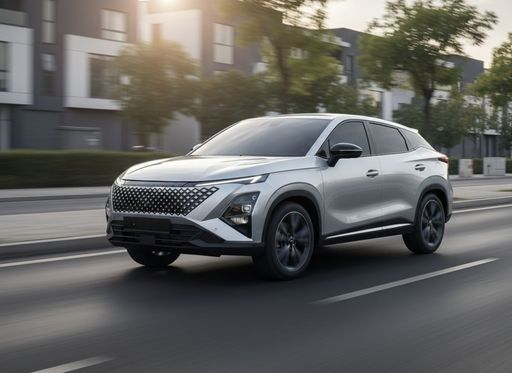
The Omoda 5 is a stylish compact crossover that catches the eye with a bold, contemporary look and a tech-forward cabin. It offers a comfortable ride and a surprisingly spacious interior, making it a practical yet distinctive choice for buyers who want modern features and solid value.
details
Land Rover Range Rover
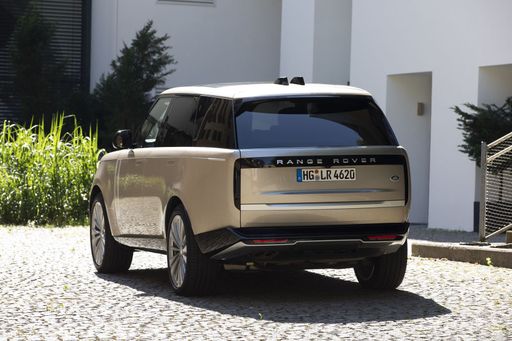
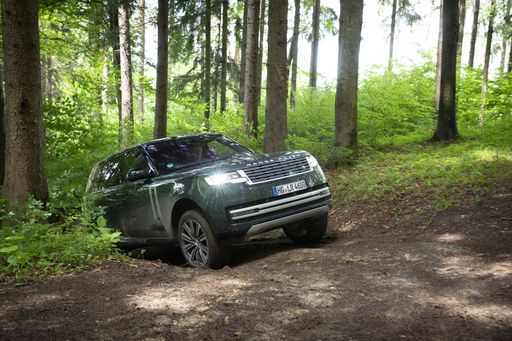
The Range Rover wraps unabashed luxury and genuine off-road capability into a silhouette that still manages to look effortlessly elegant whether parked outside a city hotel or splashing through a muddy trail. Inside, it’s a cocoon of soft leathers, refined materials and serene ride quality that makes long journeys feel like private-jet comfort — ideal for buyers who want a plush cruiser that can also go where lesser SUVs won’t.
details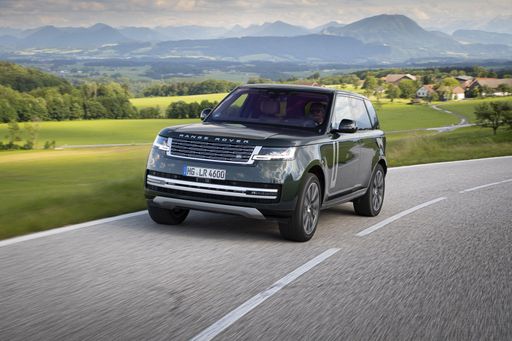

Omoda 5
Land Rover Range Rover
Costs and Consumption |
|
|---|---|
|
Price
24,800 - 31,600 £
|
Price
125,200 - 275,200 £
|
|
Consumption L/100km
5.3 L/100km
|
Consumption L/100km
2.8 - 11.8 L/100km
|
|
Consumption kWh/100km
15.9 kWh/100km
|
Consumption kWh/100km
-
|
|
Electric Range
430 km
|
Electric Range
115 - 116 km
|
|
Battery Capacity
-
|
Battery Capacity
-
|
|
co2
0 - 120 g/km
|
co2
62 - 267 g/km
|
|
Fuel tank capacity
-
|
Fuel tank capacity
-
|
Dimensions and Body |
|
|---|---|
|
Body Type
SUV
|
Body Type
Off-Roader
|
|
Seats
5
|
Seats
5 - 7
|
|
Doors
-
|
Doors
-
|
|
Curb weight
1,621 - 1,710 kg
|
Curb weight
2,504 - 2,810 kg
|
|
Trunk capacity
300 - 350 L
|
Trunk capacity
212 - 818 L
|
|
Length
-
|
Length
-
|
|
Width
1,824 - 1,830 mm
|
Width
2,047 mm
|
|
Height
-
|
Height
-
|
|
Max trunk capacity
-
|
Max trunk capacity
-
|
|
Payload
431 - 536 kg
|
Payload
645 - 846 kg
|
Engine and Performance |
|
|---|---|
|
Engine Type
Electric, Full Hybrid
|
Engine Type
Diesel MHEV, Petrol MHEV, Plugin Hybrid
|
|
Transmission
Automatic
|
Transmission
Automatic
|
|
Transmission Detail
Reduction Gearbox, Automatic Gearbox
|
Transmission Detail
Automatic Gearbox
|
|
Drive Type
Front-Wheel Drive
|
Drive Type
All-Wheel Drive
|
|
Power HP
204 - 224 HP
|
Power HP
300 - 550 HP
|
|
Acceleration 0-100km/h
7.6 - 7.9 s
|
Acceleration 0-100km/h
4.6 - 6.6 s
|
|
Max Speed
-
|
Max Speed
-
|
|
Torque
295 - 340 Nm
|
Torque
550 - 800 Nm
|
|
Number of Cylinders
4
|
Number of Cylinders
6 - 8
|
|
Power kW
150 - 165 kW
|
Power kW
221 - 405 kW
|
|
Engine capacity
1,499 cm3
|
Engine capacity
2,997 - 4,395 cm3
|
General |
|
|---|---|
|
Model Year
2026
|
Model Year
2,025 - 2,026
|
|
CO2 Efficiency Class
A, D
|
CO2 Efficiency Class
G, B
|
|
Brand
Omoda
|
Brand
Land Rover
|
DriveDuel uses data analysis and artificial intelligence to evaluate vehicle data and create content. Content is regularly reviewed and improved.
The displayed prices are estimates based on German list prices, adjusted to the respective country’s VAT. Country-specific registration taxes are not included. This information is not legally binding.