VS

Renault Clio vs Dacia Sandero comparison

Compare performance (158 HP vs 122 HP), boot space and price (17,100 £ vs 11,000 £ ) at a glance. Find out which car is the better choice for you – Renault Clio or Dacia Sandero?

Renault Clio vs Dacia Sandero: Key differences

Renault Clio

4.7 (1 Reviews)
rate
  • markedly more power
  • visibly more efficient
  • moderately quicker 0–100 km/h

Dacia Sandero

3.5 (3 Reviews)
rate
  • clearly cheaper
  • only slightly lighter
  • somewhat more trunk space

All details on performance, efficiency, range and trunk space can be found in the technical comparison below – including user reviews for both models.

Clio

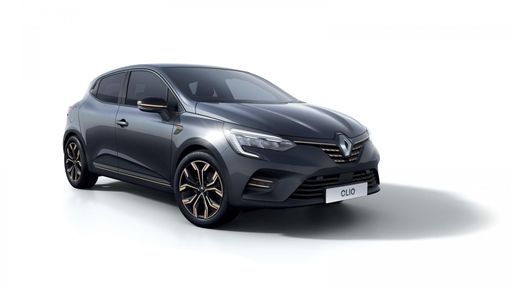
The Dacia Sandero and the Renault Clio are two popular choices in the hatchback segment, each offering a unique blend of style, performance, and practicality. While they share some similarities, such as seating capacity and front-wheel drive, they diverge significantly in terms of engine options, fuel efficiency, and technological innovations. In this comparison, we delve deep into the specifications, performance metrics, and innovations that make each model worthy of consideration.
Sandero

Engine Options and Performance

The Dacia Sandero boasts a range of powertrains, including petrol and LPG engines, delivering outputs from 67 HP to a robust 110 HP. The most powerful variant achieves 0-100 km/h acceleration in just 10 seconds, making it a nimble option in urban traffic. In contrast, the Renault Clio offers a higher-performance lineup, with its full hybrid option producing an impressive 143 HP. The Clio accelerates from 0 to 100 km/h in just 9.3 seconds, embodying a sportier disposition.

Clio

Fuel Efficiency

When it comes to fuel consumption, the Dacia Sandero is fairly economical, with figures ranging from 5.2 to 7 L/100 km depending on the engine type. The Clio outshines with even better efficiency, especially with its hybrid variant, recording just 4.3 L/100 km. This makes the Clio a more appealing option for eco-conscious buyers looking to minimize their fuel expenses.

Sandero

Dimensions and Comfort

Both models comfortably seat five passengers, but there are subtle differences in dimensions. The Sandero measures 4088 mm in length and 1848 mm in width, making it a spacious choice in the hatchback category, with a trunk capacity of 328 liters. Meanwhile, the Clio, slightly smaller at 4053 mm in length and 1798 mm in width, still offers a respectable trunk space of 301 liters in its base configuration, expanding to 391 liters in certain variants.

Clio

Modern Innovations

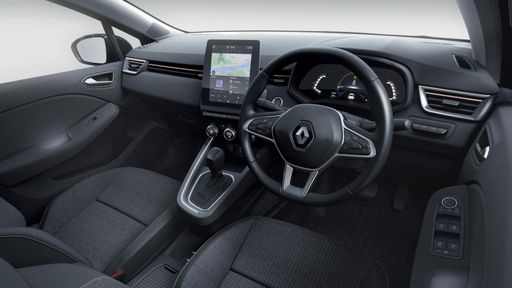
Renault has equipped the Clio with several advanced technological features, especially in its recent model year. Notable innovations include a user-friendly multimedia system with smartphone connectivity and various driver-assistance features, enhancing safety and convenience. It also offers a hybrid option, which represents a significant step towards reducing emissions.

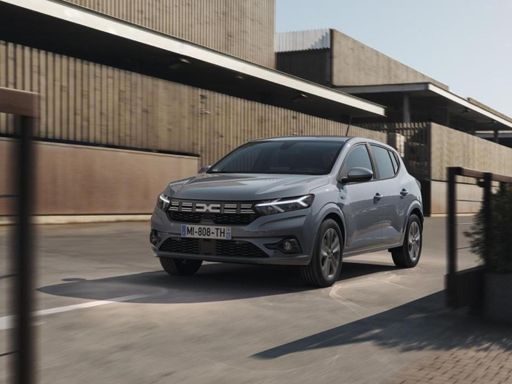
On the other hand, the Dacia Sandero, while simpler, focuses on delivering value for money with features like an intuitive infotainment system and practical interior design. The addition of LPG options is a noteworthy innovation, appealing to budget-conscious drivers looking for greener alternatives.

Sandero

Driving Experience

The handling and ride quality of both cars are tailored to provide a smooth and comfortable driving experience. The Sandero, with its slightly stiff suspension, provides a planted feel, making it suitable for both city driving and longer journeys. Conversely, the Clio's sportier chassis allows for more dynamic handling, appealing to those who prioritize driving pleasure alongside everyday usability.

Conclusion: Which is Right for You?

Choosing between the Dacia Sandero and Renault Clio ultimately hinges on individual priorities. If fuel efficiency, advanced technology, and a sporty driving experience are paramount, the Clio stands out as the clear winner. However, if budget-friendly pricing and practicality are top concerns, the Sandero makes a compelling case with its robust offerings and value proposition.

Whether you opt for the reliable Sandero or the tech-laden Clio, both vehicles offer an impressive mix of features that cater to different segments of hatchback buyers, ensuring a thoughtful decision based on your lifestyle and needs.

Here’s where it gets real: The technical differences in detail

Clio

Costs and Efficiency:

When it comes to price and running costs, the biggest differences usually appear. This is often where you see which car fits your budget better in the long run.

Dacia Sandero is clearly cheaper – starting at 11,000 £ , while the Renault Clio costs 17,100 £ . That’s a price difference of around 6,095 £.

Fuel consumption also shows a difference: the Renault Clio uses 4.1 L/100km and is visibly more efficient than the Dacia Sandero with 5.3 L/100km. The difference is about 1.2 L/100km.

Sandero

Engine and Performance:

Under the bonnet, it becomes clear which model is tuned for sportiness and which one takes the lead when you hit the accelerator.

When it comes to engine power, the Renault Clio offers markedly more power – delivering 158 HP compared to 122 HP. That’s roughly 36 HP more horsepower.

When accelerating from 0 to 100 km/h, the Renault Clio is moderately quicker – completing the sprint in 8.3 s, while the Dacia Sandero takes 9.7 s. That’s about 1.4 s quicker.

There’s also a difference in torque: the Dacia Sandero delivers only slightly more torque with 200 Nm compared to 190 Nm. That’s about 10 Nm more.

Clio

Space and Everyday Use:

Whether family car or daily driver – which one offers more room, flexibility and comfort?

Both vehicles offer seating for 5 people.

In terms of curb weight, Dacia Sandero is only slightly lighter – 1,100 kg compared to 1,202 kg. The difference is around 102 kg.

Looking at boot space, the Dacia Sandero offers somewhat more boot space – 372 L compared to 327 L. That’s a difference of about 45 L.

When it comes to payload, the Renault Clio carries very slightly more – 463 kg compared to 436 kg. That’s a difference of about 27 kg.

Who wins the race in the data check?

The Renault Clio stands well ahead of its rival in the objective data comparison.
This result only shows which model scores more points on paper – not which of the two cars feels right for you.

from £17,100
Clio

Renault Clio

  • Engine Type : Petrol, Full Hybrid
  • Transmission : Manuel, Automatic
  • Drive Type : Front-Wheel Drive
  • Power HP : 115 - 158 HP
  • Consumption L/100km : 4.1 - 5.1 L/100km
Renault Clio
Dacia Sandero

Costs and Consumption

View detailed analysis

Engine and Performance

View detailed analysis

Dimensions and Body

View detailed analysis

Renault Clio

The Clio punches above its weight with chic French styling and a surprisingly grown-up cabin that makes city driving feel effortlessly stylish. It's an easy-to-live-with choice that keeps ownership simple and even manages to put a grin on your face when the traffic gets dull.

details

Dacia Sandero

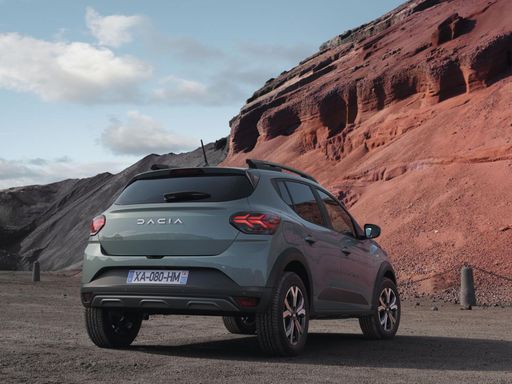
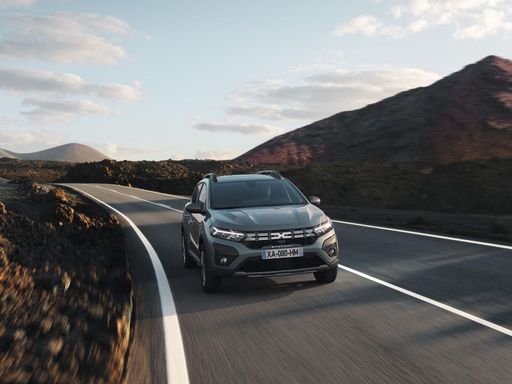
The Dacia Sandero is the everyman's hatchback — unpretentious, practical and brilliantly affordable, with sensible space and straightforward charm where it matters most. It won't wow in the premium lane, but for buyers who want honest, dependable transport without showroom theatrics, the Sandero is a clever, no‑nonsense pick that keeps running costs low and grin levels high.

details
Renault Clio
Dacia Sandero

Costs and Consumption

Price
17,100 - 23,700 £
Price
11,000 - 16,300 £
Consumption L/100km
4.1 - 5.1 L/100km
Consumption L/100km
5.3 - 7.2 L/100km
Consumption kWh/100km
-
Consumption kWh/100km
-
Electric Range
-
Electric Range
-
Battery Capacity
-
Battery Capacity
-
co2
92 - 115 g/km
co2
111 - 131 g/km
Fuel tank capacity
39 - 42 L
Fuel tank capacity
-

Dimensions and Body

Body Type
Hatchback
Body Type
Hatchback
Seats
5
Seats
5
Doors
5
Doors
-
Curb weight
1,202 - 1,316 kg
Curb weight
1,100 - 1,297 kg
Trunk capacity
301 - 327 L
Trunk capacity
372 L
Length
4,116 mm
Length
-
Width
1,768 mm
Width
1,853 mm
Height
1,451 mm
Height
-
Max trunk capacity
1,094 - 1,176 L
Max trunk capacity
-
Payload
453 - 463 kg
Payload
385 - 436 kg

Engine and Performance

Engine Type
Petrol, Full Hybrid
Engine Type
Petrol, LPG
Transmission
Manuel, Automatic
Transmission
Manuel, Automatic
Transmission Detail
Manual Gearbox, Dual-Clutch Automatic, Automatic Gearbox
Transmission Detail
Manual Gearbox, Dual-Clutch Automatic
Drive Type
Front-Wheel Drive
Drive Type
Front-Wheel Drive
Power HP
115 - 158 HP
Power HP
67 - 122 HP
Acceleration 0-100km/h
8.3 - 10.1 s
Acceleration 0-100km/h
9.7 - 16.7 s
Max Speed
180 km/h
Max Speed
-
Torque
190 Nm
Torque
95 - 200 Nm
Number of Cylinders
3 - 4
Number of Cylinders
3
Power kW
84 - 116 kW
Power kW
49 - 90 kW
Engine capacity
1,199 - 1,789 cm3
Engine capacity
999 - 1,199 cm3

General

Model Year
2,026
Model Year
2,025
CO2 Efficiency Class
C, B
CO2 Efficiency Class
D, C
Brand
Renault
Brand
Dacia
DriveDuel uses data analysis and artificial intelligence to evaluate vehicle data and create content. Content is regularly reviewed and improved. The displayed prices are estimates based on German list prices, adjusted to the respective country’s VAT. Country-specific registration taxes are not included. This information is not legally binding.