VS

Renault Clio vs Renault Symbioz comparison

Compare performance (158 HP vs 158 HP), boot space and price (17,100 £ vs 24,400 £ ) at a glance. Find out which car is the better choice for you – Renault Clio or Renault Symbioz?

Renault Clio vs Renault Symbioz: Key differences

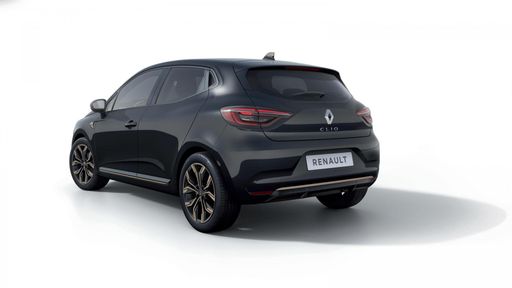
Renault Clio

4.7 (1 Reviews)
rate
  • significantly cheaper
  • very slightly more efficient
  • only slightly quicker 0–100 km/h
  • a bit lighter

Renault Symbioz

5 (3 Reviews)
rate
  • considerably more trunk space

All details on performance, efficiency, range and trunk space can be found in the technical comparison below – including user reviews for both models.

Clio

Renault Clio vs Renault Symbioz: A Clash of Icons and Innovation

When it comes to versatile and forward-thinking vehicles, Renault has a knack for delivering impressive options that capture the imagination. In this article, we delve into a fascinating comparison between two of their offerings: the beloved Renault Clio and the innovative Renault Symbioz. Both vehicles stand out in their respective categories, but which one aligns best with your automotive aspirations? Let's dive into their technical specifications and innovations to find out.
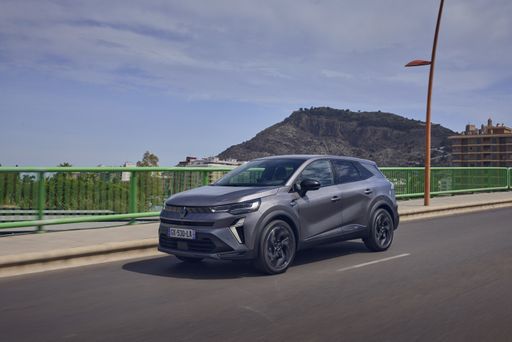
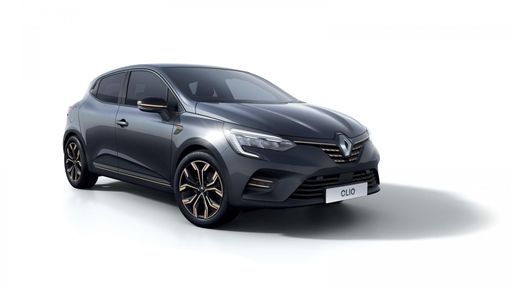
Symbioz

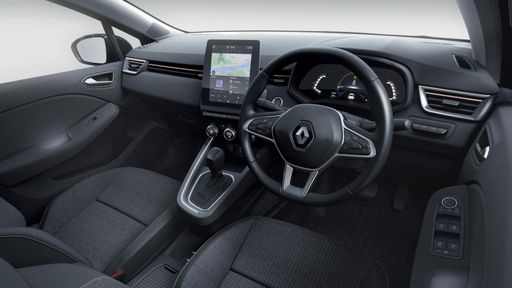
The Evergreen Hatchback: Renault Clio

The Renault Clio has long been a staple in the hatchback segment, and for good reason. It comes in various engine types, including full hybrid, petrol, and LPG, catering to a wide range of driver preferences. Whether you opt for the automatic gearbox or prefer the control a manual transmission provides, the Clio delivers a smooth ride with its front-wheel-drive powertrain.

The Clio's power ranges from 67 HP to 143 HP, with fuel consumption varying between 4.3 to 5.8 L/100km, depending on the engine choice. For environmentally conscious drivers, the Clio offers a range of CO2 outputs from 97 to 130 g/km, earning a CO2 efficiency class of either C or D, based on the variant. Its nimble acceleration rates, clocking from 0-100km/h in as little as 9.3 seconds, make the Clio a dynamic choice for urban environments.

Clio

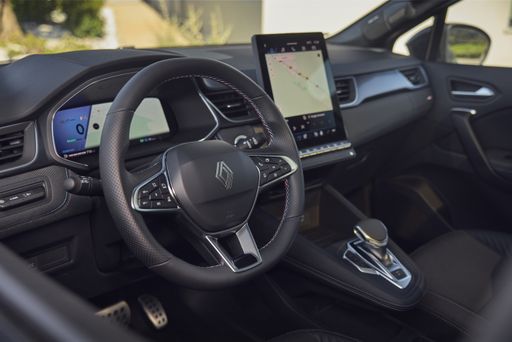
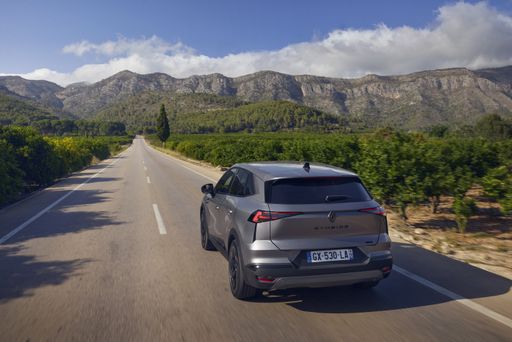
The Future-forward SUV: Renault Symbioz

The Renault Symbioz represents a leap into the future with its unique take on the SUV formula. Embodying the latest in hybrid technology, it features a full hybrid engine complemented by an automatic gearbox. The Symbioz promises not only power but also efficiency, thanks to its fuel consumption rate of 4.8 L/100km and a CO2 output of 109 g/km, securing its spot in the C efficiency class.

With 143 HP of power and a torque of 250 Nm, the Symbioz ensures a robust driving experience. Unlike the Clio, the Symbioz comes with a larger fuel tank and trunk capacity, offering 48 liters and 492 liters respectively, making it an ideal companion for longer journeys and family adventures. Its futuristic design encapsulates the potential of hybrid technology, ensuring that drivers experience both power and economy.

Symbioz

Design and Dimensions: Hatchback vs SUV

While the Clio prides itself on being a compact and agile hatchback with dimensions of 4053 mm in length, 1798 mm in width, and 1440 mm in height, the Symbioz takes a more substantial stance as an SUV with dimensions of 4413 mm in length, 1797 mm in width, and 1575 mm in height. These structural differences inherently cater to different needs; the Clio is perfect for city living, while the Symbioz provides a commanding presence for broader landscapes.

Clio

Performance and Practicality

When comparing curb weights, the Clio ranges from 1124 to 1331 kg, lighter than the Symbioz's 1498 kg, which could offer better fuel efficiency in urban scenarios. Both cars provide seating for five, but the payload capacity is where the Symbioz edges out slightly, with a payload of 427 kg compared to the Clio's maximum of 406 kg, showcasing its aptitude for heavier loads.

Symbioz

Conclusion

Both the Renault Clio and the Renault Symbioz bring compelling features to the table. The Clio with its versatility and efficient design appeals to those seeking a stylish and agile city car. Meanwhile, the Symbioz represents a step into the future, ideal for drivers desiring innovative technology packaged in a robust SUV form. Ultimately, the choice between these two distinguished Renault models hinges on your lifestyle preferences—whether you're navigating city streets or embarking on grand adventures.

Here’s where it gets real: The technical differences in detail

Clio

Costs and Efficiency:

Price and efficiency are key factors when choosing a car – and this is often where the real differences emerge.

Renault Clio is significantly cheaper – starting at 17,100 £ , while the Renault Symbioz costs 24,400 £ . That’s a price difference of around 7,371 £.

Fuel consumption also shows a difference: the Renault Clio uses 4.1 L/100km and is very slightly more efficient than the Renault Symbioz with 4.5 L/100km. The difference is about 0.4 L/100km.

Symbioz

Engine and Performance:

Power, torque and acceleration are the classic benchmarks for car enthusiasts – and here, some clear differences start to show.

Both models deliver identical power – 158 HP each.

When accelerating from 0 to 100 km/h, the Renault Clio is only slightly quicker – completing the sprint in 8.3 s, while the Renault Symbioz takes 9.1 s. That’s about 0.8 s quicker.

There’s no difference in top speed – both reach 180 km/h.

There’s also a difference in torque: the Renault Symbioz delivers markedly more torque with 265 Nm compared to 190 Nm. That’s about 75 Nm more.

Clio

Space and Everyday Use:

Whether family car or daily driver – which one offers more room, flexibility and comfort?

Both vehicles offer seating for 5 people.

In terms of curb weight, Renault Clio is a bit lighter – 1,202 kg compared to 1,359 kg. The difference is around 157 kg.

Looking at boot space, the Renault Symbioz offers considerably more boot space – 576 L compared to 327 L. That’s a difference of about 249 L.

For maximum load capacity, the Renault Symbioz offers noticeably more capacity – up to 1,682 L, about 506 L more than the Renault Clio.

When it comes to payload, the Renault Clio carries very slightly more – 463 kg compared to 459 kg. That’s a difference of about 4 kg.

Who wins the race in the data check?

The Renault Symbioz shows a few small advantages in the objective data comparison.
This result only shows which model scores more points on paper – not which of the two cars feels right for you.

from £24,400
Symbioz

Renault Symbioz

  • Engine Type : Full Hybrid, Petrol MHEV
  • Transmission : Automatic, Manuel
  • Drive Type : Front-Wheel Drive
  • Power HP : 140 - 158 HP
  • Consumption L/100km : 4.5 - 6 L/100km
Renault Clio
Renault Symbioz

Costs and Consumption

View detailed analysis

Engine and Performance

View detailed analysis

Dimensions and Body

View detailed analysis

Renault Clio

The Clio punches above its weight with chic French styling and a surprisingly grown-up cabin that makes city driving feel effortlessly stylish. It's an easy-to-live-with choice that keeps ownership simple and even manages to put a grin on your face when the traffic gets dull.

details

Renault Symbioz

The Renault Symbioz feels less like a traditional car and more like a rolling living room that's been told it's allowed to drive — its flowing lines and minimalist cabin are pure concept-car theatre that teases the future of everyday transport. For buyers with an eye for design and a taste for tech-forward ideas, the Symbioz is an alluring vision of what Renault could offer tomorrow, even if it's not yet a model you can park in your driveway.

details
Renault Clio
Renault Symbioz

Costs and Consumption

Price
17,100 - 23,700 £
Price
24,400 - 30,700 £
Consumption L/100km
4.1 - 5.1 L/100km
Consumption L/100km
4.5 - 6 L/100km
Consumption kWh/100km
-
Consumption kWh/100km
-
Electric Range
-
Electric Range
-
Battery Capacity
-
Battery Capacity
-
co2
92 - 115 g/km
co2
102 - 136 g/km
Fuel tank capacity
39 - 42 L
Fuel tank capacity
48 L

Dimensions and Body

Body Type
Hatchback
Body Type
SUV
Seats
5
Seats
5
Doors
5
Doors
5
Curb weight
1,202 - 1,316 kg
Curb weight
1,359 - 1,465 kg
Trunk capacity
301 - 327 L
Trunk capacity
492 - 576 L
Length
4,116 mm
Length
4,413 mm
Width
1,768 mm
Width
1,797 mm
Height
1,451 mm
Height
1,575 mm
Max trunk capacity
1,094 - 1,176 L
Max trunk capacity
1,682 L
Payload
453 - 463 kg
Payload
455 - 459 kg

Engine and Performance

Engine Type
Petrol, Full Hybrid
Engine Type
Full Hybrid, Petrol MHEV
Transmission
Manuel, Automatic
Transmission
Automatic, Manuel
Transmission Detail
Manual Gearbox, Dual-Clutch Automatic, Automatic Gearbox
Transmission Detail
Automatic Gearbox, Manual Gearbox, Dual-Clutch Automatic
Drive Type
Front-Wheel Drive
Drive Type
Front-Wheel Drive
Power HP
115 - 158 HP
Power HP
140 - 158 HP
Acceleration 0-100km/h
8.3 - 10.1 s
Acceleration 0-100km/h
9.1 - 11 s
Max Speed
180 km/h
Max Speed
180 km/h
Torque
190 Nm
Torque
250 - 265 Nm
Number of Cylinders
3 - 4
Number of Cylinders
4
Power kW
84 - 116 kW
Power kW
103 - 116 kW
Engine capacity
1,199 - 1,789 cm3
Engine capacity
1,332 - 1,789 cm3

General

Model Year
2,026
Model Year
2,025
CO2 Efficiency Class
C, B
CO2 Efficiency Class
C, D, E
Brand
Renault
Brand
Renault
DriveDuel uses data analysis and artificial intelligence to evaluate vehicle data and create content. Content is regularly reviewed and improved. The displayed prices are estimates based on German list prices, adjusted to the respective country’s VAT. Country-specific registration taxes are not included. This information is not legally binding.