VS

Renault Symbioz vs Dacia Jogger comparison

Compare performance (158 HP vs 158 HP), boot space and price (24,400 £ vs 15,400 £ ) at a glance. Find out which car is the better choice for you – Renault Symbioz or Dacia Jogger?

Renault Symbioz vs Dacia Jogger: Key differences

Renault Symbioz

5 (4 Reviews)
rate

Dacia Jogger

4.6 (1 Reviews)
rate
  • considerably cheaper
  • marginally quicker 0–100 km/h
  • very slightly lighter
  • very slightly more trunk space

All details on performance, efficiency, range and trunk space can be found in the technical comparison below – including user reviews for both models.

Symbioz

Introduction: A Clash of Versatility and Innovation

In the ever-evolving automotive landscape, two remarkable offerings have emerged from the Renault Group’s portfolio: the Dacia Jogger and the Renault Symbioz. While both vehicles share lineage, they cater to distinctly different markets and preferences. This comparison delves into the technical aspects, features, and innovations that define these two models.
Jogger

Design and Dimensions

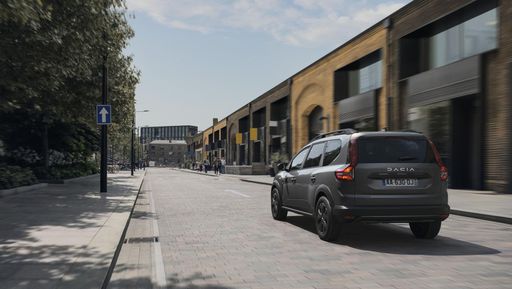
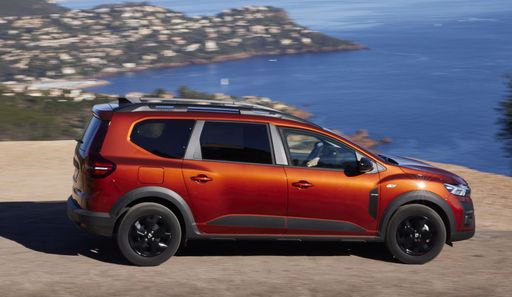
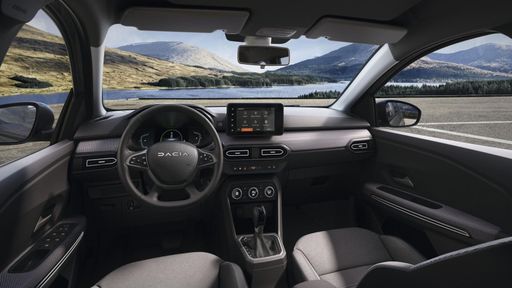
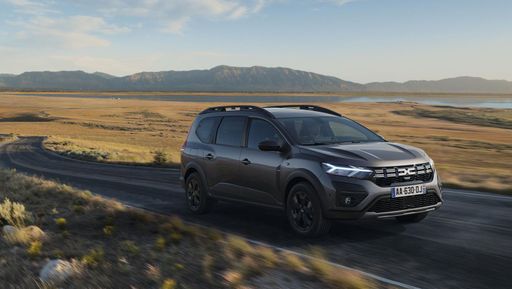
The Dacia Jogger, an MPV, boasts a practical design that caters to families and those requiring ample cargo space. Measuring 4547 mm in length and with a cargo capacity of up to 607 liters, it positions itself as a versatile transport solution.

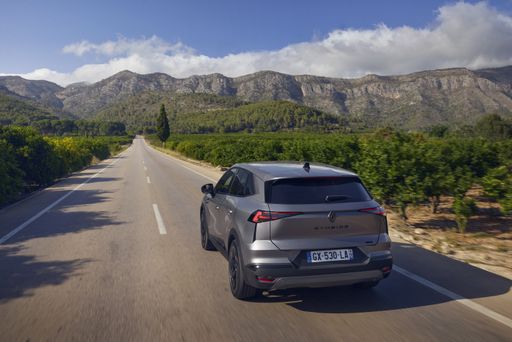
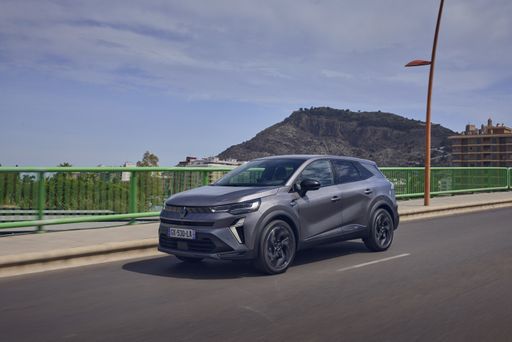
On the other hand, the Renault Symbioz is a sleek, modern SUV with a length of 4413 mm. While slightly shorter, it still offers a respectable trunk capacity of 492 liters, making it a good option for city driving and weekend adventures.

Symbioz

Powertrains: Efficiency Meets Performance

Under the hood, the Dacia Jogger provides a range of engine options including a full hybrid, LPG, and petrol engines, with power outputs varying from 91 HP to 140 HP. This flexibility allows it to cater to diverse driving needs, whether through urban commuting or longer road trips.

The Renault Symbioz, on the other hand, is powered by a single full hybrid engine rated at 143 HP. This focuses on providing a smooth and efficient driving experience with impressive fuel consumption figures around 4.8 L/100km.

Jogger

Transmission and Drive Experience

Both vehicles offer front-wheel drive configurations, making them suitable for a variety of road conditions. The Jogger comes with options for either an automatic or manual gearbox, while the Symbioz is equipped solely with an automatic gearbox, ensuring ease of use in urban settings.

Symbioz

Performance Metrics: Acceleration and Speed

In terms of performance, the Dacia Jogger showcases impressive numbers given its utility orientation, with a 0-100 km/h acceleration time ranging between 9.8 to 13.2 seconds depending on the engine choice. The top speed peaks at 167 km/h.

Conversely, the Renault Symbioz, with its hybrid focus, achieves 0-100 km/h in a respectable 10.6 seconds and has a maximum speed of 170 km/h. Both vehicles strike a balance between performance and practicality but cater to different driving experiences.

Jogger

Technological Innovations

Technological advancements play a crucial role in today’s vehicles. The Dacia Jogger incorporated innovations such as advanced safety features and efficient hybrid technology, making it an appealing choice for family-oriented consumers.

The Renault Symbioz pushes the boundaries with smart connectivity and autonomous driving features, aligning with modern trends in vehicle technology. This focus on tech makes it attractive to tech-savvy customers seeking an innovative driving experience.

Environmental Considerations

As environmental awareness grows, both models offer commendable CO2 efficiency. The Dacia Jogger ranges from a CO2 output of 105 g/km to 137 g/km, depending on the engine configuration, while the Renault Symbioz presents a slightly lower output of 109 g/km, highlighting its hybrid technology benefits.

Conclusion: Choosing Between Family Utility and Innovative Technology

The Dacia Jogger and Renault Symbioz each have distinct advantages that appeal to different segments of the market. The Jogger stands out as a versatile family vehicle, prioritizing space and practicality, while the Symbioz offers a glimpse into the future with its hybrid technology and innovative features. Ultimately, the choice between these two vehicles boils down to personal preferences—whether you seek the robustness of an MPV or the cutting-edge experience of a modern SUV.

Here’s where it gets real: The technical differences in detail

Symbioz

Costs and Efficiency:

Price and efficiency are key factors when choosing a car – and this is often where the real differences emerge.

Dacia Jogger is considerably cheaper – starting at 15,400 £ , while the Renault Symbioz costs 24,400 £ . That’s a price difference of around 9,008 £.

Both cars consume an average of 4.5 L/100km – no difference here.

Jogger

Engine and Performance:

Power, torque and acceleration say a lot about how a car feels on the road. This is where you see which model delivers more driving dynamics.

Both models deliver identical power – 158 HP each.

When accelerating from 0 to 100 km/h, the Dacia Jogger is marginally quicker – completing the sprint in 8.9 s, while the Renault Symbioz takes 9.1 s. That’s about 0.2 s quicker.

There’s also a difference in torque: the Renault Symbioz delivers noticeably more torque with 265 Nm compared to 200 Nm. That’s about 65 Nm more.

Symbioz

Space and Everyday Use:

Beyond pure performance, interior space and usability matter most in daily life. This is where you see which car is more practical and versatile.

Seats: Dacia Jogger offers more seats – 7 vs 5.

In terms of curb weight, Dacia Jogger is very slightly lighter – 1,268 kg compared to 1,359 kg. The difference is around 91 kg.

Looking at boot space, the Dacia Jogger offers very slightly more boot space – 607 L compared to 576 L. That’s a difference of about 31 L.

When it comes to payload, the Dacia Jogger carries somewhat more – 559 kg compared to 459 kg. That’s a difference of about 100 kg.

Who wins the race in the data check?

The Dacia Jogger is far ahead overall in the objective data comparison.
This result only shows which model scores more points on paper – not which of the two cars feels right for you.

from £15,400
Jogger

Dacia Jogger

  • Engine Type : Petrol, Full Hybrid, LPG
  • Transmission : Manuel, Automatic
  • Drive Type : Front-Wheel Drive
  • Power HP : 110 - 158 HP
  • Consumption L/100km : 4.5 - 7.6 L/100km
Renault Symbioz
Dacia Jogger

Costs and Consumption

View detailed analysis

Engine and Performance

View detailed analysis

Dimensions and Body

View detailed analysis

Renault Symbioz

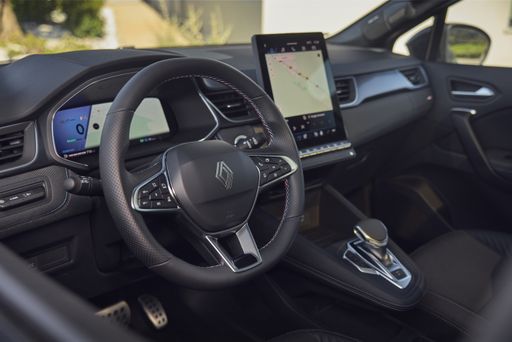
The Renault Symbioz feels less like a traditional car and more like a rolling living room that's been told it's allowed to drive — its flowing lines and minimalist cabin are pure concept-car theatre that teases the future of everyday transport. For buyers with an eye for design and a taste for tech-forward ideas, the Symbioz is an alluring vision of what Renault could offer tomorrow, even if it's not yet a model you can park in your driveway.

details

Dacia Jogger

The Dacia Jogger is a no-nonsense family mover that stretches the idea of value with cavernous practicality and flexible space, perfect for buyers who need a sensible, everyday Swiss Army knife on wheels. It doesn’t try to be glamorous — instead it wins hearts with cheerful thrift, durable materials and honest engineering, giving you useful transport without the pretence.

details
Renault Symbioz
Dacia Jogger

Costs and Consumption

Price
24,400 - 30,700 £
Price
15,400 - 23,500 £
Consumption L/100km
4.5 - 6 L/100km
Consumption L/100km
4.5 - 7.6 L/100km
Consumption kWh/100km
-
Consumption kWh/100km
-
Electric Range
-
Electric Range
-
Battery Capacity
-
Battery Capacity
-
co2
102 - 136 g/km
co2
103 - 138 g/km
Fuel tank capacity
48 L
Fuel tank capacity
-

Dimensions and Body

Body Type
SUV
Body Type
MPV
Seats
5
Seats
5 - 7
Doors
5
Doors
-
Curb weight
1,359 - 1,465 kg
Curb weight
1,268 - 1,463 kg
Trunk capacity
492 - 576 L
Trunk capacity
160 - 607 L
Length
4,413 mm
Length
-
Width
1,797 mm
Width
1,784 mm
Height
1,575 mm
Height
-
Max trunk capacity
1,682 L
Max trunk capacity
-
Payload
455 - 459 kg
Payload
384 - 559 kg

Engine and Performance

Engine Type
Full Hybrid, Petrol MHEV
Engine Type
Petrol, Full Hybrid, LPG
Transmission
Automatic, Manuel
Transmission
Manuel, Automatic
Transmission Detail
Automatic Gearbox, Manual Gearbox, Dual-Clutch Automatic
Transmission Detail
Manual Gearbox, Automatic Gearbox, Dual-Clutch Automatic
Drive Type
Front-Wheel Drive
Drive Type
Front-Wheel Drive
Power HP
140 - 158 HP
Power HP
110 - 158 HP
Acceleration 0-100km/h
9.1 - 11 s
Acceleration 0-100km/h
8.9 - 12 s
Max Speed
180 km/h
Max Speed
-
Torque
250 - 265 Nm
Torque
190 - 200 Nm
Number of Cylinders
4
Number of Cylinders
3 - 4
Power kW
103 - 116 kW
Power kW
81 - 116 kW
Engine capacity
1,332 - 1,789 cm3
Engine capacity
999 - 1,789 cm3

General

Model Year
2,025
Model Year
2,025
CO2 Efficiency Class
C, D, E
CO2 Efficiency Class
D, E, C
Brand
Renault
Brand
Dacia
DriveDuel uses data analysis and artificial intelligence to evaluate vehicle data and create content. Content is regularly reviewed and improved. The displayed prices are estimates based on German list prices, adjusted to the respective country’s VAT. Country-specific registration taxes are not included. This information is not legally binding.