VS

Subaru Crosstrek vs Toyota Yaris Cross comparison

Compare performance (136 HP vs 130 HP), boot space and price (29,900 £ vs 23,700 £ ) at a glance. Find out which car is the better choice for you – Subaru Crosstrek or Toyota Yaris Cross?

Subaru Crosstrek vs Toyota Yaris Cross: Key differences

Subaru Crosstrek

4.3 (4 Reviews)
rate
  • barely more power
details

Toyota Yaris Cross

4.2 (19 Reviews)
rate
  • noticeably cheaper
  • substantially more efficient
  • very slightly quicker 0–100 km/h
  • markedly lighter
  • noticeably more trunk space
details

All details on performance, efficiency, range and trunk space can be found in the technical comparison below – including user reviews for both models.

By Achim Sedelmaier

Crosstrek

Quick take: Subaru Crosstrek VS Toyota Yaris Cross

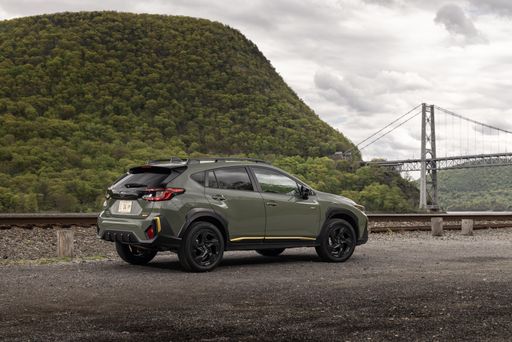
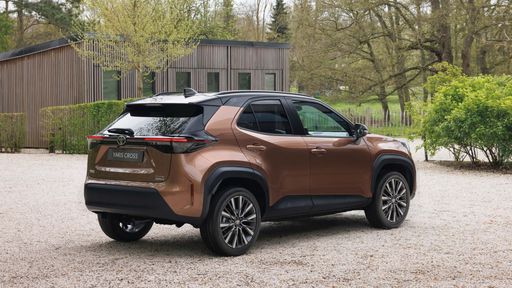
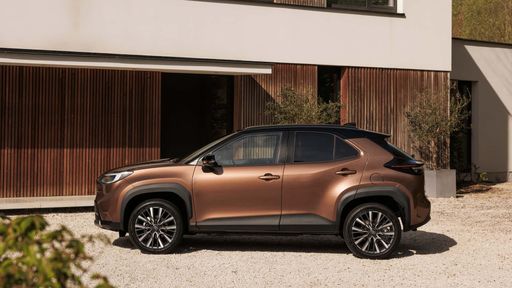
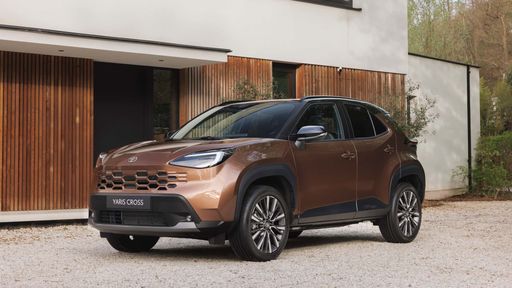
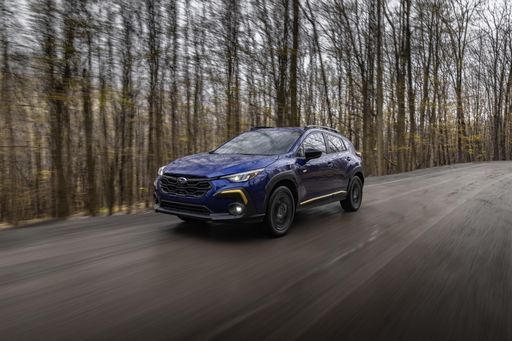
Subaru Crosstrek VS Toyota Yaris Cross sets up a clear choice between rugged all‑weather competence and everyday hybrid efficiency. The Subaru Crosstrek arrives with genuine permanent all‑wheel traction, a higher ride and a calm, comfort‑biased chassis that feels at home on muddy tracks and snowy lanes. The Toyota Yaris Cross presents itself as a city‑savvy, full‑hybrid small SUV that keeps fuel bills low and cargo space sensible for everyday life. Between them the decision is less about spec sheets and more about whether you value seasonal traction and composure or economy and usable boot space in daily driving. Below we map those real‑world trade‑offs so you can tell which car fits your life before we dive into the numbers.
Yaris Cross

Driving character and on‑road behavior

The Subaru Crosstrek drives like a little grown‑up SUV — steady, planted and forgiving, with its permanent all‑wheel drive stepping in where front‑wheel cars would struggle. That security comes with a relaxed power delivery and a CVT personality that can sound strained under brisk acceleration, so it rewards calm progress rather than sporty bursts. The Toyota Yaris Cross feels lighter on its feet around town, using its hybrid system to mask engine effort during normal cruising, but under hard throttle the three‑cylinder package becomes noticeably vocal. If you tackle unpaved access roads or live where winters bite, the Crosstrek’s traction and higher ground clearance make everyday driving less stressful; if most of your miles are urban or commuter routes, the Yaris Cross’s agility and hybrid smoothing will feel more natural.

Crosstrek

Comfort and long‑distance use

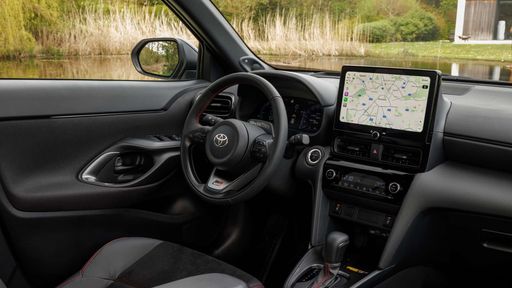
On long runs the Subaru Crosstrek leans into comfort: supple suspension, supportive front seats and a generally relaxed ride that soaks up rough surfaces better than its rivals. That softness brings occasional body motion on quick direction changes, and the boxer‑engine/CVT combo will raise cabin noise when you ask for brisk overtakes. The Toyota Yaris Cross is firm and efficient at speed; the updated model improved insulation and infotainment responsiveness, but it still transmits more mechanical and wind noise under load than the Crosstrek. For motorway miles the Crosstrek feels more at ease for occupants seeking plushness, while the Yaris Cross rewards those who prioritise lower consumption even if the trip is a bit noisier.

Yaris Cross

Practicality, cabin feel and usability

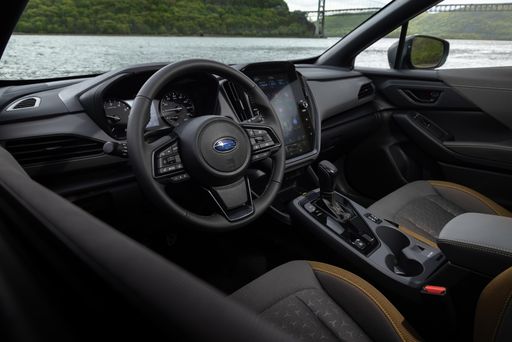
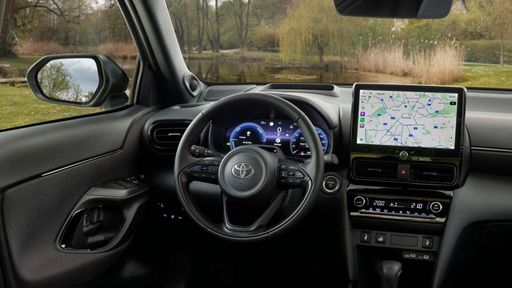
Inside the Subaru Crosstrek you get a rugged, functional cabin with lots of real buttons and good forward visibility, but haptics and surface quality trend utilitarian rather than premium. Its boot is shallower and the loading lip sits high, which curbs usefulness for bulky luggage despite the car’s overall outdoorsy look. The Toyota Yaris Cross delivers a surprisingly roomy and practical boot in its two‑wheel versions with a flexible load floor that eases day‑to‑day chores, though the optional all‑wheel system noticeably eats into cargo volume. Rear passengers feel the difference too: the Crosstrek offers decent legroom but tighter headspace in places, while the Yaris Cross’s back seat is snug for tall adults despite the roomier luggage area up front.

Crosstrek

City friendliness and running costs

City dwellers will immediately notice the Yaris Cross’s hybrid advantage: it coasted through urban driving with much lower consumption and a smooth stop‑start experience that trims fuel bills and stress. The Subaru Crosstrek is comfortable in town but drinks more fuel and has more frequent servicing needs, so ownership costs add up faster if you do lots of short trips. Manoeuvrability and parking tilt toward the Yaris Cross thanks to its compact feel and nimble controls, while the Crosstrek’s higher ride height and clearer sightlines make slow‑speed driving around potholes and steep driveways easier. If low running costs are a priority, the Toyota is the pragmatic choice; if you value confidence in poor surfaces and seasons, the Subaru pays back in capability rather than pennies saved at the pump.

Yaris Cross

Buyer fit: who should pick which car?

Choose the Subaru Crosstrek if your life includes snowy commutes, gravel tracks, or regular family trips where ground clearance, solid traction and a relaxed ride matter more than every last mile per litre. Opt for the Toyota Yaris Cross if your priority is economical daily commuting, easy parking, and a class‑leading usable boot (provided you don’t fit the AWD option that shrinks it). Both cars sell themselves on safety and practicality, but in different ways: the Crosstrek leans into all‑weather reassurance and comfort, the Yaris Cross into low running costs and urban convenience. Read on to the technical comparison to see how these everyday differences map back to drivetrain, weight and cargo design — the numbers explain why each car behaves the way it does.

Here’s where it gets real: The technical differences in detail

Crosstrek

Costs and Efficiency:

When it comes to price and running costs, the biggest differences usually appear. This is often where you see which car fits your budget better in the long run.

Toyota Yaris Cross is noticeably cheaper – starting at 23,700 £ , while the Subaru Crosstrek costs 29,900 £ . That’s a price difference of around 6,214 £.

Fuel consumption also shows a difference: the Toyota Yaris Cross uses 4.5 L/100km and is substantially more efficient than the Subaru Crosstrek with 7.7 L/100km. The difference is about 3.2 L/100km.

Yaris Cross

Engine and Performance:

Under the bonnet, it becomes clear which model is tuned for sportiness and which one takes the lead when you hit the accelerator.

When it comes to engine power, the Subaru Crosstrek offers barely more power – delivering 136 HP compared to 130 HP. That’s roughly 6 HP more horsepower.

When accelerating from 0 to 100 km/h, the Toyota Yaris Cross is very slightly quicker – completing the sprint in 10.7 s, while the Subaru Crosstrek takes 10.8 s. That’s about 0.1 s quicker.

Crosstrek

Space and Everyday Use:

Cabin size, boot volume and payload all play a role in everyday practicality. Here, comfort and flexibility make the difference.

Both vehicles offer seating for 5 people.

In terms of curb weight, Toyota Yaris Cross is markedly lighter – 1,180 kg compared to 1,595 kg. The difference is around 415 kg.

Looking at boot space, the Toyota Yaris Cross offers noticeably more boot space – 397 L compared to 315 L. That’s a difference of about 82 L.

When it comes to payload, the Toyota Yaris Cross carries marginally more – 510 kg compared to 505 kg. That’s a difference of about 5 kg.

Who wins the race in the data check?

The Toyota Yaris Cross holds a decisive overall lead in the objective data comparison.
This result only shows which model scores more points on paper – not which of the two cars feels right for you.

from £23,700
Yaris Cross

Toyota Yaris Cross

  • Engine Type Full Hybrid
  • Transmission Automatic
  • Drive Type Front-Wheel Drive, All-Wheel Drive
  • Power HP 116 - 130 HP
  • Consumption L/100km 4.5 - 4.8 L/100km
Subaru Crosstrek
Toyota Yaris Cross

Costs and Consumption

View detailed analysis

Engine and Performance

View detailed analysis

Dimensions and Body

View detailed analysis

Subaru Crosstrek

The Subaru Crosstrek is a compact, go-anywhere crossover that blends rugged good looks with Subaru's familiar all-wheel-drive confidence, so it feels equally at home on backroads and in the supermarket car park. It delivers practical, reliable transport with a comfy ride and sensible features — not the flashiest cabin, but great for buyers who prefer substance over sparkle.

details

Toyota Yaris Cross

The Toyota Yaris Cross blends the maneuverability of a small hatch with the higher driving position and practicality of a crossover, wrapped in Toyota's dependable build quality. It suits urban buyers who need easy parking, flexible cargo space and a comfortable, economical daily driver.

details
Subaru Crosstrek
Toyota Yaris Cross

Costs and Consumption

Price
29,900 - 35,000 £
Price
23,700 - 34,300 £
Consumption L/100km
7.7 L/100km
Consumption L/100km
4.5 - 4.8 L/100km
Consumption kWh/100km
-
Consumption kWh/100km
-
Electric Range
-
Electric Range
-
Battery Capacity
-
Battery Capacity
-
co2
174 g/km
co2
101 - 108 g/km
Fuel tank capacity
-
Fuel tank capacity
-

Dimensions and Body

Body Type
SUV
Body Type
SUV
Seats
5
Seats
5
Doors
-
Doors
-
Curb weight
1,595 - 1,628 kg
Curb weight
1,180 - 1,290 kg
Trunk capacity
315 L
Trunk capacity
320 - 397 L
Length
-
Length
-
Width
1,800 mm
Width
1,765 mm
Height
-
Height
-
Max trunk capacity
-
Max trunk capacity
-
Payload
472 - 505 kg
Payload
485 - 510 kg

Engine and Performance

Engine Type
Petrol MHEV
Engine Type
Full Hybrid
Transmission
Automatic
Transmission
Automatic
Transmission Detail
CVT
Transmission Detail
CVT
Drive Type
All-Wheel Drive
Drive Type
Front-Wheel Drive, All-Wheel Drive
Power HP
136 HP
Power HP
116 - 130 HP
Acceleration 0-100km/h
10.8 s
Acceleration 0-100km/h
10.7 - 11.3 s
Max Speed
-
Max Speed
-
Torque
182 Nm
Torque
-
Number of Cylinders
4
Number of Cylinders
3
Power kW
100 kW
Power kW
85 - 96 kW
Engine capacity
1,995 cm3
Engine capacity
1,490 cm3

General

Model Year
2026
Model Year
2026
CO2 Efficiency Class
F
CO2 Efficiency Class
C
Brand
Subaru
Brand
Toyota
DriveDuel uses data analysis and artificial intelligence to evaluate vehicle data and create content. Content is regularly reviewed and improved. The displayed prices are estimates based on German list prices, adjusted to the respective country’s VAT. Country-specific registration taxes are not included. This information is not legally binding.