VS

Tesla Model Y vs Ford Capri comparison

Compare performance (460 HP vs 340 HP), boot space and price (34,300 £ vs 36,300 £ ) at a glance. Find out which car is the better choice for you – Tesla Model Y or Ford Capri?

Tesla Model Y vs Ford Capri: Key differences

Tesla Model Y

4.5 (8 Reviews)
rate
  • only slightly cheaper
  • noticeably more power
  • very slightly more efficient
  • significantly quicker 0–100 km/h
  • marginally lighter
  • clearly more trunk space
details

Ford Capri

4.8 (4 Reviews)
rate
  • barely more electric range
details

All details on performance, efficiency, range and trunk space can be found in the technical comparison below – including user reviews for both models.

By Achim Sedelmaier

Model Y

In the world of electric vehicles, the competition is fierce, and two standout candidates are the Ford Capri and the Tesla Model Y. Both vehicles represent the future of automotive engineering with their unique features, environmental commitments, and advanced technologies. However, they are tailored for different audiences, which gives each its own set of advantages. Let’s delve into a detailed comparison of these innovative electric SUVs.
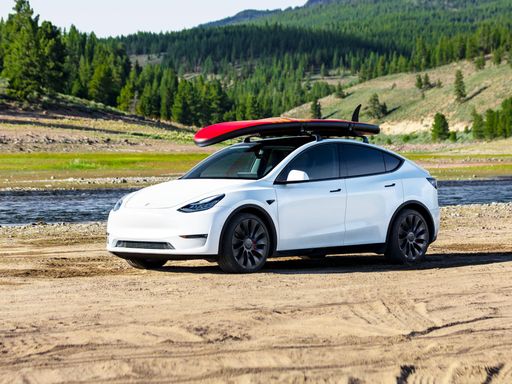
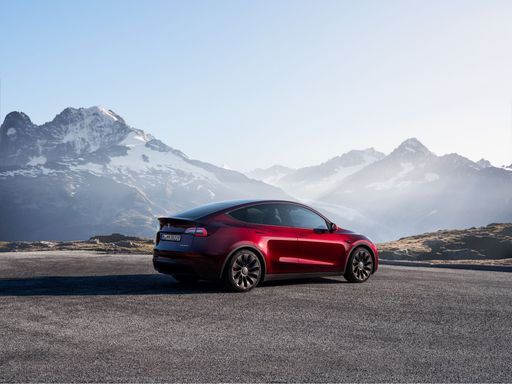
Capri

Design and Dimensions

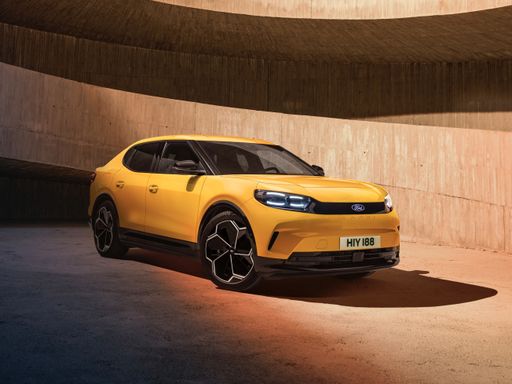
The Ford Capri boasts dimensions of 4634 mm in length, 1872 mm in width, and 1626 mm in height, making it a compact yet spacious SUV. With a trunk capacity ranging from 567 to 572 liters, it strikes a balance between practicality and style. On the other hand, the Tesla Model Y is slightly larger, measuring 4751 mm in length, 1921 mm in width, and 1624 mm in height. It offers an impressive trunk capacity of up to 854 liters, which makes it appealing for families and those needing extra storage.

Model Y

Performance and Powertrain

When it comes to performance, the Ford Capri delivers a range of power options with outputs starting from 286 HP to 340 HP. The electric SUV can accelerate from 0 to 100 km/h in as low as 5.3 seconds and achieves a top speed of 180 km/h, thanks to its well-designed rear-wheel and all-wheel drive systems.

In contrast, the Tesla Model Y offers even more potent performance variants, with power outputs ranging from 299 HP all the way up to 534 HP. With a blistering acceleration of just 3.7 seconds from 0 to 100 km/h in its most powerful variant, the Model Y reaches a maximum speed of 250 km/h. The diverse options bolster its appeal for those craving speed and power on the road.

Capri

Energy Efficiency and Range

Both vehicles utilize electric powertrains that promote environmental sustainability. The Ford Capri reveals commendable energy consumption figures between 13.3 to 15.8 kWh/100 km while providing an electric range of up to 627 km in select variants. This makes the Capri a solid choice for long-distance travel without frequent recharging.

On the Tesla side, the Model Y offers a range that extends up to 600 km, but with slightly higher energy consumption figures that can reach up to 17.3 kWh/100 km. The decision on which vehicle might be suitable here leans towards personal requirements — whether it's more about maximum range or efficiency depending on daily driving habits.

Model Y

Interior and Technology Features

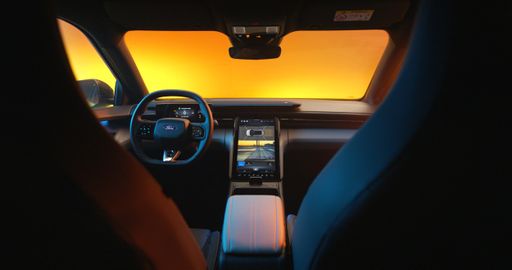
Inside, the Ford Capri intends to offer a modern and high-tech cabin experience with spacious seating for up to five passengers. It prioritizes comfort and convenience, featuring multiple configurations to enhance the driving experience. However, specifics about technological innovations are still being unveiled.

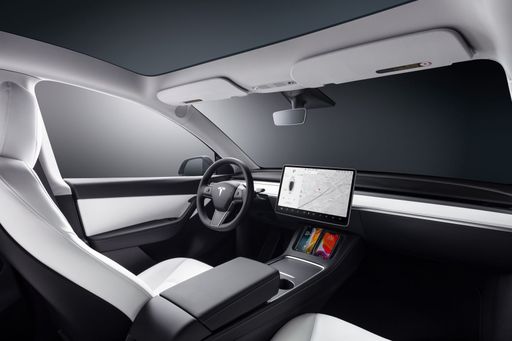
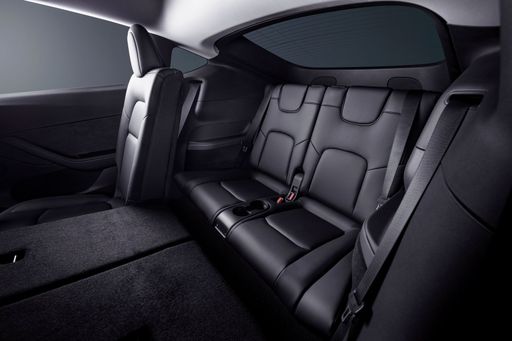
Conversely, the Tesla Model Y is renowned for its minimalist yet technologically advanced interior, including a large 15-inch central touchscreen that controls most vehicle functions. Its ability to provide over-the-air software updates continuously enhances its features over time. The Model Y also offers an optional third row, accommodating up to seven passengers, making it exceptionally versatile for larger groups.

Conclusion

Both the Ford Capri and Tesla Model Y showcase significant advancements in electric vehicle technology, yet they cater to different segments of consumers. The Capri emphasizes efficiency, practicality, and a traditional SUV feel, while the Tesla Model Y shines with high performance, tech-savvy innovations, and superior range. Ultimately, the choice between the two will depend on individual preferences, whether one prefers a more hands-on, engaging driving experience or a technologically rich ecosystem. As the electric vehicle market continues to grow, both Ford and Tesla are well-positioned to lead the way.

Here’s where it gets real: The technical differences in detail

Model Y

Costs and Efficiency:

Price and efficiency are often the first things buyers look at. Here it becomes clear which model has the long-term edge – whether at the pump, the plug, or in purchase price.

Tesla Model Y is only slightly cheaper – starting at 34,300 £ , while the Ford Capri costs 36,300 £ . That’s a price difference of around 2,065 £.

In terms of energy consumption, the Tesla Model Y is very slightly more efficient: consuming 13.1 kWh/100km compared to 13.8 kWh/100km for the Ford Capri. That’s a difference of about 0.7 kWh/100km.

As for electric range, the Ford Capri offers barely more range – reaching up to 627 km, about 5 km more than the Tesla Model Y.

Capri

Engine and Performance:

Power, torque and acceleration are the classic benchmarks for car enthusiasts – and here, some clear differences start to show.

When it comes to engine power, the Tesla Model Y offers noticeably more power – delivering 460 HP compared to 340 HP. That’s roughly 120 HP more horsepower.

When accelerating from 0 to 100 km/h, the Tesla Model Y is significantly quicker – completing the sprint in 3.5 s, while the Ford Capri takes 5.3 s. That’s about 1.8 s quicker.

There’s also a difference in torque: the Ford Capri delivers marginally more torque with 679 Nm compared to 660 Nm. That’s about 19 Nm more.

Model Y

Space and Everyday Use:

Cabin size, boot volume and payload all play a role in everyday practicality. Here, comfort and flexibility make the difference.

Seats: Tesla Model Y offers more seats – 7 vs 5.

In terms of curb weight, Tesla Model Y is marginally lighter – 1,976 kg compared to 2,001 kg. The difference is around 25 kg.

Looking at boot space, the Tesla Model Y offers clearly more boot space – 836 L compared to 572 L. That’s a difference of about 264 L.

When it comes to payload, the Ford Capri carries moderately more – 587 kg compared to 472 kg. That’s a difference of about 115 kg.

Who wins the race in the data check?

The Tesla Model Y stands well ahead of its rival in the objective data comparison.
This result only shows which model scores more points on paper – not which of the two cars feels right for you.

from £34,300
Model Y

Tesla Model Y

  • Engine Type Electric
  • Transmission Automatic
  • Drive Type All-Wheel Drive, Rear-Wheel Drive
  • Power HP 299 - 460 HP
  • Consumption kWh/100km 13.1 - 16.2 kWh/100km
  • Electric Range 534 - 622 km
Tesla Model Y
Ford Capri

Costs and Consumption

View detailed analysis

Engine and Performance

View detailed analysis

Dimensions and Body

View detailed analysis

Tesla Model Y

The Tesla Model Y is a compact electric SUV that pairs practical interior space with a minimalist, tech-forward cabin that feels modern and airy. Its confident electric performance and suite of driver-assist features make everyday driving effortless, and regular software updates help the car stay fresh over time.

details

Ford Capri

The Ford Capri turned the family car into something cheekily sporty, with a long, rakish profile that still promises fun at a glance. Today it lives on as a lovable classic — easy to tinker with, enjoyable to drive and guaranteed to raise smiles at any meet.

details
Tesla Model Y
Ford Capri

Costs and Consumption

Price
34,300 - 53,100 £
Price
36,300 - 51,800 £
Consumption L/100km
-
Consumption L/100km
-
Consumption kWh/100km
13.1 - 16.2 kWh/100km
Consumption kWh/100km
13.8 - 16.5 kWh/100km
Electric Range
534 - 622 km
Electric Range
439 - 627 km
Battery Capacity
-
Battery Capacity
-
co2
0 g/km
co2
0 g/km
Fuel tank capacity
-
Fuel tank capacity
-

Dimensions and Body

Body Type
SUV
Body Type
SUV
Seats
5 - 7
Seats
5
Doors
-
Doors
-
Curb weight
1,976 - 2,108 kg
Curb weight
2,001 - 2,206 kg
Trunk capacity
822 - 836 L
Trunk capacity
572 L
Length
-
Length
-
Width
1,920 mm
Width
1,872 mm
Height
-
Height
-
Max trunk capacity
-
Max trunk capacity
-
Payload
435 - 472 kg
Payload
539 - 587 kg

Engine and Performance

Engine Type
Electric
Engine Type
Electric
Transmission
Automatic
Transmission
Automatic
Transmission Detail
Reduction Gearbox
Transmission Detail
Reduction Gearbox
Drive Type
All-Wheel Drive, Rear-Wheel Drive
Drive Type
Rear-Wheel Drive, All-Wheel Drive
Power HP
299 - 460 HP
Power HP
190 - 340 HP
Acceleration 0-100km/h
3.5 - 7.2 s
Acceleration 0-100km/h
5.3 - 8 s
Max Speed
-
Max Speed
-
Torque
420 - 660 Nm
Torque
350 - 679 Nm
Number of Cylinders
-
Number of Cylinders
-
Power kW
220 - 338 kW
Power kW
140 - 250 kW
Engine capacity
-
Engine capacity
-

General

Model Year
2,025 - 2,026
Model Year
2026
CO2 Efficiency Class
A
CO2 Efficiency Class
A
Brand
Tesla
Brand
Ford
DriveDuel uses data analysis and artificial intelligence to evaluate vehicle data and create content. Content is regularly reviewed and improved. The displayed prices are estimates based on German list prices, adjusted to the respective country’s VAT. Country-specific registration taxes are not included. This information is not legally binding.