VS

Tesla Model Y vs Polestar 4 comparison

Compare performance (460 HP vs 544 HP), boot space and price (34,300 £ vs 53,100 £ ) at a glance. Find out which car is the better choice for you – Tesla Model Y or Polestar 4?

Tesla Model Y vs Polestar 4: Key differences

Tesla Model Y

4.5 (4 Reviews)
rate
  • clearly cheaper
  • considerably more efficient
  • very slightly more electric range
  • marginally quicker 0–100 km/h
  • somewhat lighter
  • noticeably more trunk space

Polestar 4

4.8 (8 Reviews)
rate
  • somewhat more power

All details on performance, efficiency, range and trunk space can be found in the technical comparison below – including user reviews for both models.

Model Y

Looks That Stick

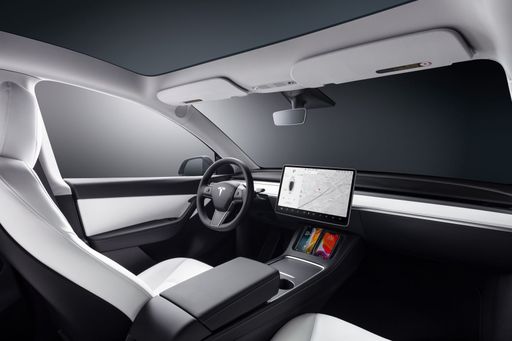
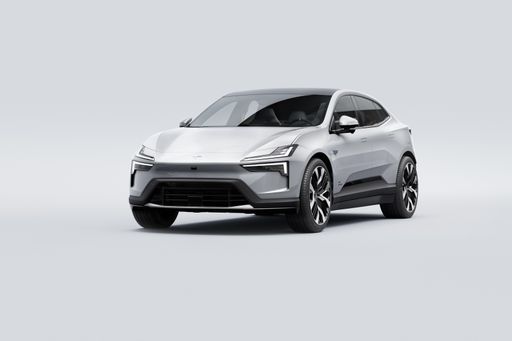
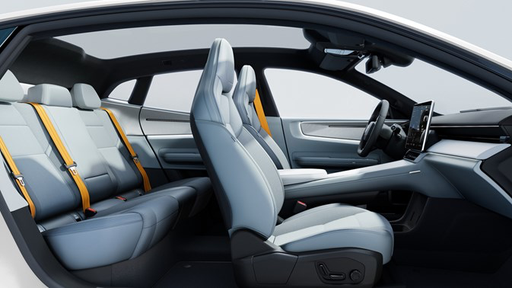
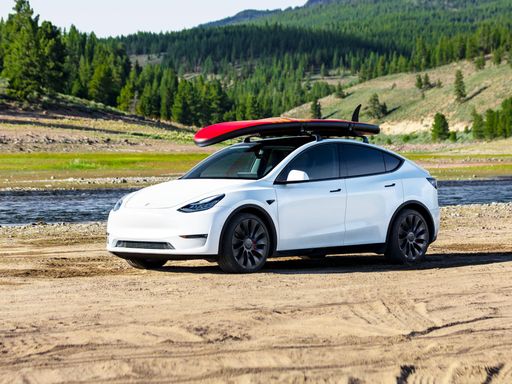
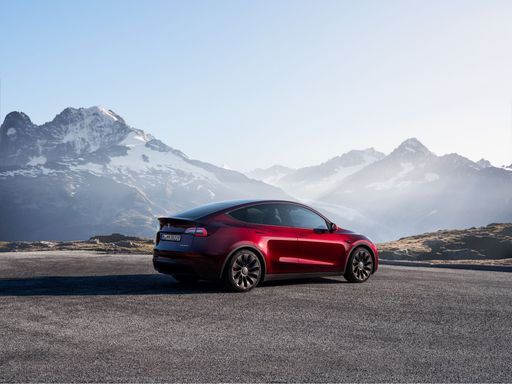
The Polestar 4 arrives like a sculpted concept that married a coupe and an SUV, its stance signalling restrained Scandinavian confidence, while the Tesla Model Y opts for familiar, functional lines that prioritise aerodynamic logic over flash. Up close, Polestar feels more boutique — materials and details lean premium — whereas the Tesla trades detail for a recognisable, pared-back aesthetic that ages predictably. Both turn heads, but they do it for different reasons: one for design intent, the other for ubiquity and subtlety on the road.
4

What It's Like Behind the Wheel

On the move the Polestar tends to feel more composed, with a chassis and steering setup that prefers measured precision and a planted confidence through corners, making it a rewarding companion for drivers who enjoy a tactile connection. The Model Y emphasises effortless thrust and a more floated, accessible driving posture that suits commuters who want pace without fuss; its delivery feels immediate and uncomplicated. Neither is a harsh taskmaster — Polestar leans toward driver engagement while Tesla leans toward smooth, relentless progress — so your preference will come down to whether you value feel or single-minded efficiency.

Model Y

Living with It Day-to-Day

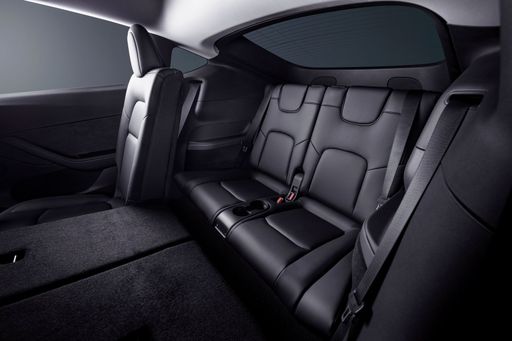
Practicality splits along clear lines: the Model Y is unapologetically practical, shaping itself around cabin versatility and the kind of space economy families and gear haulers appreciate, while the Polestar favours a refined cocoon that pampers occupants and treats daily journeys as part of the ownership experience. Both are straightforward to live with, but the Polestar rewards those who prioritise comfort and crafted interiors, whereas the Tesla rewards those who prioritise sheer usability and roominess. Either way, routine errands, school runs and weekend escapes feel comfortable, but the tone and priorities are different.

4

Tech, Screens and Human Touch

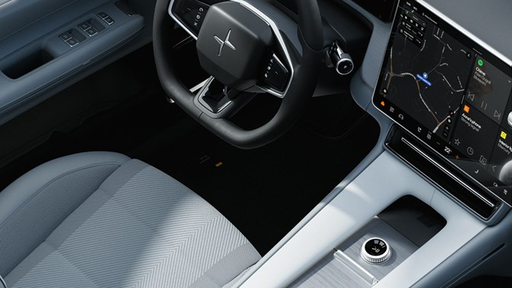
The Tesla ecosystem remains a study in simplicity: one screen, one philosophy, a seamless cloud-fed interface that invisible-izes many decisions for the owner, while the Polestar blends modern displays with tactile controls and a cabin that feels like someone cared about ergonomics as much as software. Owners who crave an intuitive, tightly integrated digital life will gravitate to the Tesla’s streamlined approach, whereas those who want a mix of digital cleverness and physical familiarity will enjoy Polestar’s more considered layout. Both cars demonstrate how tech can elevate daily driving, but they give it different personalities — one clinical and efficient, the other human and composed.

Model Y

Who Should Buy Which

If you’re a commuter who prizes maximum practicality, minimal fuss and a tech ecosystem that simplifies life, the Tesla Model Y will be hard to beat; if you’re style-conscious, value interior refinement and want your EV to feel a bit more special every day, the Polestar 4 will appeal more. Families who need flexible space and straightforward ownership habits will find comfort in Tesla’s packaging, while buyers who treat their car as a design statement will enjoy what Polestar offers. Keep reading — the DriveDuel Champion will be revealed afterwards.

Here’s where it gets real: The technical differences in detail

Model Y

Costs and Efficiency:

Price and efficiency are often the first things buyers look at. Here it becomes clear which model has the long-term edge – whether at the pump, the plug, or in purchase price.

Tesla Model Y is clearly cheaper – starting at 34,300 £ , while the Polestar 4 costs 53,100 £ . That’s a price difference of around 18,780 £.

In terms of energy consumption, the Tesla Model Y is considerably more efficient: consuming 12.7 kWh/100km compared to 17.8 kWh/100km for the Polestar 4. That’s a difference of about 5.1 kWh/100km.

As for electric range, the Tesla Model Y offers very slightly more range – reaching up to 657 km, about 37 km more than the Polestar 4.

4

Engine and Performance:

Power, torque and acceleration say a lot about how a car feels on the road. This is where you see which model delivers more driving dynamics.

When it comes to engine power, the Polestar 4 offers somewhat more power – delivering 544 HP compared to 460 HP. That’s roughly 84 HP more horsepower.

When accelerating from 0 to 100 km/h, the Tesla Model Y is marginally quicker – completing the sprint in 3.5 s, while the Polestar 4 takes 3.8 s. That’s about 0.3 s quicker.

Looking at top speed, the Tesla Model Y is marginally faster – reaching 201 km/h, while the Polestar 4 tops out at 200 km/h. The difference is around 1 km/h.

There’s also a difference in torque: the Polestar 4 delivers marginally more torque with 686 Nm compared to 660 Nm. That’s about 26 Nm more.

Model Y

Space and Everyday Use:

Cabin size, boot volume and payload all play a role in everyday practicality. Here, comfort and flexibility make the difference.

Seats: Tesla Model Y offers more seats – 7 vs 5.

In terms of curb weight, Tesla Model Y is somewhat lighter – 1,953 kg compared to 2,230 kg. The difference is around 277 kg.

Looking at boot space, the Tesla Model Y offers noticeably more boot space – 822 L compared to 526 L. That’s a difference of about 296 L.

For maximum load capacity, the Tesla Model Y offers noticeably more capacity – up to 2,138 L, about 602 L more than the Polestar 4.

When it comes to payload, the Tesla Model Y carries barely more – 472 kg compared to 455 kg. That’s a difference of about 17 kg.

Who wins the race in the data check?

The Tesla Model Y stands well ahead of its rival in the objective data comparison.
This result only shows which model scores more points on paper – not which of the two cars feels right for you.

from £34,300
Model Y

Tesla Model Y

  • Engine Type : Electric
  • Transmission : Automatic
  • Drive Type : All-Wheel Drive, Rear-Wheel Drive
  • Power HP : 299 - 460 HP
  • Consumption kWh/100km : 12.7 - 16.2 kWh/100km
  • Electric Range : 534 - 657 km
Tesla Model Y
Polestar 4

Costs and Consumption

View detailed analysis

Engine and Performance

View detailed analysis

Dimensions and Body

View detailed analysis

Tesla Model Y

The Tesla Model Y blends SUV practicality with sports-car poke, wrapping a roomy, minimalist cabin and handy hatch into a slick, aerodynamic package that feels more Silicon Valley gadget than garage ornament. It’s an ideal pick for buyers who want effortless electric driving, regular software improvements and access to Tesla’s convenient charging network, though style-conscious shoppers should know it’s more about tech and efficiency than classic luxury.

details

Polestar 4

The Polestar 4 wears a coupe-like profile and a Scandinavian-minimal interior that feels premium and unexpectedly roomy, with composed handling that makes urban driving and country roads a pleasure. For buyers who want an electric car that turns heads without shouting, the Polestar 4 is a stylish, clever choice that balances practicality with personality.

details
Tesla Model Y
Polestar 4

Costs and Consumption

Price
34,300 - 53,100 £
Price
53,100 - 59,900 £
Consumption L/100km
-
Consumption L/100km
-
Consumption kWh/100km
12.7 - 16.2 kWh/100km
Consumption kWh/100km
17.8 - 18.7 kWh/100km
Electric Range
534 - 657 km
Electric Range
590 - 620 km
Battery Capacity
64.5 - 83 kWh
Battery Capacity
94 kWh
co2
0 g/km
co2
0 g/km
Fuel tank capacity
-
Fuel tank capacity
-

Dimensions and Body

Body Type
SUV
Body Type
SUV
Seats
5 - 7
Seats
5
Doors
5
Doors
5
Curb weight
1,953 - 2,108 kg
Curb weight
2,230 - 2,355 kg
Trunk capacity
822 L
Trunk capacity
526 L
Length
4,790 - 4,797 mm
Length
4,840 mm
Width
1,920 - 1,921 mm
Width
2,008 mm
Height
1,621 - 1,624 mm
Height
1,534 mm
Max trunk capacity
2,118 - 2,138 L
Max trunk capacity
1,536 L
Payload
435 - 472 kg
Payload
455 kg

Engine and Performance

Engine Type
Electric
Engine Type
Electric
Transmission
Automatic
Transmission
Automatic
Transmission Detail
Reduction Gearbox
Transmission Detail
Reduction Gearbox
Drive Type
All-Wheel Drive, Rear-Wheel Drive
Drive Type
All-Wheel Drive, Rear-Wheel Drive
Power HP
299 - 460 HP
Power HP
272 - 544 HP
Acceleration 0-100km/h
3.5 - 7.2 s
Acceleration 0-100km/h
3.8 - 7.1 s
Max Speed
201 km/h
Max Speed
200 km/h
Torque
420 - 660 Nm
Torque
343 - 686 Nm
Number of Cylinders
-
Number of Cylinders
-
Power kW
220 - 338 kW
Power kW
200 - 400 kW
Engine capacity
-
Engine capacity
-

General

Model Year
2,025 - 2,026
Model Year
2,024
CO2 Efficiency Class
A
CO2 Efficiency Class
A
Brand
Tesla
Brand
Polestar
DriveDuel uses data analysis and artificial intelligence to evaluate vehicle data and create content. Content is regularly reviewed and improved. The displayed prices are estimates based on German list prices, adjusted to the respective country’s VAT. Country-specific registration taxes are not included. This information is not legally binding.