VS

Tesla Model Y vs VW ID.7 Touring comparison

Compare performance (460 HP vs 340 HP), boot space and price (34,300 £ vs 47,100 £ ) at a glance. Find out which car is the better choice for you – Tesla Model Y or VW ID.7 Touring?

Tesla Model Y vs VW ID.7 Touring: Key differences

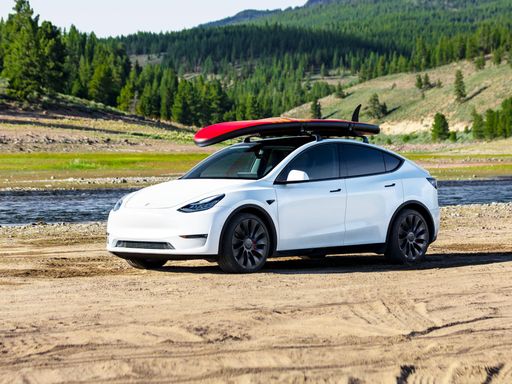
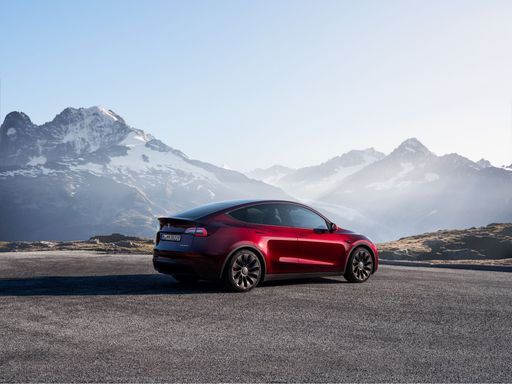
Tesla Model Y

4.5 (5 Reviews)
rate
  • clearly cheaper
  • clearly more power
  • slightly more efficient
  • substantially quicker 0–100 km/h
  • slightly lighter
  • markedly more trunk space
details

VW ID.7 Touring

5 (2 Reviews)
rate
  • only slightly more electric range
details

All details on performance, efficiency, range and trunk space can be found in the technical comparison below – including user reviews for both models.

By Achim Sedelmaier

Model Y

VW ID.7 Touring vs. Tesla Model Y: A Comprehensive Comparison

The electric vehicle (EV) market is evolving rapidly, and two of the standout players in this sector are the VW ID.7 Touring and the Tesla Model Y. Both vehicles represent a significant leap forward in automotive technology, offering innovative features, impressive performance, and eco-friendly transportation options. This comparison aims to dig deep into the specifications, performance, and innovations these models bring to the table.

ID.7 Touring

Design and Dimensions

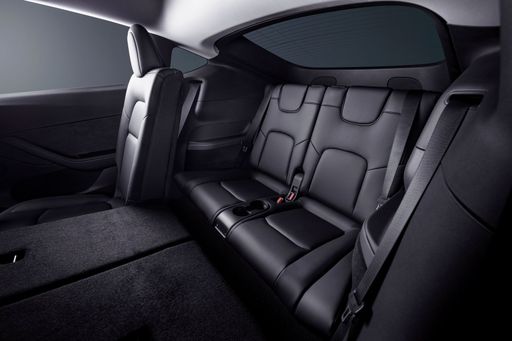
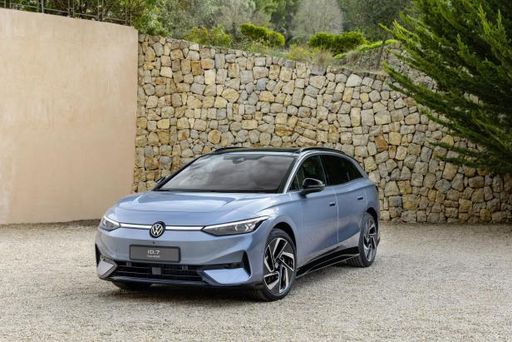
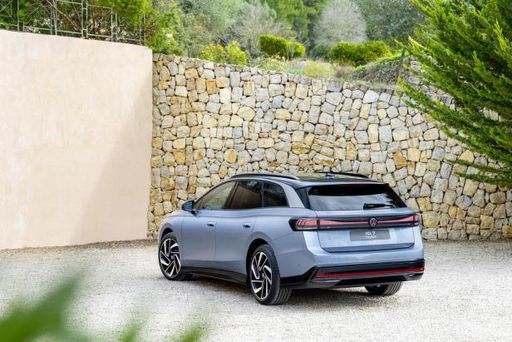
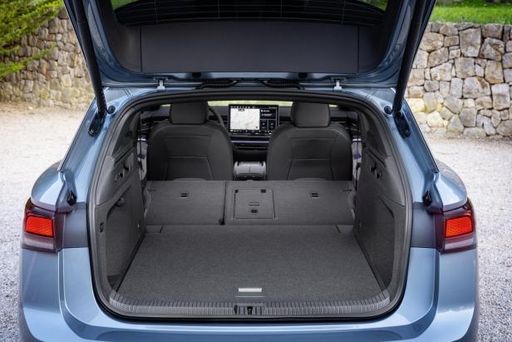
The VW ID.7 Touring is a sleek wagon, measuring 4,961 mm in length with a width of 1,862 mm and a height of up to 1,551 mm. On the other hand, the Tesla Model Y is an SUV that’s slightly more compact with a length of 4,751 mm, a width of 1,921 mm, and a height of 1,624 mm. This difference in dimensions gives the Model Y a slightly sportier stance, while the ID.7 allows for a more spacious interior with a trunk capacity of 605 liters compared to the Model Y’s variable trunk capacity of 354 liters (with 7 seats) or 854 liters (with 5 seats).

Model Y

Powertrains and Performance

Under the hood, the ID.7 Touring offers two power options: 286 HP with a rear-wheel drive (RWD) configuration and a more robust 340 HP all-wheel drive (AWD) variant. The Tesla Model Y exhibits various configurations, boasting up to 534 HP in its Performance variant. Acceleration is impressive across the board, with the ID.7 reaching 0-100 km/h in as little as 5.5 seconds, while the Model Y’s top-tier variant achieves this in just 3.7 seconds, demonstrating Tesla’s focus on performance.

ID.7 Touring

Battery Capacity and Range

Battery technology is another significant aspect in which these vehicles differ. The VW ID.7 Touring comes equipped with choices of either a 77 kWh or an 86 kWh battery, providing an electric range of up to 690 km depending on the configuration. In contrast, the Tesla Model Y offers battery capacities ranging from 62 to 79 kWh, enabling a maximum range of 600 km. This gives the ID.7 Touring an edge in long-distance travel—ideal for consumers wanting less frequent charging stops.

Model Y

Efficiency and Consumption

When looking at energy consumption, the ID.7 Touring is highly efficient, with figures showing a consumption of 14.4 kWh/100 km for the RWD model, while the Model Y's best result is around 15.7 kWh/100 km. This emphasizes the ID.7’s engineering prowess in maximizing battery usage—critical for drivers focused on sustainability and minimizing running costs.

ID.7 Touring

Interior and Technology

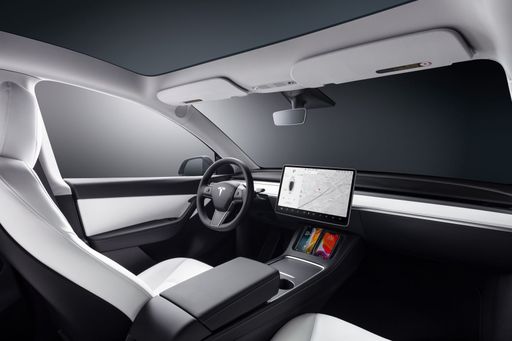
Inside the VW ID.7 Touring, the design emphasis is on space and comfort. The cabin is crafted with high-quality materials and is expected to feature the latest infotainment systems, aligning with VW's push towards a digital cockpit ideology. Tesla, however, continues to lead in tech with its minimalist design, large touchscreen interface, and robust software that enables over-the-air updates, driving assistance systems, and an extensive suite of connected services. Both vehicles offer impressive tech features, but Tesla's capabilities in software integration are tough to beat.

Model Y

Safety Features

Safety is paramount in both models, with both VW and Tesla incorporating advanced driver-assistance systems (ADAS). The Tesla Model Y features Autopilot capabilities, which allow for semi-autonomous driving, while the ID.7 Touring offers comprehensive safety features aimed at preventing collisions and enhancing driver awareness. Both brands have received high safety ratings, making them reliable choices for families and eco-conscious drivers alike.

Conclusion: Which One Reigns Supreme?

Both the VW ID.7 Touring and the Tesla Model Y have unique strengths that cater to different automotive enthusiasts. The ID.7 Touring boasts superior range and spaciousness, making it ideal for long trips and families wanting more room. Meanwhile, the Tesla Model Y impresses with performance, cutting-edge technology, and a well-established charging infrastructure. Ultimately, the decision between these two electric vehicles will depend on personal preferences regarding style, performance needs, and technological desires in the burgeoning world of electric mobility.

Here’s where it gets real: The technical differences in detail

Model Y

Costs and Efficiency:

When it comes to price and running costs, the biggest differences usually appear. This is often where you see which car fits your budget better in the long run.

Tesla Model Y is clearly cheaper – starting at 34,300 £ , while the VW ID.7 Touring costs 47,100 £ . That’s a price difference of around 12,784 £.

In terms of energy consumption, the Tesla Model Y is slightly more efficient: consuming 12.7 kWh/100km compared to 14 kWh/100km for the VW ID.7 Touring. That’s a difference of about 1.3 kWh/100km.

As for electric range, the VW ID.7 Touring offers only slightly more range – reaching up to 689 km, about 32 km more than the Tesla Model Y.

ID.7 Touring

Engine and Performance:

Power, torque and acceleration say a lot about how a car feels on the road. This is where you see which model delivers more driving dynamics.

When it comes to engine power, the Tesla Model Y offers clearly more power – delivering 460 HP compared to 340 HP. That’s roughly 120 HP more horsepower.

When accelerating from 0 to 100 km/h, the Tesla Model Y is substantially quicker – completing the sprint in 3.5 s, while the VW ID.7 Touring takes 5.5 s. That’s about 2 s quicker.

Looking at top speed, the Tesla Model Y is somewhat faster – reaching 201 km/h, while the VW ID.7 Touring tops out at 180 km/h. The difference is around 21 km/h.

There’s also a difference in torque: the VW ID.7 Touring delivers barely more torque with 679 Nm compared to 660 Nm. That’s about 19 Nm more.

Model Y

Space and Everyday Use:

Cabin size, boot volume and payload all play a role in everyday practicality. Here, comfort and flexibility make the difference.

Seats: Tesla Model Y offers more seats – 7 vs 5.

In terms of curb weight, Tesla Model Y is slightly lighter – 1,953 kg compared to 2,191 kg. The difference is around 238 kg.

Looking at boot space, the Tesla Model Y offers markedly more boot space – 822 L compared to 605 L. That’s a difference of about 217 L.

For maximum load capacity, the Tesla Model Y offers moderately more capacity – up to 2,138 L, about 424 L more than the VW ID.7 Touring.

When it comes to payload, the Tesla Model Y carries marginally more – 472 kg compared to 465 kg. That’s a difference of about 7 kg.

Who wins the race in the data check?

The Tesla Model Y is far ahead overall in the objective data comparison.
This result only shows which model scores more points on paper – not which of the two cars feels right for you.

from £34,300
Model Y

Tesla Model Y

  • Engine Type : Electric
  • Transmission : Automatic
  • Drive Type : All-Wheel Drive, Rear-Wheel Drive
  • Power HP : 299 - 460 HP
  • Consumption kWh/100km : 12.7 - 16.2 kWh/100km
  • Electric Range : 534 - 657 km
Tesla Model Y
VW ID.7 Touring

Costs and Consumption

View detailed analysis

Engine and Performance

View detailed analysis

Dimensions and Body

View detailed analysis

Tesla Model Y

The Tesla Model Y is a tech‑forward family SUV that marries blistering efficiency with enormous interior space, calm motorway manners and the obvious convenience of Tesla’s charging ecosystem and over‑the‑air updates. Its minimalist, screen‑centric cabin and rather firm ride — plus limited rear visibility and the absence of Apple CarPlay/Android Auto — are trade‑offs that will bother buyers who prioritise comfort or traditional ergonomics.

details

VW ID.7 Touring

The VW ID.7 Touring blends sleek, aerodynamic fastback looks with estate practicality, delivering an electric family car that looks grown-up and feels refined. Inside it's calm and spacious with clever storage and modern tech, swallowing suitcases and weekend plans with ease — a sensible, slightly flashy choice for buyers who want electric comfort without giving up practicality.

details
Tesla Model Y
VW ID.7 Touring

Costs and Consumption

Price
34,300 - 53,100 £
Price
47,100 - 54,900 £
Consumption L/100km
-
Consumption L/100km
-
Consumption kWh/100km
12.7 - 16.2 kWh/100km
Consumption kWh/100km
14 - 16.6 kWh/100km
Electric Range
534 - 657 km
Electric Range
584 - 689 km
Battery Capacity
64.5 - 83 kWh
Battery Capacity
77 - 86 kWh
co2
0 g/km
co2
0 g/km
Fuel tank capacity
-
Fuel tank capacity
-

Dimensions and Body

Body Type
SUV
Body Type
Estate
Seats
5 - 7
Seats
5
Doors
5
Doors
5
Curb weight
1,953 - 2,108 kg
Curb weight
2,191 - 2,336 kg
Trunk capacity
822 L
Trunk capacity
605 L
Length
4,790 - 4,797 mm
Length
4,961 mm
Width
1,920 - 1,921 mm
Width
1,862 mm
Height
1,621 - 1,624 mm
Height
1,549 - 1,551 mm
Max trunk capacity
2,118 - 2,138 L
Max trunk capacity
1,714 L
Payload
435 - 472 kg
Payload
459 - 465 kg

Engine and Performance

Engine Type
Electric
Engine Type
Electric
Transmission
Automatic
Transmission
Automatic
Transmission Detail
Reduction Gearbox
Transmission Detail
Reduction Gearbox
Drive Type
All-Wheel Drive, Rear-Wheel Drive
Drive Type
Rear-Wheel Drive, All-Wheel Drive
Power HP
299 - 460 HP
Power HP
286 - 340 HP
Acceleration 0-100km/h
3.5 - 7.2 s
Acceleration 0-100km/h
5.5 - 6.7 s
Max Speed
201 km/h
Max Speed
180 km/h
Torque
420 - 660 Nm
Torque
545 - 679 Nm
Number of Cylinders
-
Number of Cylinders
-
Power kW
220 - 338 kW
Power kW
210 - 250 kW
Engine capacity
-
Engine capacity
-

General

Model Year
2,025 - 2,026
Model Year
2024
CO2 Efficiency Class
A
CO2 Efficiency Class
A
Brand
Tesla
Brand
VW
DriveDuel uses data analysis and artificial intelligence to evaluate vehicle data and create content. Content is regularly reviewed and improved. The displayed prices are estimates based on German list prices, adjusted to the respective country’s VAT. Country-specific registration taxes are not included. This information is not legally binding.