VS

Toyota C-HR vs Mazda CX-30 comparison

Compare performance (223 HP vs 186 HP), boot space and price (29,100 £ vs 25,200 £ ) at a glance. Find out which car is the better choice for you – Toyota C-HR or Mazda CX-30?

Toyota C-HR vs Mazda CX-30: Key differences

Toyota C-HR

4.8 (2 Reviews)
rate
  • a bit more power
  • substantially more efficient
  • a bit quicker 0–100 km/h
  • marginally more trunk space

Mazda CX-30

4.6 (3 Reviews)
rate
  • slightly cheaper
  • barely lighter

All details on performance, efficiency, range and trunk space can be found in the technical comparison below – including user reviews for both models.

C-HR

The compact SUV market is vibrant and full of options, but two models that stand out are the Mazda CX-30 and the Toyota C-HR. Both vehicles offer a mix of style, performance, and innovative technology. In this comparison, we will explore the technical aspects, features, and innovations of each model to help you decide which vehicle is the right fit for you.
CX-30

Design and Dimensions

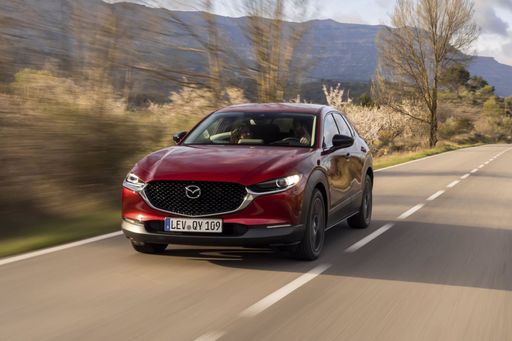
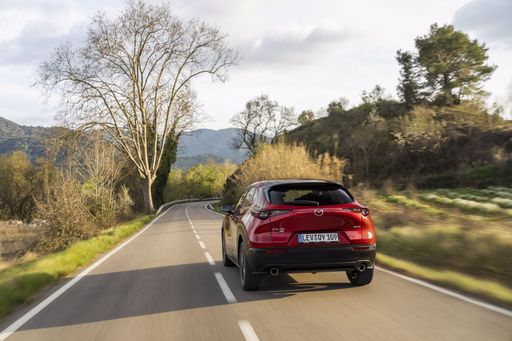
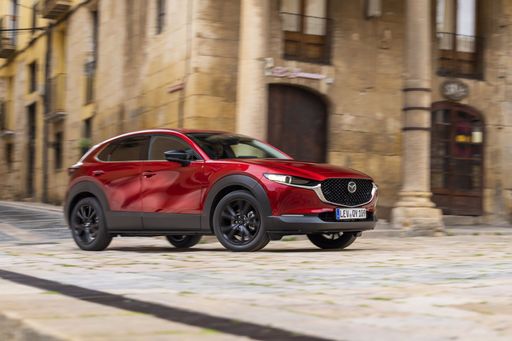
The Mazda CX-30 showcases a sleek and elegant design that reflects the brand’s Kodo design philosophy. With a length of 4,395 mm and a width of 1,795 mm, it offers a robust stance while maintaining a graceful profile. The CX-30 has a height of 1,540 mm, providing a spacious interior and good headroom for passengers.

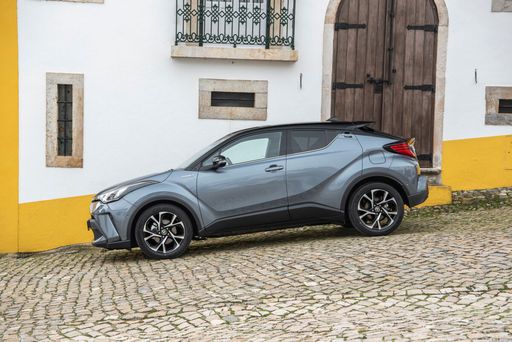
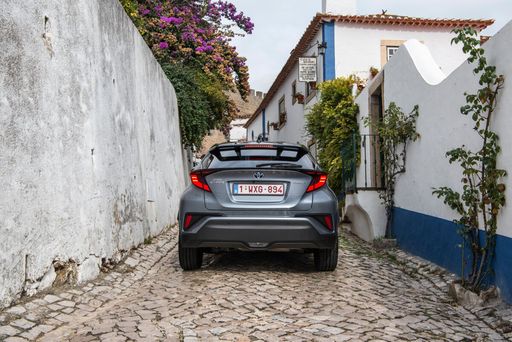
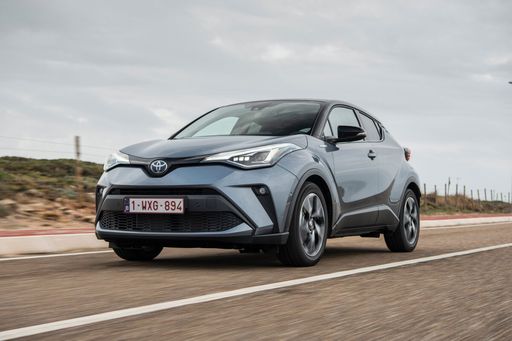
On the other hand, the Toyota C-HR presents a more dynamic and aggressive look, characterized by its sculpted body lines and distinctive silhouette. The C-HR measures 4,362 mm in length and 1,832 mm in width, standing at a height of either 1,558 mm or 1,564 mm depending on the variant. This design emphasis grants the C-HR a sporty edge that is particularly appealing to younger consumers.

C-HR

Engine and Performance

When it comes to engine options, the Mazda CX-30 offers petrol mild-hybrid choices, with power outputs ranging from 140 HP to 186 HP depending on the variant. It has commendable torque figures of 238 Nm and 240 Nm, coupled with an automatic or manual gearbox, and an impressive 0-100 km/h acceleration time ranging from 8.3 to 10.3 seconds.

The Toyota C-HR, in contrast, features a combination of full hybrid and plugin hybrid engines, providing power outputs from 140 HP up to 223 HP, providing a more varied range for the performance-oriented driver. The hybrid variants present outstanding fuel efficiency, with consumption figures as low as 4.7 L/100 km. The C-HR's acceleration times stand from 7.4 seconds to 9.9 seconds, ensuring engaging performance on the road.

CX-30

Fuel Efficiency

Fuel consumption is a crucial aspect of any vehicle purchase. The Mazda CX-30 has a range of consumption figures depending on the engine choice, averaging around 5.7 to 6.6 L/100 km for everyday driving. With a fuel tank capacity of 51L, the CX-30 is useful for longer journeys with fewer stops at the pump.

In comparison, the Toyota C-HR excels in fuel efficiency, particularly with its hybrid variants that can achieve consumption ratings as low as 4.7 L/100 km. Its smaller 43L fuel tank capacity may mean more frequent stops, but its impressive hybrid technology compensates with long-range capability on electric power alone, boasting an electric range of up to 67 km.

C-HR

Interior Space and Comfort

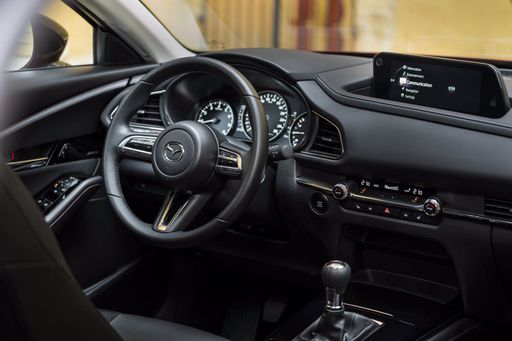
Interior comfort is paramount in this segment, and both models offer spacious, well-designed cabins. The Mazda CX-30 comfortably seats five passengers and features a trunk capacity of 430L, which is slightly roomier than the C-HR's 424L (depending on the variant). The interior is lined with high-quality materials, showcasing Mazda’s commitment to craftsmanship.

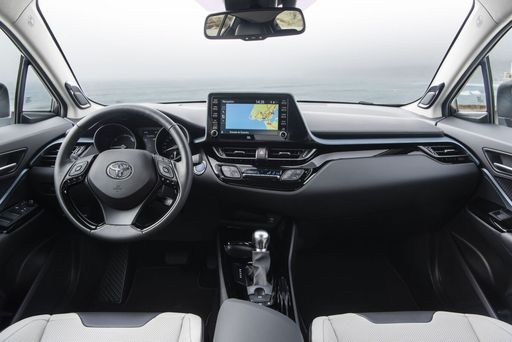
The Toyota C-HR also seats five but offers slightly less space with a trunk capacity ranging from 350L to 447L. Despite this, the C-HR’s interior is designed with a focus on modernity and minimalistic aesthetics, enhanced by a futuristic dashboard layout that integrates advanced technology seamlessly.

CX-30

Safety Innovations

Both vehicles prioritize safety, equipped with a range of advanced safety technologies. The Mazda CX-30 features an array of driver assistance systems including adaptive cruise control, lane departure warning, and automatic emergency braking, making it a strong contender in safety ratings.

The Toyota C-HR equally invests in safety, featuring Toyota’s Safety Sense suite in its standard package across most trims. It includes features like pre-collision systems, lane tracing assist, and adaptive cruise control, making it a compelling choice for safety-conscious buyers.

C-HR

Conclusion

In the head-to-head comparison of the Mazda CX-30 and Toyota C-HR, both vehicles bring their unique strengths to the compact SUV market. The CX-30 fascinates with its powerful engine options, stylish design, and spacious interior, while the C-HR leads with its fuel-efficient hybrid technology, sporty aesthetics, and advanced safety features. Ultimately, your decision will come down to your personal preferences regarding performance, efficiency, and design. Whichever option you choose, you're bound to enjoy a remarkable driving experience in these two exceptional SUVs.

Here’s where it gets real: The technical differences in detail

C-HR

Costs and Efficiency:

Looking at overall running costs, both models reveal some interesting differences in everyday economy.

Mazda CX-30 is slightly cheaper – starting at 25,200 £ , while the Toyota C-HR costs 29,100 £ . That’s a price difference of around 3,900 £.

Fuel consumption also shows a difference: the Toyota C-HR uses 2.3 L/100km and is substantially more efficient than the Mazda CX-30 with 5.7 L/100km. The difference is about 3.4 L/100km.

CX-30

Engine and Performance:

Power, torque and acceleration are the classic benchmarks for car enthusiasts – and here, some clear differences start to show.

When it comes to engine power, the Toyota C-HR offers a bit more power – delivering 223 HP compared to 186 HP. That’s roughly 37 HP more horsepower.

When accelerating from 0 to 100 km/h, the Toyota C-HR is a bit quicker – completing the sprint in 7.4 s, while the Mazda CX-30 takes 8.3 s. That’s about 0.9 s quicker.

C-HR

Space and Everyday Use:

Whether family car or daily driver – which one offers more room, flexibility and comfort?

Both vehicles offer seating for 5 people.

In terms of curb weight, Mazda CX-30 is barely lighter – 1,455 kg compared to 1,505 kg. The difference is around 50 kg.

Looking at boot space, the Toyota C-HR offers marginally more boot space – 447 L compared to 430 L. That’s a difference of about 17 L.

When it comes to payload, the Mazda CX-30 carries slightly more – 496 kg compared to 425 kg. That’s a difference of about 71 kg.

Who wins the race in the data check?

The Toyota C-HR holds a decisive overall lead in the objective data comparison.
This result only shows which model scores more points on paper – not which of the two cars feels right for you.

from £29,100
C-HR

Toyota C-HR

  • Engine Type : Full Hybrid, Plugin Hybrid
  • Transmission : Automatic
  • Drive Type : Front-Wheel Drive, All-Wheel Drive
  • Power HP : 140 - 223 HP
  • Consumption L/100km : 2.3 - 5.1 L/100km
  • Electric Range : 66 km
Toyota C-HR
Mazda CX-30

Costs and Consumption

View detailed analysis

Engine and Performance

View detailed analysis

Dimensions and Body

View detailed analysis

Toyota C-HR

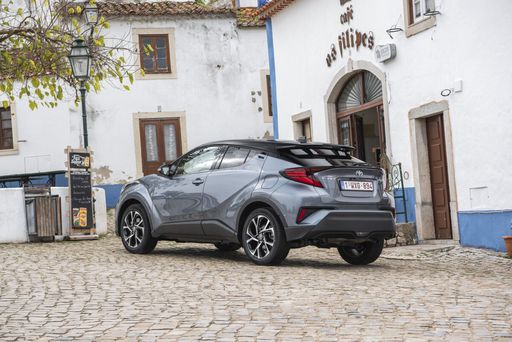
The Toyota C-HR cuts a striking figure with its angular styling and coupe-like profile, so you’ll never go unnoticed in the supermarket car park. It balances everyday practicality with a nimble, city-friendly personality, making routine commutes feel a touch more fun without asking for forgiveness.

details

Mazda CX-30

The Mazda CX-30 blends sleek coupe-like lines with the practicality of a compact crossover, feeling more premium than its price tag suggests. It’s a joy to drive for anyone who likes a taut chassis and an interior that treats daily commutes like a small luxury escape.

details
Toyota C-HR
Mazda CX-30

Costs and Consumption

Price
29,100 - 42,800 £
Price
25,200 - 36,800 £
Consumption L/100km
2.3 - 5.1 L/100km
Consumption L/100km
5.7 - 6.6 L/100km
Consumption kWh/100km
-
Consumption kWh/100km
-
Electric Range
66 km
Electric Range
-
Battery Capacity
-
Battery Capacity
-
co2
52 - 116 g/km
co2
129 - 148 g/km
Fuel tank capacity
-
Fuel tank capacity
-

Dimensions and Body

Body Type
SUV
Body Type
SUV
Seats
5
Seats
5
Doors
-
Doors
-
Curb weight
1,505 - 1,755 kg
Curb weight
1,455 - 1,587 kg
Trunk capacity
350 - 447 L
Trunk capacity
422 - 430 L
Length
-
Length
-
Width
1,832 mm
Width
1,795 mm
Height
-
Height
-
Max trunk capacity
-
Max trunk capacity
-
Payload
375 - 425 kg
Payload
458 - 496 kg

Engine and Performance

Engine Type
Full Hybrid, Plugin Hybrid
Engine Type
Petrol MHEV
Transmission
Automatic
Transmission
Manuel, Automatic
Transmission Detail
CVT
Transmission Detail
Manual Gearbox, Automatic Gearbox
Drive Type
Front-Wheel Drive, All-Wheel Drive
Drive Type
Front-Wheel Drive, All-Wheel Drive
Power HP
140 - 223 HP
Power HP
140 - 186 HP
Acceleration 0-100km/h
7.4 - 9.9 s
Acceleration 0-100km/h
8.3 - 10.3 s
Max Speed
-
Max Speed
-
Torque
-
Torque
238 - 240 Nm
Number of Cylinders
4
Number of Cylinders
4
Power kW
103 - 164 kW
Power kW
103 - 137 kW
Engine capacity
1,798 - 1,987 cm3
Engine capacity
1,998 - 2,488 cm3

General

Model Year
2,026
Model Year
2,025
CO2 Efficiency Class
C, D, B
CO2 Efficiency Class
D, E
Brand
Toyota
Brand
Mazda
DriveDuel uses data analysis and artificial intelligence to evaluate vehicle data and create content. Content is regularly reviewed and improved. The displayed prices are estimates based on German list prices, adjusted to the respective country’s VAT. Country-specific registration taxes are not included. This information is not legally binding.