VS

Toyota C-HR vs Suzuki S-Cross comparison

Compare performance (223 HP vs 110 HP), boot space and price (29,100 £ vs 21,800 £ ) at a glance. Find out which car is the better choice for you – Toyota C-HR or Suzuki S-Cross?

Toyota C-HR vs Suzuki S-Cross: Key differences

Toyota C-HR

4.8 (2 Reviews)
rate
  • clearly more power
  • significantly more efficient
  • only slightly more trunk space

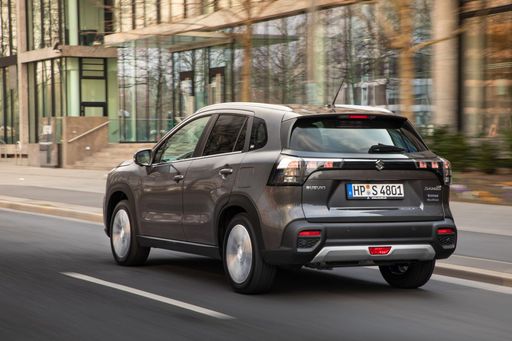
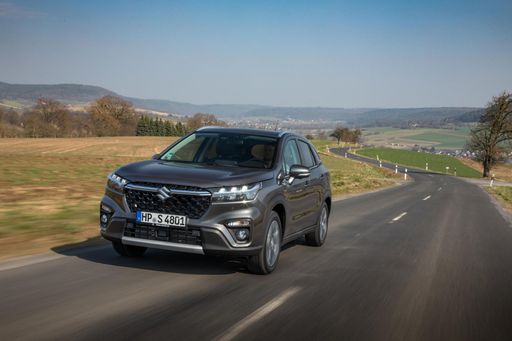
Suzuki S-Cross

4.7 (4 Reviews)
rate
  • clearly cheaper
  • somewhat lighter

All details on performance, efficiency, range and trunk space can be found in the technical comparison below – including user reviews for both models.

C-HR

Suzuki S-Cross vs. Toyota C-HR: The Battle of the Compact SUVs

The compact SUV segment is buzzing with competition, and two models that frequently spark debates among enthusiasts are the Suzuki S-Cross and the Toyota C-HR. Both vehicles bring their distinctive flair and innovative technology to the table, but which one suits your needs? Let's dive into the details of what these SUVs offer for the model year 2024.
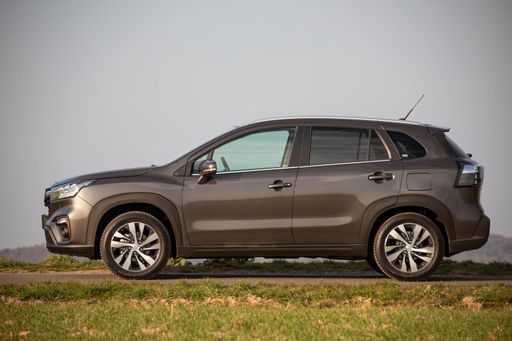
S-Cross

Performance and Engine Configurations

The Suzuki S-Cross is available with two engine types: a full hybrid and a petrol mild hybrid (MHEV). The power output ranges from 116 HP to 129 HP, facilitated by either an automated manual or a manual gearbox. This SUV offers versatility with both front-wheel drive (FWD) and all-wheel drive (AWD) options, delivering maximum speeds between 175 km/h and 195 km/h. Acceleration from 0 to 100 km/h is achieved in a respectable 9.5 seconds.

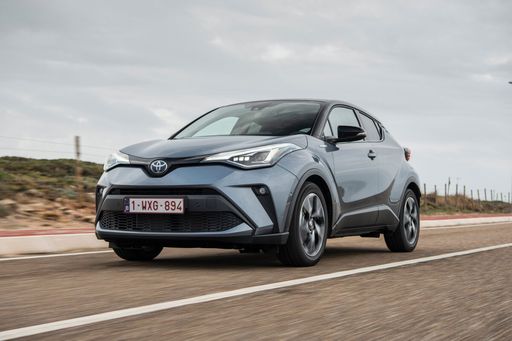
On the other hand, the Toyota C-HR provides diverse engine options including full hybrid and plug-in hybrid systems. It features power outputs ranging from 140 HP to 223 HP, driven by Toyota’s trusted continuously variable transmission (CVT). The C-HR accelerates from 0 to 100 km/h between 7.4 to 9.9 seconds, depending on the engine model, with maximum speeds plateauing at 175 km/h to 180 km/h.

C-HR

Efficiency and Environmental Impact

Fuel efficiency is a crucial consideration for many SUV buyers. The Suzuki S-Cross offers consumption figures ranging from 5.1 to 5.8 L/100 km, with CO2 emissions between 116 and 131 g/km, classifying it in the CO2 efficiency class D.

In contrast, the Toyota C-HR shines with a full hybrid option consuming as little as 4.7 L/100 km and as low as 0.8 L/100 km when in plug-in hybrid mode, boasting an electric range of up to 68 km. The C-HR emits between 17 and 115 g/km of CO2, achieving a superior efficiency class from B to C, aligning with eco-conscious driving preferences.

S-Cross

Design and Comfort

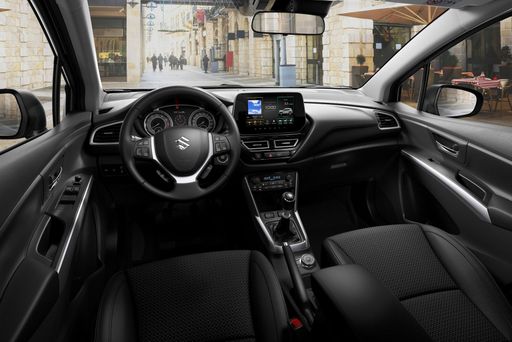
Both vehicles are crafted to accommodate five passengers comfortably, with the S-Cross offering a slightly compact body at 4300 mm length, 1785 mm width, and 1580 mm height. Its trunk holds up to 430 liters, an advantage for those seeking noteworthy cargo space in a compact design.

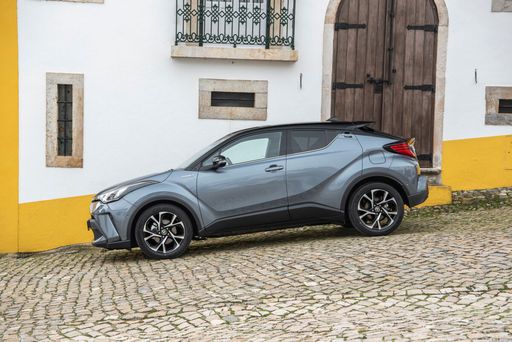
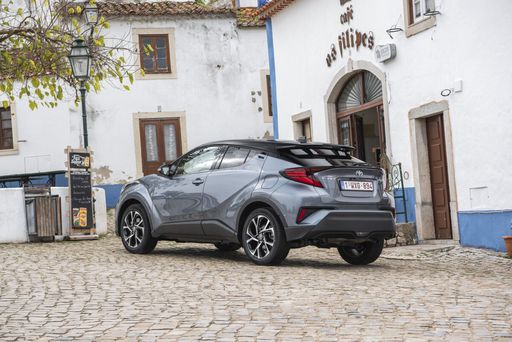
The Toyota C-HR emerges slightly larger with dimensions of 4362 mm in length, 1832 mm in width, and 1558 mm in height. Its trunk capacity varies with configurations, ranging from 350 liters to 447 liters, thus providing flexibility for storage solutions.

C-HR

Driving and Handling Innovations

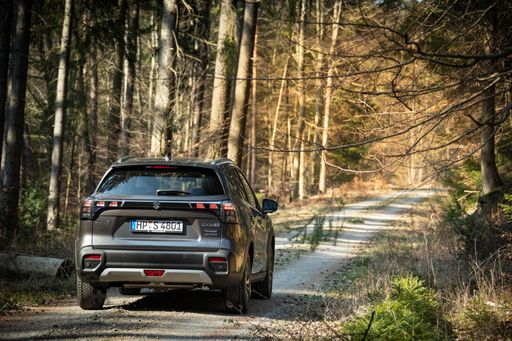
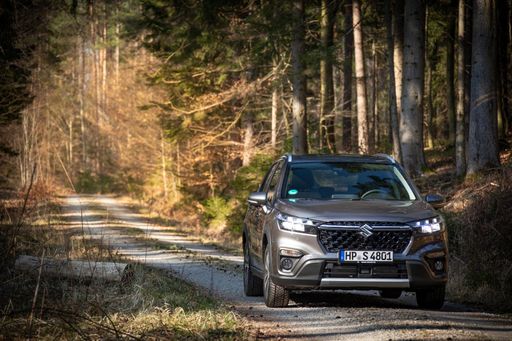
Both vehicles impress with sophisticated driving innovations. The Suzuki S-Cross offers dynamic all-wheel-drive capabilities, making it suitable for varying terrains and conditions. It maintains the traditional driving feel with its manual transmission option for those who prefer hands-on control.

The Toyota C-HR, praised for its hybrid technology, enhances driving efficiency with its advanced CVT system, ensuring a seamless and smooth ride. Its plug-in hybrid versions offer an electrifying experience with an appreciable electric-only range, supporting a greener drive.

S-Cross

A Final Word: Choosing Your Compact SUV

The decision between the Suzuki S-Cross and Toyota C-HR ultimately rests on individual preferences regarding performance, efficiency, technological innovations, and budget. The S-Cross appeals to those seeking a versatile, all-rounder compact SUV with manual driving options, while the C-HR beckons with its cutting-edge hybrid technology and eco-friendly credentials. Whether prioritizing power or efficiency, both SUVs stand as strong contenders in the vibrant compact SUV market of 2024.

Here’s where it gets real: The technical differences in detail

C-HR

Costs and Efficiency:

Price and efficiency are often the first things buyers look at. Here it becomes clear which model has the long-term edge – whether at the pump, the plug, or in purchase price.

Suzuki S-Cross is clearly cheaper – starting at 21,800 £ , while the Toyota C-HR costs 29,100 £ . That’s a price difference of around 7,372 £.

Fuel consumption also shows a difference: the Toyota C-HR uses 2.3 L/100km and is significantly more efficient than the Suzuki S-Cross with 5.3 L/100km. The difference is about 3 L/100km.

S-Cross

Engine and Performance:

Power, torque and acceleration say a lot about how a car feels on the road. This is where you see which model delivers more driving dynamics.

When it comes to engine power, the Toyota C-HR offers clearly more power – delivering 223 HP compared to 110 HP. That’s roughly 113 HP more horsepower.

C-HR

Space and Everyday Use:

Whether family car or daily driver – which one offers more room, flexibility and comfort?

Both vehicles offer seating for 5 people.

In terms of curb weight, Suzuki S-Cross is somewhat lighter – 1,280 kg compared to 1,505 kg. The difference is around 225 kg.

Looking at boot space, the Toyota C-HR offers only slightly more boot space – 447 L compared to 430 L. That’s a difference of about 17 L.

When it comes to payload, the Toyota C-HR carries barely more – 425 kg compared to 405 kg. That’s a difference of about 20 kg.

Who wins the race in the data check?

The Toyota C-HR holds a decisive overall lead in the objective data comparison.
This result only shows which model scores more points on paper – not which of the two cars feels right for you.

from £29,100
C-HR

Toyota C-HR

  • Engine Type : Full Hybrid, Plugin Hybrid
  • Transmission : Automatic
  • Drive Type : Front-Wheel Drive, All-Wheel Drive
  • Power HP : 140 - 223 HP
  • Consumption L/100km : 2.3 - 5.1 L/100km
  • Electric Range : 66 km
Toyota C-HR
Suzuki S-Cross

Costs and Consumption

View detailed analysis

Engine and Performance

View detailed analysis

Dimensions and Body

View detailed analysis

Toyota C-HR

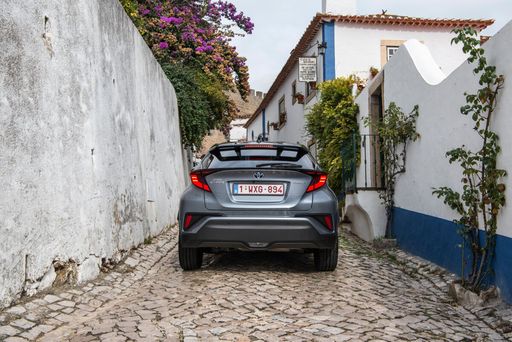
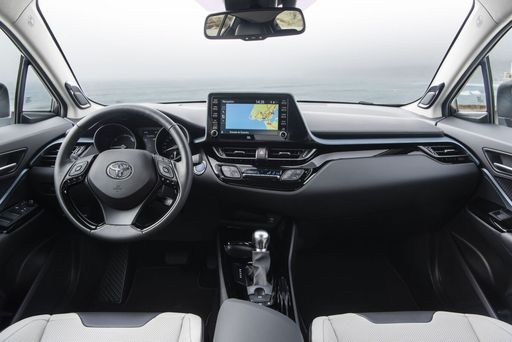
The Toyota C-HR cuts a striking figure with its angular styling and coupe-like profile, so you’ll never go unnoticed in the supermarket car park. It balances everyday practicality with a nimble, city-friendly personality, making routine commutes feel a touch more fun without asking for forgiveness.

details

Suzuki S-Cross

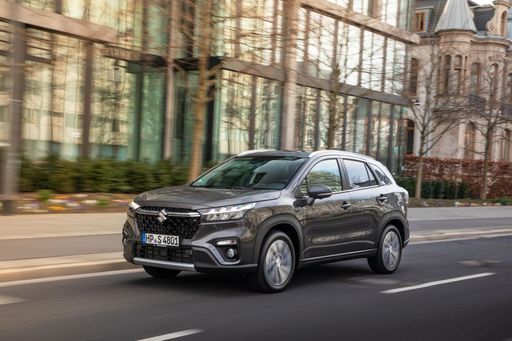
The Suzuki S-Cross is a neatly packaged crossover that puts everyday practicality ahead of showy theatrics, offering a comfortable cabin and predictable handling that suit family life and weekend errands alike. It’s not a headline-grabber, but its sensible packaging, low-key charm and reputation for reliability make it a shrewd choice for buyers who prefer smart value over flash.

details
Toyota C-HR
Suzuki S-Cross

Costs and Consumption

Price
29,100 - 42,800 £
Price
21,800 - 34,200 £
Consumption L/100km
2.3 - 5.1 L/100km
Consumption L/100km
5.3 - 5.8 L/100km
Consumption kWh/100km
-
Consumption kWh/100km
-
Electric Range
66 km
Electric Range
-
Battery Capacity
-
Battery Capacity
-
co2
52 - 116 g/km
co2
119 - 138 g/km
Fuel tank capacity
-
Fuel tank capacity
47 L

Dimensions and Body

Body Type
SUV
Body Type
SUV
Seats
5
Seats
5
Doors
-
Doors
5
Curb weight
1,505 - 1,755 kg
Curb weight
1,280 - 1,385 kg
Trunk capacity
350 - 447 L
Trunk capacity
430 L
Length
-
Length
4,305 mm
Width
1,832 mm
Width
1,785 mm
Height
-
Height
1,580 mm
Max trunk capacity
-
Max trunk capacity
1,230 L
Payload
375 - 425 kg
Payload
395 - 405 kg

Engine and Performance

Engine Type
Full Hybrid, Plugin Hybrid
Engine Type
Petrol MHEV
Transmission
Automatic
Transmission
Manuel, Automatic
Transmission Detail
CVT
Transmission Detail
Manual Gearbox, Automatic Gearbox
Drive Type
Front-Wheel Drive, All-Wheel Drive
Drive Type
Front-Wheel Drive, All-Wheel Drive
Power HP
140 - 223 HP
Power HP
110 HP
Acceleration 0-100km/h
7.4 - 9.9 s
Acceleration 0-100km/h
-
Max Speed
-
Max Speed
180 - 185 km/h
Torque
-
Torque
235 Nm
Number of Cylinders
4
Number of Cylinders
4
Power kW
103 - 164 kW
Power kW
81 kW
Engine capacity
1,798 - 1,987 cm3
Engine capacity
1,373 cm3

General

Model Year
2,026
Model Year
2,025
CO2 Efficiency Class
C, D, B
CO2 Efficiency Class
D, E
Brand
Toyota
Brand
Suzuki
DriveDuel uses data analysis and artificial intelligence to evaluate vehicle data and create content. Content is regularly reviewed and improved. The displayed prices are estimates based on German list prices, adjusted to the respective country’s VAT. Country-specific registration taxes are not included. This information is not legally binding.