VS

Toyota Yaris Cross vs Dacia Sandero comparison

Compare performance (130 HP vs 122 HP), boot space and price (23,700 £ vs 11,000 £ ) at a glance. Find out which car is the better choice for you – Toyota Yaris Cross or Dacia Sandero?

Toyota Yaris Cross vs Dacia Sandero: Key differences

Toyota Yaris Cross

4.1 (9 Reviews)
rate
  • only slightly more power
  • slightly more efficient
  • barely more trunk space

Dacia Sandero

3.5 (3 Reviews)
rate
  • considerably cheaper
  • moderately quicker 0–100 km/h
  • marginally lighter

All details on performance, efficiency, range and trunk space can be found in the technical comparison below – including user reviews for both models.

Yaris Cross

Urban Mobility Redefined: Dacia Sandero vs. Toyota Yaris Cross

The Dacia Sandero and Toyota Yaris Cross represent two distinct approaches to urban transportation, offering unique experiences and features tailored to varying driver preferences. As these models roll into 2024, they bring with them innovations and specifications that demand attention in the competitive segment of compact vehicles.

Sandero

Engine and Performance: Power vs. Economy

The Dacia Sandero provides multiple engine options designed for flexibility and economy, featuring petrol and LPG choices that range from 67 HP up to 110 HP. These engines are coupled with either a manual gearbox or a CVT transmission, offering a traditional driving experience with an eco-minded twist. Despite its hatchback design, the Sandero demonstrates modest power but provides commendable efficiency with fuel consumption starting at 5.2 L/100km.

Meanwhile, the Toyota Yaris Cross brings to the table a full hybrid engine, ensuring that it not only benefits from robust power—116 HP and up to 130 HP—but also superior efficiency, with impressive consumption as low as 4.5 L/100km. Coupled with a CVT transmission and a 1.5-liter engine, the Yaris Cross shines in terms of reducing carbon footprints and maximizing fuel economy.

Yaris Cross

Design and Dimensions: Compact Comforts

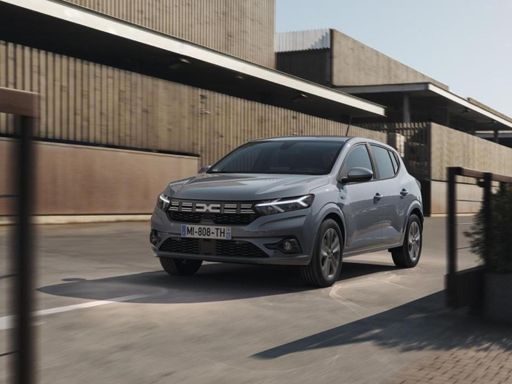
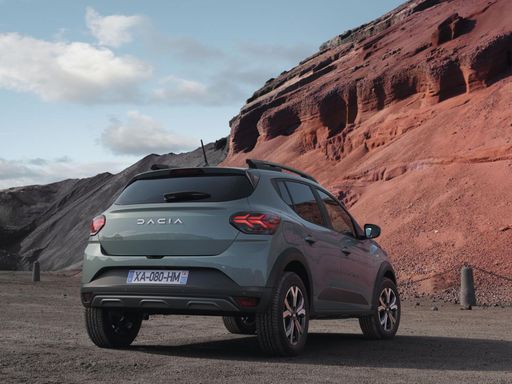
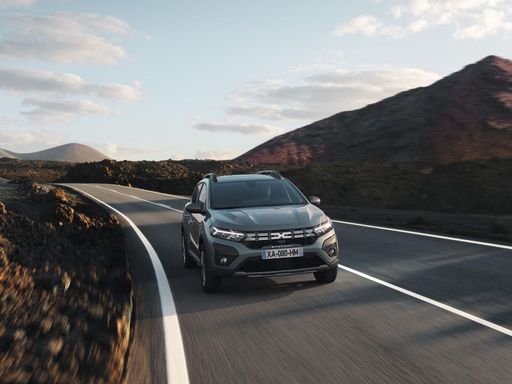
The Dacia Sandero, as a hatchback, carries a compact stance with a length of up to 4099 mm, providing a comfortable amount of interior space along with a trunk capacity of 328 liters. Designed for practicality and efficiency, it offers easy maneuverability in urban environments without sacrificing passenger comfort, thanks to its 5-seat configuration.

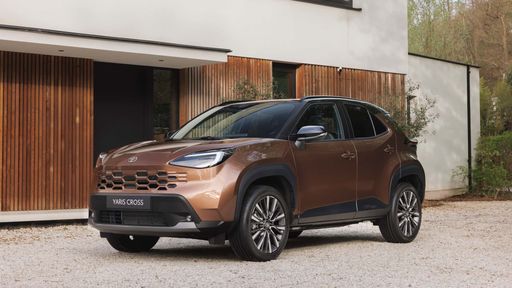
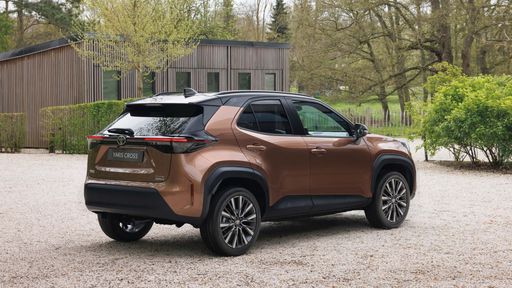
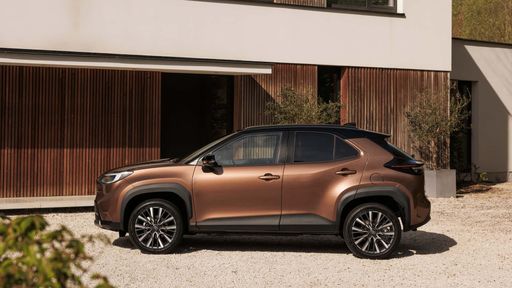
Conversely, the Toyota Yaris Cross proudly adopts an SUV design, showcasing a slightly larger frame at 4180 mm in length and a more imposing stance, given its 1595 mm height. The Yaris Cross doesn't just offer style but ample trunk space, up to 397 liters, facilitating both urban commuting and adventurous excursions.

Sandero

Technological Innovations: Smart Choices

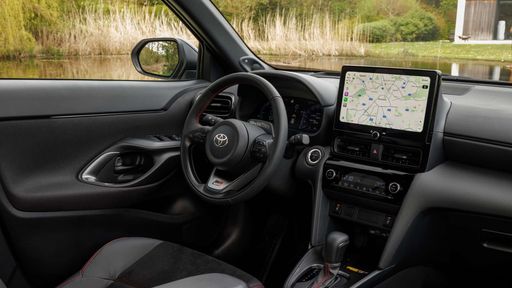
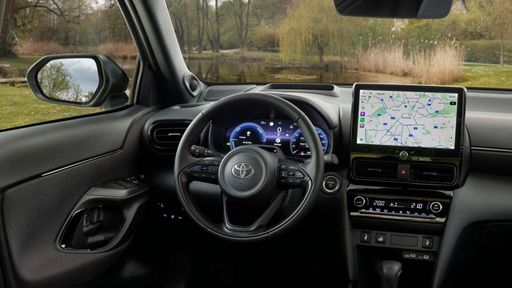
The technological offerings in the Sandero focus on practical solutions, integrating essential connectivity and safety features that benefit everyday commutes. However, the Yaris Cross elevates the game with its hybrid technology, a nod to Toyota's pioneering spirit in sustainable driving. It emphasizes innovation in its powertrain, reflecting advanced engineering designed to adapt seamlessly to both city roads and countryside paths.

Yaris Cross

Sustainability and Efficiency: A Commitment to the Environment

From an emissions perspective, the Sandero provides options with CO2 emissions ranging from 105 g/km to 139 g/km, with distinct efficiency classes of C to E. On the other hand, the Yaris Cross stands out with its coherent commitment to sustainability, boasting emissions as low as 101 g/km, firmly within the C class, underscoring its role as an efficient light SUV.

Sandero

Final Thoughts: To Each Their Own

In the great debate of the Dacia Sandero versus the Toyota Yaris Cross, it becomes clear that the choice hinges on driver priorities. If one values a straightforward, cost-effective hatchback with varied fuel options, the Sandero fits the bill with its simplicity and family-oriented design. In contrast, the Yaris Cross appeals to those seeking a more technologically advanced, eco-friendly SUV without compromising on performance or cargo space. Both models, however, symbolize exceptional strides in redefining urban mobility for 2024.

Here’s where it gets real: The technical differences in detail

Yaris Cross

Costs and Efficiency:

Price and efficiency are key factors when choosing a car – and this is often where the real differences emerge.

Dacia Sandero is considerably cheaper – starting at 11,000 £ , while the Toyota Yaris Cross costs 23,700 £ . That’s a price difference of around 12,729 £.

Fuel consumption also shows a difference: the Toyota Yaris Cross uses 4.5 L/100km and is slightly more efficient than the Dacia Sandero with 5.3 L/100km. The difference is about 0.8 L/100km.

Sandero

Engine and Performance:

Power, torque and acceleration say a lot about how a car feels on the road. This is where you see which model delivers more driving dynamics.

When it comes to engine power, the Toyota Yaris Cross offers only slightly more power – delivering 130 HP compared to 122 HP. That’s roughly 8 HP more horsepower.

When accelerating from 0 to 100 km/h, the Dacia Sandero is moderately quicker – completing the sprint in 9.7 s, while the Toyota Yaris Cross takes 10.7 s. That’s about 1 s quicker.

Yaris Cross

Space and Everyday Use:

Whether family car or daily driver – which one offers more room, flexibility and comfort?

Both vehicles offer seating for 5 people.

In terms of curb weight, Dacia Sandero is marginally lighter – 1,100 kg compared to 1,180 kg. The difference is around 80 kg.

Looking at boot space, the Toyota Yaris Cross offers barely more boot space – 397 L compared to 372 L. That’s a difference of about 25 L.

When it comes to payload, the Toyota Yaris Cross carries somewhat more – 510 kg compared to 436 kg. That’s a difference of about 74 kg.

Who wins the race in the data check?

The Dacia Sandero holds a solid overall lead in the objective data comparison.
This result only shows which model scores more points on paper – not which of the two cars feels right for you.

from £11,000
Sandero

Dacia Sandero

  • Engine Type : Petrol, LPG
  • Transmission : Manuel, Automatic
  • Drive Type : Front-Wheel Drive
  • Power HP : 67 - 122 HP
  • Consumption L/100km : 5.3 - 7.2 L/100km
Toyota Yaris Cross
Dacia Sandero

Costs and Consumption

View detailed analysis

Engine and Performance

View detailed analysis

Dimensions and Body

View detailed analysis

Toyota Yaris Cross

The Toyota Yaris Cross takes the jaunty personality of the Yaris and gives it a taller stance and a bit more practicality, so you get city-friendly agility with added SUV presence. It’s easy to live with, economical on the daily grind, and smartly packaged — a sensible pick for buyers who want fuss-free transport with a touch of character.

details

Dacia Sandero

The Dacia Sandero is the everyman's hatchback — unpretentious, practical and brilliantly affordable, with sensible space and straightforward charm where it matters most. It won't wow in the premium lane, but for buyers who want honest, dependable transport without showroom theatrics, the Sandero is a clever, no‑nonsense pick that keeps running costs low and grin levels high.

details
Toyota Yaris Cross
Dacia Sandero

Costs and Consumption

Price
23,700 - 34,300 £
Price
11,000 - 16,300 £
Consumption L/100km
4.5 - 4.8 L/100km
Consumption L/100km
5.3 - 7.2 L/100km
Consumption kWh/100km
-
Consumption kWh/100km
-
Electric Range
-
Electric Range
-
Battery Capacity
-
Battery Capacity
-
co2
101 - 108 g/km
co2
111 - 131 g/km
Fuel tank capacity
-
Fuel tank capacity
-

Dimensions and Body

Body Type
SUV
Body Type
Hatchback
Seats
5
Seats
5
Doors
-
Doors
-
Curb weight
1,180 - 1,290 kg
Curb weight
1,100 - 1,297 kg
Trunk capacity
320 - 397 L
Trunk capacity
372 L
Length
-
Length
-
Width
1,765 mm
Width
1,853 mm
Height
-
Height
-
Max trunk capacity
-
Max trunk capacity
-
Payload
485 - 510 kg
Payload
385 - 436 kg

Engine and Performance

Engine Type
Full Hybrid
Engine Type
Petrol, LPG
Transmission
Automatic
Transmission
Manuel, Automatic
Transmission Detail
CVT
Transmission Detail
Manual Gearbox, Dual-Clutch Automatic
Drive Type
Front-Wheel Drive, All-Wheel Drive
Drive Type
Front-Wheel Drive
Power HP
116 - 130 HP
Power HP
67 - 122 HP
Acceleration 0-100km/h
10.7 - 11.3 s
Acceleration 0-100km/h
9.7 - 16.7 s
Max Speed
-
Max Speed
-
Torque
-
Torque
95 - 200 Nm
Number of Cylinders
3
Number of Cylinders
3
Power kW
85 - 96 kW
Power kW
49 - 90 kW
Engine capacity
1,490 cm3
Engine capacity
999 - 1,199 cm3

General

Model Year
2,026
Model Year
2,025
CO2 Efficiency Class
C
CO2 Efficiency Class
D, C
Brand
Toyota
Brand
Dacia
DriveDuel uses data analysis and artificial intelligence to evaluate vehicle data and create content. Content is regularly reviewed and improved. The displayed prices are estimates based on German list prices, adjusted to the respective country’s VAT. Country-specific registration taxes are not included. This information is not legally binding.