VS

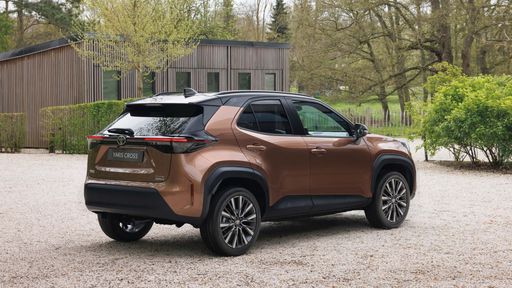
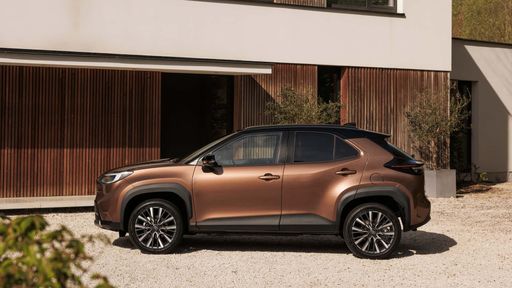
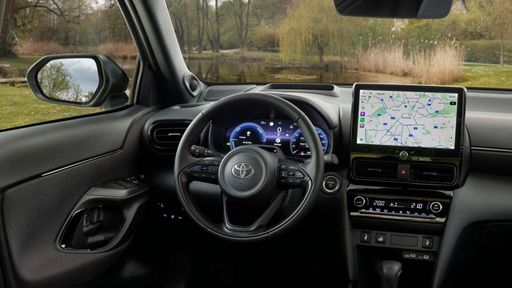
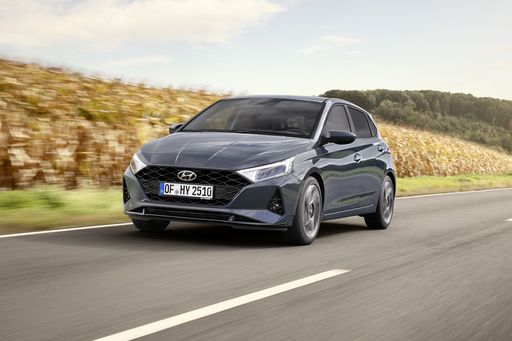
Toyota Yaris Cross vs Hyundai i20 comparison

Compare performance (130 HP vs 90 HP), boot space and price (23,700 £ vs 18,600 £ ) at a glance. Find out which car is the better choice for you – Toyota Yaris Cross or Hyundai i20?

Toyota Yaris Cross vs Hyundai i20: Key differences

Toyota Yaris Cross

4.1 (9 Reviews)
rate
  • noticeably more power
  • markedly more efficient
  • barely quicker 0–100 km/h
  • moderately more trunk space

Hyundai i20

4 (1 Reviews)
rate
  • visibly cheaper
  • very slightly lighter

All details on performance, efficiency, range and trunk space can be found in the technical comparison below – including user reviews for both models.

Yaris Cross

Compact Rivals Clash: Hyundai i20 vs. Toyota Yaris Cross

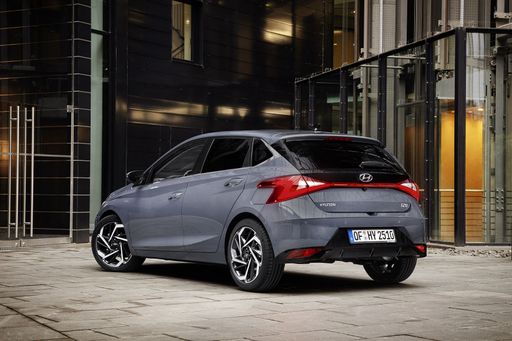
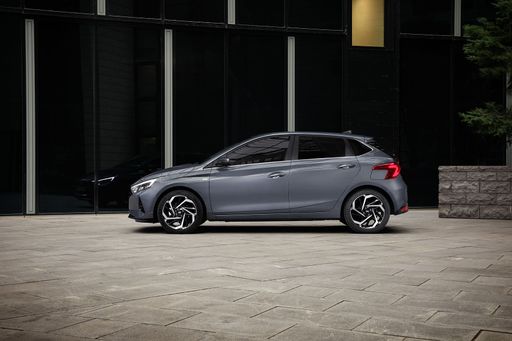
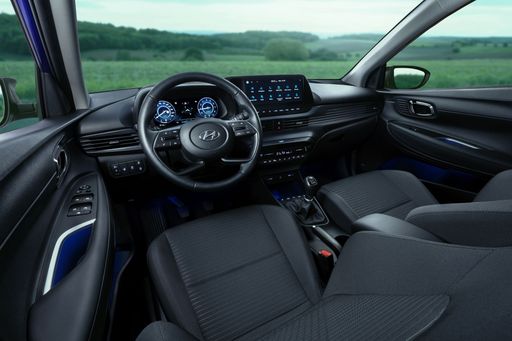
In the world of compact cars, the competition is fierce, and two models standing out in their segments are the Hyundai i20 and the Toyota Yaris Cross. Both vehicles offer a blend of performance, efficiency, and modern design, making them worthy contenders for anyone in the market for a compact vehicle. Let's dive into their technical specifications and see what sets them apart.
i20

Engine and Performance

The Hyundai i20 is available with a choice of petrol engines, including a mild hybrid electric vehicle (MHEV) variant. Its engine ranges from 79 HP to 100 HP, delivering torque between 113 Nm and 200 Nm. The i20 boasts a range of acceleration capabilities, reaching from 0-100 km/h in as little as 11.1 seconds. When it comes to top speed, the i20 pushes up to 183 km/h depending on the variant.

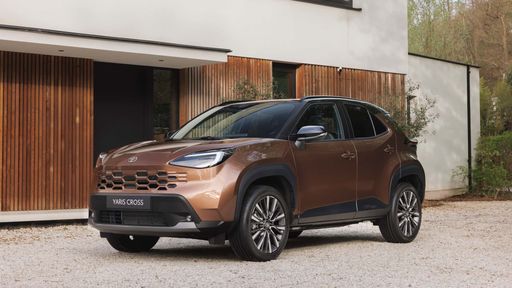
In contrast, the Toyota Yaris Cross is empowered by a full hybrid engine system capable of harnessing 116 HP to 130 HP. Its torque is not explicitly stated, but its power is efficiently transmitted through a continuously variable transmission (CVT). This setup propels the Yaris Cross from 0-100 km/h in roughly 10.7 to 11.3 seconds, with a maximum speed of 170 km/h.

Yaris Cross

Fuel Efficiency and Emissions

The Hyundai i20 achieves a fuel consumption of around 5.1 to 5.3 L/100 km, with CO2 emissions falling between 117 and 120 g/km, positioning it in the CO2 Efficiency Class D. This hatchback is optimized for both urban and highway settings, thanks to its efficient engine options and aerodynamic design.

Meanwhile, the Toyota Yaris Cross exhibits impressive fuel efficiency in the SUV segment, consuming about 4.5 to 4.8 L/100 km. Its CO2 emissions are considerably lower, at 101 to 108 g/km, securing a CO2 Efficiency Class C. The hybrid engine significantly boosts its environmental credentials, underscoring Toyota's commitment to sustainable mobility solutions.

i20

Dimensions and Practicality

The Hyundai i20 is a hatchback measuring around 4,075 mm in length, 1,775 mm in width, and 1,455 mm in height. It accommodates five passengers comfortably and has a trunk capacity of 352 liters, suitable for everyday usage and small family trips.

The Yaris Cross, being an SUV, offers a slightly larger footprint with a length of 4,180 mm, a width of 1,765 mm, and a height of 1,595 mm. This model also seats five and boasts a trunk space ranging between 320 and 397 liters, ideal for those needing a bit more cargo space without sacrificing passenger comfort.

Yaris Cross

Verdict

Choosing between the Hyundai i20 and the Toyota Yaris Cross depends largely on your priorities. If you value sporty design, multiple engine options, and slightly higher performance figures, the Hyundai i20 might be your car of choice. However, if fuel efficiency, reduced emissions, and the benefits of hybrid technology are at the top of your list, the Toyota Yaris Cross may edge out the competition.

Both vehicles are formidable in their class, reflecting the innovative strides made by their respective manufacturers. Ultimately, your lifestyle needs and preferences should guide your decision in this compact car conundrum.

Here’s where it gets real: The technical differences in detail

Yaris Cross

Costs and Efficiency:

Price and efficiency are key factors when choosing a car – and this is often where the real differences emerge.

Hyundai i20 is visibly cheaper – starting at 18,600 £ , while the Toyota Yaris Cross costs 23,700 £ . That’s a price difference of around 5,091 £.

Fuel consumption also shows a difference: the Toyota Yaris Cross uses 4.5 L/100km and is markedly more efficient than the Hyundai i20 with 5.7 L/100km. The difference is about 1.2 L/100km.

i20

Engine and Performance:

Power, torque and acceleration are the classic benchmarks for car enthusiasts – and here, some clear differences start to show.

When it comes to engine power, the Toyota Yaris Cross offers noticeably more power – delivering 130 HP compared to 90 HP. That’s roughly 40 HP more horsepower.

When accelerating from 0 to 100 km/h, the Toyota Yaris Cross is barely quicker – completing the sprint in 10.7 s, while the Hyundai i20 takes 11.5 s. That’s about 0.8 s quicker.

Yaris Cross

Space and Everyday Use:

Beyond pure performance, interior space and usability matter most in daily life. This is where you see which car is more practical and versatile.

Both vehicles offer seating for 5 people.

In terms of curb weight, Hyundai i20 is very slightly lighter – 1,145 kg compared to 1,180 kg. The difference is around 35 kg.

Looking at boot space, the Toyota Yaris Cross offers moderately more boot space – 397 L compared to 352 L. That’s a difference of about 45 L.

When it comes to payload, the Toyota Yaris Cross carries very slightly more – 510 kg compared to 465 kg. That’s a difference of about 45 kg.

Who wins the race in the data check?

The Toyota Yaris Cross is clearly superior overall in the objective data comparison.
This result only shows which model scores more points on paper – not which of the two cars feels right for you.

from £23,700
Yaris Cross

Toyota Yaris Cross

  • Engine Type : Full Hybrid
  • Transmission : Automatic
  • Drive Type : Front-Wheel Drive, All-Wheel Drive
  • Power HP : 116 - 130 HP
  • Consumption L/100km : 4.5 - 4.8 L/100km
Toyota Yaris Cross
Hyundai i20

Costs and Consumption

View detailed analysis

Engine and Performance

View detailed analysis

Dimensions and Body

View detailed analysis

Toyota Yaris Cross

The Toyota Yaris Cross takes the jaunty personality of the Yaris and gives it a taller stance and a bit more practicality, so you get city-friendly agility with added SUV presence. It’s easy to live with, economical on the daily grind, and smartly packaged — a sensible pick for buyers who want fuss-free transport with a touch of character.

details

Hyundai i20

The Hyundai i20 is a cheeky small car that mixes smart styling with sensible practicality, feeling more polished and roomy than you might expect for the money. It’s an easy car to live with, offering engaging handling, a comfy cabin and useful equipment that make daily commutes and weekend errands notably less dull.

details
Toyota Yaris Cross
Hyundai i20

Costs and Consumption

Price
23,700 - 34,300 £
Price
18,600 - 24,000 £
Consumption L/100km
4.5 - 4.8 L/100km
Consumption L/100km
5.7 L/100km
Consumption kWh/100km
-
Consumption kWh/100km
-
Electric Range
-
Electric Range
-
Battery Capacity
-
Battery Capacity
-
co2
101 - 108 g/km
co2
128 - 129 g/km
Fuel tank capacity
-
Fuel tank capacity
-

Dimensions and Body

Body Type
SUV
Body Type
Hatchback
Seats
5
Seats
5
Doors
-
Doors
-
Curb weight
1,180 - 1,290 kg
Curb weight
1,145 - 1,170 kg
Trunk capacity
320 - 397 L
Trunk capacity
352 L
Length
-
Length
-
Width
1,765 mm
Width
1,775 mm
Height
-
Height
-
Max trunk capacity
-
Max trunk capacity
-
Payload
485 - 510 kg
Payload
455 - 465 kg

Engine and Performance

Engine Type
Full Hybrid
Engine Type
Petrol
Transmission
Automatic
Transmission
Manuel, Automatic
Transmission Detail
CVT
Transmission Detail
Manual Gearbox, Dual-Clutch Automatic
Drive Type
Front-Wheel Drive, All-Wheel Drive
Drive Type
Front-Wheel Drive
Power HP
116 - 130 HP
Power HP
90 HP
Acceleration 0-100km/h
10.7 - 11.3 s
Acceleration 0-100km/h
11.5 - 12.8 s
Max Speed
-
Max Speed
-
Torque
-
Torque
172 Nm
Number of Cylinders
3
Number of Cylinders
3
Power kW
85 - 96 kW
Power kW
66 kW
Engine capacity
1,490 cm3
Engine capacity
998 cm3

General

Model Year
2,026
Model Year
2,025
CO2 Efficiency Class
C
CO2 Efficiency Class
D
Brand
Toyota
Brand
Hyundai
DriveDuel uses data analysis and artificial intelligence to evaluate vehicle data and create content. Content is regularly reviewed and improved. The displayed prices are estimates based on German list prices, adjusted to the respective country’s VAT. Country-specific registration taxes are not included. This information is not legally binding.