VS

Toyota Yaris Cross vs Kia Stonic comparison

Compare performance (130 HP vs 115 HP), boot space and price (23,700 £ vs 20,400 £ ) at a glance. Find out which car is the better choice for you – Toyota Yaris Cross or Kia Stonic?

Toyota Yaris Cross vs Kia Stonic: Key differences

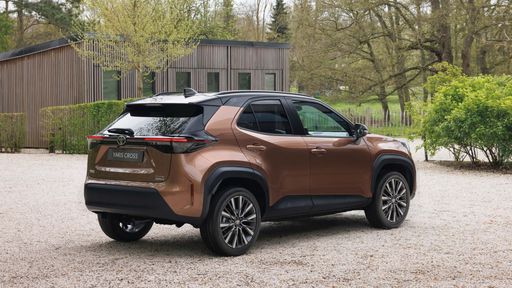
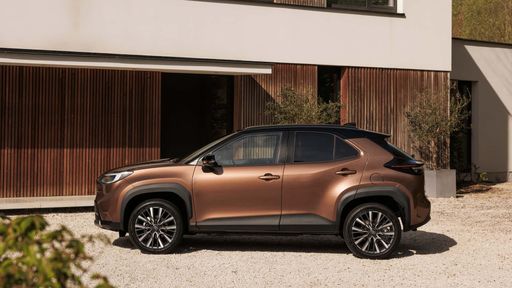
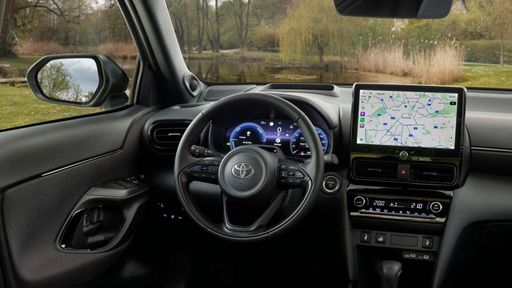
Toyota Yaris Cross

4.2 (15 Reviews)
rate
  • a bit more power
  • noticeably more efficient
  • very slightly lighter
  • moderately more trunk space
details

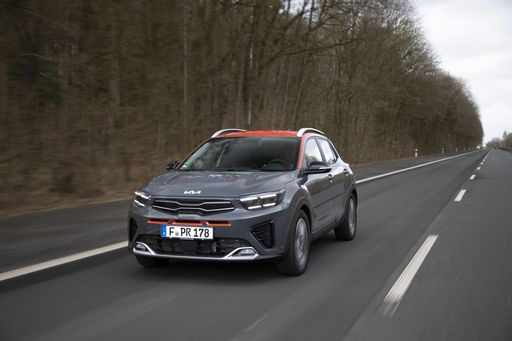
Kia Stonic

4.6 (2 Reviews)
rate
  • slightly cheaper
details

All details on performance, efficiency, range and trunk space can be found in the technical comparison below – including user reviews for both models.

By Achim Sedelmaier

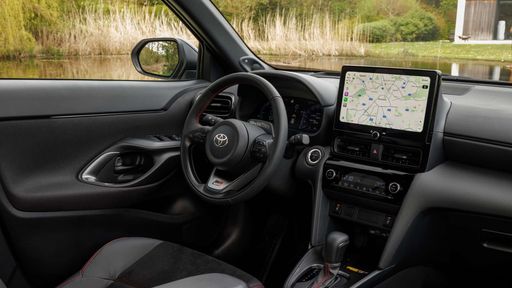
Yaris Cross

Introduction: Compact SUVs on the Rise

The automotive market has seen an increased demand for compact SUVs, and two players that have captured attention are the Kia Stonic and the Toyota Yaris Cross. Each vehicle offers unique attributes that appeal to urban drivers and outdoor adventurers alike. This article delves into the technical aspects and innovations of both models to help you understand which may be the better fit for your lifestyle.
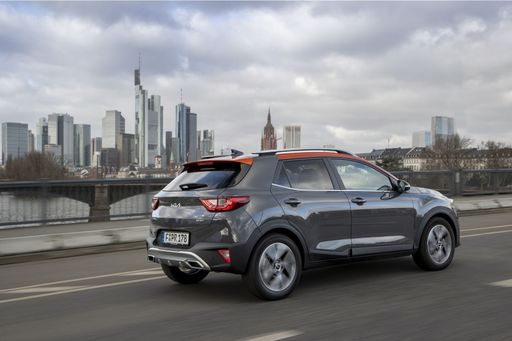
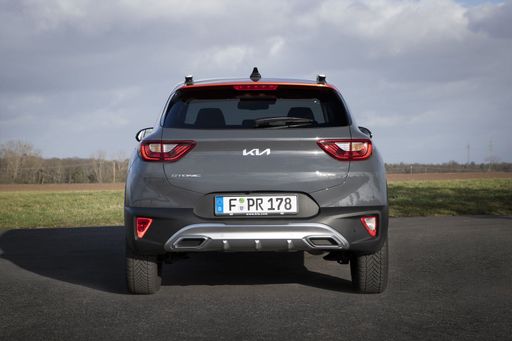
Stonic

Engine Performance and Efficiency

The Kia Stonic boasts a range of engine types, including petrol and petrol MHEV (Mild Hybrid Electric Vehicle), delivering power outputs ranging from 79 HP to 100 HP. With fuel consumption figures between 5.5 L/100km and 5.8 L/100km, the Stonic offers respectable efficiency. It achieves a torque of up to 172 Nm, making it adequate for city driving and occasional highway excursions.

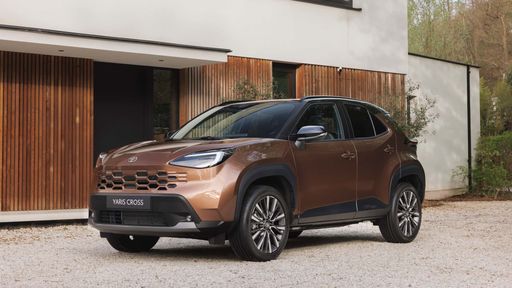
In contrast, the Toyota Yaris Cross is equipped with a full hybrid engine that generates between 116 HP and 130 HP. Its hybrid design grants it remarkable fuel efficiency, allowing for consumption as low as 4.5 L/100km. It produces a slightly lower torque of 85 kW but compensates with its eco-friendly credentials and lower CO2 emissions of 101 g/km, placing it in a more favorable CO2 efficiency class (C) compared to the Stonic's class D.

Yaris Cross

Acceleration and Top Speed

Acceleration can be a decisive factor for many buyers, especially in urban settings. The Stonic performs admirably with a 0-100km/h time of 11.3 seconds for its most potent engine option. While it reaches a top speed of 179 km/h, its slower variants take slightly longer and achieve reduced maximum speeds. The Yaris Cross, on the other hand, offers a competitive edge with top speeds capped at 170 km/h and an impressive acceleration of 10.7 seconds for its fastest version.

Stonic

Dimensions and Interior Space

When comparing dimensions, the Kia Stonic measures 4140 mm in length, 1760 mm in width, and stands 1505 mm tall. It provides ample room with a trunk capacity of 352 L. Meanwhile, the Yaris Cross is slightly larger at 4180 mm in length, 1765 mm in width, and significantly taller at 1595 mm. With a maximum trunk capacity of 397 L, it offers a bit more storage, making it suitable for carrying more luggage or larger items.

Yaris Cross

Drive and Transmission Options

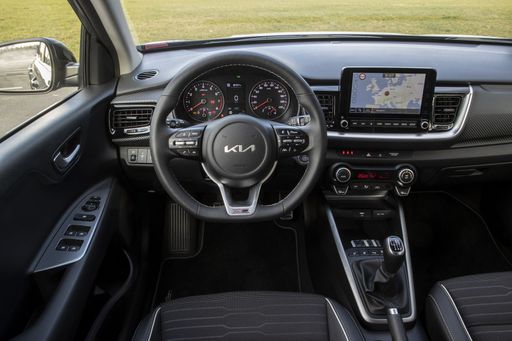
Both vehicles feature front-wheel drive configurations and offer automatic transmission; however, the Stonic provides additional options, including a manual gearbox and a dual-clutch automatic. The Yaris Cross relies solely on a continuously variable transmission (CVT), which is ideal for a smooth, fuel-efficient driving experience but may lack the engaging drive feel some enthusiasts seek.

Stonic

Safety Features and Technological Innovations

In today's market, safety features are paramount, and both vehicles come equipped with an array of advanced driver assistance systems. The Kia Stonic includes features like lane-keeping assist, adaptive cruise control, and a host of airbags, ensuring a safe ride for all. The Yaris Cross follows suit with an equally impressive suite of safety technologies, including Toyota’s Safety Sense, featuring pre-collision systems, lane departure alert, and automatic high beams, showcasing its commitment to passenger protection.

Yaris Cross

Conclusion: Which Is the Right Choice for You?

Ultimately, the choice between the Kia Stonic and the Toyota Yaris Cross boils down to individual preferences and needs. The Stonic may appeal to those looking for versatile engine options and a sportier driving experience. Meanwhile, the Yaris Cross stands out as an efficient, eco-friendly choice with ample interior space and advanced safety features. Whether you lean towards performance or sustainability, both compact SUVs are formidable contenders in their segment.

Here’s where it gets real: The technical differences in detail

Yaris Cross

Costs and Efficiency:

Looking at overall running costs, both models reveal some interesting differences in everyday economy.

Kia Stonic is slightly cheaper – starting at 20,400 £ , while the Toyota Yaris Cross costs 23,700 £ . That’s a price difference of around 3,300 £.

Fuel consumption also shows a difference: the Toyota Yaris Cross uses 4.5 L/100km and is noticeably more efficient than the Kia Stonic with 5.6 L/100km. The difference is about 1.1 L/100km.

Stonic

Engine and Performance:

Power, torque and acceleration say a lot about how a car feels on the road. This is where you see which model delivers more driving dynamics.

When it comes to engine power, the Toyota Yaris Cross offers a bit more power – delivering 130 HP compared to 115 HP. That’s roughly 15 HP more horsepower.

Both models accelerate almost equally fast – 10.7 s from 0 to 100 km/h.

Yaris Cross

Space and Everyday Use:

Whether family car or daily driver – which one offers more room, flexibility and comfort?

Both vehicles offer seating for 5 people.

In terms of curb weight, Toyota Yaris Cross is very slightly lighter – 1,180 kg compared to 1,205 kg. The difference is around 25 kg.

Looking at boot space, the Toyota Yaris Cross offers moderately more boot space – 397 L compared to 352 L. That’s a difference of about 45 L.

When it comes to payload, the Toyota Yaris Cross carries somewhat more – 510 kg compared to 445 kg. That’s a difference of about 65 kg.

Who wins the race in the data check?

The Toyota Yaris Cross is decisively ahead in the objective data comparison.
This result only shows which model scores more points on paper – not which of the two cars feels right for you.

from £23,700
Yaris Cross

Toyota Yaris Cross

  • Engine Type : Full Hybrid
  • Transmission : Automatic
  • Drive Type : Front-Wheel Drive, All-Wheel Drive
  • Power HP : 116 - 130 HP
  • Consumption L/100km : 4.5 - 4.8 L/100km
Toyota Yaris Cross
Kia Stonic

Costs and Consumption

View detailed analysis

Engine and Performance

View detailed analysis

Dimensions and Body

View detailed analysis

Toyota Yaris Cross

The Toyota Yaris Cross blends the maneuverability of a small hatch with the higher driving position and practicality of a crossover, wrapped in Toyota's dependable build quality. It suits urban buyers who need easy parking, flexible cargo space and a comfortable, economical daily driver.

details

Kia Stonic

The Kia Stonic is a compact crossover that pairs nimble city manners with a surprisingly spacious and comfortable cabin. It’s a practical, well-equipped choice for buyers who value sensible features, approachable styling and easy everyday usability.

details
Toyota Yaris Cross
Kia Stonic

Costs and Consumption

Price
23,700 - 34,300 £
Price
20,400 - 26,800 £
Consumption L/100km
4.5 - 4.8 L/100km
Consumption L/100km
5.6 - 5.7 L/100km
Consumption kWh/100km
-
Consumption kWh/100km
-
Electric Range
-
Electric Range
-
Battery Capacity
-
Battery Capacity
-
co2
101 - 108 g/km
co2
126 - 128 g/km
Fuel tank capacity
-
Fuel tank capacity
-

Dimensions and Body

Body Type
SUV
Body Type
SUV
Seats
5
Seats
5
Doors
-
Doors
-
Curb weight
1,180 - 1,290 kg
Curb weight
1,205 - 1,270 kg
Trunk capacity
320 - 397 L
Trunk capacity
352 L
Length
-
Length
-
Width
1,765 mm
Width
1,760 mm
Height
-
Height
-
Max trunk capacity
-
Max trunk capacity
-
Payload
485 - 510 kg
Payload
440 - 445 kg

Engine and Performance

Engine Type
Full Hybrid
Engine Type
Petrol, Petrol MHEV
Transmission
Automatic
Transmission
Manuel, Automatic
Transmission Detail
CVT
Transmission Detail
Manual Gearbox, Dual-Clutch Automatic
Drive Type
Front-Wheel Drive, All-Wheel Drive
Drive Type
Front-Wheel Drive
Power HP
116 - 130 HP
Power HP
100 - 115 HP
Acceleration 0-100km/h
10.7 - 11.3 s
Acceleration 0-100km/h
10.7 - 12.1 s
Max Speed
-
Max Speed
-
Torque
-
Torque
172 - 200 Nm
Number of Cylinders
3
Number of Cylinders
3
Power kW
85 - 96 kW
Power kW
74 - 85 kW
Engine capacity
1,490 cm3
Engine capacity
998 cm3

General

Model Year
2026
Model Year
2025
CO2 Efficiency Class
C
CO2 Efficiency Class
D
Brand
Toyota
Brand
Kia
DriveDuel uses data analysis and artificial intelligence to evaluate vehicle data and create content. Content is regularly reviewed and improved. The displayed prices are estimates based on German list prices, adjusted to the respective country’s VAT. Country-specific registration taxes are not included. This information is not legally binding.