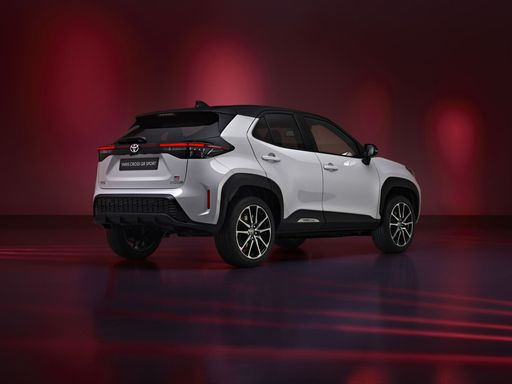
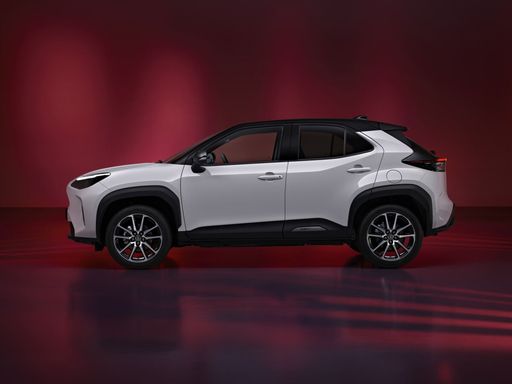
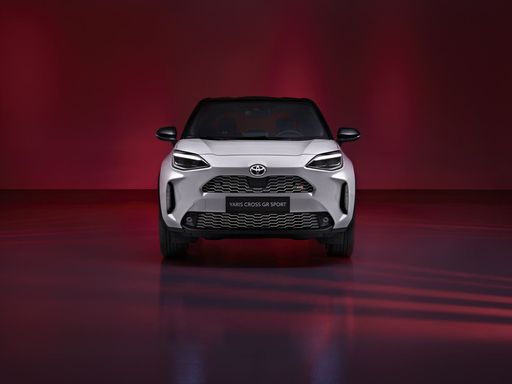
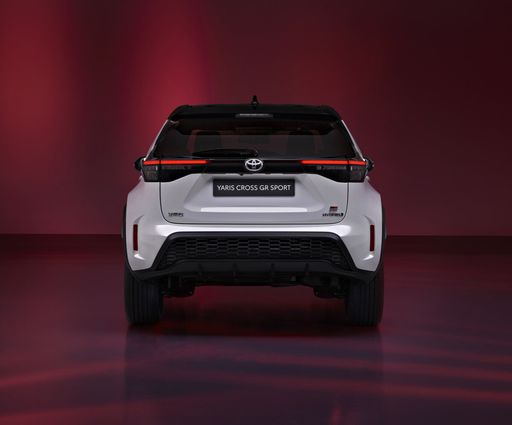
VS

Toyota Yaris Cross vs Lexus UX comparison

Compare performance (130 HP vs 199 HP), boot space and price (23,700 £ vs 37,900 £ ) at a glance. Find out which car is the better choice for you – Toyota Yaris Cross or Lexus UX?

Toyota Yaris Cross vs Lexus UX: Key differences

Toyota Yaris Cross

4.1 (9 Reviews)
rate
  • considerably cheaper
  • moderately more efficient
  • noticeably lighter

Lexus UX

4.6 (4 Reviews)
rate
  • clearly more power
  • markedly quicker 0–100 km/h

All details on performance, efficiency, range and trunk space can be found in the technical comparison below – including user reviews for both models.

Yaris Cross

Introduction: A Clash of Compact SUVs

In the competitive landscape of compact SUVs, the Lexus UX and the Toyota Yaris Cross stand out as two notable contenders. While both are positioned in a similar segment, they offer distinct characteristics that cater to different consumer preferences. This article takes a closer look at the technical specifications and innovative features of these two vehicles to help you make an informed decision.
UX

Powertrain and Performance

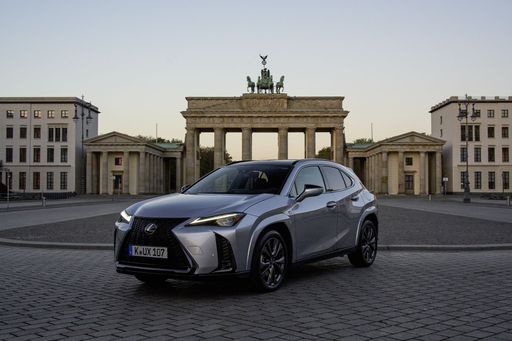
The Lexus UX boasts a robust lineup of engines, including full hybrid variants with a power output of up to 204 HP. It offers both Front-Wheel Drive and All-Wheel Drive options, giving buyers the flexibility to choose their ideal driving dynamics. The UX is equipped with a CVT transmission, which contributes to a smooth driving experience with stated consumption rates of 5 to 5.6 L/100km.

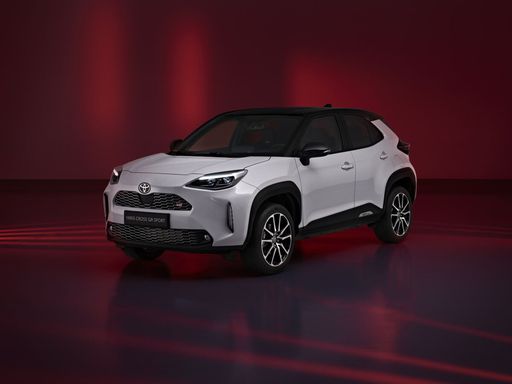
In comparison, the Toyota Yaris Cross features a more modest engine lineup, with a maximum power rating of 130 HP. Its full hybrid setup, combined with a CVT transmission, allows for an impressive fuel economy of 4.5 to 4.8 L/100km, making it a more economical choice for urban drivers. Both SUVs have remarkable acceleration capabilities, but the UX edges ahead with a 0-100km/h time of 7.5 seconds, compared to the Yaris Cross's 10.7 to 11.3 seconds.

Yaris Cross

Dimensions and Interior Space

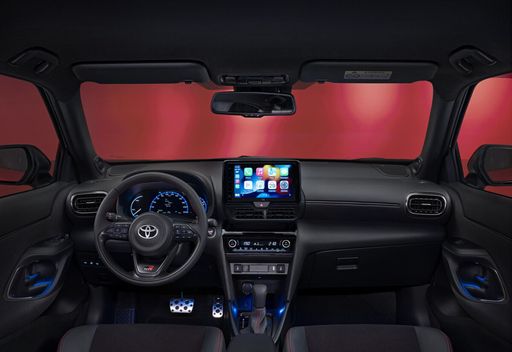
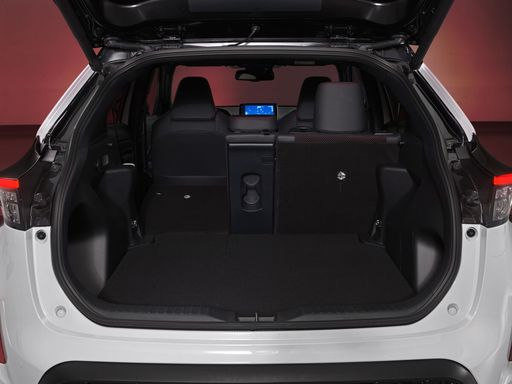
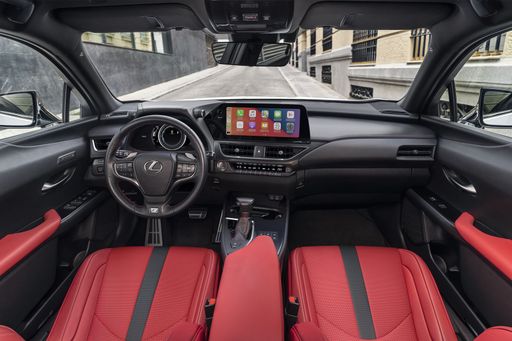
When it comes to size, the Lexus UX measures 4495mm in length, 1840mm in width, and 1545mm in height. This makes it a bit larger than the Yaris Cross, which measures 4180mm in length, 1765mm in width, and 1595mm in height. While both cars feature five doors, the Yaris Cross can accommodate up to five passengers comfortably, whereas the UX is designed for four, emphasizing a luxury feel for fewer occupants.

The trunk capacity reflects this design philosophy, with the UX offering 367 liters compared to the Yaris Cross's more generous 397 liters. This makes the Yaris Cross a practical choice for families or those needing additional cargo space.

UX

Innovative Features and Safety

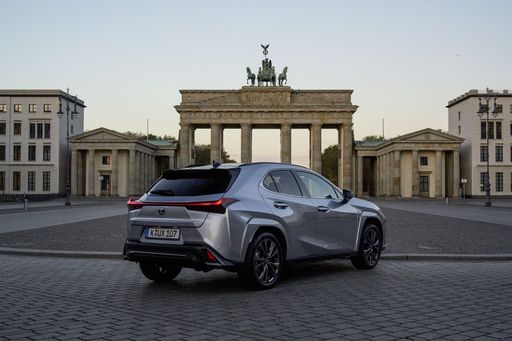
Both models come equipped with a host of modern features and safety technologies. The Lexus UX includes high-tech amenities such as a premium audio system, ambient lighting, and advanced driver-assistance systems, consistent with its luxury brand identity. Its CO2 emissions stand at a commendable 0 to 127 g/km, aligning with strict environmental standards.

On the other hand, the Toyota Yaris Cross emphasizes value and practicality with a range of safety features and hybrid technology. This SUV has a CO2 emission rating of 101 to 108 g/km, appealing to eco-conscious buyers. The Yaris Cross is built with Toyota’s reputation for reliability and safety, making it a solid everyday vehicle.

Yaris Cross

Conclusion: Which SUV is Right for You?

The choice between the Lexus UX and the Toyota Yaris Cross ultimately depends on what you value in an SUV. If you seek luxury, performance, and cutting-edge technology, the Lexus UX is your best bet. However, if you prioritize fuel efficiency, practicality, and a more budget-friendly option, the Yaris Cross will serve you well. Both vehicles have their unique strengths, making them worthy of consideration in the compact SUV market.

Here’s where it gets real: The technical differences in detail

Yaris Cross

Costs and Efficiency:

Price and efficiency are key factors when choosing a car – and this is often where the real differences emerge.

Toyota Yaris Cross is considerably cheaper – starting at 23,700 £ , while the Lexus UX costs 37,900 £ . That’s a price difference of around 14,237 £.

Fuel consumption also shows a difference: the Toyota Yaris Cross uses 4.5 L/100km and is moderately more efficient than the Lexus UX with 5 L/100km. The difference is about 0.5 L/100km.

UX

Engine and Performance:

Under the bonnet, it becomes clear which model is tuned for sportiness and which one takes the lead when you hit the accelerator.

When it comes to engine power, the Lexus UX offers clearly more power – delivering 199 HP compared to 130 HP. That’s roughly 69 HP more horsepower.

When accelerating from 0 to 100 km/h, the Lexus UX is markedly quicker – completing the sprint in 7.9 s, while the Toyota Yaris Cross takes 10.7 s. That’s about 2.8 s quicker.

Yaris Cross

Space and Everyday Use:

Beyond pure performance, interior space and usability matter most in daily life. This is where you see which car is more practical and versatile.

Both vehicles offer seating for 5 people.

In terms of curb weight, Toyota Yaris Cross is noticeably lighter – 1,180 kg compared to 1,495 kg. The difference is around 315 kg.

When it comes to payload, the Lexus UX carries somewhat more – 615 kg compared to 510 kg. That’s a difference of about 105 kg.

Who wins the race in the data check?

The Lexus UX stands well ahead of its rival in the objective data comparison.
This result only shows which model scores more points on paper – not which of the two cars feels right for you.

from £37,900
UX

Lexus UX

  • Engine Type : Full Hybrid
  • Transmission : Automatic
  • Drive Type : Front-Wheel Drive, All-Wheel Drive
  • Power HP : 199 HP
  • Consumption L/100km : 5 - 5.6 L/100km
Toyota Yaris Cross
Lexus UX

Costs and Consumption

View detailed analysis

Engine and Performance

View detailed analysis

Dimensions and Body

View detailed analysis

Toyota Yaris Cross

The Toyota Yaris Cross takes the jaunty personality of the Yaris and gives it a taller stance and a bit more practicality, so you get city-friendly agility with added SUV presence. It’s easy to live with, economical on the daily grind, and smartly packaged — a sensible pick for buyers who want fuss-free transport with a touch of character.

details

Lexus UX

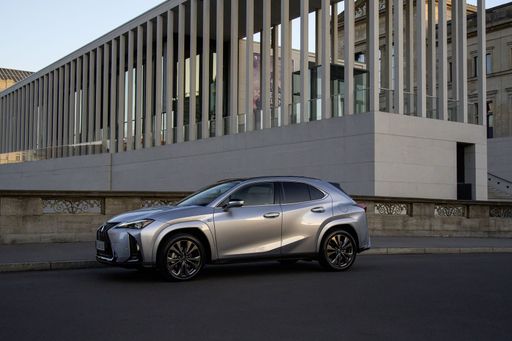
The Lexus UX is a compact luxury crossover that blends sharp styling with a quiet, comfortable cabin, perfect for urban buyers who want premium feel without shouting about it. It rides with poise, serves up plush materials and thoughtful tech, and—while it won’t satisfy anyone chasing track thrills—it's a smart, stylish choice for everyday driving.

details
Toyota Yaris Cross
Lexus UX

Costs and Consumption

Price
23,700 - 34,300 £
Price
37,900 - 54,100 £
Consumption L/100km
4.5 - 4.8 L/100km
Consumption L/100km
5 - 5.6 L/100km
Consumption kWh/100km
-
Consumption kWh/100km
-
Electric Range
-
Electric Range
-
Battery Capacity
-
Battery Capacity
-
co2
101 - 108 g/km
co2
113 - 127 g/km
Fuel tank capacity
-
Fuel tank capacity
-

Dimensions and Body

Body Type
SUV
Body Type
SUV
Seats
5
Seats
5
Doors
-
Doors
-
Curb weight
1,180 - 1,290 kg
Curb weight
1,495 - 1,555 kg
Trunk capacity
320 - 397 L
Trunk capacity
-
Length
-
Length
-
Width
1,765 mm
Width
1,840 mm
Height
-
Height
-
Max trunk capacity
-
Max trunk capacity
-
Payload
485 - 510 kg
Payload
555 - 615 kg

Engine and Performance

Engine Type
Full Hybrid
Engine Type
Full Hybrid
Transmission
Automatic
Transmission
Automatic
Transmission Detail
CVT
Transmission Detail
CVT
Drive Type
Front-Wheel Drive, All-Wheel Drive
Drive Type
Front-Wheel Drive, All-Wheel Drive
Power HP
116 - 130 HP
Power HP
199 HP
Acceleration 0-100km/h
10.7 - 11.3 s
Acceleration 0-100km/h
7.9 - 8.1 s
Max Speed
-
Max Speed
-
Torque
-
Torque
-
Number of Cylinders
3
Number of Cylinders
4
Power kW
85 - 96 kW
Power kW
146 kW
Engine capacity
1,490 cm3
Engine capacity
1,987 cm3

General

Model Year
2,026
Model Year
2,025
CO2 Efficiency Class
C
CO2 Efficiency Class
C, D
Brand
Toyota
Brand
Lexus
DriveDuel uses data analysis and artificial intelligence to evaluate vehicle data and create content. Content is regularly reviewed and improved. The displayed prices are estimates based on German list prices, adjusted to the respective country’s VAT. Country-specific registration taxes are not included. This information is not legally binding.