
 Deutschland
 France
 Nederland
 Great Britain
 Sverige
 Danmark
 Suomi
Suomi Italia
 Polska
 España
VS
Toyota Yaris Cross vs Mercedes EQA comparison
Compare performance (130 HP vs 292 HP), boot space and price (23,700 £ vs 44,200 £ ) at a glance. Find out which car is the better choice for you – Toyota Yaris Cross or Mercedes EQA?
Yaris Cross
Costs and Efficiency:
Looking at overall running costs, both models reveal some interesting differences in everyday economy.
Toyota Yaris Cross is significantly cheaper – starting at 23,700 £ , while the Mercedes EQA costs 44,200 £ . That’s a price difference of around 20,546 £.
EQA
Engine and Performance:
Power, torque and acceleration are the classic benchmarks for car enthusiasts – and here, some clear differences start to show.
When it comes to engine power, the Mercedes EQA offers substantially more power – delivering 292 HP compared to 130 HP. That’s roughly 162 HP more horsepower.
When accelerating from 0 to 100 km/h, the Mercedes EQA is significantly quicker – completing the sprint in 6 s, while the Toyota Yaris Cross takes 10.7 s. That’s about 4.7 s quicker.
Yaris Cross
Space and Everyday Use:
Cabin size, boot volume and payload all play a role in everyday practicality. Here, comfort and flexibility make the difference.
Both vehicles offer seating for 5 people.
In terms of curb weight, Toyota Yaris Cross is significantly lighter – 1,180 kg compared to 2,045 kg. The difference is around 865 kg.
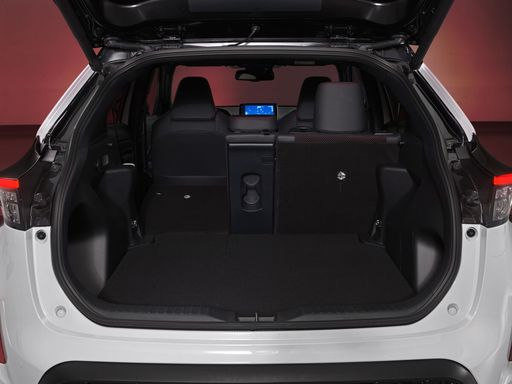
Looking at boot space, the Toyota Yaris Cross offers slightly more boot space – 397 L compared to 340 L. That’s a difference of about 57 L.
When it comes to payload, the Toyota Yaris Cross carries a bit more – 510 kg compared to 425 kg. That’s a difference of about 85 kg.
Who wins the race in the data check?
The Mercedes EQA is decisively ahead in the objective data comparison.
This result only shows which model scores more points on paper – not which of the two cars feels right for you.
from £44,200
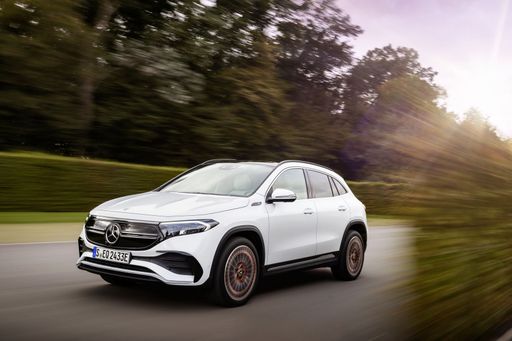
Mercedes EQA
Toyota Yaris Cross
Mercedes EQA
Costs and Consumption
View detailed analysis
View detailed analysis
Engine and Performance
View detailed analysis
View detailed analysis
Dimensions and Body
View detailed analysis
View detailed analysis
Toyota Yaris Cross
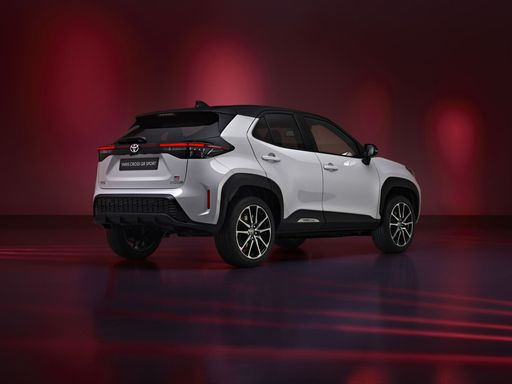
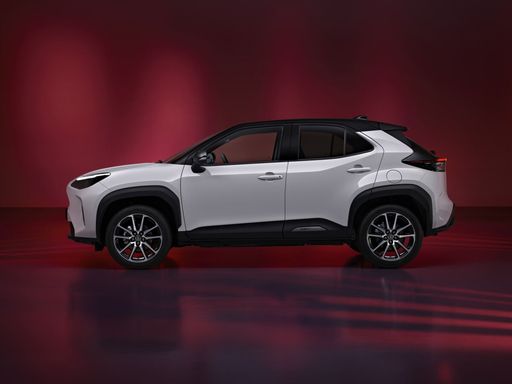
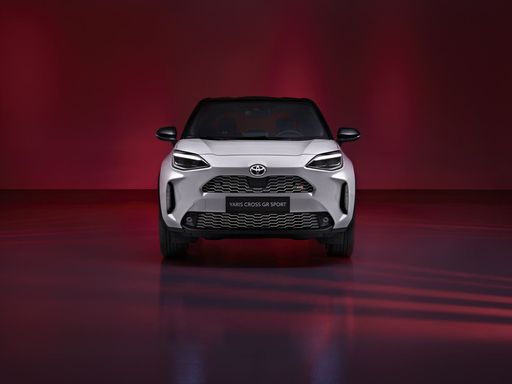
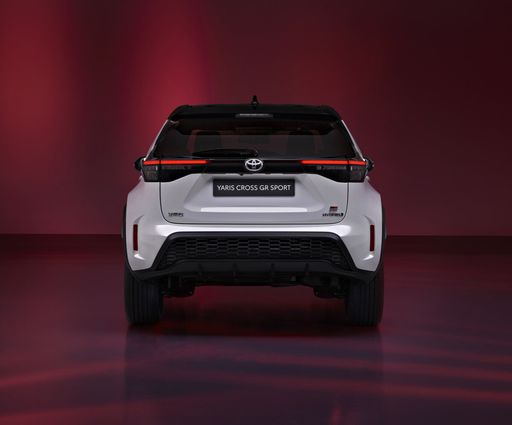
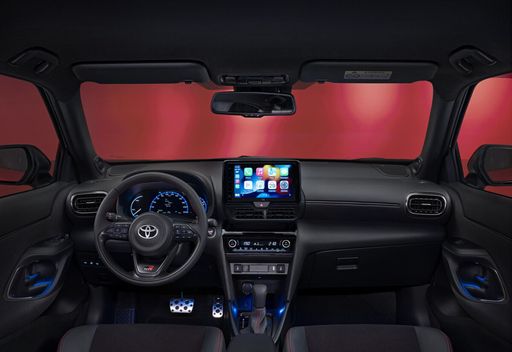
The Toyota Yaris Cross takes the jaunty personality of the Yaris and gives it a taller stance and a bit more practicality, so you get city-friendly agility with added SUV presence. It’s easy to live with, economical on the daily grind, and smartly packaged — a sensible pick for buyers who want fuss-free transport with a touch of character.
details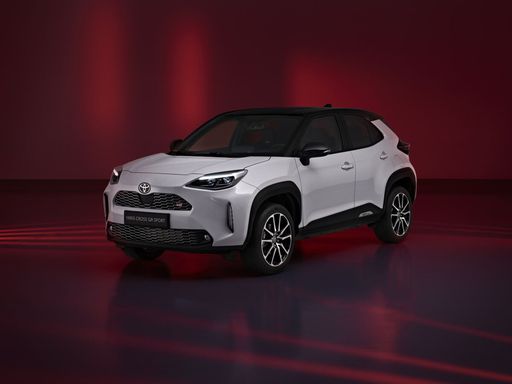
Mercedes EQA
The Mercedes EQA slips into the electric crossover ranks with the brand’s familiar luxury polish, offering a quiet, fuss-free drive that feels perfectly at home in the city or on a country escape. Inside it’s neatly finished and tech-forward, projecting grown-up refinement even if it plays things a bit safe for anyone chasing outright excitement.
details
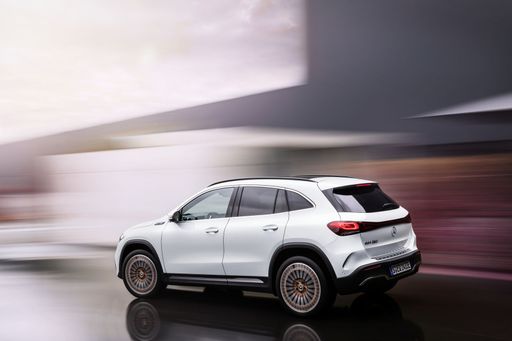
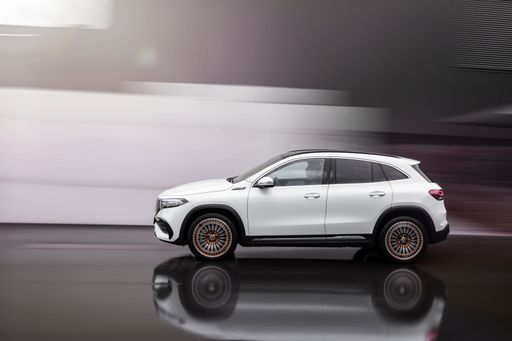
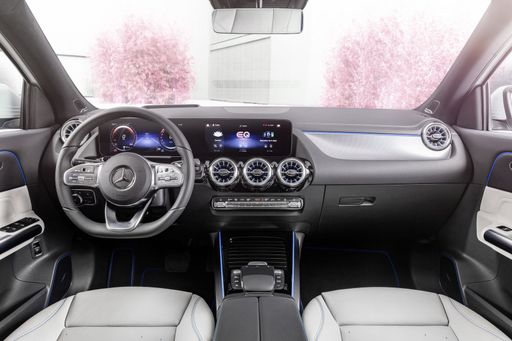
Toyota Yaris Cross
Mercedes EQA
Costs and Consumption |
|
|---|---|
|
Price
23,700 - 34,300 £
|
Price
44,200 - 57,400 £
|
|
Consumption L/100km
4.5 - 4.8 L/100km
|
Consumption L/100km
-
|
|
Consumption kWh/100km
-
|
Consumption kWh/100km
14.4 - 16.9 kWh/100km
|
|
Electric Range
-
|
Electric Range
476 - 561 km
|
|
Battery Capacity
-
|
Battery Capacity
70.5 kWh
|
|
co2
101 - 108 g/km
|
co2
0 g/km
|
|
Fuel tank capacity
-
|
Fuel tank capacity
-
|
Dimensions and Body |
|
|---|---|
|
Body Type
SUV
|
Body Type
SUV
|
|
Seats
5
|
Seats
5
|
|
Doors
-
|
Doors
5
|
|
Curb weight
1,180 - 1,290 kg
|
Curb weight
2,045 - 2,115 kg
|
|
Trunk capacity
320 - 397 L
|
Trunk capacity
340 L
|
|
Length
-
|
Length
4,463 mm
|
|
Width
1,765 mm
|
Width
1,834 mm
|
|
Height
-
|
Height
1,608 - 1,613 mm
|
|
Max trunk capacity
-
|
Max trunk capacity
1,320 L
|
|
Payload
485 - 510 kg
|
Payload
425 kg
|
Engine and Performance |
|
|---|---|
|
Engine Type
Full Hybrid
|
Engine Type
Electric
|
|
Transmission
Automatic
|
Transmission
Automatic
|
|
Transmission Detail
CVT
|
Transmission Detail
Reduction Gearbox
|
|
Drive Type
Front-Wheel Drive, All-Wheel Drive
|
Drive Type
Front-Wheel Drive, All-Wheel Drive
|
|
Power HP
116 - 130 HP
|
Power HP
190 - 292 HP
|
|
Acceleration 0-100km/h
10.7 - 11.3 s
|
Acceleration 0-100km/h
6 - 8.6 s
|
|
Max Speed
-
|
Max Speed
160 km/h
|
|
Torque
-
|
Torque
385 - 520 Nm
|
|
Number of Cylinders
3
|
Number of Cylinders
-
|
|
Power kW
85 - 96 kW
|
Power kW
140 - 215 kW
|
|
Engine capacity
1,490 cm3
|
Engine capacity
-
|
General |
|
|---|---|
|
Model Year
2,026
|
Model Year
2,024 - 2,025
|
|
CO2 Efficiency Class
C
|
CO2 Efficiency Class
A
|
|
Brand
Toyota
|
Brand
Mercedes-Benz
|
DriveDuel uses data analysis and artificial intelligence to evaluate vehicle data and create content. Content is regularly reviewed and improved.
The displayed prices are estimates based on German list prices, adjusted to the respective country’s VAT. Country-specific registration taxes are not included. This information is not legally binding.