VS

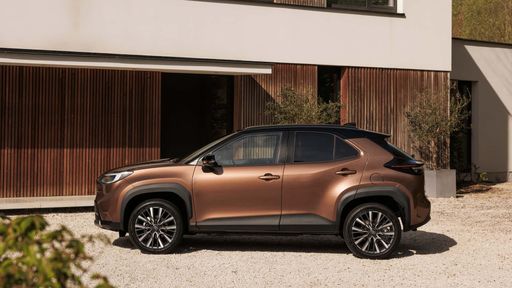
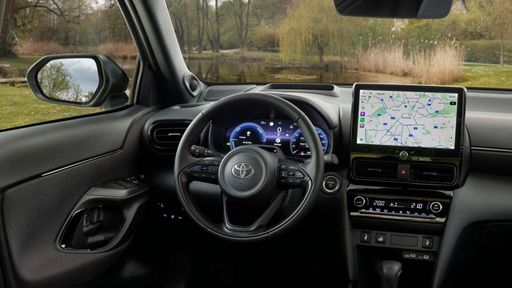
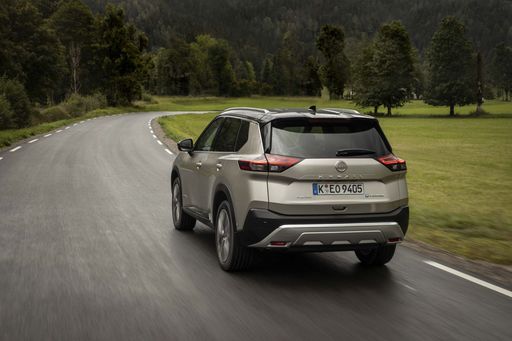
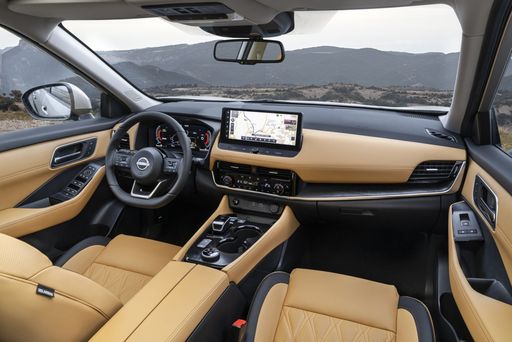
Toyota Yaris Cross vs Nissan X-Trail comparison

Compare performance (130 HP vs 213 HP), boot space and price (23,700 £ vs 34,200 £ ) at a glance. Find out which car is the better choice for you – Toyota Yaris Cross or Nissan X-Trail?

Toyota Yaris Cross vs Nissan X-Trail: Key differences

Toyota Yaris Cross

4.3 (11 Reviews)
rate
  • significantly cheaper
  • markedly more efficient
  • significantly lighter

Nissan X-Trail

4.6 (5 Reviews)
rate
  • noticeably more power
  • clearly quicker 0–100 km/h
  • clearly more trunk space

All details on performance, efficiency, range and trunk space can be found in the technical comparison below – including user reviews for both models.

Yaris Cross

A Battle of Compact SUVs: Nissan X-Trail vs. Toyota Yaris Cross

The compact SUV segment continues to thrive with cutting-edge technology and impressive performance. The latest contenders in this category are the robust Nissan X-Trail and the agile Toyota Yaris Cross. As both vehicles cater to diverse needs and preferences, it's essential to dive into their specifics to see what each brings to the table.

X-Trail

Nissan X-Trail: Innovation and Versatility

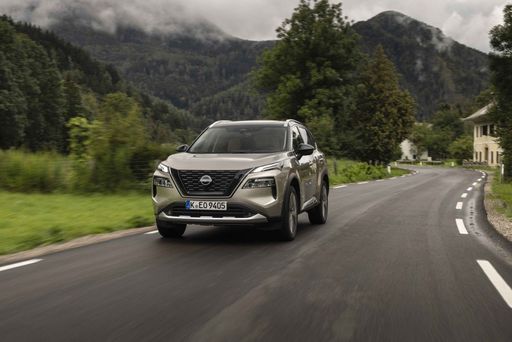
The Nissan X-Trail, known for its spaciousness and modern design, features multiple engine options tailored to suit different driving styles. The 2024 model offers a choice between a Petrol MHEV and a Full Hybrid engine, producing power outputs from 163 HP to an exhilarating 213 HP. These engines are paired with either a CVT or a reduction gearbox, transmitting power smoothly through both Front-Wheel Drive and All-Wheel Drive configurations.

Performance enthusiasts will appreciate the X-Trail's acceleration, achieving 0-100 km/h in as little as 7 seconds for the more powerful variants, and reaching top speeds of up to 200 km/h. Despite its robust capabilities, it maintains a reasonable fuel consumption range of 5.7 to 6.9 L/100km, ensuring efficiency on the road.

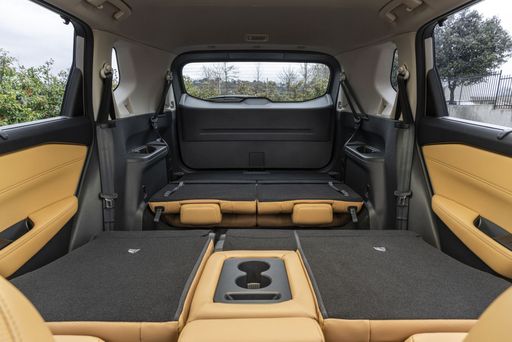
Inside, the X-Trail comfortably seats up to seven passengers, making it an ideal choice for families. The interior boasts a generous trunk capacity of up to 585 liters, perfect for those weekend getaways. Technological advancements are evident with features designed to enhance both safety and convenience. The vehicle is built with an emphasis on sustainability, holding CO2 efficiency classes from F to E.


Yaris Cross

Toyota Yaris Cross: Economy and Efficiency

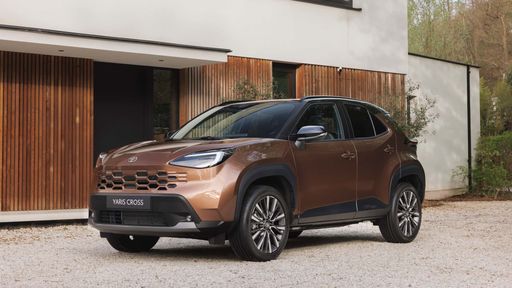
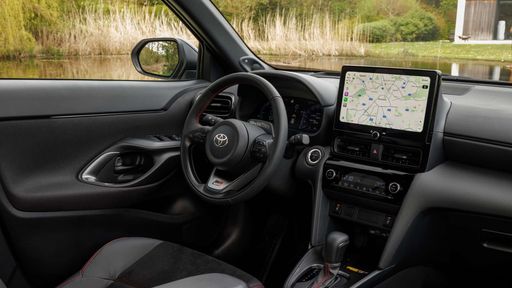
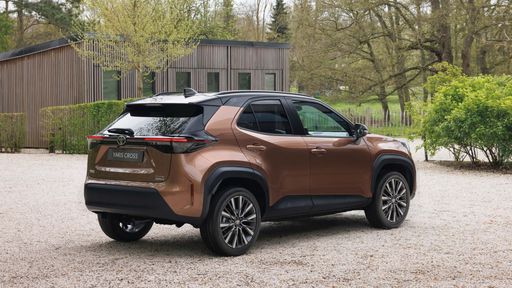
On the other hand, the Toyota Yaris Cross represents efficiency and maneuverability in the realm of city-centric SUVs. The 2024 and 2025 models are powered by a Full Hybrid engine delivering between 116 HP and 130 HP. This power is managed via a CVT transmission and solely focuses on Front-Wheel Drive, aligning with urban driving demands.

The Yaris Cross achieves admirable fuel consumption rates of just 4.5 to 4.8 L/100km, appealing to the environmentally conscious consumer. Though its acceleration from 0-100 km/h ranges from 10.7 to 11.3 seconds, the vehicle provides a balanced drive suitable for daily commutes and longer journeys alike.

With seating for five and a trunk capacity of up to 397 liters, the Yaris Cross provides ample space while maintaining a compact footprint. Its efficient design is complemented by a curb weight ranging from 1180 to 1290 kg, contributing to its agile handling characteristics. The CO2 efficiency class of C underscores its commitment to reduced emissions.

X-Trail

Conclusion: Choosing Your Ideal Compact SUV

In choosing between the Nissan X-Trail and Toyota Yaris Cross, potential buyers must consider their distinct needs. The X-Trail offers versatility and power ideal for those seeking family adventure in a tech-forward vehicle. Meanwhile, the Yaris Cross excels in fuel efficiency and city compatibility, making it a popular choice for urban dwellers focused on sustainability.

Ultimately, both models arrive equipped with their own innovations and advantages. Buyers are encouraged to examine how they prioritize performance, efficiency, and usability in their SUV experience. Both Nissan and Toyota continue to lead in producing vehicles that appeal to diverse lifestyles, ensuring there is an option for everyone in the compact SUV market.

Here’s where it gets real: The technical differences in detail

Yaris Cross

Costs and Efficiency:

Price and efficiency are key factors when choosing a car – and this is often where the real differences emerge.

Toyota Yaris Cross is significantly cheaper – starting at 23,700 £ , while the Nissan X-Trail costs 34,200 £ . That’s a price difference of around 10,466 £.

Fuel consumption also shows a difference: the Toyota Yaris Cross uses 4.5 L/100km and is markedly more efficient than the Nissan X-Trail with 5.7 L/100km. The difference is about 1.2 L/100km.

X-Trail

Engine and Performance:

Power, torque and acceleration are the classic benchmarks for car enthusiasts – and here, some clear differences start to show.

When it comes to engine power, the Nissan X-Trail offers noticeably more power – delivering 213 HP compared to 130 HP. That’s roughly 83 HP more horsepower.

When accelerating from 0 to 100 km/h, the Nissan X-Trail is clearly quicker – completing the sprint in 7 s, while the Toyota Yaris Cross takes 10.7 s. That’s about 3.7 s quicker.

Yaris Cross

Space and Everyday Use:

Beyond pure performance, interior space and usability matter most in daily life. This is where you see which car is more practical and versatile.

Seats: Nissan X-Trail offers more seats – 7 vs 5.

In terms of curb weight, Toyota Yaris Cross is significantly lighter – 1,180 kg compared to 1,668 kg. The difference is around 488 kg.

Looking at boot space, the Nissan X-Trail offers clearly more boot space – 585 L compared to 397 L. That’s a difference of about 188 L.

When it comes to payload, the Nissan X-Trail carries a bit more – 574 kg compared to 510 kg. That’s a difference of about 64 kg.

Who wins the race in the data check?

The Nissan X-Trail holds a decisive overall lead in the objective data comparison.
This result only shows which model scores more points on paper – not which of the two cars feels right for you.

from £34,200
X-Trail

Nissan X-Trail

  • Engine Type : Petrol MHEV, Full Hybrid
  • Transmission : Automatic
  • Drive Type : Front-Wheel Drive, All-Wheel Drive
  • Power HP : 163 - 213 HP
  • Consumption L/100km : 5.7 - 6.9 L/100km
Toyota Yaris Cross
Nissan X-Trail

Costs and Consumption

View detailed analysis

Engine and Performance

View detailed analysis

Dimensions and Body

View detailed analysis

Toyota Yaris Cross

The Toyota Yaris Cross takes the jaunty personality of the Yaris and gives it a taller stance and a bit more practicality, so you get city-friendly agility with added SUV presence. It’s easy to live with, economical on the daily grind, and smartly packaged — a sensible pick for buyers who want fuss-free transport with a touch of character.

details

Nissan X-Trail

The Nissan X-Trail is a roomy, no-nonsense family SUV that mixes sensible practicality with a quietly modern look, making it an easy choice for busy lives and weekend escapes. It drives with calm confidence, delivers a comfortable ride and sensible tech, and won’t demand drama while doing the everyday heavy lifting.

details
Toyota Yaris Cross
Nissan X-Trail

Costs and Consumption

Price
23,700 - 34,300 £
Price
34,200 - 50,500 £
Consumption L/100km
4.5 - 4.8 L/100km
Consumption L/100km
5.7 - 6.9 L/100km
Consumption kWh/100km
-
Consumption kWh/100km
-
Electric Range
-
Electric Range
-
Battery Capacity
-
Battery Capacity
-
co2
101 - 108 g/km
co2
131 - 161 g/km
Fuel tank capacity
-
Fuel tank capacity
-

Dimensions and Body

Body Type
SUV
Body Type
SUV
Seats
5
Seats
5 - 7
Doors
-
Doors
-
Curb weight
1,180 - 1,290 kg
Curb weight
1,668 - 1,961 kg
Trunk capacity
320 - 397 L
Trunk capacity
177 - 585 L
Length
-
Length
-
Width
1,765 mm
Width
1,840 mm
Height
-
Height
-
Max trunk capacity
-
Max trunk capacity
-
Payload
485 - 510 kg
Payload
432 - 574 kg

Engine and Performance

Engine Type
Full Hybrid
Engine Type
Petrol MHEV, Full Hybrid
Transmission
Automatic
Transmission
Automatic
Transmission Detail
CVT
Transmission Detail
CVT, Reduction Gearbox
Drive Type
Front-Wheel Drive, All-Wheel Drive
Drive Type
Front-Wheel Drive, All-Wheel Drive
Power HP
116 - 130 HP
Power HP
163 - 213 HP
Acceleration 0-100km/h
10.7 - 11.3 s
Acceleration 0-100km/h
7 - 9.6 s
Max Speed
-
Max Speed
-
Torque
-
Torque
300 - 525 Nm
Number of Cylinders
3
Number of Cylinders
3
Power kW
85 - 96 kW
Power kW
120 - 157 kW
Engine capacity
1,490 cm3
Engine capacity
1,497 cm3

General

Model Year
2,026
Model Year
2,025
CO2 Efficiency Class
C
CO2 Efficiency Class
F, D, E
Brand
Toyota
Brand
Nissan
DriveDuel uses data analysis and artificial intelligence to evaluate vehicle data and create content. Content is regularly reviewed and improved. The displayed prices are estimates based on German list prices, adjusted to the respective country’s VAT. Country-specific registration taxes are not included. This information is not legally binding.