VS

Toyota Yaris Cross vs Suzuki Vitara comparison

Compare performance (130 HP vs 184 HP), boot space and price (23,700 £ vs 23,600 £ ) at a glance. Find out which car is the better choice for you – Toyota Yaris Cross or Suzuki Vitara?

Toyota Yaris Cross vs Suzuki Vitara: Key differences

Toyota Yaris Cross

4 (8 Reviews)
rate
  • a bit more efficient
  • marginally lighter
  • only slightly more trunk space

Suzuki Vitara

4.5 (3 Reviews)
rate
  • barely cheaper
  • noticeably more power
  • substantially quicker 0–100 km/h

All details on performance, efficiency, range and trunk space can be found in the technical comparison below – including user reviews for both models.

Yaris Cross

Small SUVs, Big Personalities

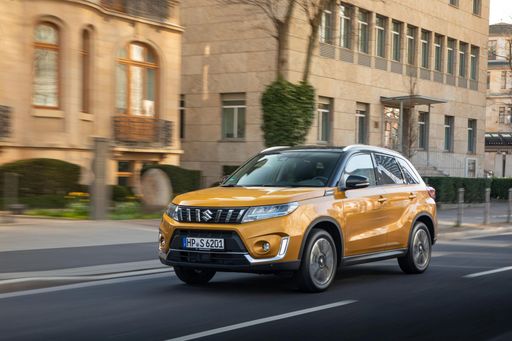
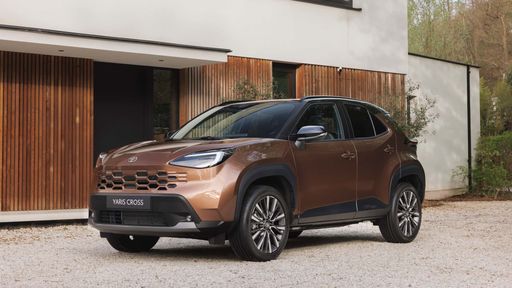
The Suzuki Vitara and Toyota Yaris Cross approach the same brief with very different accents. One is an old-school crossover with a tough, no-nonsense vibe, the other a city-savvy style piece with a green conscience. Both promise easy ownership and stress-free daily driving, but they charm in their own ways. Consider this a contrast between hiking boots and sleek sneakers—both practical, just tuned for different days.
Vitara

City Shuffle vs Country Stroll

The Yaris Cross feels right at home in tight streets, with light controls and a neat, eager attitude that makes urban errands painless. Push it and the powertrain prefers a measured approach, rewarding smooth drivers more than heavy-footed ones. The Vitara, by contrast, feels sturdier and more relaxed, shrugging off battered roads and speed bumps with a reassuring sturdiness. It’s the one you’ll happily point down a rough lane without a second thought.

Yaris Cross

Ride, Refinement and the Daily Grind

Toyota keeps the body tidy over bumps, so it corners neatly, though you’ll notice a firmer edge on patchy tarmac. The Vitara rides with a softer, more easygoing gait, rounding off imperfections while letting a bit more surface noise through on harsher textures. On longer stretches both settle into a calm cruise, but they encourage different tempos. The Toyota prefers a gentle rhythm; the Suzuki is content to lope along without fuss.

Vitara

Cabin Feel: Buttons or Swipes?

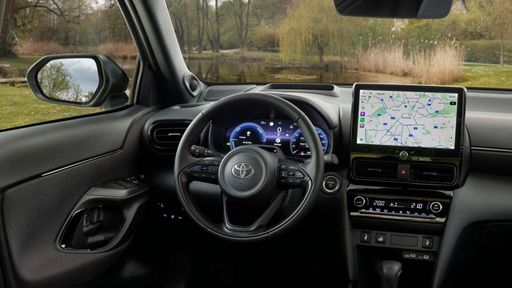
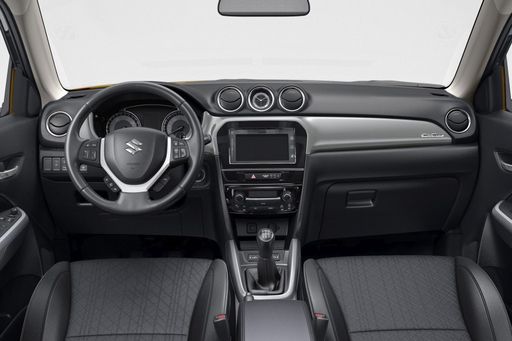
Inside, the Yaris Cross brings a more modern presentation, with crisp graphics and an interface that feels up to date, even if some menus take a moment to learn. The Vitara counters with an honest, button-forward layout that’s blissfully simple on the move. Materials lean durable rather than plush, but nothing distracts from the business of driving. Think contemporary studio versus well-organized workshop—both get the job done.

Yaris Cross

Space to Live With

Both cars are sized just right for everyday life, with decent visibility and seating that makes hopping in and out easy. The Vitara’s upright shape gifts it an airy feel and a square opening that’s friendly to bulky items. The Yaris Cross answers with clever storage touches and a flexible load area that adapts to shopping, strollers, or a weekend away. Rear space is usable in both, best suited to kids or occasional adult trips.

Vitara

Running Costs and Peace of Mind

The Toyota leans heavily into efficiency and low-stress commuting, which pays off if most of your miles are urban. Suzuki plays the value card: straightforward ownership, sensible spec, and an unfussy nature that keeps life simple. Both brands trade on reliability, and dealer support is widespread, so there’s no anxiety in choosing either. Your wallet will like the Toyota’s sipping habits; your head might admire the Vitara’s honest, no-drama approach.

Yaris Cross

Which Driver Fits Which Car?

If you’re a commuter who wants a stylish companion with slick tech and a calm city demeanor, the Yaris Cross fits like a glove. If your weekends involve muddy car parks, country detours, or you just prefer a tougher, more traditional feel, the Vitara will win you over. Long-distance users will appreciate the Suzuki’s laid-back stride, while the Toyota rewards measured drivers with an easy, efficient routine. Different vibes, same mission: keep your life moving without fuss.

Vitara

The Final Word Awaits

Two strong contenders, each with a clear character and a sensible case to make. The choice hinges on where you drive and what you value most. Keep reading—our DriveDuel Champion is about to be revealed.

Here’s where it gets real: The technical differences in detail

Yaris Cross

Costs and Efficiency:

Looking at overall running costs, both models reveal some interesting differences in everyday economy.

Suzuki Vitara is barely cheaper – starting at 23,600 £ , while the Toyota Yaris Cross costs 23,700 £ . That’s a price difference of around 120 £.

Fuel consumption also shows a difference: the Toyota Yaris Cross uses 4.5 L/100km and is a bit more efficient than the Suzuki Vitara with 5 L/100km. The difference is about 0.5 L/100km.

Vitara

Engine and Performance:

Power, torque and acceleration are the classic benchmarks for car enthusiasts – and here, some clear differences start to show.

When it comes to engine power, the Suzuki Vitara offers noticeably more power – delivering 184 HP compared to 130 HP. That’s roughly 54 HP more horsepower.

When accelerating from 0 to 100 km/h, the Suzuki Vitara is substantially quicker – completing the sprint in 7.4 s, while the Toyota Yaris Cross takes 10.7 s. That’s about 3.3 s quicker.

Yaris Cross

Space and Everyday Use:

Whether family car or daily driver – which one offers more room, flexibility and comfort?

Both vehicles offer seating for 5 people.

In terms of curb weight, Toyota Yaris Cross is marginally lighter – 1,180 kg compared to 1,255 kg. The difference is around 75 kg.

Looking at boot space, the Toyota Yaris Cross offers only slightly more boot space – 397 L compared to 375 L. That’s a difference of about 22 L.

When it comes to payload, the Toyota Yaris Cross carries somewhat more – 510 kg compared to 425 kg. That’s a difference of about 85 kg.

Who wins the race in the data check?

The Suzuki Vitara is far ahead overall in the objective data comparison.
This result only shows which model scores more points on paper – not which of the two cars feels right for you.

from £23,600
Vitara

Suzuki Vitara

  • Engine Type : Petrol MHEV, Full Hybrid, Electric
  • Transmission : Manuel, Automatic
  • Drive Type : Front-Wheel Drive, All-Wheel Drive
  • Power HP : 110 - 184 HP
  • Consumption L/100km : 5 - 5.9 L/100km
  • Consumption kWh/100km : 14.9 - 16.6 kWh/100km
  • Electric Range : 344 - 426 km
Toyota Yaris Cross
Suzuki Vitara

Costs and Consumption

View detailed analysis

Engine and Performance

View detailed analysis

Dimensions and Body

View detailed analysis

Toyota Yaris Cross

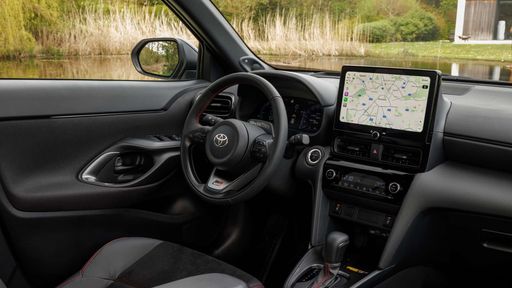
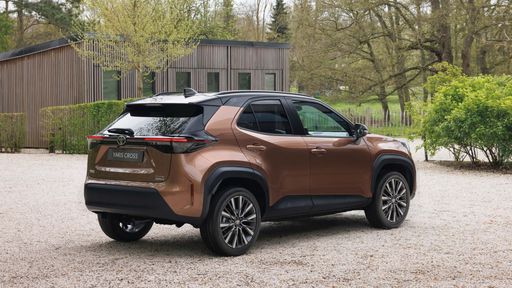
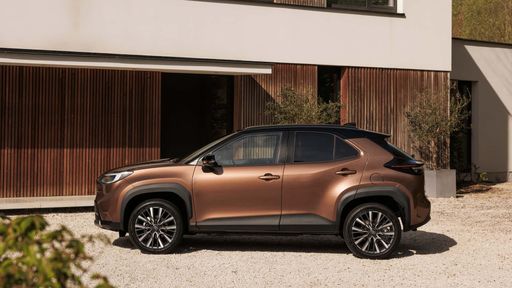
The Toyota Yaris Cross takes the jaunty personality of the Yaris and gives it a taller stance and a bit more practicality, so you get city-friendly agility with added SUV presence. It’s easy to live with, economical on the daily grind, and smartly packaged — a sensible pick for buyers who want fuss-free transport with a touch of character.

details

Suzuki Vitara

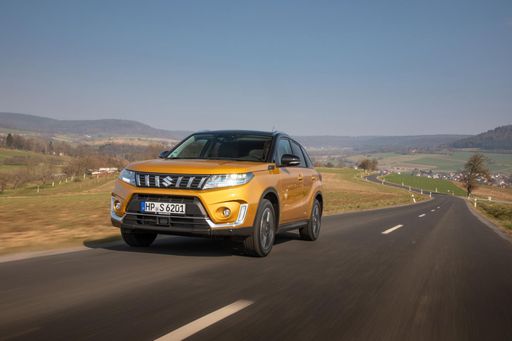
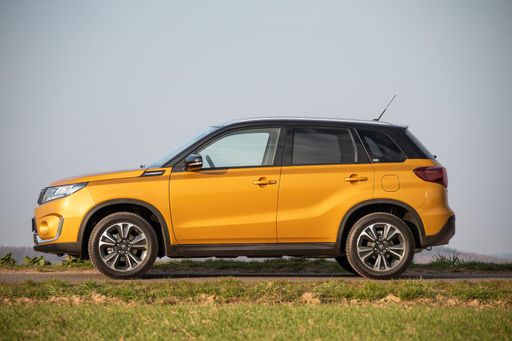
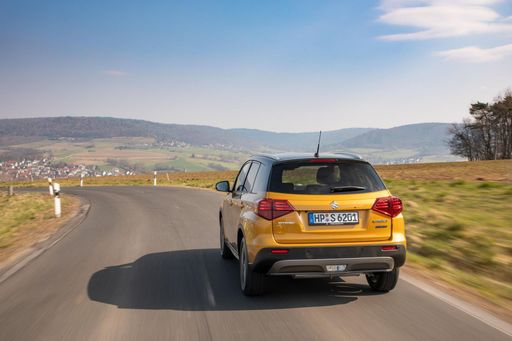
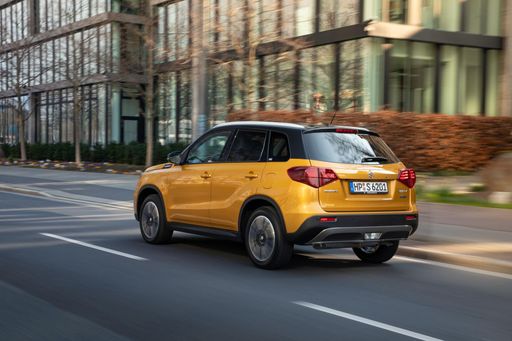
The Vitara is a city-smart SUV with a cheeky streak of off-road promise, perfect for drivers who want practicality without pretense. It’s honest, easy to live with and surprisingly likeable, a sensible companion for everyday adventures and weekend escapes.

details
Toyota Yaris Cross
Suzuki Vitara

Costs and Consumption

Price
23,700 - 34,300 £
Price
23,600 - 36,800 £
Consumption L/100km
4.5 - 4.8 L/100km
Consumption L/100km
5 - 5.9 L/100km
Consumption kWh/100km
-
Consumption kWh/100km
14.9 - 16.6 kWh/100km
Electric Range
-
Electric Range
344 - 426 km
Battery Capacity
-
Battery Capacity
-
co2
101 - 108 g/km
co2
0 - 138 g/km
Fuel tank capacity
-
Fuel tank capacity
47 L

Dimensions and Body

Body Type
SUV
Body Type
SUV
Seats
5
Seats
5
Doors
-
Doors
5
Curb weight
1,180 - 1,290 kg
Curb weight
1,255 - 1,935 kg
Trunk capacity
320 - 397 L
Trunk capacity
289 - 375 L
Length
-
Length
4,185 mm
Width
1,765 mm
Width
1,775 - 1,800 mm
Height
-
Height
1,595 mm
Max trunk capacity
-
Max trunk capacity
1,046 - 1,120 L
Payload
485 - 510 kg
Payload
375 - 425 kg

Engine and Performance

Engine Type
Full Hybrid
Engine Type
Petrol MHEV, Full Hybrid, Electric
Transmission
Automatic
Transmission
Manuel, Automatic
Transmission Detail
CVT
Transmission Detail
Manual Gearbox, Automated Manual, Automatic Gearbox
Drive Type
Front-Wheel Drive, All-Wheel Drive
Drive Type
Front-Wheel Drive, All-Wheel Drive
Power HP
116 - 130 HP
Power HP
110 - 184 HP
Acceleration 0-100km/h
10.7 - 11.3 s
Acceleration 0-100km/h
7.4 - 12.7 s
Max Speed
-
Max Speed
180 - 190 km/h
Torque
-
Torque
193 - 307 Nm
Number of Cylinders
3
Number of Cylinders
4
Power kW
85 - 96 kW
Power kW
81 - 135 kW
Engine capacity
1,490 cm3
Engine capacity
1,373 - 1,462 cm3

General

Model Year
2,026
Model Year
2,024 - 2,026
CO2 Efficiency Class
C
CO2 Efficiency Class
D, C, E, A
Brand
Toyota
Brand
Suzuki
DriveDuel uses data analysis and artificial intelligence to evaluate vehicle data and create content. Content is regularly reviewed and improved. The displayed prices are estimates based on German list prices, adjusted to the respective country’s VAT. Country-specific registration taxes are not included. This information is not legally binding.