VS

Volvo EX30 vs MINI Aceman comparison

Compare performance (428 HP vs 258 HP), boot space and price (33,000 £ vs 25,500 £ ) at a glance. Find out which car is the better choice for you – Volvo EX30 or MINI Aceman?

Volvo EX30 vs MINI Aceman: Key differences

Volvo EX30

3.6 (5 Reviews)
rate
  • noticeably more power
  • somewhat more electric range
  • considerably quicker 0–100 km/h
  • only slightly more trunk space

MINI Aceman

4.6 (1 Reviews)
rate
  • noticeably cheaper
  • markedly more efficient
  • marginally lighter

All details on performance, efficiency, range and trunk space can be found in the technical comparison below – including user reviews for both models.

EX30

Electric Showdown: MINI Aceman vs. Volvo EX30

As the automotive industry increasingly pivots towards electrification, the spotlight is on two intriguing contenders in the electric SUV market: the MINI Aceman and the Volvo EX30. Both models embody innovative design and advanced technology, appealing to eco-conscious consumers seeking style and performance. This article dives deep into the specifications, features, and innovations that make these electric SUVs stand out.
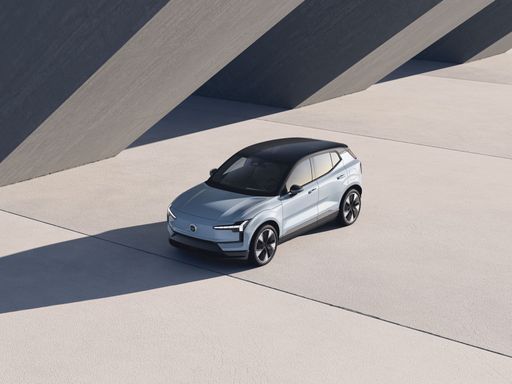
Aceman

Powertrain and Performance

The MINI Aceman boasts a lineup of powerful electric options ranging from 184 to 258 HP, courtesy of its front-wheel-drive setup. With torque figures peaking at 350 Nm, it exhibits spirited acceleration, claiming 0-100 km/h times ranging from 6.4 to 7.9 seconds. In contrast, the Volvo EX30 takes performance up a notch with a rear-wheel-drive option and an exhilarating all-wheel-drive alternative. The EX30 features power outputs from 272 to an incredible 428 HP and showcases torque numbers that soar to 543 Nm, allowing for a blistering 0-100 km/h time of just 3.6 seconds in its most potent configuration.

EX30

Battery and Range

Range anxiety is often a concern for electric vehicle owners, but both the Aceman and EX30 address this with commendable ranges. The Aceman offers an electric range of up to 405 km, powered by battery options of 38.5 kWh and 49.2 kWh. On the other hand, the EX30 raises the bar with an impressive maximum range of 476 km using its larger 65 kWh battery. This makes the EX30 a potentially more suitable choice for those with longer commutes or more adventurous travel plans.

Aceman

Efficiency and Consumption

Efficiency is key in the electric vehicle realm, and the MINI Aceman showcases remarkable figures between 14.0 to 16.0 kWh/100 km. These stats highlight its capabilities as an efficient urban runabout. The Volvo EX30, while slightly less efficient, maintains a competitive edge with consumption figures around 17 to 17.5 kWh/100 km. Both models carry a CO2 efficiency class rating of 'A', reinforcing their commitment to sustainability.

EX30

Dimensions and Interior Space

When it comes to size, the Volvo EX30 is more generous, measuring 4,233 mm in length and 1,837 mm in width, compared to the MINI Aceman’s 4,079 mm length and 1,754 mm width. This translates to slightly more interior and trunk space, with the EX30 providing 318 liters of cargo space, while the Aceman provides 300 liters. Both models offer seating for five, making them practical choices for families or groups.

Aceman

Innovative Features and Technology

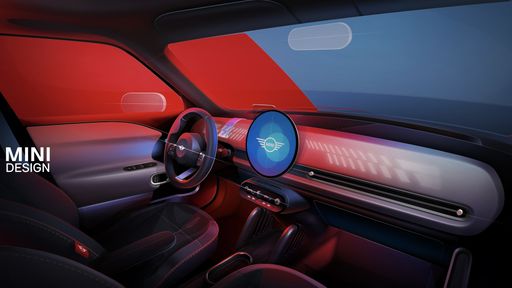
Both models embrace cutting-edge technology. The MINI Aceman integrates a high-definition infotainment system, advanced driver-assistance features, and customisable ambient lighting, highlighting MINI's playful spirit and user-focused design. The Aceman’s interior emphasizes a modern aesthetic combined with familiar MINI touches, offering a unique driving experience.

Conversely, the Volvo EX30 prioritizes safety and sophistication, equipped with an array of driver assistance systems and Volvo’s signature safety features. Its interior is minimalist yet functional, filled with premium materials that reflect Scandinavian design sensibilities.

EX30

Final Thoughts: Choosing Your Electric SUV

The decision between the MINI Aceman and the Volvo EX30 will largely depend on individual preferences and priorities. The Aceman is a stylish, efficient option that's perfect for urban driving, while the EX30 positions itself as a performance-oriented, spacious electric SUV suitable for various terrains and longer trips. Both models represent the future of electric mobility, pushing boundaries in design and innovation.

Here’s where it gets real: The technical differences in detail

EX30

Costs and Efficiency:

Price and efficiency are key factors when choosing a car – and this is often where the real differences emerge.

MINI Aceman is noticeably cheaper – starting at 25,500 £ , while the Volvo EX30 costs 33,000 £ . That’s a price difference of around 7,534 £.

In terms of energy consumption, the MINI Aceman is markedly more efficient: consuming 14 kWh/100km compared to 17 kWh/100km for the Volvo EX30. That’s a difference of about 3 kWh/100km.

As for electric range, the Volvo EX30 offers somewhat more range – reaching up to 476 km, about 71 km more than the MINI Aceman.

Aceman

Engine and Performance:

Power, torque and acceleration say a lot about how a car feels on the road. This is where you see which model delivers more driving dynamics.

When it comes to engine power, the Volvo EX30 offers noticeably more power – delivering 428 HP compared to 258 HP. That’s roughly 170 HP more horsepower.

When accelerating from 0 to 100 km/h, the Volvo EX30 is considerably quicker – completing the sprint in 3.6 s, while the MINI Aceman takes 6.4 s. That’s about 2.8 s quicker.

Looking at top speed, the MINI Aceman is only slightly faster – reaching 200 km/h, while the Volvo EX30 tops out at 180 km/h. The difference is around 20 km/h.

There’s also a difference in torque: the Volvo EX30 delivers noticeably more torque with 543 Nm compared to 350 Nm. That’s about 193 Nm more.

EX30

Space and Everyday Use:

Cabin size, boot volume and payload all play a role in everyday practicality. Here, comfort and flexibility make the difference.

Both vehicles offer seating for 5 people.

In terms of curb weight, MINI Aceman is marginally lighter – 1,720 kg compared to 1,840 kg. The difference is around 120 kg.

Looking at boot space, the Volvo EX30 offers only slightly more boot space – 318 L compared to 300 L. That’s a difference of about 18 L.

For maximum load capacity, the MINI Aceman offers barely more capacity – up to 1,005 L, about 5 L more than the Volvo EX30.

When it comes to payload, the MINI Aceman carries visibly more – 530 kg compared to 390 kg. That’s a difference of about 140 kg.

Who wins the race in the data check?

The Volvo EX30 is far ahead overall in the objective data comparison.
This result only shows which model scores more points on paper – not which of the two cars feels right for you.

from £33,000
EX30

Volvo EX30

  • Engine Type : Electric
  • Transmission : Automatic
  • Drive Type : Rear-Wheel Drive, All-Wheel Drive
  • Power HP : 272 - 428 HP
  • Consumption kWh/100km : 17 - 18.3 kWh/100km
  • Electric Range : 339 - 476 km
Volvo EX30
MINI Aceman

Costs and Consumption

View detailed analysis

Engine and Performance

View detailed analysis

Dimensions and Body

View detailed analysis

Volvo EX30

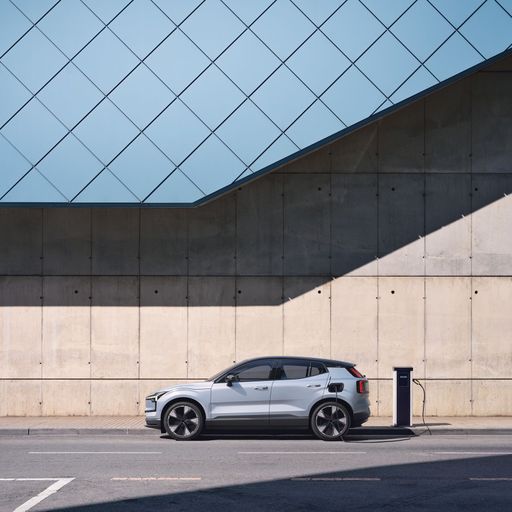
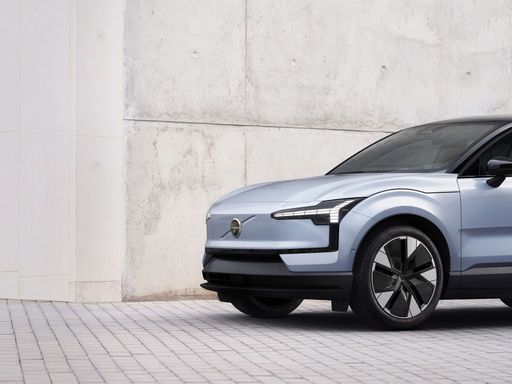
The Volvo EX30 arrives as a compact electric with crisp Scandinavian design and a cheeky personality, proving you can be serious about safety and still enjoy a grin on your commute. Its cabin is cleverly packaged and delightfully easy to live with, offering smart tech and practical touches that make it feel like a grown-up's city car with a sense of fun.

details

MINI Aceman

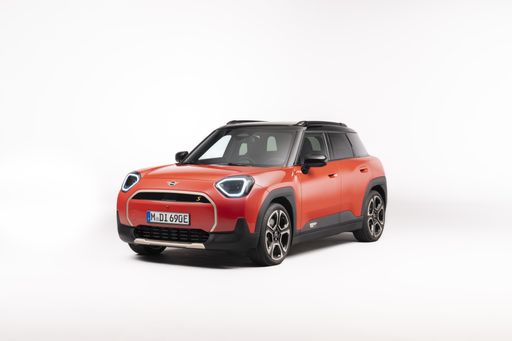
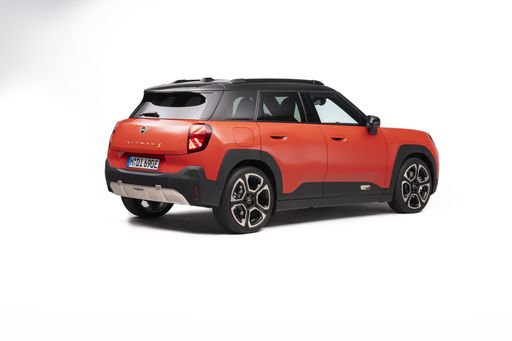
The MINI Aceman squeezes classic MINI charm into a sharper, more crossover-ready shape, trading some of the old curves for grown-up practicality while keeping the wink-and-grin personality buyers crave. Inside it's a surprisingly premium, customizable cabin that feels clever rather than cluttered, and on the road the Aceman is eager and nimble — ideal for city dwellers who want an SUV silhouette with proper fun behind the wheel.

details
Volvo EX30
MINI Aceman

Costs and Consumption

Price
33,000 - 49,100 £
Price
25,500 - 36,200 £
Consumption L/100km
-
Consumption L/100km
-
Consumption kWh/100km
17 - 18.3 kWh/100km
Consumption kWh/100km
14 - 16 kWh/100km
Electric Range
339 - 476 km
Electric Range
303 - 405 km
Battery Capacity
49 - 65 kWh
Battery Capacity
38.5 - 49.2 kWh
co2
0 g/km
co2
0 g/km
Fuel tank capacity
-
Fuel tank capacity
-

Dimensions and Body

Body Type
SUV
Body Type
SUV
Seats
5
Seats
5
Doors
5
Doors
5
Curb weight
1,840 - 1,960 kg
Curb weight
1,720 - 1,825 kg
Trunk capacity
318 L
Trunk capacity
300 L
Length
4,233 mm
Length
4,079 mm
Width
1,838 mm
Width
1,754 mm
Height
1,550 mm
Height
1,514 mm
Max trunk capacity
1,000 L
Max trunk capacity
1,005 L
Payload
370 - 390 kg
Payload
450 - 530 kg

Engine and Performance

Engine Type
Electric
Engine Type
Electric
Transmission
Automatic
Transmission
Automatic
Transmission Detail
Reduction Gearbox
Transmission Detail
Reduction Gearbox
Drive Type
Rear-Wheel Drive, All-Wheel Drive
Drive Type
Front-Wheel Drive
Power HP
272 - 428 HP
Power HP
184 - 258 HP
Acceleration 0-100km/h
3.6 - 5.7 s
Acceleration 0-100km/h
6.4 - 7.9 s
Max Speed
180 km/h
Max Speed
160 - 200 km/h
Torque
343 - 543 Nm
Torque
290 - 350 Nm
Number of Cylinders
-
Number of Cylinders
-
Power kW
200 - 315 kW
Power kW
135 - 190 kW
Engine capacity
-
Engine capacity
-

General

Model Year
2,024 - 2,025
Model Year
2,024 - 2,026
CO2 Efficiency Class
A
CO2 Efficiency Class
A
Brand
Volvo
Brand
MINI
DriveDuel uses data analysis and artificial intelligence to evaluate vehicle data and create content. Content is regularly reviewed and improved. The displayed prices are estimates based on German list prices, adjusted to the respective country’s VAT. Country-specific registration taxes are not included. This information is not legally binding.