@ Volvo Cars
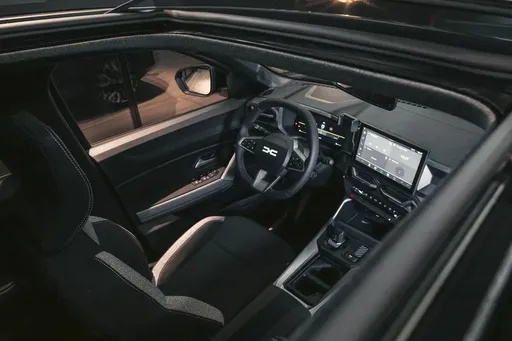
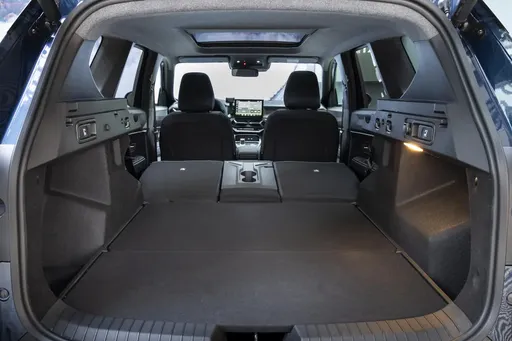
@ Dacia / Renault Group Media
VS

Volvo XC90 vs Dacia Bigster – Which one offers the better deal?

Both models have their strengths – but which one suits you more?
Compare performance, efficiency, price and space directly: Volvo XC90 or Dacia Bigster?

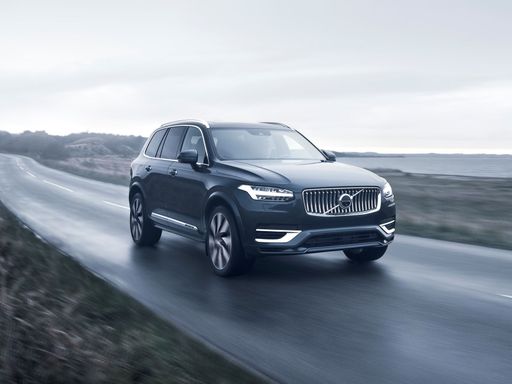
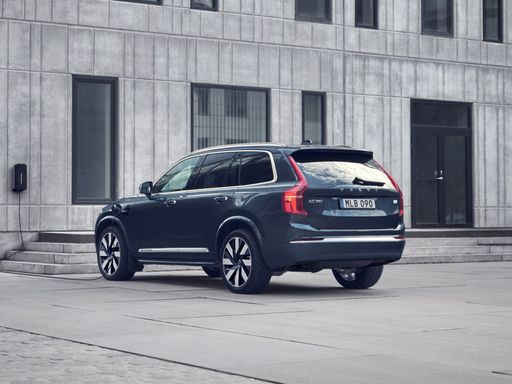
XC90 @ Volvo Cars

A Clash of Titans: Volvo XC90 vs. Dacia Bigster

As the SUV market continues to expand, buyers are faced with a plethora of choices, each offering unique combinations of style, performance, and technology. Today, we dive into the intricacies of two popular contenders in this space: the upscale Volvo XC90 and the practical yet ambitious Dacia Bigster. Both vehicles have their charms, but let’s delve into the details to see which one best suits your lifestyle.
Bigster @ Dacia / Renault Group Media

Performance and Power

The Volvo XC90 is no stranger to power and sophistication. Available in both petrol mild-hybrid and plug-in hybrid variants, it boasts power outputs of 250 HP and a robust 455 HP, allowing it to sprint from 0-100 km/h in impressive times ranging from 7.7 to 5.4 seconds. Featuring an all-wheel-drive system, its operation is smooth and suitable for a variety of terrains, making it an ideal choice for those who seek versatility and luxury.

On the other hand, the Dacia Bigster presents itself as a solid performer albeit at a different segment of the market. With power ranging from 130 HP to 155 HP, depending on the engine choice (petrol MHEV, full hybrid, LPG), it achieves 0-100 km/h times between 11.2 and 9.7 seconds. Though not as quick as its Swedish rival, the Bigster emphasizes efficiency and affordability, making it a practical choice for everyday driving.

XC90 @ Volvo Cars

Efficiency and Environmental Impact

Volvo has made a significant push towards sustainability with its plug-in hybrid XC90 variant achieving a super low consumption rate of 1.2 L/100km and an electric range of 71 km. Carbon emissions are impressively minimized to 30 g/km, placing it in the B CO2 efficiency class. However, its petrol MHEV version does carry higher emissions at 191 g/km (efficiency class G).

The Dacia Bigster, with its assortment of engines, offers reasonable efficiency in its class: the petrol MHEV option provides consumption of 6.1 L/100km, while its hybrid and LPG variants boast even better figures (5.5 and 4.7 L/100km, respectively). Its CO2 emissions range from 137 to a commendable 106 g/km, aligning with varied efficiency classes, from E to C.

Bigster @ Dacia / Renault Group Media

Space and Practicality

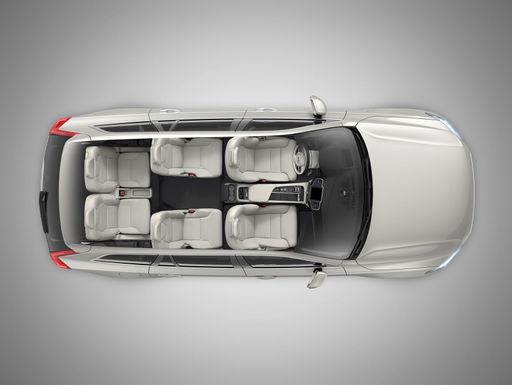
In terms of space, the XC90 stands tall with seating for seven and a functional trunk capacity of 302 liters, which reduces slightly to 262 liters when utilizing its plug-in hybrid technology. With a length of 4953 mm, width of 1923 mm, and height of 1771 mm, it provides a spacious interior and comfortable ride for families and those in need of extra seating.

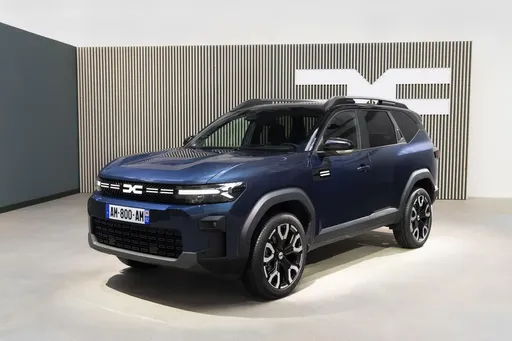
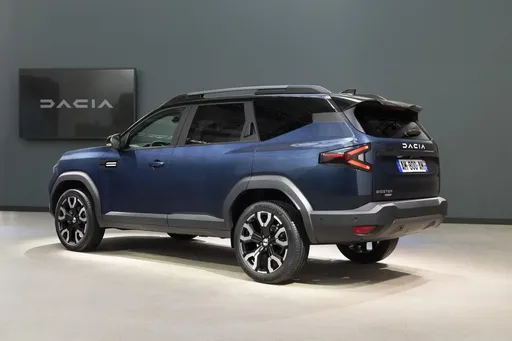
Conversely, the Bigster, with its more compact dimensions (4570 mm in length, 1813 mm in width, and 1705 mm in height), accommodates up to five passengers. However, it trumps the XC90 in trunk space with capacities ranging from 546 to an ample 667 liters, appealing to those prioritizing cargo space.

XC90 @ Volvo Cars

Innovation and Technology

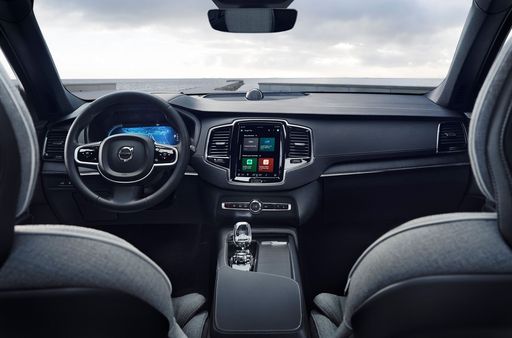
The Volvo XC90 shines in the innovation department, equipped with state-of-the-art features expected from a luxury SUV. Its technological advancements include adaptive digital displays, intuitive infotainment systems, and cutting-edge safety technologies that have become synonymous with the Volvo brand.

The Dacia Bigster, while not as lavish, focuses on delivering reliable and user-friendly technology. It might not boast the high-end techno-gadgets of the XC90, but delivers all the necessary technology for a modern driving experience, focusing on utility and affordability.

Bigster @ Dacia / Renault Group Media

Final Verdict

Choosing between the Volvo XC90 and the Dacia Bigster largely depends on individual priorities. The XC90 offers luxury, advanced performance, and eco-friendly options for the discerning buyer. Meanwhile, the Bigster provides practicality, affordability, and ample cargo space for those after value-for-money. Ultimately, each represents a pinnacle of its respective class, tailored for distinct buyer needs in the ever-evolving SUV landscape.

Here’s where it gets real: The technical differences in detail

XC90 @ Volvo Cars

Costs and Efficiency:

Price and efficiency are often the first things buyers look at. Here it becomes clear which model has the long-term edge – whether at the pump, the plug, or in purchase price.

Dacia Bigster has a clearly advantage in terms of price – it starts at 20600 £, while the Volvo XC90 costs 69800 £. That’s a price difference of around 49200 £.

Fuel consumption also shows a difference: Volvo XC90 manages with 3.50 L and is therefore evident more efficient than the Dacia Bigster with 4.70 L. The difference is about 1.20 L per 100 km.

Bigster @ Dacia / Renault Group Media

Engine and Performance:

Under the bonnet, it becomes clear which model is tuned for sportiness and which one takes the lead when you hit the accelerator.

When it comes to engine power, the Volvo XC90 has a significantly edge – offering 455 HP compared to 155 HP. That’s roughly 300 HP more horsepower.

In acceleration from 0 to 100 km/h, the Volvo XC90 is convincingly quicker – completing the sprint in 5.40 s, while the Dacia Bigster takes 9.70 s. That’s about 4.30 s faster.

There’s no difference in top speed – both reach 180 km/h.

There’s also a difference in torque: Volvo XC90 pulls decisively stronger with 709 Nm compared to 230 Nm. That’s about 479 Nm difference.

XC90 @ Volvo Cars

Space and Everyday Use:

Beyond pure performance, interior space and usability matter most in daily life. This is where you see which car is more practical and versatile.

Seats: Volvo XC90 offers evident more seating capacity – 7 vs 5.

In curb weight, Dacia Bigster is significantly lighter – 1425 kg compared to 2080 kg. The difference is around 655 kg.

In terms of boot space, the Dacia Bigster offers convincingly more room – 667 L compared to 302 L. That’s a difference of about 365 L.

In maximum load capacity, the Dacia Bigster performs minimal better – up to 1937 L, which is about 81 L more than the Volvo XC90.

When it comes to payload, Volvo XC90 noticeable takes the win – 710 kg compared to 467 kg. That’s a difference of about 243 kg.

Who comes out on top?

Overall, the Volvo XC90 shows itself to be wins the duel decisively and secures the title of DriveDuel Champion.
It convinces with the more balanced overall package and proves to be the more versatile choice for everyday use.

from about £69,800
XC90 @ Volvo Cars

Volvo XC90

  • Engine Type : Petrol MHEV, Plugin Hybrid
  • Transmission : Automatic
  • Drive Type : All-Wheel Drive
  • Power HP : 250 - 455 HP
  • Consumption L/100km : 3.5 - 8.5 L
  • Electric Range : 71 km

Volvo XC90

5 (1)
rate

The Volvo XC90 is a serene Scandinavian SUV that mixes minimalist luxury with a composed, confidence-inspiring presence — ideal for buyers who want family practicality without sacrificing style. Inside it serves up a calm, well-crafted cabin and user-friendly tech that keeps long journeys pleasant and tantrums to a minimum, making the XC90 a smart, stylish pick for sensible drivers.

details

Dacia Bigster

5 (1)
rate

The Bigster is poised to redefine the SUV segment with its bold design and spacious interior, catering to the needs of both families and adventure seekers alike. Emphasizing sustainability and practicality, this model reflects a modern approach to automotive engineering, making it a compelling choice for environmentally conscious drivers. With its striking presence on the road, the Bigster not only captures attention but also embodies a new era of versatile mobility.

details
Volvo XC90
Dacia Bigster
XC90 @ Volvo Cars
Bigster @ Dacia / Renault Group Media

Costs and Consumption

Price
69800 - 84600 £
Price
20600 - 26600 £
Consumption L/100km
3.5 - 8.5 L
Consumption L/100km
4.7 - 7.1 L
Consumption kWh/100km
-
Consumption kWh/100km
-
Electric Range
71 km
Electric Range
-
Battery Capacity
14.70 kWh
Battery Capacity
-
co2
79 - 191 g/km
co2
106 - 137 g/km
Fuel tank capacity
71 L
Fuel tank capacity
50 - 55 L

Dimensions and Body

Body Type
SUV
Body Type
SUV
Seats
7
Seats
5
Doors
5
Doors
5
Curb weight
2080 - 2297 kg
Curb weight
1425 - 1547 kg
Trunk capacity
262 - 302 L
Trunk capacity
510 - 667 L
Length
4953 mm
Length
4570 mm
Width
1923 mm
Width
1813 mm
Height
1771 mm
Height
1705 mm
Max trunk capacity
1816 - 1856 L
Max trunk capacity
1813 - 1937 L
Payload
653 - 710 kg
Payload
383 - 467 kg

Engine and Performance

Engine Type
Petrol MHEV, Plugin Hybrid
Engine Type
Petrol MHEV, Full Hybrid, LPG
Transmission
Automatic
Transmission
Manuel, Automatic
Transmission Detail
Automatic Gearbox
Transmission Detail
Manual Gearbox, Automated Manual
Drive Type
All-Wheel Drive
Drive Type
All-Wheel Drive, Front-Wheel Drive
Power HP
250 - 455 HP
Power HP
130 - 155 HP
Acceleration 0-100km/h
5.4 - 7.7 s
Acceleration 0-100km/h
9.7 - 11.2 s
Max Speed
180 km/h
Max Speed
180 km/h
Torque
360 - 709 Nm
Torque
230 Nm
Number of Cylinders
4
Number of Cylinders
3 - 4
Power kW
184 - 335 kW
Power kW
96 - 115 kW
Engine capacity
1969 cm3
Engine capacity
1199 - 1799 cm3

General

Model Year
2024 - 2025
Model Year
2025
CO2 Efficiency Class
G, B
CO2 Efficiency Class
E, D, C
Brand
Volvo
Brand
Dacia
What drivetrain options does the Volvo XC90 have?

Available configurations include All-Wheel Drive.

The prices and data displayed are estimates based on German list prices and may vary by country. This information is not legally binding.