VS

VW T-Roc vs Audi Q3 comparison

Compare performance (150 HP vs 272 HP), boot space and price (26,400 £ vs 38,200 £ ) at a glance. Find out which car is the better choice for you – VW T-Roc or Audi Q3?

VW T-Roc vs Audi Q3: Key differences

VW T-Roc

4.7 (4 Reviews)
rate
  • considerably cheaper
  • somewhat lighter

Audi Q3

5 (1 Reviews)
rate
  • clearly more power
  • considerably more efficient
  • considerably quicker 0–100 km/h
  • considerably more trunk space

All details on performance, efficiency, range and trunk space can be found in the technical comparison below – including user reviews for both models.

T-Roc

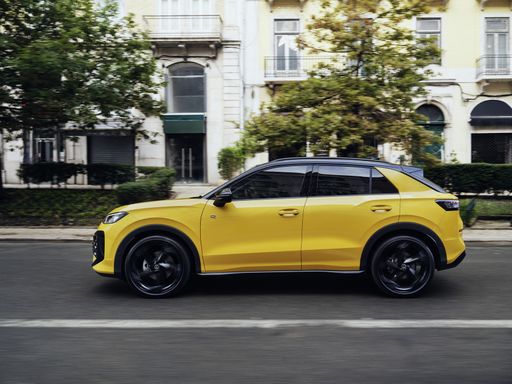
Street Presence: Personality at a Glance

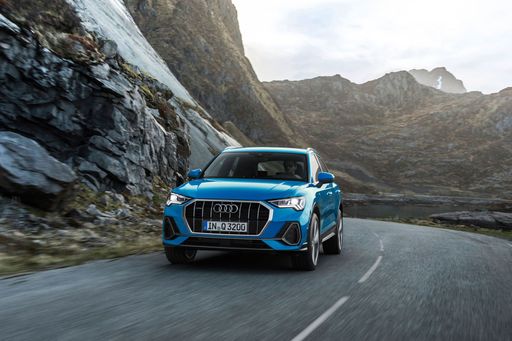
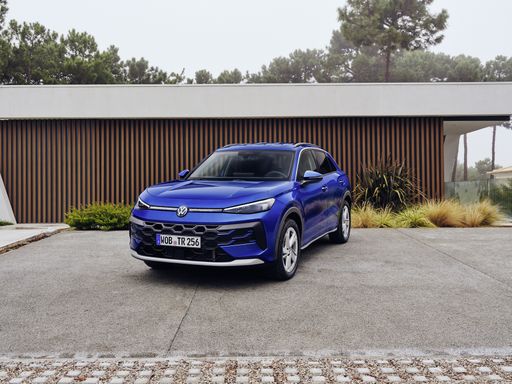
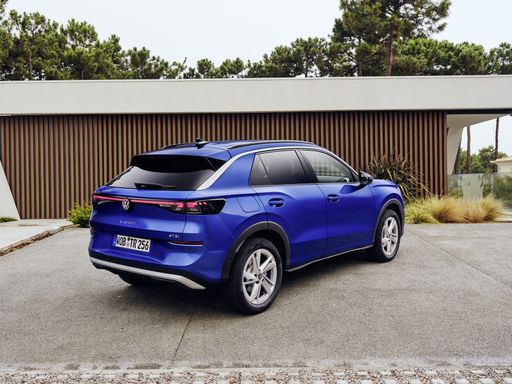
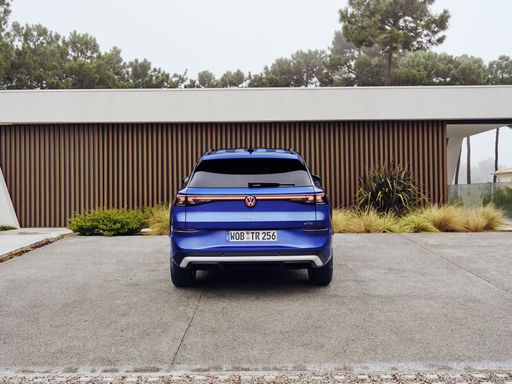
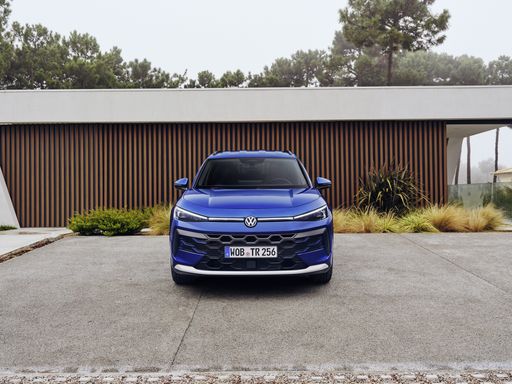
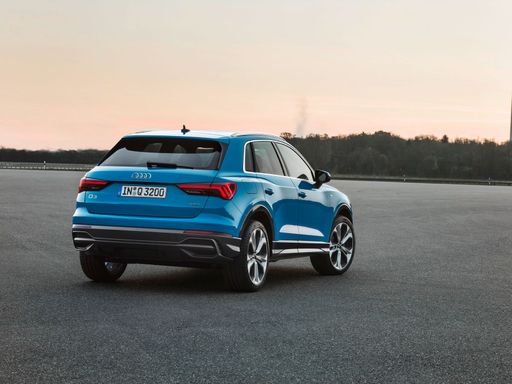
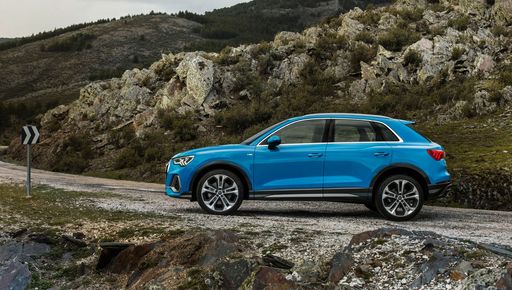
The compact coupe-ish stance of the Audi Q3 feels deliberately premium, while the VW T‑Roc wears a livelier, more youthful look that wants to be noticed in the city. The Q3’s styling reads refined and restrained — it’s the kind of car that says “understated money” — whereas the T‑Roc’s bolder cues give it a cheeky, outgoing character. Buyers who care about image will lean one way or the other depending on whether they prefer conservative luxury or playful personality.

Q3

Behind the Wheel: Character and Choreography

On the move the two SUVs take very different approaches: the Audi Q3 trades tautness and precision for a composed, confidence-inspiring experience, while the VW T‑Roc feels lighter on its feet and more eager through town corners. Both are tidy and easy to live with, but the Q3 rewards those who prioritise calm and composure on longer stints, and the T‑Roc appeals to drivers who want a bit more sprightliness in everyday traffic. Steering, body control and pedal response combine to create two clearly distinct driving personalities rather than a single compromise solution.

T-Roc

Cabin Life: Daily Comfort and Usability

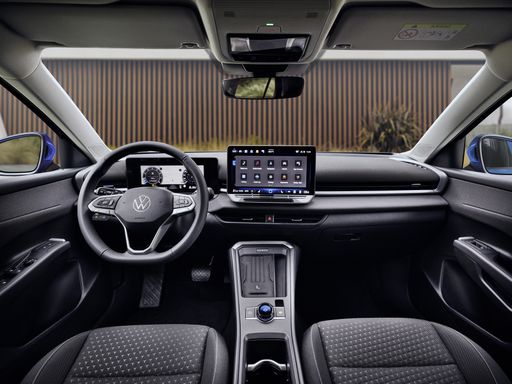
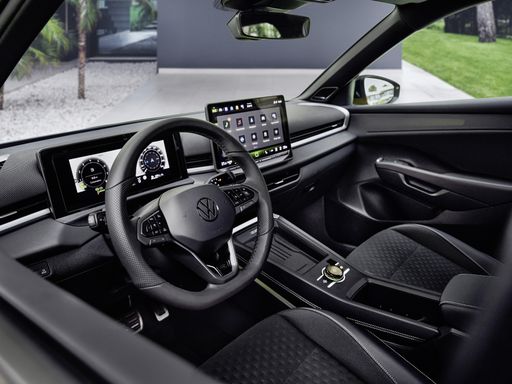
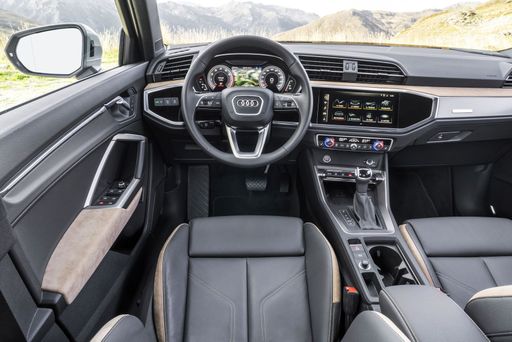
Step inside the Audi Q3 and you’re greeted by a cabin that skews premium, with materials and finishes that feel deliberately well put together; the VW T‑Roc counters with a practical, more playful interior that prioritises logic and ease of use. Both cabins are honest about their intentions: one leans towards a refined commute, the other towards a fuss-free user experience that families will appreciate. Ergonomics and visibility are solid in both, so neither will frustrate day-to-day duties.

Q3

Weekend Life and Practicality

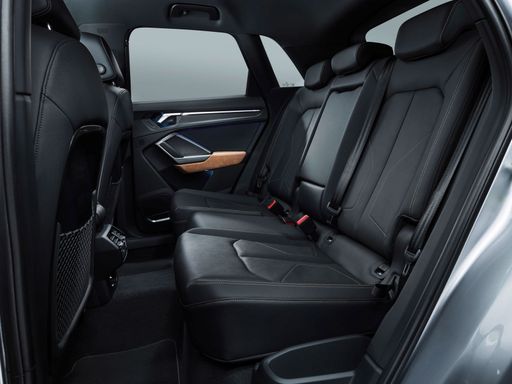
When it comes to living with either car, the T‑Roc makes a case for flexible, straightforward utility and easy city parking, while the Q3 emphasizes a slightly more grown-up approach to space and finish. Rear-seat comfort and adaptability are decent in both, making either a reasonable choice for small families, but the way they organise load space and cabin storage reflects their characters — practical versus polished. If you often juggle shopping, sports gear or weekend luggage, think about whether you want maximum convenience or a touch more refinement.

T-Roc

Ownership Angle: What You’ll Feel After a Year

Running either model will be a largely uneventful affair, but impressions diverge once you factor in perceived value versus brand cachet: the T‑Roc offers a sense of getting a lot for your money with an upbeat personality, while the Q3 offers a quieter confidence that some buyers find worth the premium. Service experience, build quality and residual confidence are delivered differently, so your feeling about long-term ownership will depend on whether you prize headline prestige or pragmatic practicality. Both are sensible choices; it’s a matter of what kind of ownership reassurance you prefer.

Q3

Your Shortlist: Which Buyer Fits Which Car?

If you’re a style-conscious commuter who favours a composed cabin and a refined feel, the Audi Q3 will sit nicely on your list; if you’re a young family or a city shopper who wants personality and usability without fuss, the VW T‑Roc will tick more boxes. Neither is an out-and-out sports car or a brute workhorse — they’re compact SUVs with clear, buyer-friendly characters aimed at different priorities. Read on to see which model the DriveDuel judges crown as the champion — the reveal follows immediately after this feature.

Here’s where it gets real: The technical differences in detail

T-Roc

Costs and Efficiency:

Price and efficiency are often the first things buyers look at. Here it becomes clear which model has the long-term edge – whether at the pump, the plug, or in purchase price.

VW T-Roc is considerably cheaper – starting at 26,400 £ , while the Audi Q3 costs 38,200 £ . That’s a price difference of around 11,790 £.

Fuel consumption also shows a difference: the Audi Q3 uses 1.7 L/100km and is considerably more efficient than the VW T-Roc with 5.5 L/100km. The difference is about 3.8 L/100km.

Q3

Engine and Performance:

Power, torque and acceleration say a lot about how a car feels on the road. This is where you see which model delivers more driving dynamics.

When it comes to engine power, the Audi Q3 offers clearly more power – delivering 272 HP compared to 150 HP. That’s roughly 122 HP more horsepower.

When accelerating from 0 to 100 km/h, the Audi Q3 is considerably quicker – completing the sprint in 5.7 s, while the VW T-Roc takes 8.9 s. That’s about 3.2 s quicker.

There’s also a difference in torque: the Audi Q3 delivers noticeably more torque with 400 Nm compared to 250 Nm. That’s about 150 Nm more.

T-Roc

Space and Everyday Use:

Beyond pure performance, interior space and usability matter most in daily life. This is where you see which car is more practical and versatile.

Both vehicles offer seating for 5 people.

In terms of curb weight, VW T-Roc is somewhat lighter – 1,465 kg compared to 1,635 kg. The difference is around 170 kg.

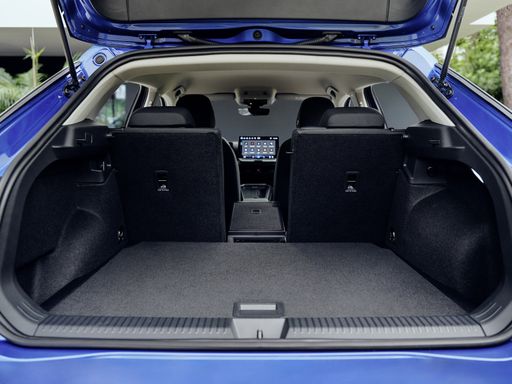
Looking at boot space, the Audi Q3 offers considerably more boot space – 488 L compared to 284 L. That’s a difference of about 204 L.

When it comes to payload, the Audi Q3 carries very slightly more – 535 kg compared to 515 kg. That’s a difference of about 20 kg.

Who wins the race in the data check?

The Audi Q3 is decisively ahead in the objective data comparison.
This result only shows which model scores more points on paper – not which of the two cars feels right for you.

from £38,200
Q3

Audi Q3

  • Engine Type : Petrol MHEV, Petrol, Plugin Hybrid, Diesel
  • Transmission : Automatic
  • Drive Type : Front-Wheel Drive, All-Wheel Drive
  • Power HP : 150 - 272 HP
  • Consumption L/100km : 1.7 - 8.6 L/100km
  • Electric Range : 118 - 119 km
VW T-Roc
Audi Q3

Costs and Consumption

View detailed analysis

Engine and Performance

View detailed analysis

Dimensions and Body

View detailed analysis

VW T-Roc

The VW T-Roc mixes cheeky, coupe-like styling with the everyday sense and space of an SUV, so it looks fun without sacrificing family sense. It’s a likeable all-rounder with tidy road manners and plenty of personality, ideal if you want a car that’s practical enough for chores but entertaining enough to enjoy.

details

Audi Q3

The Audi Q3 feels like a grown-up compact SUV with premium polish and city-friendly agility, the sort of car that makes weekend escapes and daily commutes equally satisfying. Inside, you get quality materials and smart packaging that keep things practical without skimping on style, so it’s an easy pick for buyers who want luxury without the drama.

details
VW T-Roc
Audi Q3

Costs and Consumption

Price
26,400 - 38,600 £
Price
38,200 - 52,900 £
Consumption L/100km
5.5 - 6.3 L/100km
Consumption L/100km
1.7 - 8.6 L/100km
Consumption kWh/100km
-
Consumption kWh/100km
-
Electric Range
-
Electric Range
118 - 119 km
Battery Capacity
-
Battery Capacity
-
co2
126 - 143 g/km
co2
39 - 195 g/km
Fuel tank capacity
-
Fuel tank capacity
-

Dimensions and Body

Body Type
SUV
Body Type
SUV
Seats
4 - 5
Seats
5
Doors
-
Doors
-
Curb weight
1,465 - 1,539 kg
Curb weight
1,635 - 1,900 kg
Trunk capacity
284 L
Trunk capacity
375 - 488 L
Length
-
Length
-
Width
1,811 - 1,828 mm
Width
1,859 mm
Height
-
Height
-
Max trunk capacity
-
Max trunk capacity
-
Payload
368 - 515 kg
Payload
505 - 535 kg

Engine and Performance

Engine Type
Petrol, Petrol MHEV
Engine Type
Petrol MHEV, Petrol, Plugin Hybrid, Diesel
Transmission
Manuel, Automatic
Transmission
Automatic
Transmission Detail
Manual Gearbox, Dual-Clutch Automatic
Transmission Detail
Dual-Clutch Automatic
Drive Type
Front-Wheel Drive
Drive Type
Front-Wheel Drive, All-Wheel Drive
Power HP
115 - 150 HP
Power HP
150 - 272 HP
Acceleration 0-100km/h
8.9 - 12.3 s
Acceleration 0-100km/h
5.7 - 9.2 s
Max Speed
-
Max Speed
-
Torque
200 - 250 Nm
Torque
250 - 400 Nm
Number of Cylinders
3 - 4
Number of Cylinders
4
Power kW
85 - 110 kW
Power kW
110 - 200 kW
Engine capacity
999 - 1,498 cm3
Engine capacity
1,498 - 1,984 cm3

General

Model Year
2,024 - 2,025
Model Year
2,025
CO2 Efficiency Class
E, D
CO2 Efficiency Class
E, G, B
Brand
VW
Brand
Audi
DriveDuel uses data analysis and artificial intelligence to evaluate vehicle data and create content. Content is regularly reviewed and improved. The displayed prices are estimates based on German list prices, adjusted to the respective country’s VAT. Country-specific registration taxes are not included. This information is not legally binding.