VS

VW T-Roc vs MINI Countryman comparison

Compare performance (150 HP vs 313 HP), boot space and price (26,400 £ vs 30,100 £ ) at a glance. Find out which car is the better choice for you – VW T-Roc or MINI Countryman?

VW T-Roc vs MINI Countryman: Key differences

VW T-Roc

4.7 (4 Reviews)
rate
  • somewhat cheaper
  • barely lighter

MINI Countryman

  • substantially more power
  • slightly more efficient
  • clearly quicker 0–100 km/h
  • significantly more trunk space

All details on performance, efficiency, range and trunk space can be found in the technical comparison below – including user reviews for both models.

T-Roc

A Spirited Showdown: MINI Countryman vs. VW T-Roc

In the contemporary compact SUV arena, two nameplates rise to prominence: the MINI Countryman and the VW T-Roc. Both vehicles exude charm, but when it comes to engineering, performance, and innovation, how do they really stack up against each other? Here we delve into an incisive comparison of these dynamic models, both tailored for the 2024 model year.
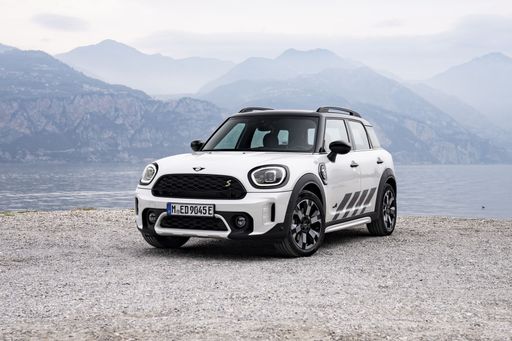
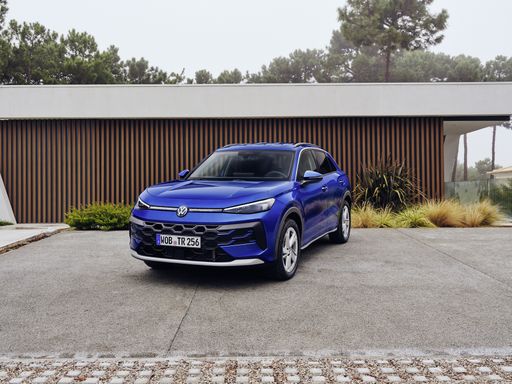
Countryman

Under the Hood: Performance and Power

The MINI Countryman leaps forward with a variety of engine choices, ranging from petrol mild-hybrid (MHEV), diesel MHEV, to a pure electric drive. The standout is the 313 HP electric variant, which offers brisk acceleration from 0-100 km/h in just 5.4 seconds, ensuring a thrilling drive. It also impresses with an electric range of up to 462 kilometers. For traditionalists, the petrol and diesel engines range up to 170 and 163 HP respectively, each with a dual-clutch automatic transmission for seamless shifts.

On the flip side, the VW T-Roc presents a mix of petrol and diesel engines, boasting power outputs from a modest 115 HP up to a sprightly 300 HP. The T-Roc's 300 HP variant accelerates from 0-100 km/h in a swift 4.9 seconds, courtesy of its all-wheel-drive system and dual-clutch automatic transmission.

T-Roc

Efficiency and Emissions

Fuel efficiency is paramount in modern vehicles, and here both models exhibit innovation. The MINI Countryman's electric variant shows a remarkable efficiency of 15.7 kWh/100 km. Its petrol engines also deliver competitive fuel consumption figures, with as low as 4.6 L/100 km and CO2 emissions starting at 120 g/km, making it a clean choice.

Conversely, the T-Roc delivers fuel economy figures from 4.7 to 6.3 L/100 km, depending on the engine, with CO2 emissions landing between 125 and 194 g/km. Though not as low as the Countryman's, it's efficient enough for those prioritizing petrol power.

Countryman

Interior Space and Practicality

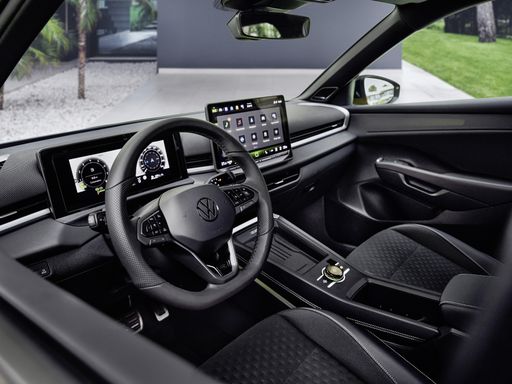
For those requiring practicality, both SUVs cater admirably. The MINI Countryman offers a decent trunk capacity of up to 505 liters, slightly exceeding that of the T-Roc's maximum of 445 liters. Both models comfortably seat five passengers, though the Countryman's slightly larger dimensions give it an edge in interior spaciousness.

T-Roc

Advanced Features and Innovation

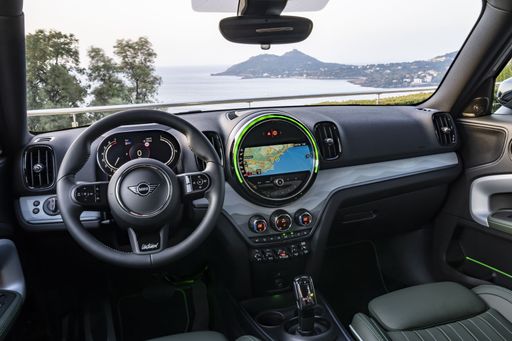
In terms of technology, the Countryman and T-Roc offer differing attractions. The Countryman's cutting-edge infotainment system with an intuitive interface pairs seamlessly with its eco-friendly powertrains, highlighting MINI's commitment to sustainable innovation.

The T-Roc, however, packs a punch with its array of driver-assistance systems such as adaptive cruise control and park assist, enhancing safety and ease of use. VW’s latest connectivity offerings ensure drivers remain in touch with the digital world.

Countryman

The Verdict: Tailored Experience for Different Tastes

Ultimately, choosing between the MINI Countryman and the VW T-Roc comes down to individual preference. The Countryman caters to the eco-conscious with its electric variant and lower emissions, along with a stylish and spacious build. Meanwhile, the T-Roc beckons those seeking robust traditional performance and a suite of advanced technology to make driving both fun and safe.

Both models represent the pinnacle of their marque's engineering innovation and display the modern compact SUV's ability to offer versatile and engaging driving experiences. The decision lies in aligning their unique attributes with your driving desires.

Here’s where it gets real: The technical differences in detail

T-Roc

Costs and Efficiency:

When it comes to price and running costs, the biggest differences usually appear. This is often where you see which car fits your budget better in the long run.

VW T-Roc is somewhat cheaper – starting at 26,400 £ , while the MINI Countryman costs 30,100 £ . That’s a price difference of around 3,647 £.

Fuel consumption also shows a difference: the MINI Countryman uses 4.6 L/100km and is slightly more efficient than the VW T-Roc with 5.5 L/100km. The difference is about 0.9 L/100km.

Countryman

Engine and Performance:

Power, torque and acceleration say a lot about how a car feels on the road. This is where you see which model delivers more driving dynamics.

When it comes to engine power, the MINI Countryman offers substantially more power – delivering 313 HP compared to 150 HP. That’s roughly 163 HP more horsepower.

When accelerating from 0 to 100 km/h, the MINI Countryman is clearly quicker – completing the sprint in 5.4 s, while the VW T-Roc takes 8.9 s. That’s about 3.5 s quicker.

There’s also a difference in torque: the MINI Countryman delivers considerably more torque with 494 Nm compared to 250 Nm. That’s about 244 Nm more.

T-Roc

Space and Everyday Use:

Cabin size, boot volume and payload all play a role in everyday practicality. Here, comfort and flexibility make the difference.

Both vehicles offer seating for 5 people.

In terms of curb weight, VW T-Roc is barely lighter – 1,465 kg compared to 1,570 kg. The difference is around 105 kg.

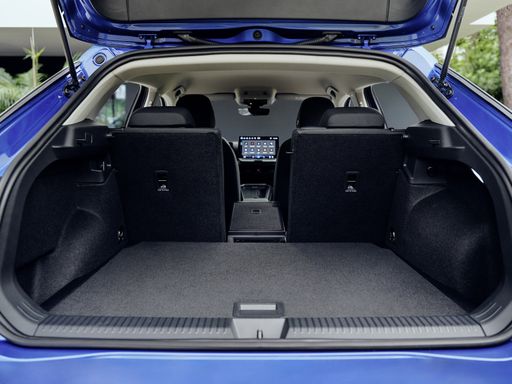
Looking at boot space, the MINI Countryman offers significantly more boot space – 505 L compared to 284 L. That’s a difference of about 221 L.

When it comes to payload, the VW T-Roc carries barely more – 515 kg compared to 500 kg. That’s a difference of about 15 kg.

Who wins the race in the data check?

The MINI Countryman stands well ahead of its rival in the objective data comparison.
This result only shows which model scores more points on paper – not which of the two cars feels right for you.

from £30,100
Countryman

MINI Countryman

  • Engine Type : Petrol MHEV, Diesel MHEV, Petrol, Electric
  • Transmission : Automatic
  • Drive Type : Front-Wheel Drive, All-Wheel Drive
  • Power HP : 122 - 313 HP
  • Consumption L/100km : 4.6 - 7.8 L/100km
  • Consumption kWh/100km : 14.8 - 15.9 kWh/100km
  • Electric Range : 463 - 497 km
VW T-Roc
MINI Countryman

Costs and Consumption

View detailed analysis

Engine and Performance

View detailed analysis

Dimensions and Body

View detailed analysis

VW T-Roc

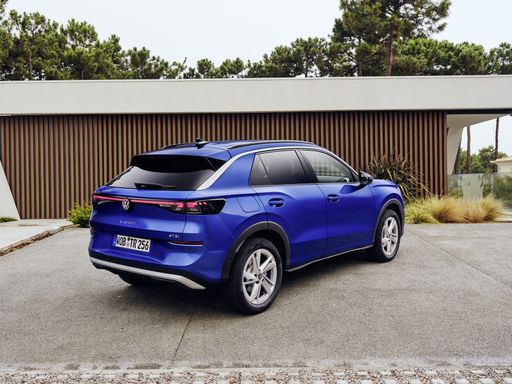
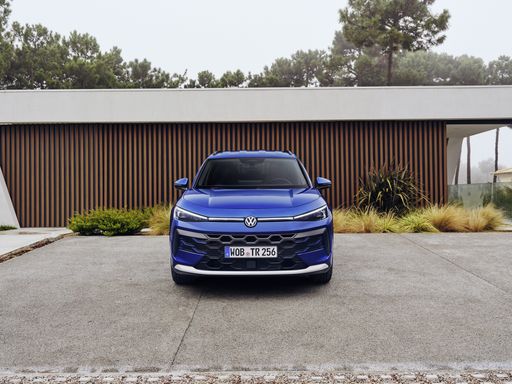
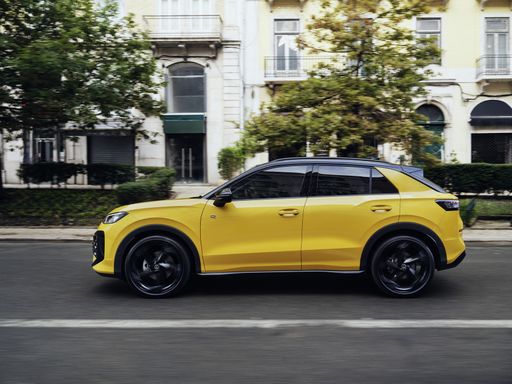
The VW T-Roc mixes cheeky, coupe-like styling with the everyday sense and space of an SUV, so it looks fun without sacrificing family sense. It’s a likeable all-rounder with tidy road manners and plenty of personality, ideal if you want a car that’s practical enough for chores but entertaining enough to enjoy.

details

MINI Countryman

The MINI Countryman turns the cheeky charm of a classic MINI into a proper all-rounder, blending playful styling with surprisingly usable space for everyday life. It still grins at city lights but will happily tackle muddy lanes, perfect for buyers who want character without sacrificing practicality.

details
VW T-Roc
MINI Countryman

Costs and Consumption

Price
26,400 - 38,600 £
Price
30,100 - 45,300 £
Consumption L/100km
5.5 - 6.3 L/100km
Consumption L/100km
4.6 - 7.8 L/100km
Consumption kWh/100km
-
Consumption kWh/100km
14.8 - 15.9 kWh/100km
Electric Range
-
Electric Range
463 - 497 km
Battery Capacity
-
Battery Capacity
-
co2
126 - 143 g/km
co2
0 - 177 g/km
Fuel tank capacity
-
Fuel tank capacity
45 - 54 L

Dimensions and Body

Body Type
SUV
Body Type
SUV
Seats
4 - 5
Seats
5
Doors
-
Doors
5
Curb weight
1,465 - 1,539 kg
Curb weight
1,570 - 2,075 kg
Trunk capacity
284 L
Trunk capacity
450 - 505 L
Length
-
Length
4,444 - 4,447 mm
Width
1,811 - 1,828 mm
Width
1,843 mm
Height
-
Height
1,645 - 1,661 mm
Max trunk capacity
-
Max trunk capacity
1,450 - 1,530 L
Payload
368 - 515 kg
Payload
460 - 500 kg

Engine and Performance

Engine Type
Petrol, Petrol MHEV
Engine Type
Petrol MHEV, Diesel MHEV, Petrol, Electric
Transmission
Manuel, Automatic
Transmission
Automatic
Transmission Detail
Manual Gearbox, Dual-Clutch Automatic
Transmission Detail
Dual-Clutch Automatic, Automatic Gearbox, Reduction Gearbox
Drive Type
Front-Wheel Drive
Drive Type
Front-Wheel Drive, All-Wheel Drive
Power HP
115 - 150 HP
Power HP
122 - 313 HP
Acceleration 0-100km/h
8.9 - 12.3 s
Acceleration 0-100km/h
5.4 - 10.5 s
Max Speed
-
Max Speed
208 - 250 km/h
Torque
200 - 250 Nm
Torque
230 - 494 Nm
Number of Cylinders
3 - 4
Number of Cylinders
3 - 4
Power kW
85 - 110 kW
Power kW
90 - 230 kW
Engine capacity
999 - 1,498 cm3
Engine capacity
1,499 - 1,998 cm3

General

Model Year
2,024 - 2,025
Model Year
2,024 - 2,026
CO2 Efficiency Class
E, D
CO2 Efficiency Class
D, E, G, A
Brand
VW
Brand
MINI
DriveDuel uses data analysis and artificial intelligence to evaluate vehicle data and create content. Content is regularly reviewed and improved. The displayed prices are estimates based on German list prices, adjusted to the respective country’s VAT. Country-specific registration taxes are not included. This information is not legally binding.