VS

VW T-Roc vs Toyota C-HR comparison

Compare performance (150 HP vs 223 HP), boot space and price (26,400 £ vs 29,100 £ ) at a glance. Find out which car is the better choice for you – VW T-Roc or Toyota C-HR?

VW T-Roc vs Toyota C-HR: Key differences

VW T-Roc

4.8 (6 Reviews)
rate
  • somewhat cheaper
  • marginally lighter

Toyota C-HR

4.8 (2 Reviews)
rate
  • markedly more power
  • substantially more efficient
  • markedly quicker 0–100 km/h
  • noticeably more trunk space

All details on performance, efficiency, range and trunk space can be found in the technical comparison below – including user reviews for both models.

T-Roc

A Tale of Two Compact SUVs: Toyota C-HR vs. VW T-Roc

The compact SUV segment has exploded in popularity, with more consumers seeking versatile, stylish options that blend performance with efficiency. Among the plethora of choices, the Toyota C-HR and the Volkswagen T-Roc stand out as two compelling contenders. This article will delve into a thorough comparison of these two models, exploring their technical specifications, features, and innovations to help you make an informed decision.

C-HR

Design and Dimensions

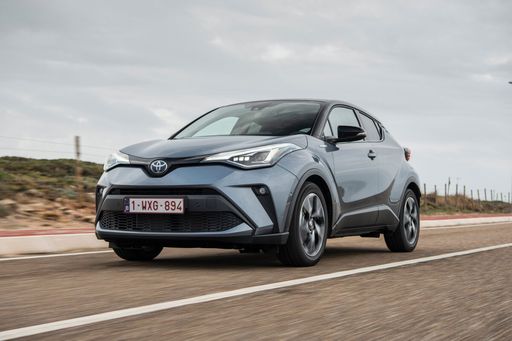
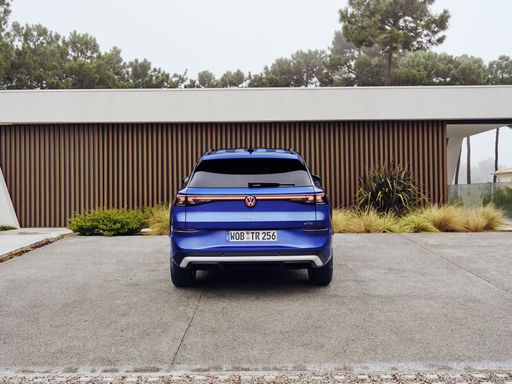
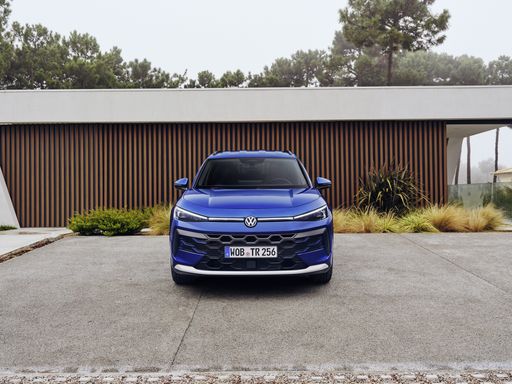
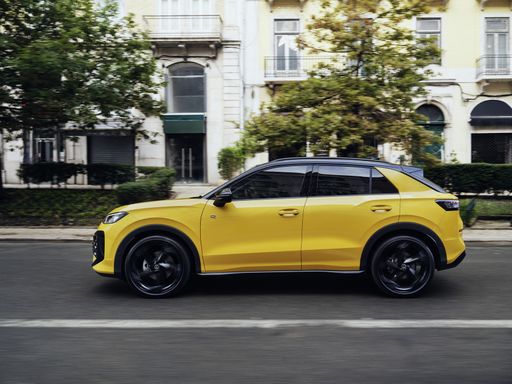
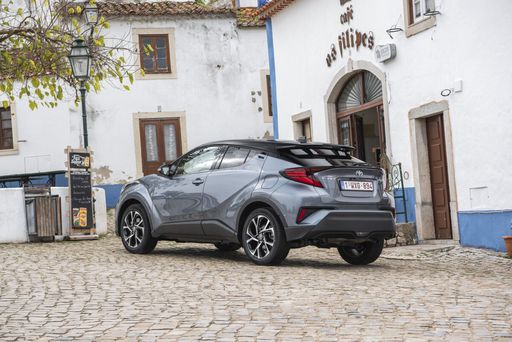
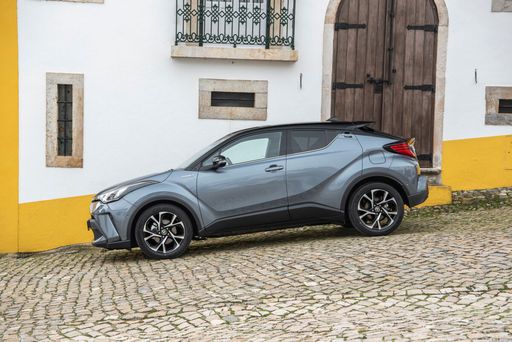
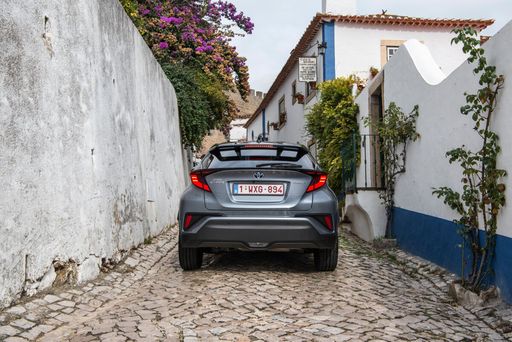
The Toyota C-HR boasts a strikingly bold exterior, characterized by its dynamic lines and an aggressive stance. Measuring 4362 mm in length, 1832 mm in width, and 1558 mm in height, the C-HR provides a stylish presence without sacrificing practicality.

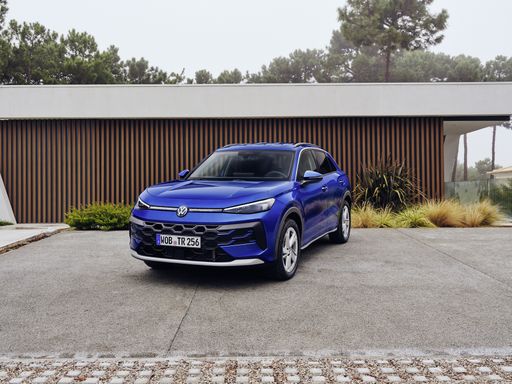
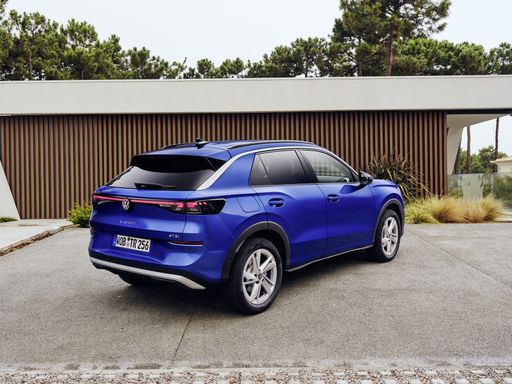
In contrast, the VW T-Roc presents a more conventional yet sophisticated look. Its dimensions vary slightly, with an average length of 4241 mm, a width of 1819 mm, and a height of 1568 mm, allowing for a more spacious cabin layout. Both models feature five doors, ensuring ease of access for all passengers.

T-Roc

Powertrains: Hybrid Versus Traditional Fuel Options

The heart of the Toyota C-HR lies in its hybrid technology. Available as a full hybrid with a power output of 140 HP or as a plug-in hybrid generating up to 223 HP, the C-HR offers impressive efficiency. Its fuel consumption ranges from 4.7 to 5.1 L/100km, showcasing its eco-friendly credentials. With a remarkable electric range of 67 km, the C-HR stands out for those prioritizing sustainability in their driving experience.

On the other hand, the VW T-Roc offers a broader spectrum of engine choices, including petrol and diesel options ranging from 115 HP to a high-performance 300 HP model. Its consumption figures vary, with diesel options peaking around 4.7 L/100km, while some petrol variants consume up to 8.5 L/100km. This flexibility allows drivers to choose a model that best suits their performance and fuel efficiency preferences.

C-HR

Transmission and Drive Options

The C-HR employs a continuously variable transmission (CVT) for its hybrid engines. Available in both front-wheel drive and all-wheel drive configurations, it adeptly adapts to different driving conditions, ensuring a smooth and efficient ride.

The T-Roc, however, offers more variety in transmission options, including manual and dual-clutch automatic gearboxes. Its available drive configurations also include front-wheel and all-wheel drive, catering to a wider range of driving styles and preferences.

T-Roc

Performance Metrics: Speed and Acceleration

In terms of performance, the C-HR demonstrates its capabilities with acceleration times ranging from 7.4 seconds to 9.9 seconds for 0-100 km/h, depending on the configuration. The maximum speed of the C-HR reaches up to 180 km/h, making it a nimble option for urban and highway driving.

The T-Roc excels in performance, particularly with the higher-output models, boasting acceleration times as low as 4.9 seconds and a top speed of up to 250 km/h. This performance-oriented aspect of the T-Roc integrates driving enjoyment into everyday experiences.

C-HR

Interior and Technology: Comfort Meets Connectivity

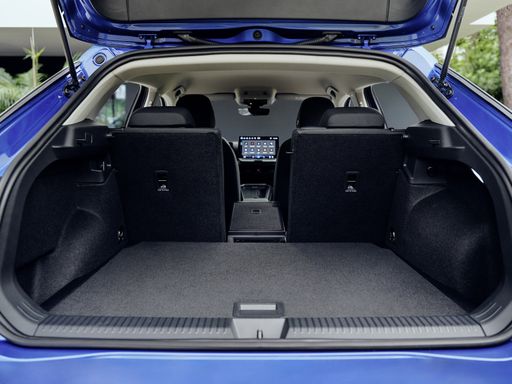
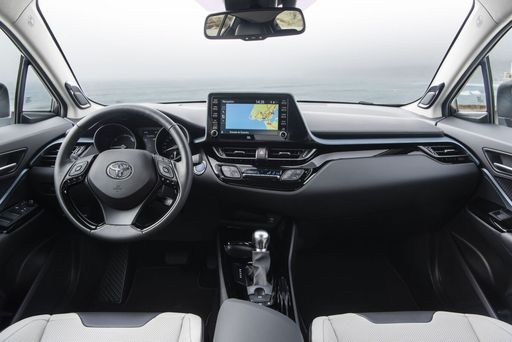
Inside, the Toyota C-HR focuses on driver comfort and modern aesthetics. It offers a spacious cabin with ample headroom and a trunk capacity ranging from 350 to 447 liters, suitable for various carrying needs. The infotainment system is straightforward and includes essential connectivity features like Apple CarPlay and Android Auto.

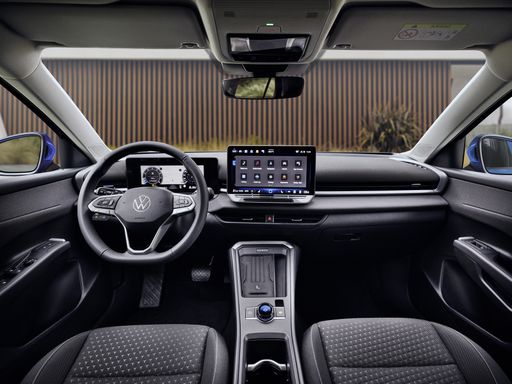
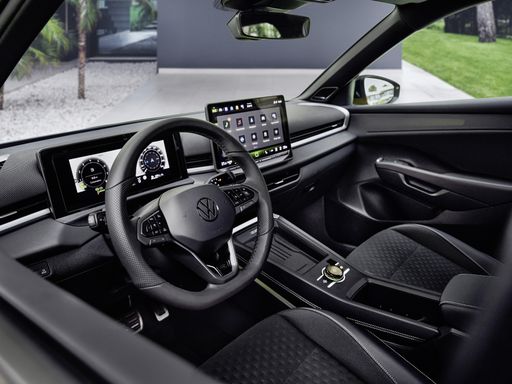
The VW T-Roc also prioritizes passenger comfort and integrates advanced technology seamlessly. The cabin, generously spacious for its category, features a trunk capacity of up to 445 liters. The T-Roc's infotainment system is more advanced and user-friendly, packed with features appealing to tech enthusiasts.

T-Roc

Safety and Driver Assistance

Both the C-HR and T-Roc come equipped with a suite of safety features designed to enhance driver confidence and passenger security. The C-HR excels with its CO2 efficiency class of B, reflecting its commitment to sustainability while protecting its occupants.

Meanwhile, the T-Roc showcases a range of advanced driver assistance systems, bolstering its safety credentials further. This includes features such as adaptive cruise control, lane-departure warning, and emergency braking systems, making it a strong contender for families seeking additional peace of mind on the road.

C-HR

Conclusion: Which Compact SUV Reigns Supreme?

Choosing between the Toyota C-HR and the VW T-Roc comes down to personal preferences and driving needs. If you prefer a hybrid vehicle with an emphasis on efficiency and sustainability, the C-HR is a solid choice. Conversely, for drivers who prioritize performance and a wider range of fuel options, the T-Roc stands out with its powerful engines and impressive driving dynamics.

Ultimately, both models showcase exceptional craftsmanship and innovation, making them worthy competitors in the compact SUV market. Your decision will ultimately hinge on which features resonate most with your lifestyle and driving aspirations.

Here’s where it gets real: The technical differences in detail

T-Roc

Costs and Efficiency:

Price and efficiency are key factors when choosing a car – and this is often where the real differences emerge.

VW T-Roc is somewhat cheaper – starting at 26,400 £ , while the Toyota C-HR costs 29,100 £ . That’s a price difference of around 2,696 £.

Fuel consumption also shows a difference: the Toyota C-HR uses 2.3 L/100km and is substantially more efficient than the VW T-Roc with 5.5 L/100km. The difference is about 3.2 L/100km.

C-HR

Engine and Performance:

Power, torque and acceleration say a lot about how a car feels on the road. This is where you see which model delivers more driving dynamics.

When it comes to engine power, the Toyota C-HR offers markedly more power – delivering 223 HP compared to 150 HP. That’s roughly 73 HP more horsepower.

When accelerating from 0 to 100 km/h, the Toyota C-HR is markedly quicker – completing the sprint in 7.4 s, while the VW T-Roc takes 8.9 s. That’s about 1.5 s quicker.

T-Roc

Space and Everyday Use:

Cabin size, boot volume and payload all play a role in everyday practicality. Here, comfort and flexibility make the difference.

Both vehicles offer seating for 5 people.

In terms of curb weight, VW T-Roc is marginally lighter – 1,465 kg compared to 1,505 kg. The difference is around 40 kg.

Looking at boot space, the Toyota C-HR offers noticeably more boot space – 447 L compared to 284 L. That’s a difference of about 163 L.

When it comes to payload, the VW T-Roc carries somewhat more – 515 kg compared to 425 kg. That’s a difference of about 90 kg.

Who wins the race in the data check?

The Toyota C-HR is far ahead overall in the objective data comparison.
This result only shows which model scores more points on paper – not which of the two cars feels right for you.

from £29,100
C-HR

Toyota C-HR

  • Engine Type : Full Hybrid, Plugin Hybrid
  • Transmission : Automatic
  • Drive Type : Front-Wheel Drive, All-Wheel Drive
  • Power HP : 140 - 223 HP
  • Consumption L/100km : 2.3 - 5.1 L/100km
  • Electric Range : 66 km
VW T-Roc
Toyota C-HR

Costs and Consumption

View detailed analysis

Engine and Performance

View detailed analysis

Dimensions and Body

View detailed analysis

VW T-Roc

The VW T-Roc mixes cheeky, coupe-like styling with the everyday sense and space of an SUV, so it looks fun without sacrificing family sense. It’s a likeable all-rounder with tidy road manners and plenty of personality, ideal if you want a car that’s practical enough for chores but entertaining enough to enjoy.

details

Toyota C-HR

The Toyota C-HR cuts a striking figure with its angular styling and coupe-like profile, so you’ll never go unnoticed in the supermarket car park. It balances everyday practicality with a nimble, city-friendly personality, making routine commutes feel a touch more fun without asking for forgiveness.

details
VW T-Roc
Toyota C-HR

Costs and Consumption

Price
26,400 - 38,600 £
Price
29,100 - 42,800 £
Consumption L/100km
5.5 - 6.3 L/100km
Consumption L/100km
2.3 - 5.1 L/100km
Consumption kWh/100km
-
Consumption kWh/100km
-
Electric Range
-
Electric Range
66 km
Battery Capacity
-
Battery Capacity
-
co2
126 - 143 g/km
co2
52 - 116 g/km
Fuel tank capacity
-
Fuel tank capacity
-

Dimensions and Body

Body Type
SUV
Body Type
SUV
Seats
4 - 5
Seats
5
Doors
-
Doors
-
Curb weight
1,465 - 1,539 kg
Curb weight
1,505 - 1,755 kg
Trunk capacity
284 L
Trunk capacity
350 - 447 L
Length
-
Length
-
Width
1,811 - 1,828 mm
Width
1,832 mm
Height
-
Height
-
Max trunk capacity
-
Max trunk capacity
-
Payload
368 - 515 kg
Payload
375 - 425 kg

Engine and Performance

Engine Type
Petrol, Petrol MHEV
Engine Type
Full Hybrid, Plugin Hybrid
Transmission
Manuel, Automatic
Transmission
Automatic
Transmission Detail
Manual Gearbox, Dual-Clutch Automatic
Transmission Detail
CVT
Drive Type
Front-Wheel Drive
Drive Type
Front-Wheel Drive, All-Wheel Drive
Power HP
115 - 150 HP
Power HP
140 - 223 HP
Acceleration 0-100km/h
8.9 - 12.3 s
Acceleration 0-100km/h
7.4 - 9.9 s
Max Speed
-
Max Speed
-
Torque
200 - 250 Nm
Torque
-
Number of Cylinders
3 - 4
Number of Cylinders
4
Power kW
85 - 110 kW
Power kW
103 - 164 kW
Engine capacity
999 - 1,498 cm3
Engine capacity
1,798 - 1,987 cm3

General

Model Year
2,024 - 2,025
Model Year
2,026
CO2 Efficiency Class
E, D
CO2 Efficiency Class
C, D, B
Brand
VW
Brand
Toyota
DriveDuel uses data analysis and artificial intelligence to evaluate vehicle data and create content. Content is regularly reviewed and improved. The displayed prices are estimates based on German list prices, adjusted to the respective country’s VAT. Country-specific registration taxes are not included. This information is not legally binding.