VS

VW Touareg vs Dacia Bigster comparison

Compare performance (462 HP vs 158 HP), boot space and price (64,300 £ vs 20,600 £ ) at a glance. Find out which car is the better choice for you – VW Touareg or Dacia Bigster?

VW Touareg vs Dacia Bigster: Key differences

VW Touareg

4.9 (4 Reviews)
rate
  • considerably more power
  • clearly quicker 0–100 km/h
  • a bit more trunk space
details

Dacia Bigster

4.5 (12 Reviews)
rate
  • considerably cheaper
  • somewhat more efficient
  • clearly lighter
details

All details on performance, efficiency, range and trunk space can be found in the technical comparison below – including user reviews for both models.

By Achim Sedelmaier

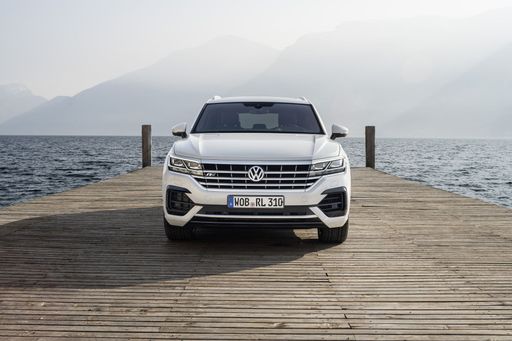
Touareg

A Battle of SUV Titans: VW Touareg vs Dacia Bigster

In the world of SUVs, two vehicles garner attention for their diverse offerings and distinct appeal: the VW Touareg and the Dacia Bigster. As the automotive industry evolves with new technologies and consumer demands, these models represent two ends of the spectrum. The Touareg is known for luxury and performance, while the Bigster symbolizes practicality and affordability. Let's dive deeper into how these two vehicles stack up against each other in terms of technical advancements and innovative features.
Bigster

Power and Performance

The VW Touareg boasts a lineup of formidable powertrains. With options such as diesel, petrol, and plug-in hybrid, the Touareg delivers a power range from 231 HP to 462 HP. The most powerful version, with a plug-in hybrid engine, achieves a swift 0-100km/h acceleration in just 5.1 seconds, showcasing its sporty attributes. Additionally, the Touareg offers impressive top speeds reaching up to 250 km/h, paired with all-wheel drive for superior handling.

On the other hand, the Dacia Bigster focuses on efficiency and affordability. Its engine offerings include petrol MHEV, full hybrid, and LPG, with power outputs ranging from 130 HP to 155 HP. While not as rapidly inclined as the Touareg, the Bigster’s 0-100km/h in approximately 9.7 seconds is respectable within its class. A maximum speed of 180 km/h, along with all-wheel and front-wheel drive options, makes it adaptable for various terrains.

Touareg

Fuel Efficiency and Eco-friendliness

Eco-conscious buyers will find the VW Touareg's plug-in hybrid variant enticing, with a consumption rate as low as 2.2 liters per 100 km and an electric range of up to 51 km. This feature, enhanced by a 14.3 kWh battery, emphasizes VW's commitment to sustainable travel.

Meanwhile, the Dacia Bigster does not fall far behind, with its hybrid systems boasting fuel efficiencies as low as 4.7 liters per 100 km. The reduced CO2 emissions, positioning within C to E efficiency classes, reflect Dacia's growing emphasis on reducing environmental impacts.

Bigster

Interior and Space

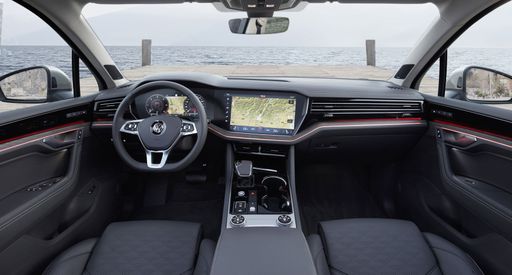
The Touareg stands out with its opulent interior and innovative tech features, offering 5 seats in a spacious cabin. Trunk capacity ranges up to 810 liters, accommodating plenty for long journeys. Luxurious materials and advanced infotainment systems accentuate the Touareg's premium feel.

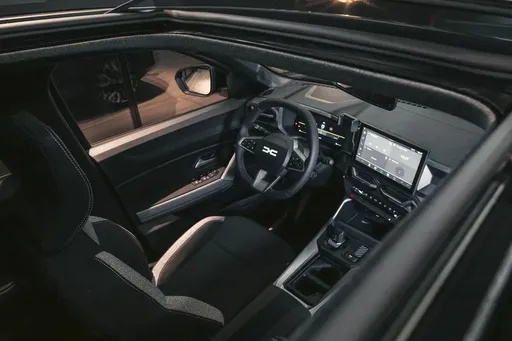
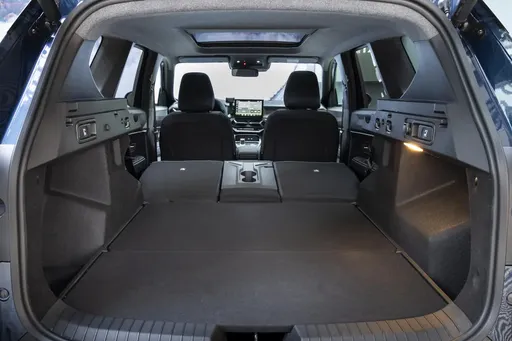
The Bigster, on the other hand, presents a pragmatic interior designed for functionality rather than luxury. It offers comfortable seating for five and a trunk capacity of up to 667 liters, sufficient for daily use and short trips. The design is simple but effective, making it a great choice for budget-conscious families.

Touareg

Conclusion: Choosing the Right SUV

The decision between the VW Touareg and the Dacia Bigster largely depends on the buyer's priorities. The Touareg is a perfect blend of luxury, power, and state-of-the-art technology, aimed at those seeking premium driving experiences. Conversely, the Bigster appeals to practical buyers, providing a balanced combination of essential features, efficiency, and affordability.

Both SUVs represent significant strides in their respective categories, and their differences make them suitable for varied consumer needs. Whether it's the allure of advanced engineering or the practicality of cost-effective functionality, both the Touareg and Bigster have carved their niches in the ever-evolving SUV landscape.

Here’s where it gets real: The technical differences in detail

Touareg

Costs and Efficiency:

Looking at overall running costs, both models reveal some interesting differences in everyday economy.

Dacia Bigster is considerably cheaper – starting at 20,600 £ , while the VW Touareg costs 64,300 £ . That’s a price difference of around 43,745 £.

Fuel consumption also shows a difference: the Dacia Bigster uses 4.7 L/100km and is somewhat more efficient than the VW Touareg with 5.2 L/100km. The difference is about 0.5 L/100km.

Bigster

Engine and Performance:

Under the bonnet, it becomes clear which model is tuned for sportiness and which one takes the lead when you hit the accelerator.

When it comes to engine power, the VW Touareg offers considerably more power – delivering 462 HP compared to 158 HP. That’s roughly 304 HP more horsepower.

When accelerating from 0 to 100 km/h, the VW Touareg is clearly quicker – completing the sprint in 5.1 s, while the Dacia Bigster takes 9.7 s. That’s about 4.6 s quicker.

There’s also a difference in torque: the VW Touareg delivers clearly more torque with 700 Nm compared to 230 Nm. That’s about 470 Nm more.

Touareg

Space and Everyday Use:

Cabin size, boot volume and payload all play a role in everyday practicality. Here, comfort and flexibility make the difference.

Both vehicles offer seating for 5 people.

In terms of curb weight, Dacia Bigster is clearly lighter – 1,425 kg compared to 2,059 kg. The difference is around 634 kg.

Looking at boot space, the VW Touareg offers a bit more boot space – 810 L compared to 667 L. That’s a difference of about 143 L.

When it comes to payload, the VW Touareg carries visibly more – 751 kg compared to 465 kg. That’s a difference of about 286 kg.

Who wins the race in the data check?

The VW Touareg holds a decisive overall lead in the objective data comparison.
This result only shows which model scores more points on paper – not which of the two cars feels right for you.

from £64,300
Touareg

VW Touareg

  • Engine Type Petrol, Plugin Hybrid, Diesel
  • Transmission Automatic
  • Drive Type All-Wheel Drive
  • Power HP 231 - 462 HP
  • Consumption L/100km 5.2 - 10.5 L/100km
  • Electric Range 47 - 49 km
VW Touareg
Dacia Bigster

Costs and Consumption

View detailed analysis

Engine and Performance

View detailed analysis

Dimensions and Body

View detailed analysis

VW Touareg

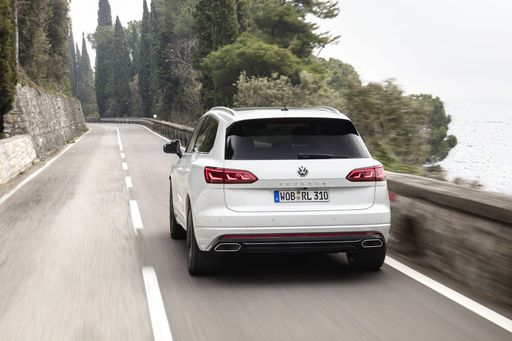
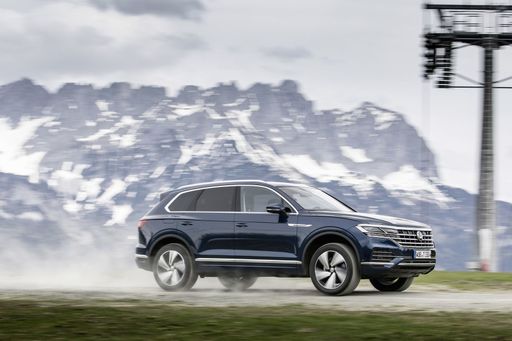
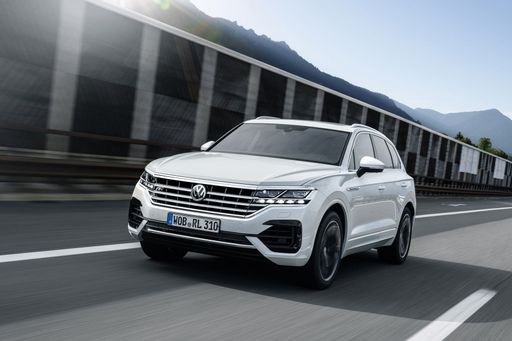
Volkswagen Touareg wraps a grown-up presence in a classy, well-appointed cabin that feels more like a premium saloon than an SUV. It glides with quiet composure, devours long journeys and tucks away clever tech that makes life easier whether you’re stuck in town or nipping off the beaten track.

details

Dacia Bigster

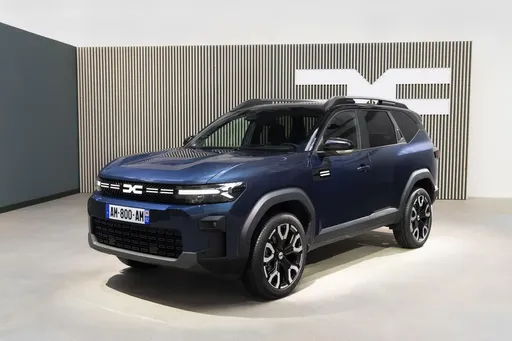
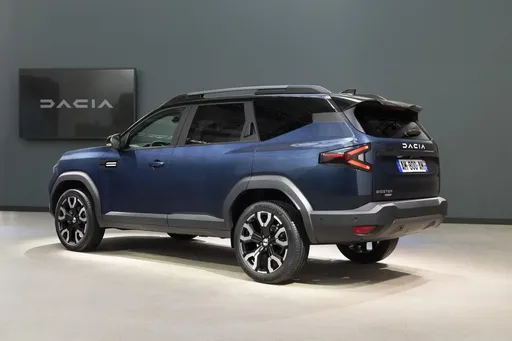
The Dacia Bigster is a straightforward, value-driven SUV that emphasizes space, practicality and low running costs rather than flashy tech. It’s a sensible choice for buyers who want a roomy, well-built family car with rugged styling and easy-to-use features at an affordable price.

details
VW Touareg
Dacia Bigster

Costs and Consumption

Price
64,300 - 88,300 £
Price
20,600 - 28,100 £
Consumption L/100km
5.2 - 10.5 L/100km
Consumption L/100km
4.7 - 7.2 L/100km
Consumption kWh/100km
-
Consumption kWh/100km
-
Electric Range
47 - 49 km
Electric Range
-
Battery Capacity
-
Battery Capacity
-
co2
119 - 239 g/km
co2
106 - 134 g/km
Fuel tank capacity
-
Fuel tank capacity
-

Dimensions and Body

Body Type
SUV
Body Type
SUV
Seats
5
Seats
5
Doors
-
Doors
-
Curb weight
2,059 - 2,470 kg
Curb weight
1,425 - 1,611 kg
Trunk capacity
665 - 810 L
Trunk capacity
444 - 667 L
Length
-
Length
-
Width
1,984 mm
Width
1,813 mm
Height
-
Height
-
Max trunk capacity
-
Max trunk capacity
-
Payload
550 - 751 kg
Payload
434 - 465 kg

Engine and Performance

Engine Type
Petrol, Plugin Hybrid, Diesel
Engine Type
Petrol MHEV, Full Hybrid, LPG
Transmission
Automatic
Transmission
Manuel, Automatic
Transmission Detail
Automatic Gearbox
Transmission Detail
Manual Gearbox, Automated Manual, Dual-Clutch Automatic
Drive Type
All-Wheel Drive
Drive Type
Front-Wheel Drive, All-Wheel Drive
Power HP
231 - 462 HP
Power HP
140 - 158 HP
Acceleration 0-100km/h
5.1 - 7.7 s
Acceleration 0-100km/h
9.7 - 10.5 s
Max Speed
-
Max Speed
-
Torque
450 - 700 Nm
Torque
230 Nm
Number of Cylinders
6
Number of Cylinders
3 - 4
Power kW
170 - 340 kW
Power kW
103 - 116 kW
Engine capacity
2,967 - 2,995 cm3
Engine capacity
1,199 - 1,789 cm3

General

Model Year
2025
Model Year
2025
CO2 Efficiency Class
G, D
CO2 Efficiency Class
D, C
Brand
VW
Brand
Dacia
DriveDuel uses data analysis and artificial intelligence to evaluate vehicle data and create content. Content is regularly reviewed and improved. The displayed prices are estimates based on German list prices, adjusted to the respective country’s VAT. Country-specific registration taxes are not included. This information is not legally binding.