VS

Audi A1 vs Ford Puma comparison

Compare performance (207 HP vs 168 HP), boot space and price (20,000 £ vs 23,900 £ ) at a glance. Find out which car is the better choice for you – Audi A1 or Ford Puma?

Audi A1 vs Ford Puma: Key differences

Audi A1

2.4 (1 Reviews)
rate
  • slightly cheaper
  • slightly more power
  • only slightly more efficient
  • slightly quicker 0–100 km/h
  • moderately lighter

Ford Puma

3 (11 Reviews)
rate

All details on performance, efficiency, range and trunk space can be found in the technical comparison below – including user reviews for both models.

By Achim Sedelmaier

A1

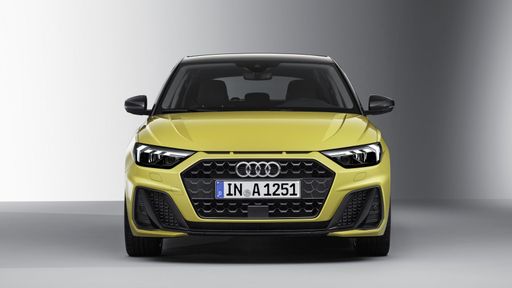
When it comes to compact cars, the Audi A1 and Ford Puma both stand out in their own right. The A1, a premium hatchback from Audi, showcases a blend of sophistication and engineering excellence, while the Ford Puma offers a sporty design with SUV characteristics, making it a versatile choice for various lifestyles. In this article, we will compare these two remarkable vehicles across various aspects, including technical specifications, performance features, and innovative technologies.
Puma

Design and Body Type

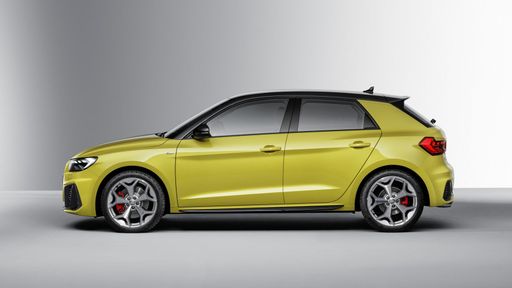
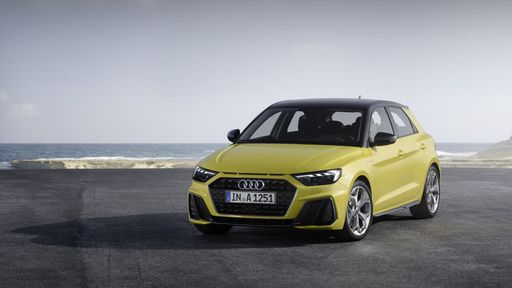
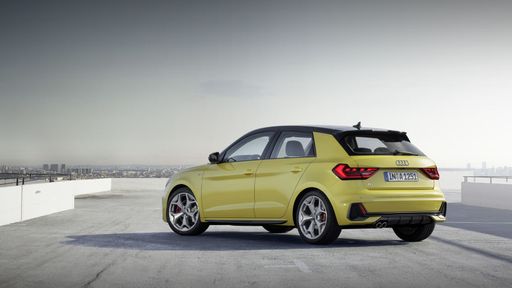
The Audi A1 is classified as a hatchback, measuring 4046 mm in length and 1756 mm in width, offering a sleek and refined appearance typical of Audi's design philosophy. Its compact size and stylish silhouette make it suitable for urban environments, while the Practical 335-liter trunk capacity adds to its usability.

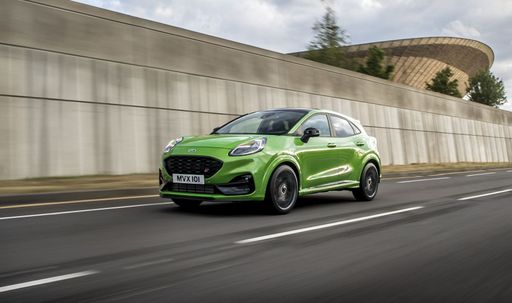
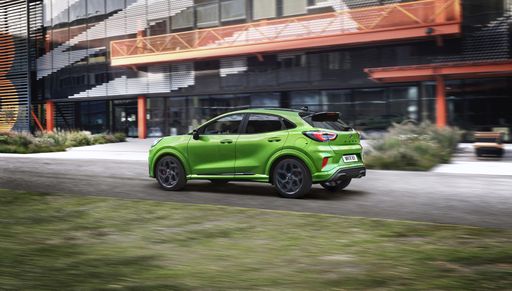
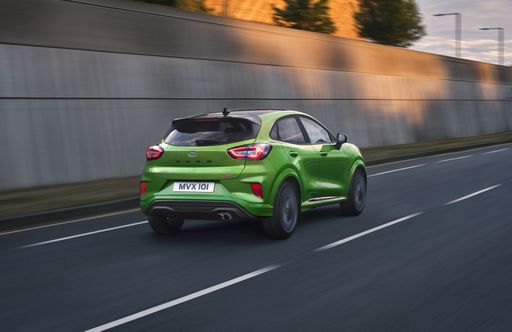
In contrast, the Ford Puma is classified as an SUV, exhibiting a slightly larger form with lengths ranging from 4186 mm to 4226 mm and a width of 1805 mm. This additional height and bulk contribute to a more commanding presence on the road. The Puma’s trunk capacity is noteworthy at a maximum of 523 liters, highlighting its practicality for families and adventurers alike.

A1

Powertrains and Performance

The Audi A1 offers several power options, with engines ranging from a 1.0-liter three-cylinder producing 95 HP to a more powerful 2.0-liter turbocharged four-cylinder generating 207 HP. The choice between manual and dual-clutch automatic transmissions ensures both driving pleasure and convenience. Acceleration from 0-100 km/h varies from 6.5 seconds in the top variant to around 11.5 seconds in base models, while top speeds reach up to 245 km/h.

Ford, on the other hand, presents the Puma with a slightly different approach. Available with both petrol mild-hybrid (MHEV) and fully electric engines, the Puma’s petrol options range from 125 to 168 HP. The Puma also shines with impressive acceleration, boasting a 0-100 km/h time as low as 7.4 seconds in its most powerful trims. The top speed can reach up to 210 km/h, showcasing the Puma's sporty characteristics.

Puma

Fuel Efficiency and Emissions

The Audi A1 appeals to performance enthusiasts with respectable fuel consumption figures, ranging from 5.3 to 6.5 L/100 km, depending on the engine choice, and CO2 emissions ranging from 120 to 147 g/km. These statistics reinforce Audi's commitment to blending performance with efficiency.

Conversely, the Ford Puma is positioned as a more eco-friendly choice, especially with its electric variants. The petrol engines show a competitive fuel consumption of 5.4 to 6 L/100 km, while the electric version has a range of 364 to 376 km on a full charge, with a battery capacity of 43 kWh. The Puma excels in emissions, particularly with zero emissions from its electric model, categorized as "A" in CO2 efficiency.

A1

Interior Quality and Technology

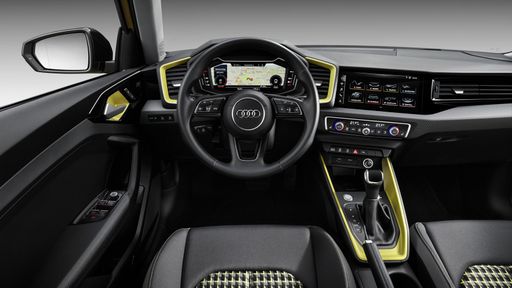
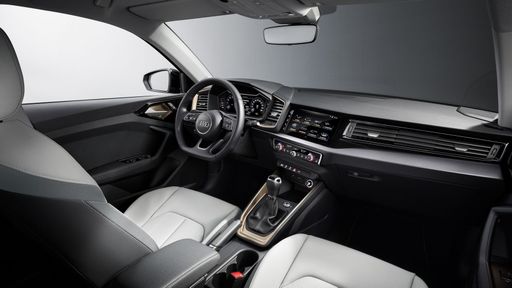
Inside, the Audi A1 boasts a premium cabin with high-quality materials and advanced infotainment features. Designed for five occupants, it includes a user-friendly MMI system that offers smartphone integration and a suite of driver assistance technologies.

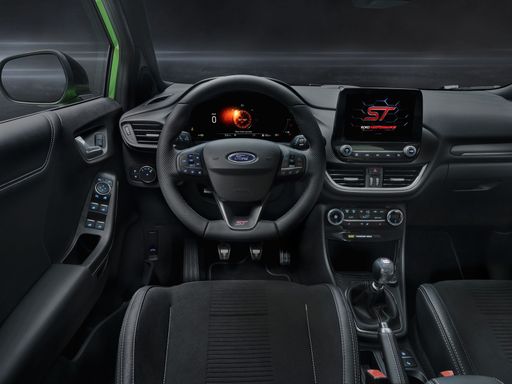
The Ford Puma also prioritizes comfort and technology, with an emphasis on practicality. Its spacious interior can comfortably seat five, and it features Ford’s latest SYNC infotainment system, providing seamless connectivity and navigation options. The compact SUV's higher seating position enhances visibility and driving pleasure, making it suitable for various terrains.

Puma

Conclusion: Which One to Choose?

In summary, choosing between the Audi A1 and Ford Puma ultimately depends on your needs and preferences. The A1 offers a premium hatchback experience with top-notch performance and luxury, appealing to those who prioritize style and brand prestige. Meanwhile, the Ford Puma stands out with its versatility, practicality, and eco-friendly options, making it an appealing choice for families and environmentally conscious consumers.

Both cars reflect their manufacturers’ dedication to innovation, quality, and driving pleasure, ensuring that potential buyers have compelling choices in the compact car segment. Test-driving both vehicles will ultimately provide valuable insights, helping you make the right decision for your lifestyle and driving needs.

Here’s where it gets real: The technical differences in detail

A1

Costs and Efficiency:

Looking at overall running costs, both models reveal some interesting differences in everyday economy.

Audi A1 is slightly cheaper – starting at 20,000 £ , while the Ford Puma costs 23,900 £ . That’s a price difference of around 3,943 £.

Fuel consumption also shows a difference: the Audi A1 uses 5.2 L/100km and is only slightly more efficient than the Ford Puma with 5.4 L/100km. The difference is about 0.2 L/100km.

Puma

Engine and Performance:

Power, torque and acceleration are the classic benchmarks for car enthusiasts – and here, some clear differences start to show.

When it comes to engine power, the Audi A1 offers slightly more power – delivering 207 HP compared to 168 HP. That’s roughly 39 HP more horsepower.

When accelerating from 0 to 100 km/h, the Audi A1 is slightly quicker – completing the sprint in 6.5 s, while the Ford Puma takes 7.4 s. That’s about 0.9 s quicker.

There’s also a difference in torque: the Audi A1 delivers marginally more torque with 320 Nm compared to 290 Nm. That’s about 30 Nm more.

A1

Space and Everyday Use:

Cabin size, boot volume and payload all play a role in everyday practicality. Here, comfort and flexibility make the difference.

Both vehicles offer seating for 5 people.

In terms of curb weight, Audi A1 is moderately lighter – 1,175 kg compared to 1,316 kg. The difference is around 141 kg.

When it comes to payload, the Audi A1 carries marginally more – 470 kg compared to 469 kg. That’s a difference of about 1 kg.

Who wins the race in the data check?

The Audi A1 stands well ahead of its rival in the objective data comparison.
This result only shows which model scores more points on paper – not which of the two cars feels right for you.

from £20,000
A1

Audi A1

  • Engine Type : Petrol
  • Transmission : Manuel, Automatic
  • Drive Type : Front-Wheel Drive
  • Power HP : 95 - 207 HP
  • Consumption L/100km : 5.2 - 6.4 L/100km
Audi A1
Ford Puma

Costs and Consumption

View detailed analysis

Engine and Performance

View detailed analysis

Dimensions and Body

View detailed analysis

Audi A1

The Audi A1 is a compact premium hatch that wraps Audi's polished design and surprisingly grown-up cabin into a city-friendly package. It’s poised and fun to drive, a smart pick for buyers who want luxury flair without the fuss of a bigger car — and it makes tight parking feel almost enjoyable.

details

Ford Puma

The Ford Puma is a cheeky compact crossover that blends sporty styling with city-friendly practicality, giving drivers a surprisingly fun and composed ride. With clever storage tricks and a lively personality, it’s a smart pick for buyers who want enjoyment without fuss.

details
Audi A1
Ford Puma

Costs and Consumption

Price
20,000 - 28,800 £
Price
23,900 - 36,300 £
Consumption L/100km
5.2 - 6.4 L/100km
Consumption L/100km
5.4 - 5.9 L/100km
Consumption kWh/100km
-
Consumption kWh/100km
13 - 13.7 kWh/100km
Electric Range
-
Electric Range
404 - 417 km
Battery Capacity
-
Battery Capacity
-
co2
118 - 146 g/km
co2
0 - 135 g/km
Fuel tank capacity
-
Fuel tank capacity
-

Dimensions and Body

Body Type
Hatchback
Body Type
SUV
Seats
5
Seats
5
Doors
-
Doors
-
Curb weight
1,175 - 1,365 kg
Curb weight
1,316 - 1,563 kg
Trunk capacity
335 L
Trunk capacity
-
Length
-
Length
-
Width
1,740 - 1,756 mm
Width
1,805 mm
Height
-
Height
-
Max trunk capacity
-
Max trunk capacity
-
Payload
410 - 470 kg
Payload
367 - 469 kg

Engine and Performance

Engine Type
Petrol
Engine Type
Petrol MHEV, Electric
Transmission
Manuel, Automatic
Transmission
Manuel, Automatic
Transmission Detail
Manual Gearbox, Dual-Clutch Automatic
Transmission Detail
Manual Gearbox, Dual-Clutch Automatic, Reduction Gearbox
Drive Type
Front-Wheel Drive
Drive Type
Front-Wheel Drive
Power HP
95 - 207 HP
Power HP
125 - 168 HP
Acceleration 0-100km/h
6.5 - 11.5 s
Acceleration 0-100km/h
7.4 - 9.8 s
Max Speed
-
Max Speed
-
Torque
175 - 320 Nm
Torque
170 - 290 Nm
Number of Cylinders
3 - 4
Number of Cylinders
3
Power kW
70 - 152 kW
Power kW
92 - 124 kW
Engine capacity
999 - 1,984 cm3
Engine capacity
999 cm3

General

Model Year
2,025
Model Year
2,025 - 2,026
CO2 Efficiency Class
D, E
CO2 Efficiency Class
D, A
Brand
Audi
Brand
Ford
DriveDuel uses data analysis and artificial intelligence to evaluate vehicle data and create content. Content is regularly reviewed and improved. The displayed prices are estimates based on German list prices, adjusted to the respective country’s VAT. Country-specific registration taxes are not included. This information is not legally binding.