VS

Dacia Bigster vs Renault Austral comparison

Compare performance (158 HP vs 148 HP), boot space and price (20,600 £ vs 29,900 £ ) at a glance. Find out which car is the better choice for you – Dacia Bigster or Renault Austral?

Dacia Bigster vs Renault Austral: Key differences

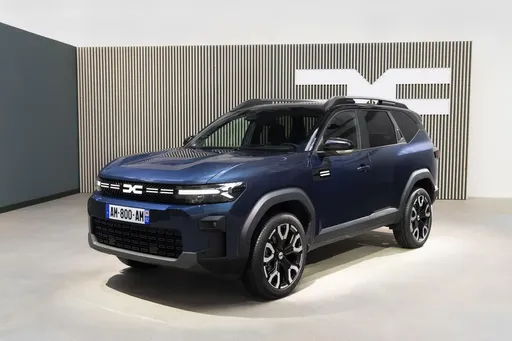
Dacia Bigster

4.6 (7 Reviews)
rate
  • substantially cheaper
  • very slightly more power
  • visibly more efficient
  • marginally quicker 0–100 km/h
  • very slightly lighter
details

Renault Austral

4.9 (5 Reviews)
rate
details

All details on performance, efficiency, range and trunk space can be found in the technical comparison below – including user reviews for both models.

By Achim Sedelmaier

Bigster

The Battle of Compact SUVs: Renault Austral vs Dacia Bigster

In the ever-competitive realm of compact SUVs, two contenders have captured the attention of automotive enthusiasts: the Renault Austral and the Dacia Bigster. Both vehicles bring their unique strengths to the table, offering prospective buyers an array of choices based on performance, design, and technological innovations. Let's delve into the specifics of these two models and see where they stand out.

Austral

Performance and Powertrain

The Renault Austral, available in 2024, offers a choice between petrol mild hybrid (MHEV) and full hybrid engine configurations. These engines yield power outputs of 158 HP and 200 HP respectively, with corresponding torque figures at 270 Nm. The Austral showcases a refined driving experience with its automatic transmission options, including a CVT and a more traditional automatic gearbox, delivering power through its front-wheel-drive system. With acceleration from 0-100 km/h in as little as 8.4 seconds, it impresses with its efficiency, offering consumption rates as low as 4.7 L/100 km.

On the other hand, the Dacia Bigster, anticipated in 2025, provides a slightly broader engine range that includes petrol MHEV, full hybrid, and LPG options. Its power band ranges between 130 HP and 155 HP, complemented by torque figures up to 230 Nm. With both all-wheel and front-wheel-drive choices, the Bigster achieves a top speed of 180 km/h, narrowly edging out the Austral. This model addresses diverse driving preferences with both manual and automatic transmissions, and an acceleration benchmark of 9.7 seconds to 100 km/h for its most robust configuration.

Bigster

Design and Dimensions

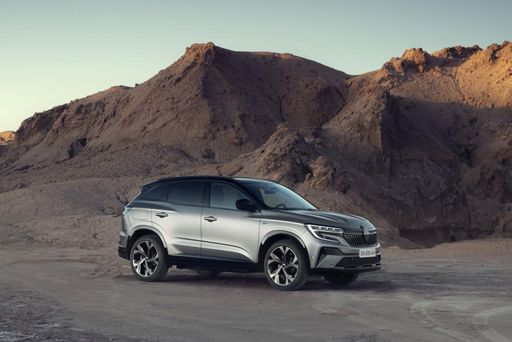
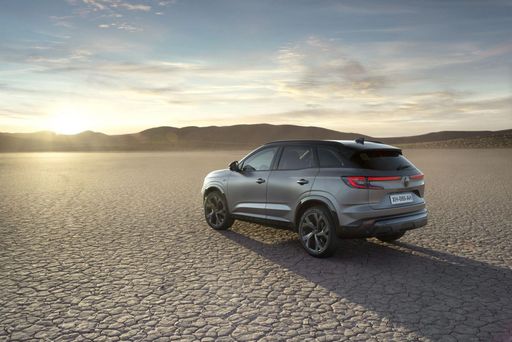
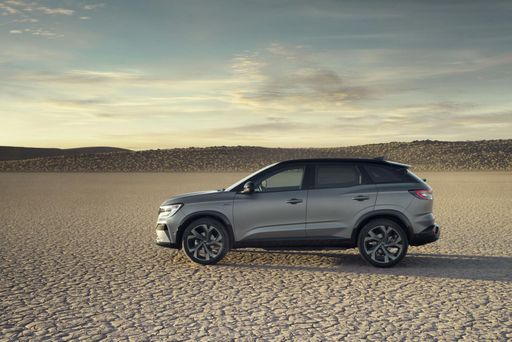
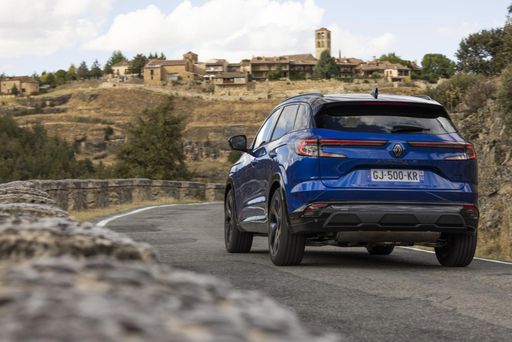
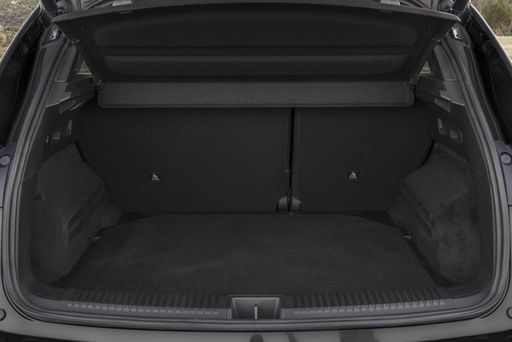
Both vehicles adhere to the essence of modern SUV styling, yet maintain distinctive characteristics. The Renault Austral measures 4510 mm in length and 1825 mm in width, with a height of 1618 mm. Its elegant design not only emphasizes aerodynamic efficiency but also enhances road presence. The Austral offers a trunk capacity between 430 and 500 liters, catering to practical needs without compromising on style.

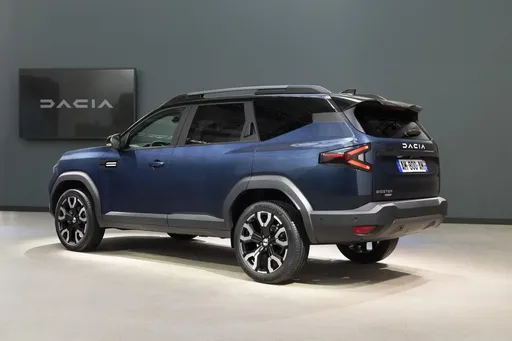
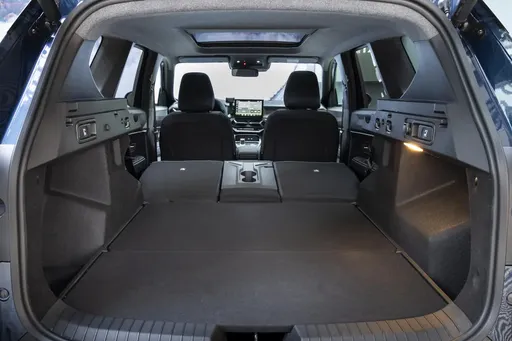
Conversely, the Dacia Bigster, slightly longer at 4570 mm and 1813 mm wide, stands taller at 1705 mm. This gives it a robust look and potentially greater off-road capabilities. The Bigster leads in cargo space, boasting an impressive trunk capacity of up to 667 liters, ideal for those who need extra room for their adventures or daily routines.

Austral

Technological Innovations

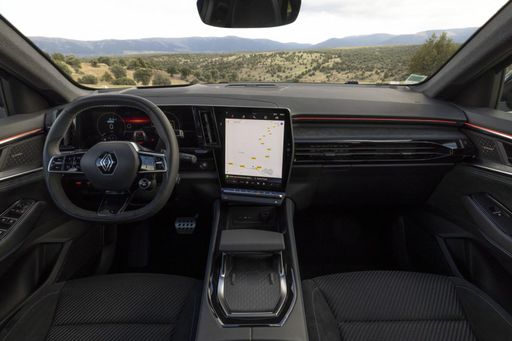
Renault's Austral introduces a user-friendly infotainment system that seamlessly integrates navigation and connectivity features, emphasizing a driver-centric environment. The CO2 efficiency class ranges from E to C, with emissions as low as 105 g/km, reflecting an impressive commitment to minimizing environmental impact without sacrificing performance.

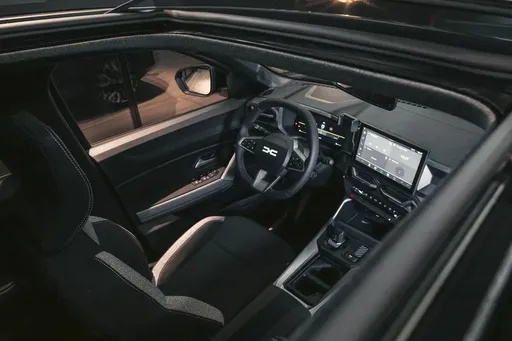
Dacia, often celebrated for its pragmatic approach, offers a range in CO2 efficiency from E to C, similar to its competitor. However, it augments its eco-friendly credentials with an optional LPG engine that further reduces operating costs. Despite its budget-conscious background, the Bigster does not skimp on technology, integrating advanced features to meet modern drivers' expectations.

Bigster

Conclusion

Choosing between the Renault Austral and Dacia Bigster ultimately depends on personal preference and specific needs. The Austral appeals to those seeking a blend of style, efficiency, and technological sophistication within a compact frame. The Bigster, alternatively, targets drivers prioritizing versatility, ample cargo capacity, and an adventurous spirit. Each model represents a compelling option in the SUV marketplace, embodying the innovative strides both brands continue to make in the automotive industry.

Here’s where it gets real: The technical differences in detail

Bigster

Costs and Efficiency:

When it comes to price and running costs, the biggest differences usually appear. This is often where you see which car fits your budget better in the long run.

Dacia Bigster is substantially cheaper – starting at 20,600 £ , while the Renault Austral costs 29,900 £ . That’s a price difference of around 9,352 £.

Fuel consumption also shows a difference: the Dacia Bigster uses 4.7 L/100km and is visibly more efficient than the Renault Austral with 6.4 L/100km. The difference is about 1.7 L/100km.

Austral

Engine and Performance:

Power, torque and acceleration are the classic benchmarks for car enthusiasts – and here, some clear differences start to show.

When it comes to engine power, the Dacia Bigster offers very slightly more power – delivering 158 HP compared to 148 HP. That’s roughly 10 HP more horsepower.

When accelerating from 0 to 100 km/h, the Dacia Bigster is marginally quicker – completing the sprint in 9.7 s, while the Renault Austral takes 9.9 s. That’s about 0.2 s quicker.

There’s also a difference in torque: the Renault Austral delivers moderately more torque with 270 Nm compared to 230 Nm. That’s about 40 Nm more.

Bigster

Space and Everyday Use:

Beyond pure performance, interior space and usability matter most in daily life. This is where you see which car is more practical and versatile.

Both vehicles offer seating for 5 people.

In terms of curb weight, Dacia Bigster is very slightly lighter – 1,425 kg compared to 1,548 kg. The difference is around 123 kg.

When it comes to payload, the Dacia Bigster carries only slightly more – 465 kg compared to 455 kg. That’s a difference of about 10 kg.

Who wins the race in the data check?

The Dacia Bigster stands well ahead of its rival in the objective data comparison.
This result only shows which model scores more points on paper – not which of the two cars feels right for you.

from £20,600
Bigster

Dacia Bigster

  • Engine Type : Petrol MHEV, Full Hybrid, LPG
  • Transmission : Manuel, Automatic
  • Drive Type : Front-Wheel Drive, All-Wheel Drive
  • Power HP : 140 - 158 HP
  • Consumption L/100km : 4.7 - 7.2 L/100km
Dacia Bigster
Renault Austral

Costs and Consumption

View detailed analysis

Engine and Performance

View detailed analysis

Dimensions and Body

View detailed analysis

Dacia Bigster

The Bigster is poised to redefine the SUV segment with its bold design and spacious interior, catering to the needs of both families and adventure seekers alike. Emphasizing sustainability and practicality, this model reflects a modern approach to automotive engineering, making it a compelling choice for environmentally conscious drivers. With its striking presence on the road, the Bigster not only captures attention but also embodies a new era of versatile mobility.

details

Renault Austral

The Renault Austral dresses the family SUV in elegant modern looks and a surprisingly grown-up cabin that feels thoughtful and livable. It balances comfort and clever technology with a relaxed road presence—an appealing choice for buyers who want style and everyday sense without fuss.

details
Dacia Bigster
Renault Austral

Costs and Consumption

Price
20,600 - 28,100 £
Price
29,900 - 34,100 £
Consumption L/100km
4.7 - 7.2 L/100km
Consumption L/100km
6.4 L/100km
Consumption kWh/100km
-
Consumption kWh/100km
-
Electric Range
-
Electric Range
-
Battery Capacity
-
Battery Capacity
-
co2
106 - 134 g/km
co2
145 g/km
Fuel tank capacity
-
Fuel tank capacity
-

Dimensions and Body

Body Type
SUV
Body Type
SUV
Seats
5
Seats
5
Doors
-
Doors
-
Curb weight
1,425 - 1,611 kg
Curb weight
1,548 kg
Trunk capacity
546 - 667 L
Trunk capacity
-
Length
-
Length
-
Width
1,813 mm
Width
1,825 mm
Height
-
Height
-
Max trunk capacity
-
Max trunk capacity
-
Payload
434 - 465 kg
Payload
455 kg

Engine and Performance

Engine Type
Petrol MHEV, Full Hybrid, LPG
Engine Type
Petrol MHEV
Transmission
Manuel, Automatic
Transmission
Automatic
Transmission Detail
Manual Gearbox, Automated Manual, Dual-Clutch Automatic
Transmission Detail
CVT
Drive Type
Front-Wheel Drive, All-Wheel Drive
Drive Type
Front-Wheel Drive
Power HP
140 - 158 HP
Power HP
148 HP
Acceleration 0-100km/h
9.7 - 10.5 s
Acceleration 0-100km/h
9.9 s
Max Speed
-
Max Speed
-
Torque
230 Nm
Torque
270 Nm
Number of Cylinders
3 - 4
Number of Cylinders
4
Power kW
103 - 116 kW
Power kW
109 kW
Engine capacity
1,199 - 1,799 cm3
Engine capacity
1,332 cm3

General

Model Year
2025
Model Year
2025
CO2 Efficiency Class
D, C
CO2 Efficiency Class
E
Brand
Dacia
Brand
Renault
DriveDuel uses data analysis and artificial intelligence to evaluate vehicle data and create content. Content is regularly reviewed and improved. The displayed prices are estimates based on German list prices, adjusted to the respective country’s VAT. Country-specific registration taxes are not included. This information is not legally binding.