VS

Ford Puma vs Ford Focus Turnier comparison

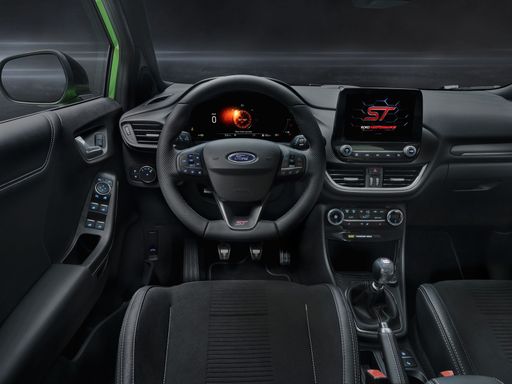
Compare performance (168 HP vs 280 HP), boot space and price (23,900 £ vs 28,500 £ ) at a glance. Find out which car is the better choice for you – Ford Puma or Ford Focus Turnier?

Ford Puma vs Ford Focus Turnier: Key differences

Ford Puma

3 (11 Reviews)
rate
  • moderately cheaper
  • marginally lighter

Ford Focus Turnier

  • visibly more power
  • barely more efficient
  • markedly quicker 0–100 km/h

All details on performance, efficiency, range and trunk space can be found in the technical comparison below – including user reviews for both models.

Puma

Ford Focus Turnier vs Ford Puma: A Comprehensive Comparison

If you're in the market for a versatile family car or a compact SUV, the Ford lineup offers some compelling choices. Two standout models are the Ford Focus Turnier and the Ford Puma, both of which have unique strengths. Let's look at the technical aspects and innovations of these vehicles to help you make an informed decision.

Focus Turnier

Key Technical Specifications

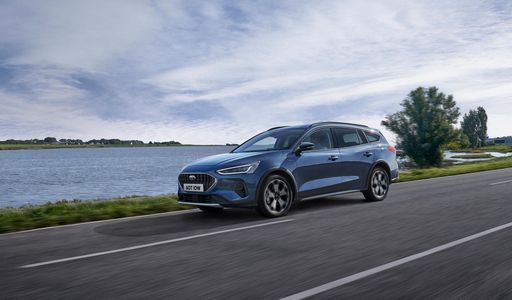
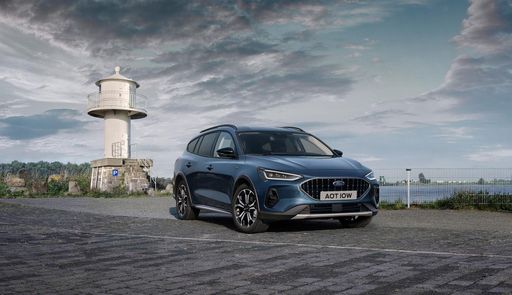
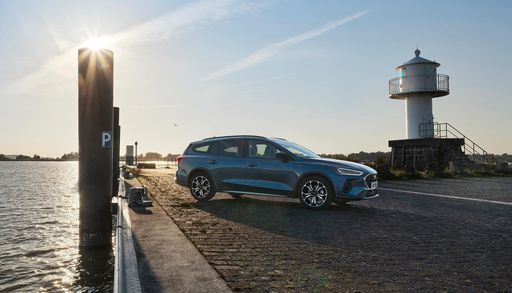
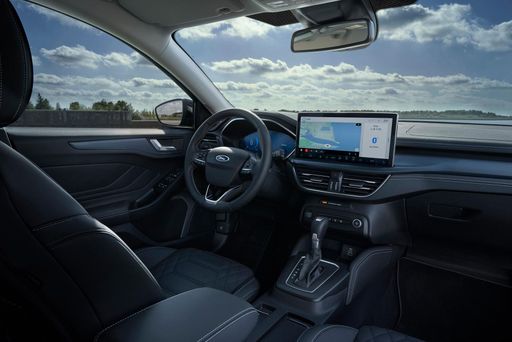
The Ford Focus Turnier is a wagon that blends practicality with efficiency. It offers various engine options including petrol, diesel, and mild hybrid electric vehicle (MHEV) variants. The power output ranges from 115 HP to a more robust 280 HP. This flexibility is complemented by multiple transmission types, such as the manual gearbox, dual-clutch automatic, and automatic gearbox, catering to diverse driving preferences. The Focus Turnier is primarily a front-wheel-drive vehicle.

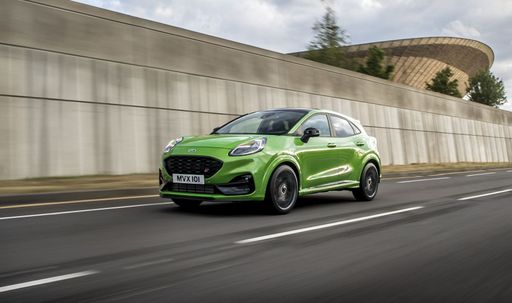
In contrast, the Ford Puma is a compact SUV, designed for those who value versatility and modern aesthetics. It offers both petrol MHEV and fully electric powertrains, with power output ranging from 125 HP to 168 HP. Like the Focus Turnier, it features a front-wheel-drive system and multiple transmission options, including a manual gearbox and a dual-clutch automatic. The electric variant adds the unique twist of a reduction gearbox.


Puma

Performance and Efficiency

The Focus Turnier's performance range is broad, with acceleration from 0-100km/h taking between 5.8 to 12.1 seconds, depending on the chosen engine. Fuel consumption varies as well, with figures between 5.0 to 8.0 L/100km, and CO2 emissions ranging from 120 to 183 g/km.

On the other hand, the Puma offers a sprightly driving experience with acceleration ranging from 7.4 to 9.8 seconds for the 0-100km/h dash. Fuel consumption is slightly higher compared to the Focus Turnier, consuming between 5.4 to 6.0 L/100km. The electric variant of the Puma boasts an impressive electric range of 364 to 376 km with CO2 emissions effectively at 0 g/km.

Focus Turnier

Design and Practicality

Both models accommodate five passengers comfortably, making them excellent for family use. The Focus Turnier outdoes the Puma in trunk capacity, offering a substantial 608 to 635 liters of space, essential for long road trips or everyday utility. In contrast, the Puma provides a more modest trunk capacity, ranging from 456 to 523 liters, adequate for city commutes and small adventures.

The Focus Turnier's longer length of up to 4693 mm enhances its road presence and interior space, whereas the Puma, with a maximum length of 4226 mm, delivers a compact form factor that benefits urban mobility. The Puma's slightly higher stance, with a height of up to 1555 mm, gives it an SUV-like commanding view on the road.

Puma

Tech and Innovations

Both the Focus Turnier and Puma offer advanced tech features expected in modern vehicles. While specific tech packages vary by model and trim, expect to find options such as adaptive cruise control, state-of-the-art infotainment systems, and driver assistance technologies like lane-keeping assist and autonomous emergency braking.

Given the shift towards sustainability, the Puma's option for an all-electric variant signifies Ford's commitment to eco-friendly innovation. The inclusion of MHEV technology across both models highlights Ford's efforts to blend performance with improved fuel efficiency and reduced emissions.

Focus Turnier

Conclusion

In choosing between the Ford Focus Turnier and Ford Puma, your decision should be guided by your lifestyle needs. If you prioritize trunk space and long journeys, the versatile Focus Turnier is hard to beat. For those seeking a city-friendly vehicle with the added benefit of electrification, the Puma presents an attractive option.

Both models embody Ford's commitment to quality and innovation, promising a satisfying driving experience tailored to your personal needs.

Here’s where it gets real: The technical differences in detail

Puma

Costs and Efficiency:

Price and efficiency are often the first things buyers look at. Here it becomes clear which model has the long-term edge – whether at the pump, the plug, or in purchase price.

Ford Puma is moderately cheaper – starting at 23,900 £ , while the Ford Focus Turnier costs 28,500 £ . That’s a price difference of around 4,628 £.

Fuel consumption also shows a difference: the Ford Focus Turnier uses 5 L/100km and is barely more efficient than the Ford Puma with 5.4 L/100km. The difference is about 0.4 L/100km.

Focus Turnier

Engine and Performance:

Power, torque and acceleration are the classic benchmarks for car enthusiasts – and here, some clear differences start to show.

When it comes to engine power, the Ford Focus Turnier offers visibly more power – delivering 280 HP compared to 168 HP. That’s roughly 112 HP more horsepower.

When accelerating from 0 to 100 km/h, the Ford Focus Turnier is markedly quicker – completing the sprint in 5.8 s, while the Ford Puma takes 7.4 s. That’s about 1.6 s quicker.

There’s also a difference in torque: the Ford Focus Turnier delivers noticeably more torque with 420 Nm compared to 290 Nm. That’s about 130 Nm more.

Puma

Space and Everyday Use:

Cabin size, boot volume and payload all play a role in everyday practicality. Here, comfort and flexibility make the difference.

Both vehicles offer seating for 5 people.

In terms of curb weight, Ford Puma is marginally lighter – 1,316 kg compared to 1,413 kg. The difference is around 97 kg.

When it comes to payload, the Ford Focus Turnier carries moderately more – 557 kg compared to 469 kg. That’s a difference of about 88 kg.

Who wins the race in the data check?

The Ford Focus Turnier stands well ahead of its rival in the objective data comparison.
This result only shows which model scores more points on paper – not which of the two cars feels right for you.

from £28,500
Focus Turnier

Ford Focus Turnier

  • Engine Type : Petrol MHEV, Diesel, Petrol
  • Transmission : Manuel, Automatic
  • Drive Type : Front-Wheel Drive
  • Power HP : 115 - 280 HP
  • Consumption L/100km : 5 - 8 L/100km
Ford Puma
Ford Focus Turnier

Costs and Consumption

View detailed analysis

Engine and Performance

View detailed analysis

Dimensions and Body

View detailed analysis

Ford Puma

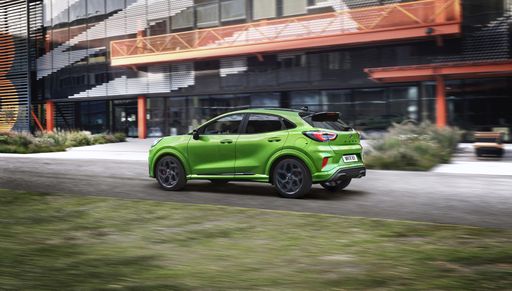
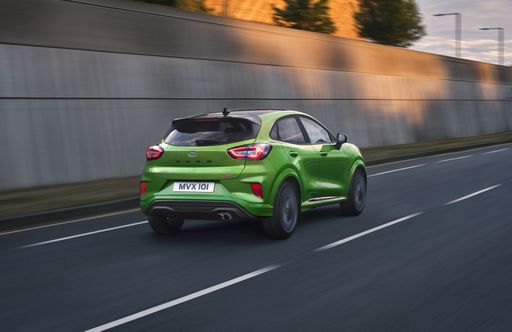
The Ford Puma is a cheeky compact crossover that blends sporty styling with city-friendly practicality, giving drivers a surprisingly fun and composed ride. With clever storage tricks and a lively personality, it’s a smart pick for buyers who want enjoyment without fuss.

details

Ford Focus Turnier

The Ford Focus Estate packs practical, family-friendly space into a compact, poised package that feels sharper and more grown-up than its price suggests. It steers with tidy composure, offers sensible interior flexibility, and is perfect for buyers who want everyday usability without turning into a moving van.

details
Ford Puma
Ford Focus Turnier

Costs and Consumption

Price
23,900 - 36,300 £
Price
28,500 - 39,900 £
Consumption L/100km
5.4 - 5.9 L/100km
Consumption L/100km
5 - 8 L/100km
Consumption kWh/100km
13 - 13.7 kWh/100km
Consumption kWh/100km
-
Electric Range
404 - 417 km
Electric Range
-
Battery Capacity
-
Battery Capacity
-
co2
0 - 135 g/km
co2
120 - 183 g/km
Fuel tank capacity
-
Fuel tank capacity
52 L

Dimensions and Body

Body Type
SUV
Body Type
Estate
Seats
5
Seats
5
Doors
-
Doors
5
Curb weight
1,316 - 1,563 kg
Curb weight
1,413 - 1,563 kg
Trunk capacity
-
Trunk capacity
608 - 635 L
Length
-
Length
4,672 - 4,693 mm
Width
1,805 mm
Width
1,825 - 1,844 mm
Height
-
Height
1,459 - 1,504 mm
Max trunk capacity
-
Max trunk capacity
1,653 L
Payload
367 - 469 kg
Payload
523 - 557 kg

Engine and Performance

Engine Type
Petrol MHEV, Electric
Engine Type
Petrol MHEV, Diesel, Petrol
Transmission
Manuel, Automatic
Transmission
Manuel, Automatic
Transmission Detail
Manual Gearbox, Dual-Clutch Automatic, Reduction Gearbox
Transmission Detail
Manual Gearbox, Dual-Clutch Automatic, Automatic Gearbox
Drive Type
Front-Wheel Drive
Drive Type
Front-Wheel Drive
Power HP
125 - 168 HP
Power HP
115 - 280 HP
Acceleration 0-100km/h
7.4 - 9.8 s
Acceleration 0-100km/h
5.8 - 12.1 s
Max Speed
-
Max Speed
184 - 250 km/h
Torque
170 - 290 Nm
Torque
170 - 420 Nm
Number of Cylinders
3
Number of Cylinders
3 - 4
Power kW
92 - 124 kW
Power kW
85 - 206 kW
Engine capacity
999 cm3
Engine capacity
999 - 2,261 cm3

General

Model Year
2,025 - 2,026
Model Year
2,023 - 2,024
CO2 Efficiency Class
D, A
CO2 Efficiency Class
D, G
Brand
Ford
Brand
Ford
DriveDuel uses data analysis and artificial intelligence to evaluate vehicle data and create content. Content is regularly reviewed and improved. The displayed prices are estimates based on German list prices, adjusted to the respective country’s VAT. Country-specific registration taxes are not included. This information is not legally binding.