
 Deutschland
 France
 Nederland
 Great Britain
 Sverige
 Norge
Norge Danmark
 Suomi
Suomi Italia
 Polska
 España
VS
Ford Puma vs Kia EV6 – Which one offers the better deal?
Two cars, one duel: Ford Puma meets Kia EV6.
Which one wins in performance, efficiency and value for money? Find out now!
Puma
@ Ford Motor Company / Ford Media Center
Costs and Efficiency:
Looking at overall running costs, both models reveal some interesting differences in everyday economy.
Ford Puma has a convincingly advantage in terms of price – it starts at 24800 £, while the Kia EV6 costs 38600 £. That’s a price difference of around 13791 £.
In terms of energy consumption, the advantage goes to the Ford Puma: with 13.10 kWh per 100 km, it’s evident more efficient than the Kia EV6 with 15.90 kWh. That’s a difference of about 2.80 kWh.
As for range, the Kia EV6 performs distinct better – achieving up to 582 km, about 206 km more than the Ford Puma.
EV6
@ Kia Corporation
Engine and Performance:
Power, torque and acceleration say a lot about how a car feels on the road. This is where you see which model delivers more driving dynamics.
When it comes to engine power, the Kia EV6 has a decisively edge – offering 609 HP compared to 168 HP. That’s roughly 441 HP more horsepower.
In acceleration from 0 to 100 km/h, the Kia EV6 is decisively quicker – completing the sprint in 3.50 s, while the Ford Puma takes 7.40 s. That’s about 3.90 s faster.
In terms of top speed, the Kia EV6 performs slightly better – reaching 260 km/h, while the Ford Puma tops out at 210 km/h. The difference is around 50 km/h.
There’s also a difference in torque: Kia EV6 pulls decisively stronger with 770 Nm compared to 290 Nm. That’s about 480 Nm difference.
Puma
@ Ford Motor Company / Ford Media Center
Space and Everyday Use:
Whether family car or daily driver – which one offers more room, flexibility and comfort?
Both vehicles offer seating for 5 people.
In curb weight, Ford Puma is clearly lighter – 1316 kg compared to 1955 kg. The difference is around 639 kg.
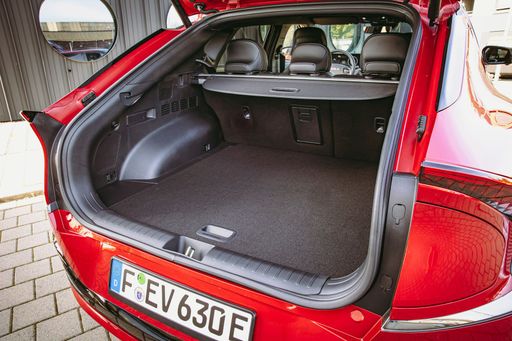
In terms of boot space, the Ford Puma offers hardly perceptible more room – 523 L compared to 490 L. That’s a difference of about 33 L.
In maximum load capacity, the Kia EV6 performs hardly perceptible better – up to 1290 L, which is about 7 L more than the Ford Puma.
When it comes to payload, Ford Puma minimal takes the win – 469 kg compared to 450 kg. That’s a difference of about 19 kg.
Who comes out on top?
Overall, the Kia EV6 shows itself to be dominates this comparison and secures the title of DriveDuel Champion.
It convinces with the more balanced overall package and proves to be the more versatile choice for everyday use.
from about £38,600
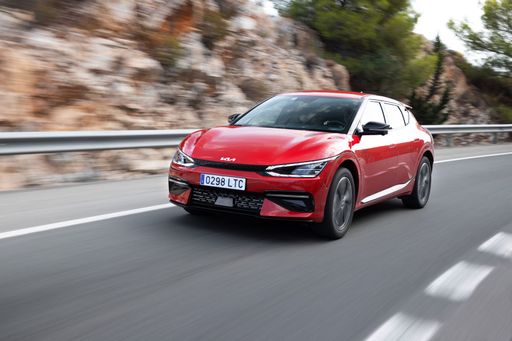 @ Kia Corporation
Kia EV6
Ford Puma
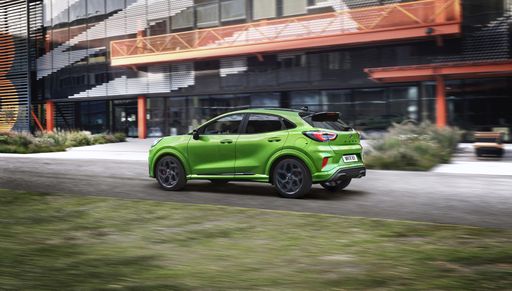
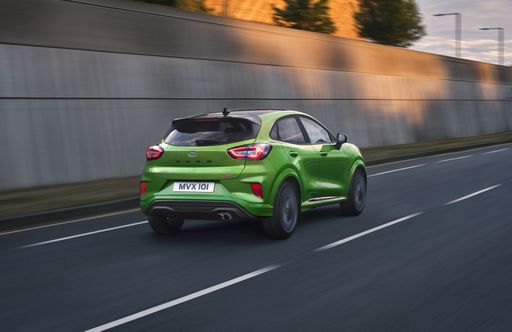
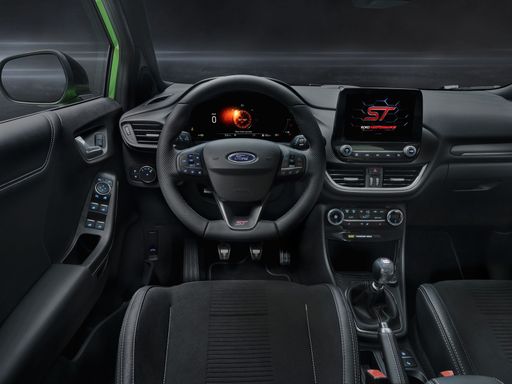
The Ford Puma is a cheeky compact crossover that blends sporty styling with city-friendly practicality, giving drivers a surprisingly fun and composed ride. With clever storage tricks and a lively personality, it’s a smart pick for buyers who want enjoyment without fuss.
details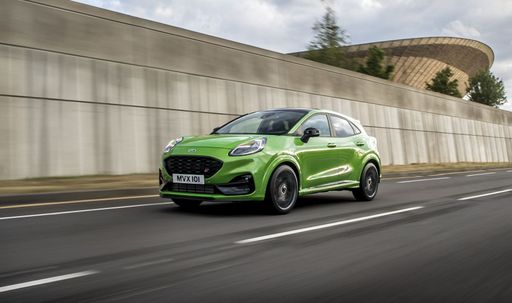 @ Ford Motor Company / Ford Media Center
 @ Ford Motor Company / Ford Media Center
 @ Ford Motor Company / Ford Media Center
 @ Ford Motor Company / Ford Media Center
Kia EV6
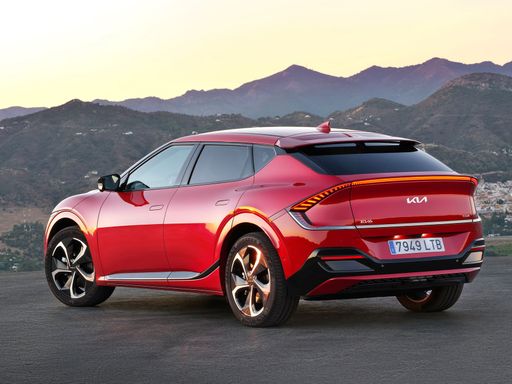
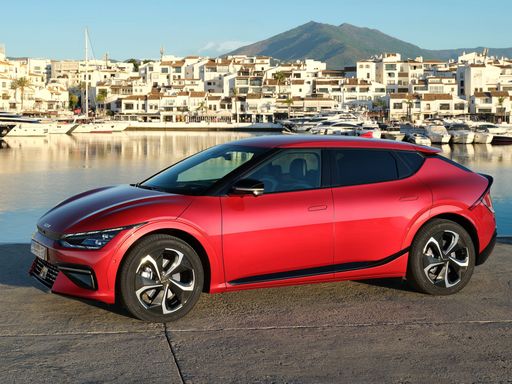
The Kia EV6 looks like it sprinted off a concept stage, its bold, futuristic lines wrapping a surprisingly spacious and grown-up cabin. On the road it delivers crisp, immediate thrust and composed handling, with enough everyday practicality and slick tech to make ditching petrol feel like an upgrade rather than a compromise.
details
@ Kia Corporation
 @ Kia Corporation
 @ Kia Corporation
 @ Kia Corporation
 @ Kia Corporation
Ford Puma
Kia EV6
|
@ Ford Motor Company / Ford Media Center
|
@ Kia Corporation
|
|
|
|
Costs and Consumption |
|
|---|---|
|
Price
24800 - 36300 £
|
Price
38600 - 60000 £
|
|
Consumption L/100km
5.4 - 5.9 L
|
Consumption L/100km
-
|
|
Consumption kWh/100km
13.1 - 13.9 kWh
|
Consumption kWh/100km
15.9 - 20.9 kWh
|
|
Electric Range
361 - 376 km
|
Electric Range
428 - 582 km
|
|
Battery Capacity
43 kWh
|
Battery Capacity
63 - 84 kWh
|
|
co2
0 - 135 g/km
|
co2
0 g/km
|
|
Fuel tank capacity
42 L
|
Fuel tank capacity
-
|
Dimensions and Body |
|
|---|---|
|
Body Type
SUV
|
Body Type
SUV
|
|
Seats
5
|
Seats
5
|
|
Doors
5
|
Doors
5
|
|
Curb weight
1316 - 1563 kg
|
Curb weight
1955 - 2220 kg
|
|
Trunk capacity
456 - 523 L
|
Trunk capacity
480 - 490 L
|
|
Length
4186 - 4226 mm
|
Length
4695 mm
|
|
Width
1805 mm
|
Width
1880 - 1890 mm
|
|
Height
1550 - 1555 mm
|
Height
1545 - 1550 mm
|
|
Max trunk capacity
1216 - 1283 L
|
Max trunk capacity
1250 - 1290 L
|
|
Payload
367 - 469 kg
|
Payload
440 - 450 kg
|
Engine and Performance |
|
|---|---|
|
Engine Type
Electric, Petrol MHEV
|
Engine Type
Electric
|
|
Transmission
Automatic, Manuel
|
Transmission
Automatic
|
|
Transmission Detail
Reduction Gearbox, Manual Gearbox, Dual-Clutch Automatic
|
Transmission Detail
Reduction Gearbox
|
|
Drive Type
Front-Wheel Drive
|
Drive Type
Rear-Wheel Drive, All-Wheel Drive
|
|
Power HP
125 - 168 HP
|
Power HP
170 - 609 HP
|
|
Acceleration 0-100km/h
7.4 - 9.8 s
|
Acceleration 0-100km/h
3.5 - 8.7 s
|
|
Max Speed
160 - 210 km/h
|
Max Speed
185 - 260 km/h
|
|
Torque
170 - 290 Nm
|
Torque
350 - 770 Nm
|
|
Number of Cylinders
3
|
Number of Cylinders
-
|
|
Power kW
92 - 124 kW
|
Power kW
125 - 448 kW
|
|
Engine capacity
999 cm3
|
Engine capacity
-
|
General |
|
|---|---|
|
Model Year
2025
|
Model Year
2024 - 2025
|
|
CO2 Efficiency Class
A, D
|
CO2 Efficiency Class
A
|
|
Brand
Ford
|
Brand
Kia
|
Is the Ford Puma offered with different drivetrains?
The Ford Puma is offered with Front-Wheel Drive.
The prices and data displayed are estimates based on German list prices and may vary by country. This information is not legally binding.