VS

Hyundai Bayon vs Ford Puma comparison

Compare performance (90 HP vs 168 HP), boot space and price (20,500 £ vs 23,900 £ ) at a glance. Find out which car is the better choice for you – Hyundai Bayon or Ford Puma?

Hyundai Bayon vs Ford Puma: Key differences

Hyundai Bayon

4.4 (2 Reviews)
rate
  • a bit cheaper
  • slightly lighter
details

Ford Puma

3 (11 Reviews)
rate
  • clearly more power
  • barely more efficient
  • substantially quicker 0–100 km/h
  • noticeably more trunk space
details

All details on performance, efficiency, range and trunk space can be found in the technical comparison below – including user reviews for both models.

By Achim Sedelmaier

Bayon

Ford Puma VS Hyundai Bayon — a practical, searchable comparison for small‑SUV buyers

Ford Puma and Hyundai Bayon sit on the same compact SUV shelf but aim at different kinds of buyers: the Puma sells a bit of driving fun with clever storage ideas, while the Bayon sells straightforward value and everyday space. This comparison looks beyond spec sheets to how each car actually feels in traffic, on the motorway and when you’re loading the kids and the weekend kit. Expect clear contrasts in driving character, cabin logic and what you sacrifice for price or personality. Read on to see which one aligns with your weekly routine rather than just the headline figures.
Puma

Character and driving dynamics

The Ford Puma feels lively and composed, with steering and body control that make it more entertaining on twisty B‑roads; the Hyundai Bayon leans toward a neutral, gather‑your‑shopping‑and‑go temperament. Puma’s sharper chassis gives drivers confidence and a sense of connectedness, which rewards anyone who values engagement on the commute. Bayon’s lighter steering and softer focus are easier in stop‑and‑go city use but won’t thrill you on a country run. If you prioritise spirited handling, the Puma will feel more satisfying; if you want undemanding, predictable behavior, the Bayon is the calmer companion.

Bayon

Comfort and long‑distance behaviour

On longer journeys the Ford Puma’s firm setup and supportive front seats keep you planted and composed, though its three‑cylinder character can sound busy at low revs and the rear seats are tight for tall passengers. The Hyundai Bayon trades some personality for a more relaxed overall ride and slightly more forgiving rear accommodation, making it less fatiguing for back‑seat passengers over hours. Wind and road noise are broadly similar at motorway speeds, but Bayon’s packaging gives it a marginally more insulated feel during steady cruising. Choose the Puma if you want an engaging long‑distance car with firm support up front; pick the Bayon if rear passenger comfort and a gentler ride matter more.

Puma

Practicality and everyday usability

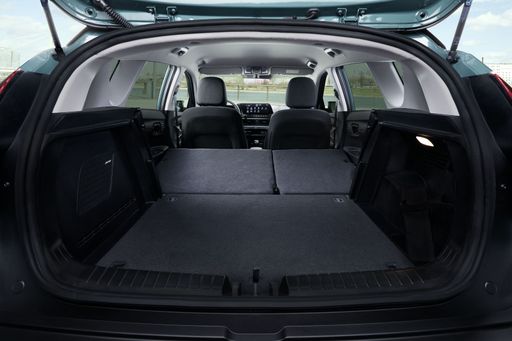
Practicality is a real contrast: the Ford Puma’s inventive MegaBox and wide loading aperture make it the pick for muddy boots, sports kit or awkward cargo that benefits from a low, washable compartment. The Hyundai Bayon answers with straightforward, roomy luggage capacity and a more conventionally usable boot that suits family shopping and prams without special tricks. Rear seat space favors the Bayon for taller occupants, where the Puma’s clever boot doesn’t fully compensate for the tighter back‑seat room. If you regularly carry wet or dirty gear the Puma’s solution is uniquely handy; if you need predictable space for passengers and cargo every day, the Bayon is the more pragmatic choice.

Bayon

Cabin feel, controls and perceived quality

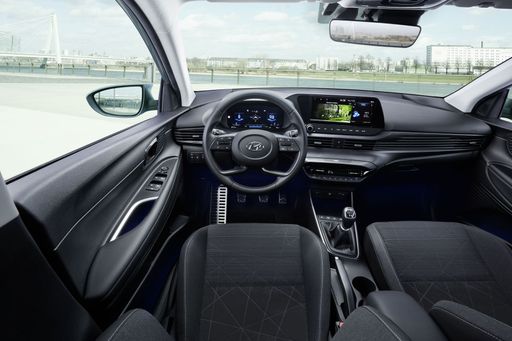
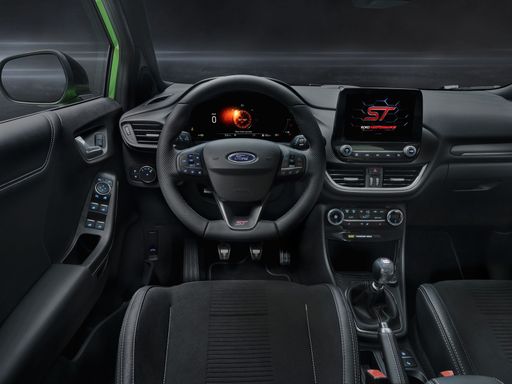
The Ford Puma presents a modern cockpit with large screens and a fresher visual layout, but it also pushes many functions into touch controls that demand attention while driving. The Hyundai Bayon keeps things tactile: physical buttons and a simpler layout make operation intuitive and less distracting, even if the cabin plastics feel more utilitarian. Perceived quality therefore splits along preference — Puma looks more contemporary, Bayon feels more user‑friendly. If you prize a touchscreen‑led modern interior, the Puma will impress visually; if you want straightforward ergonomics and durable surfaces, the Bayon will disappoint less over time.

Puma

Buyer fit — who should choose which car next?

Decide on priorities: the Ford Puma suits drivers who want a compact SUV that’s fun to drive, clever with cargo (the MegaBox is a real everyday advantage) and willing to pay a premium for personality and tech. The Hyundai Bayon will appeal to buyers who prioritise value, warranty coverage and a no‑nonsense cabin with easy controls and better rear‑seat usability. For small families or cost‑conscious buyers who want a dependable, roomy runabout the Bayon is the safer, more economical bet in daily life. If you want to see how those real‑world differences map to power, weight and economy, the technical comparison that follows will show which specifications reinforce the impressions above.

Here’s where it gets real: The technical differences in detail

Bayon

Costs and Efficiency:

When it comes to price and running costs, the biggest differences usually appear. This is often where you see which car fits your budget better in the long run.

Hyundai Bayon is a bit cheaper – starting at 20,500 £ , while the Ford Puma costs 23,900 £ . That’s a price difference of around 3,429 £.

Fuel consumption also shows a difference: the Ford Puma uses 5.4 L/100km and is barely more efficient than the Hyundai Bayon with 5.8 L/100km. The difference is about 0.4 L/100km.

Puma

Engine and Performance:

Under the bonnet, it becomes clear which model is tuned for sportiness and which one takes the lead when you hit the accelerator.

When it comes to engine power, the Ford Puma offers clearly more power – delivering 168 HP compared to 90 HP. That’s roughly 78 HP more horsepower.

When accelerating from 0 to 100 km/h, the Ford Puma is substantially quicker – completing the sprint in 7.4 s, while the Hyundai Bayon takes 11.9 s. That’s about 4.5 s quicker.

There’s also a difference in torque: the Ford Puma delivers significantly more torque with 290 Nm compared to 172 Nm. That’s about 118 Nm more.

Bayon

Space and Everyday Use:

Whether family car or daily driver – which one offers more room, flexibility and comfort?

Both vehicles offer seating for 5 people.

In terms of curb weight, Hyundai Bayon is slightly lighter – 1,175 kg compared to 1,316 kg. The difference is around 141 kg.

Looking at boot space, the Ford Puma offers noticeably more boot space – 523 L compared to 411 L. That’s a difference of about 112 L.

When it comes to payload, the Ford Puma carries marginally more – 469 kg compared to 460 kg. That’s a difference of about 9 kg.

Who wins the race in the data check?

The Ford Puma is far ahead overall in the objective data comparison.
This result only shows which model scores more points on paper – not which of the two cars feels right for you.

from £23,900
Puma

Ford Puma

  • Engine Type Petrol MHEV, Electric
  • Transmission Manuel, Automatic
  • Drive Type Front-Wheel Drive
  • Power HP 125 - 168 HP
  • Consumption L/100km 5.4 - 5.9 L/100km
  • Consumption kWh/100km 13 - 13.9 kWh/100km
  • Electric Range 404 - 417 km
Hyundai Bayon
Ford Puma

Costs and Consumption

View detailed analysis

Engine and Performance

View detailed analysis

Dimensions and Body

View detailed analysis

Hyundai Bayon

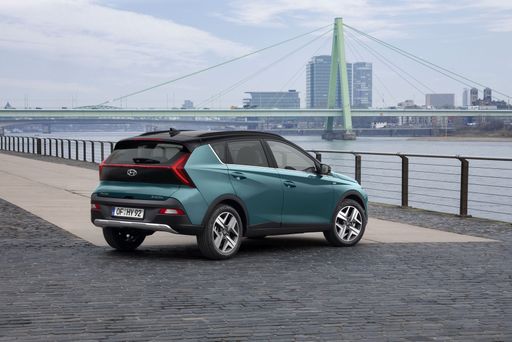
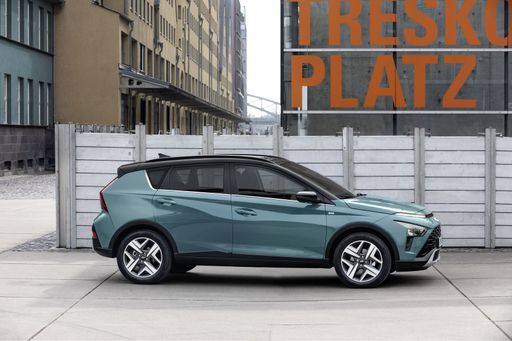
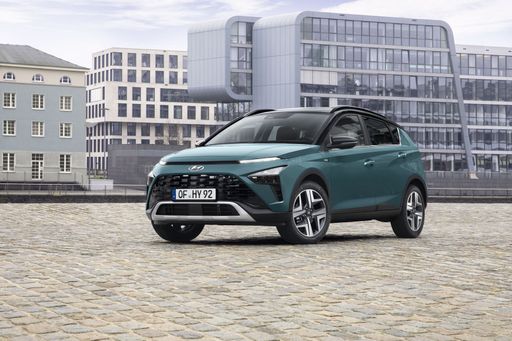
The Hyundai Bayon slips neatly between city runabout and small SUV, offering surprising practicality and a fresh, confident design that stands out in urban traffic. It's an easy buy for shoppers who want smart packaging, tidy handling and a dash of personality without fuss — a sensible little crossover that makes everyday driving a bit more enjoyable.

details

Ford Puma

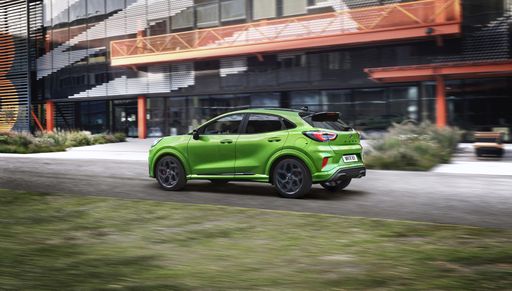
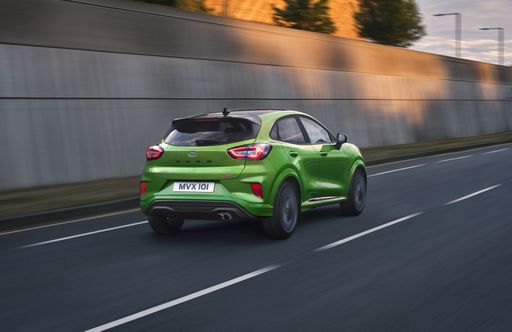
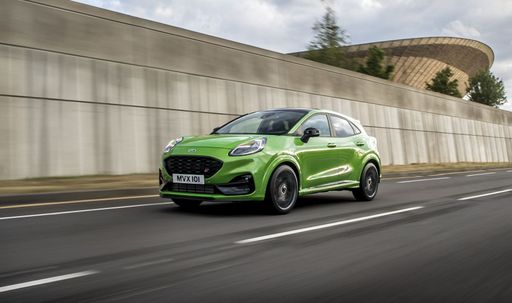
The Ford Puma blends sporty styling with practical everyday usability, making it a smart choice for drivers who want flair without sacrificing versatility. Its engaging driving character and clever interior packaging give it a more dynamic and useful feel than many rivals.

details
Hyundai Bayon
Ford Puma

Costs and Consumption

Price
20,500 - 26,200 £
Price
23,900 - 36,300 £
Consumption L/100km
5.8 L/100km
Consumption L/100km
5.4 - 5.9 L/100km
Consumption kWh/100km
-
Consumption kWh/100km
13 - 13.9 kWh/100km
Electric Range
-
Electric Range
404 - 417 km
Battery Capacity
-
Battery Capacity
-
co2
130 - 132 g/km
co2
0 - 135 g/km
Fuel tank capacity
-
Fuel tank capacity
-

Dimensions and Body

Body Type
SUV
Body Type
SUV
Seats
5
Seats
5
Doors
-
Doors
-
Curb weight
1,175 - 1,200 kg
Curb weight
1,316 - 1,563 kg
Trunk capacity
411 L
Trunk capacity
456 - 523 L
Length
-
Length
-
Width
1,775 mm
Width
1,805 mm
Height
-
Height
-
Max trunk capacity
-
Max trunk capacity
-
Payload
450 - 460 kg
Payload
367 - 469 kg

Engine and Performance

Engine Type
Petrol
Engine Type
Petrol MHEV, Electric
Transmission
Manuel, Automatic
Transmission
Manuel, Automatic
Transmission Detail
Manual Gearbox, Dual-Clutch Automatic
Transmission Detail
Manual Gearbox, Dual-Clutch Automatic, Reduction Gearbox
Drive Type
Front-Wheel Drive
Drive Type
Front-Wheel Drive
Power HP
90 HP
Power HP
125 - 168 HP
Acceleration 0-100km/h
11.9 - 13.3 s
Acceleration 0-100km/h
7.4 - 9.8 s
Max Speed
-
Max Speed
-
Torque
172 Nm
Torque
170 - 290 Nm
Number of Cylinders
3
Number of Cylinders
3
Power kW
66 kW
Power kW
92 - 124 kW
Engine capacity
998 cm3
Engine capacity
999 cm3

General

Model Year
2025
Model Year
2,025 - 2,026
CO2 Efficiency Class
D
CO2 Efficiency Class
D, A
Brand
Hyundai
Brand
Ford
DriveDuel uses data analysis and artificial intelligence to evaluate vehicle data and create content. Content is regularly reviewed and improved. The displayed prices are estimates based on German list prices, adjusted to the respective country’s VAT. Country-specific registration taxes are not included. This information is not legally binding.