VS

Kia Stonic vs Ford Puma comparison

Compare performance (115 HP vs 168 HP), boot space and price (20,400 £ vs 23,900 £ ) at a glance. Find out which car is the better choice for you – Kia Stonic or Ford Puma?

Kia Stonic vs Ford Puma: Key differences

Kia Stonic

4.6 (2 Reviews)
rate
  • somewhat cheaper
  • barely lighter
details

Ford Puma

3 (11 Reviews)
rate
  • clearly more power
  • marginally more efficient
  • significantly quicker 0–100 km/h
  • markedly more trunk space
details

All details on performance, efficiency, range and trunk space can be found in the technical comparison below – including user reviews for both models.

By Achim Sedelmaier

Stonic

A Clash of Compact Titans: Ford Puma vs. Kia Stonic

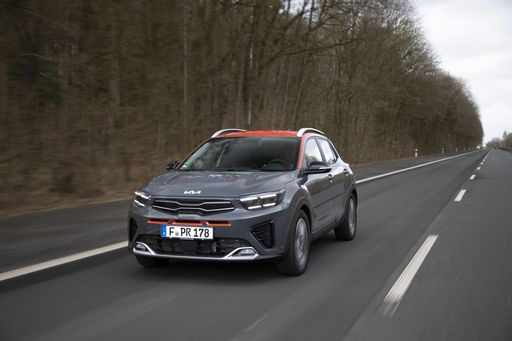
In the bustling world of compact SUVs, the Ford Puma and Kia Stonic shine as two notable contenders. Both vehicles offer an attractive blend of technology, efficiency, and style, positioning themselves as strong players in this competitive segment. Let's delve into their technical aspects and innovations to help you make an informed choice.
Puma

Engine and Performance

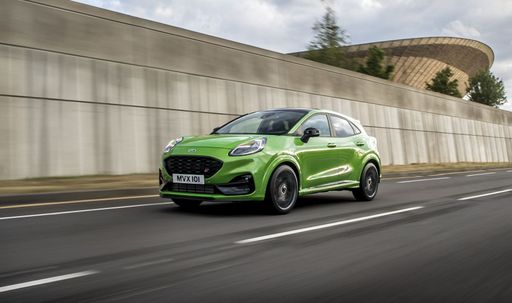
The Ford Puma stands out with its diverse engine options, including Petrol MHEV and Electric variants. The Puma's power ranges from 125 to 160 HP for petrol engines and reaches up to 168 HP on the electric model. Its acceleration time from 0-100 km/h varies between a swift 8 to 9.8 seconds depending on the version, promising a dynamic driving experience. Additionally, the Puma offers a top speed of up to 210 km/h.

On the other hand, the Kia Stonic is primarily powered by Petrol and Petrol MHEV engines, offering between 79 and 100 HP. Although not as powerful as the Puma, the Stonic delivers reliable performance with an acceleration between 11.3 to 14.2 seconds from 0-100 km/h. The Stonic reaches a maximum speed of 179 km/h, ensuring a steady drive suitable for urban commuting.

Stonic

Transmission and Drive

Both models offer manual and automatic transmission options. The Ford Puma includes a manual gearbox, dual-clutch automatic, and reduction gearbox, catering to a wide range of driving preferences. Similarly, the Kia Stonic comes with a manual gearbox and a dual-clutch automatic, highlighting flexibility for drivers seeking a more hands-on approach or a seamless automatic experience.

Puma

Fuel Efficiency and Eco Credentials

The fuel consumption for the Ford Puma varies between 5.4 to 6 L/100 km for the petrol variants and an efficient 13.1 to 13.7 kWh/100 km for the electric option, boasting an impressive electric range of up to 376 km. With CO2 emissions ranging from 0 to 136 g/km, the Puma shows versatility in its eco-friendly aspirations.

Comparatively, the Kia Stonic displays a fuel consumption rate between 5.5 to 5.8 L/100 km, with CO2 emissions locked between 125 to 132 g/km. While its eco credentials are slightly less impressive than the Puma's, the Stonic maintains a respectable rating within its class.

Stonic

Design and Practicality

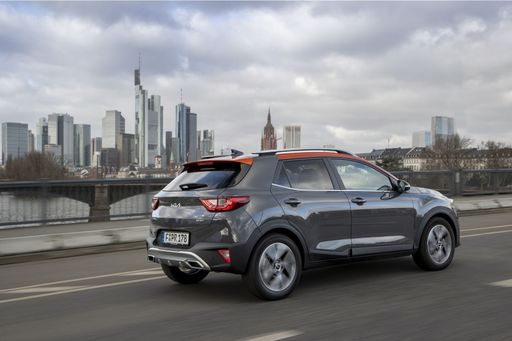
The Ford Puma presents a sturdy SUV profile with dimensions of 4186 to 4226 mm in length, 1805 mm in width, and a height of 1550 to 1555 mm. It offers ample trunk capacity ranging from 456 to 523 liters, making it a practical choice for storage and everyday use.

The Kia Stonic, while slightly more compact, measures 4140 mm in length, 1760 mm in width, and 1505 mm in height. It offers a trunk capacity of 352 liters, providing adequate space for small families or urban adventures.

Puma

Final Thoughts

Choosing between the Ford Puma and Kia Stonic depends heavily on individual preferences and needs. The Puma is favored for its powerful performance, innovative hybrid technology, and flexibility. Meanwhile, the Stonic shines with its practicality and reliable efficiency, offering an appealing package for those who prioritize a straightforward, efficient urban vehicle. Ultimately, both SUVs represent the exemplary shift towards modern, compact automotive solutions, catering to diverse lifestyles and driving desires.

Here’s where it gets real: The technical differences in detail

Stonic

Costs and Efficiency:

Price and efficiency are often the first things buyers look at. Here it becomes clear which model has the long-term edge – whether at the pump, the plug, or in purchase price.

Kia Stonic is somewhat cheaper – starting at 20,400 £ , while the Ford Puma costs 23,900 £ . That’s a price difference of around 3,523 £.

Fuel consumption also shows a difference: the Ford Puma uses 5.4 L/100km and is marginally more efficient than the Kia Stonic with 5.6 L/100km. The difference is about 0.2 L/100km.

Puma

Engine and Performance:

Power, torque and acceleration are the classic benchmarks for car enthusiasts – and here, some clear differences start to show.

When it comes to engine power, the Ford Puma offers clearly more power – delivering 168 HP compared to 115 HP. That’s roughly 53 HP more horsepower.

When accelerating from 0 to 100 km/h, the Ford Puma is significantly quicker – completing the sprint in 7.4 s, while the Kia Stonic takes 10.7 s. That’s about 3.3 s quicker.

There’s also a difference in torque: the Ford Puma delivers noticeably more torque with 290 Nm compared to 200 Nm. That’s about 90 Nm more.

Stonic

Space and Everyday Use:

Beyond pure performance, interior space and usability matter most in daily life. This is where you see which car is more practical and versatile.

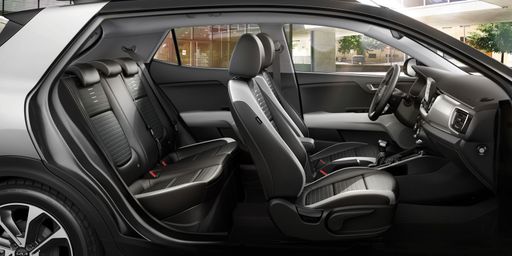
Both vehicles offer seating for 5 people.

In terms of curb weight, Kia Stonic is barely lighter – 1,205 kg compared to 1,316 kg. The difference is around 111 kg.

Looking at boot space, the Ford Puma offers markedly more boot space – 523 L compared to 352 L. That’s a difference of about 171 L.

When it comes to payload, the Ford Puma carries marginally more – 469 kg compared to 445 kg. That’s a difference of about 24 kg.

Who wins the race in the data check?

The Ford Puma is far ahead overall in the objective data comparison.
This result only shows which model scores more points on paper – not which of the two cars feels right for you.

from £23,900
Puma

Ford Puma

  • Engine Type Petrol MHEV, Electric
  • Transmission Manuel, Automatic
  • Drive Type Front-Wheel Drive
  • Power HP 125 - 168 HP
  • Consumption L/100km 5.4 - 5.9 L/100km
  • Consumption kWh/100km 13 - 13.9 kWh/100km
  • Electric Range 404 - 417 km
Kia Stonic
Ford Puma

Costs and Consumption

View detailed analysis

Engine and Performance

View detailed analysis

Dimensions and Body

View detailed analysis

Kia Stonic

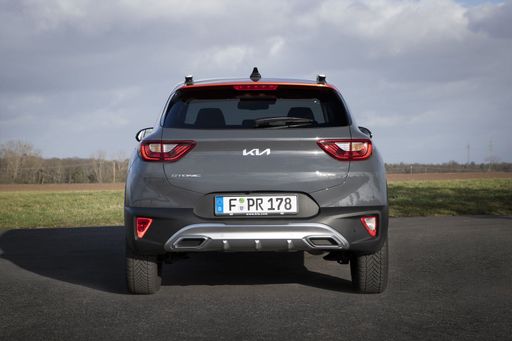
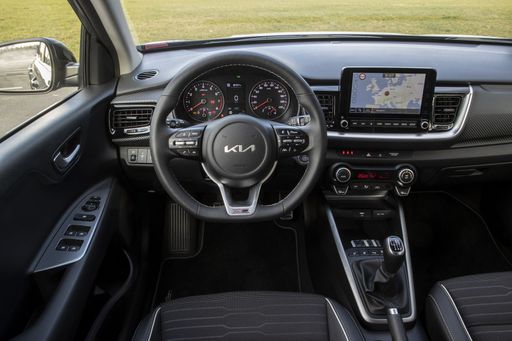
The Kia Stonic is a compact crossover that pairs nimble city manners with a surprisingly spacious and comfortable cabin. It’s a practical, well-equipped choice for buyers who value sensible features, approachable styling and easy everyday usability.

details

Ford Puma

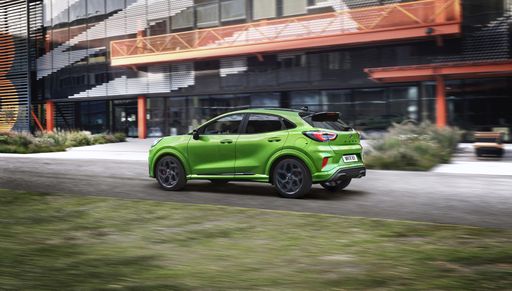
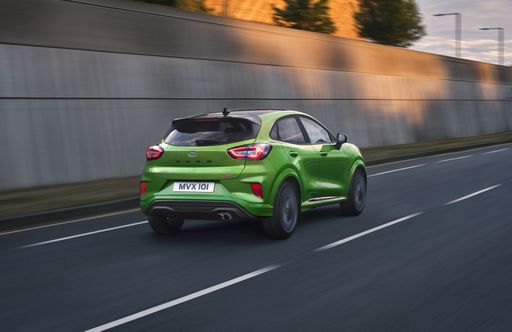
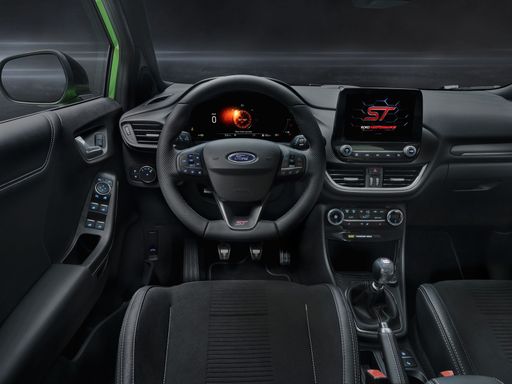
The Ford Puma blends sporty styling with practical everyday usability, making it a smart choice for drivers who want flair without sacrificing versatility. Its engaging driving character and clever interior packaging give it a more dynamic and useful feel than many rivals.

details
Kia Stonic
Ford Puma

Costs and Consumption

Price
20,400 - 26,800 £
Price
23,900 - 36,300 £
Consumption L/100km
5.6 - 5.7 L/100km
Consumption L/100km
5.4 - 5.9 L/100km
Consumption kWh/100km
-
Consumption kWh/100km
13 - 13.9 kWh/100km
Electric Range
-
Electric Range
404 - 417 km
Battery Capacity
-
Battery Capacity
-
co2
126 - 128 g/km
co2
0 - 135 g/km
Fuel tank capacity
-
Fuel tank capacity
-

Dimensions and Body

Body Type
SUV
Body Type
SUV
Seats
5
Seats
5
Doors
-
Doors
-
Curb weight
1,205 - 1,270 kg
Curb weight
1,316 - 1,563 kg
Trunk capacity
352 L
Trunk capacity
456 - 523 L
Length
-
Length
-
Width
1,760 mm
Width
1,805 mm
Height
-
Height
-
Max trunk capacity
-
Max trunk capacity
-
Payload
440 - 445 kg
Payload
367 - 469 kg

Engine and Performance

Engine Type
Petrol, Petrol MHEV
Engine Type
Petrol MHEV, Electric
Transmission
Manuel, Automatic
Transmission
Manuel, Automatic
Transmission Detail
Manual Gearbox, Dual-Clutch Automatic
Transmission Detail
Manual Gearbox, Dual-Clutch Automatic, Reduction Gearbox
Drive Type
Front-Wheel Drive
Drive Type
Front-Wheel Drive
Power HP
100 - 115 HP
Power HP
125 - 168 HP
Acceleration 0-100km/h
10.7 - 12.1 s
Acceleration 0-100km/h
7.4 - 9.8 s
Max Speed
-
Max Speed
-
Torque
172 - 200 Nm
Torque
170 - 290 Nm
Number of Cylinders
3
Number of Cylinders
3
Power kW
74 - 85 kW
Power kW
92 - 124 kW
Engine capacity
998 cm3
Engine capacity
999 cm3

General

Model Year
2025
Model Year
2,025 - 2,026
CO2 Efficiency Class
D
CO2 Efficiency Class
D, A
Brand
Kia
Brand
Ford
DriveDuel uses data analysis and artificial intelligence to evaluate vehicle data and create content. Content is regularly reviewed and improved. The displayed prices are estimates based on German list prices, adjusted to the respective country’s VAT. Country-specific registration taxes are not included. This information is not legally binding.