VS

Mazda 3 Hatchback vs Mazda CX-30 comparison

Compare performance (186 HP vs 186 HP), boot space and price (24,500 £ vs 25,200 £ ) at a glance. Find out which car is the better choice for you – Mazda 3 Hatchback or Mazda CX-30?

Mazda 3 Hatchback vs Mazda CX-30: Key differences

Mazda 3 Hatchback

  • barely cheaper
  • marginally more efficient
  • marginally quicker 0–100 km/h
  • barely lighter

Mazda CX-30

4.6 (3 Reviews)
rate
  • a bit more trunk space

All details on performance, efficiency, range and trunk space can be found in the technical comparison below – including user reviews for both models.

3 Hatchback

Mazda 3 Hatchback vs. Mazda CX-30: A Battle of Style and Versatility

In the ever-evolving world of automobiles, Mazda continues to impress with its commitment to design, technology, and driving dynamics. Two popular models from Mazda's lineup are the Mazda 3 Hatchback and the Mazda CX-30. Both vehicles offer unique features and cater to different driving needs and preferences. Let's dive into a detailed comparison of these two models, focusing on their technical aspects and innovations.
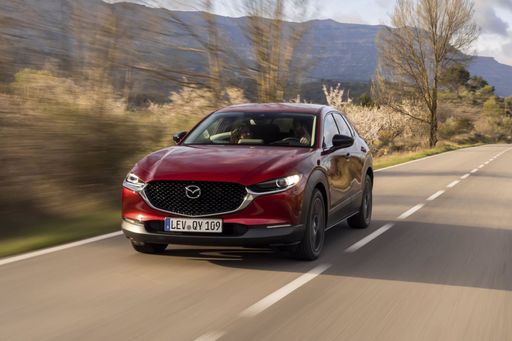
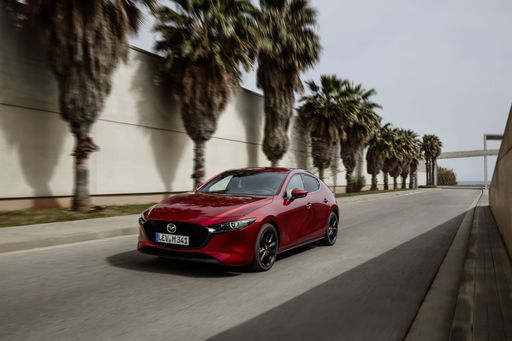
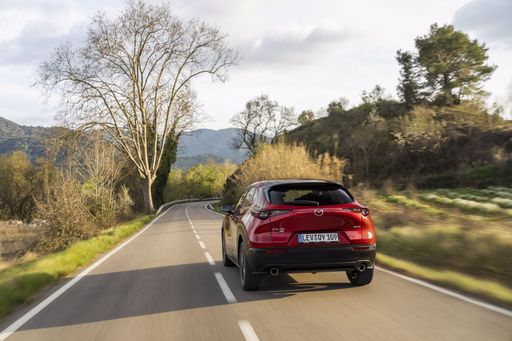
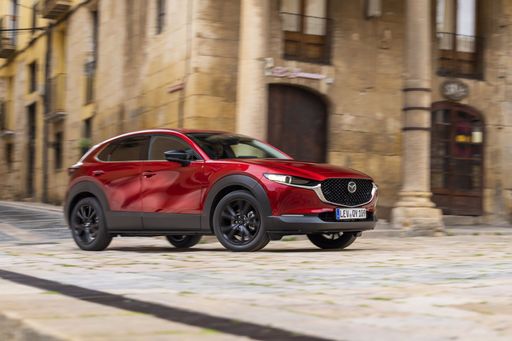
CX-30

Design and Dimensions

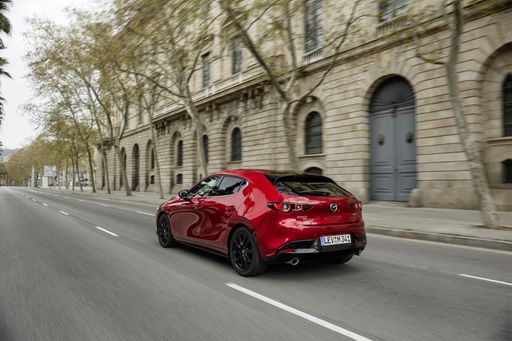
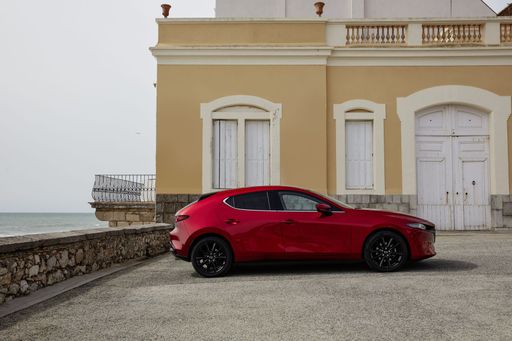
The Mazda 3 Hatchback and the Mazda CX-30 are both standout models in Mazda's lineup. The Mazda 3 Hatchback is a perfect choice for those who prioritize a sleek, aerodynamic design. With its refined lines and modern aesthetics, the Mazda 3 Hatchback measures 4460 mm in length, 1795 mm in width, and stands 1435 mm tall. This compact form factor makes it ideal for urban driving and spirited adventures.

In contrast, the Mazda CX-30 takes the form of a compact SUV, offering more rugged appeal and enhanced ground clearance. It measures 4395 mm in length, the same width as the Hatchback at 1795 mm, but stands taller at 1540 mm. This increase in height gives the CX-30 an edge in terms of visibility and cabin space, perfect for those who appreciate a commanding driving position.

3 Hatchback

Performance and Efficiency

Under the hood, both vehicles offer similar powertrains with a few distinctions. The Mazda 3 Hatchback is equipped with a 2.0L petrol mild hybrid engine, capable of delivering up to 186 horsepower and a torque of 240 Nm. Its excellent power-to-weight ratio allows quick acceleration, covering 0-100 km/h in just 8 seconds and reaching a maximum speed of 216 km/h. The fuel consumption ranges from 5.6 to 6.5 L/100km, providing a balance between performance and efficiency.

Similarly, the Mazda CX-30 shares the same engine configurations, but with slight variations in performance. The CX-30's acceleration from 0-100 km/h ranges between 8.3 to 10.3 seconds, with a top speed of up to 204 km/h. Its fuel consumption is marginally higher than the Hatchback, ranging from 5.7 to 6.6 L/100km. This makes the CX-30 appealing for those who need a bit more utility without sacrificing too much in efficiency.

CX-30

Interior and Cargo Space

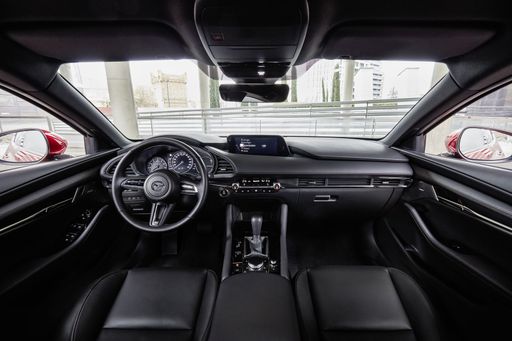
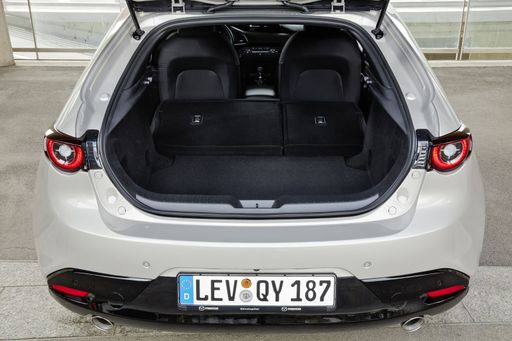
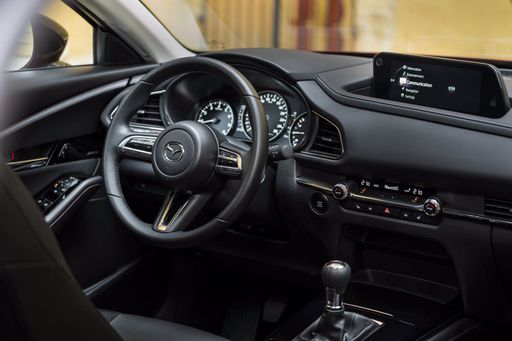
Inside, both vehicles maintain Mazda's reputation for high-quality materials and driver-focused cockpits. The Mazda 3 Hatchback offers a cargo capacity of 351 liters, which is practical for everyday use but could limit larger loads. As a trade-off for its compact size, it provides an intimate, sporty cabin experience for those who enjoy driver-centric interiors.

On the other hand, the CX-30 offers a more generous trunk capacity of up to 430 liters, reflecting its SUV roots. This extra space can be crucial for families or those who require more versatility from their vehicle. The ride height and a slightly larger interior space make the CX-30 a comfortable option for longer journeys.

3 Hatchback

Technology and Safety

Mazda equips both models with a suite of advanced technological features including a user-friendly infotainment system, connectivity options, and a range of driver-assistance technologies. Safety features are robust in both models, with systems like adaptive cruise control, lane departure warning, and blind-spot monitoring available, ensuring peace of mind for the driver and passengers.

CX-30

Conclusion

The choice between the Mazda 3 Hatchback and Mazda CX-30 largely depends on the driver's lifestyle and priorities. The Mazda 3 Hatchback is a compelling option for those who prioritize sporty dynamics, compact dimensions, and striking looks. Conversely, the Mazda CX-30 caters to those who appreciate the practicality, higher driving position, and increased cargo capacity of a compact SUV.

In essence, Mazda has effectively captured the essence of both segments, allowing drivers to enjoy a well-rounded experience regardless of their preference. Whether you lean towards the exhilarating drive of the Hatchback or the utility-packed SUV experience of the CX-30, both models promise an engaging and refined driving experience, true to Mazda's hallmark craftsmanship.

Here’s where it gets real: The technical differences in detail

3 Hatchback

Costs and Efficiency:

When it comes to price and running costs, the biggest differences usually appear. This is often where you see which car fits your budget better in the long run.

Mazda 3 Hatchback is barely cheaper – starting at 24,500 £ , while the Mazda CX-30 costs 25,200 £ . That’s a price difference of around 686 £.

Fuel consumption also shows a difference: the Mazda 3 Hatchback uses 5.6 L/100km and is marginally more efficient than the Mazda CX-30 with 5.7 L/100km. The difference is about 0.1 L/100km.

CX-30

Engine and Performance:

Under the bonnet, it becomes clear which model is tuned for sportiness and which one takes the lead when you hit the accelerator.

Both models deliver identical power – 186 HP each.

When accelerating from 0 to 100 km/h, the Mazda 3 Hatchback is marginally quicker – completing the sprint in 8 s, while the Mazda CX-30 takes 8.3 s. That’s about 0.3 s quicker.

Both models offer the same torque – 240 Nm.

3 Hatchback

Space and Everyday Use:

Beyond pure performance, interior space and usability matter most in daily life. This is where you see which car is more practical and versatile.

Both vehicles offer seating for 5 people.

In terms of curb weight, Mazda 3 Hatchback is barely lighter – 1,419 kg compared to 1,455 kg. The difference is around 36 kg.

Looking at boot space, the Mazda CX-30 offers a bit more boot space – 430 L compared to 351 L. That’s a difference of about 79 L.

When it comes to payload, the Mazda CX-30 carries very slightly more – 496 kg compared to 485 kg. That’s a difference of about 11 kg.

Who wins the race in the data check?

The Mazda CX-30 sits just ahead overall in the objective data comparison.
This result only shows which model scores more points on paper – not which of the two cars feels right for you.

from £25,200
CX-30

Mazda CX-30

  • Engine Type : Petrol MHEV
  • Transmission : Manuel, Automatic
  • Drive Type : Front-Wheel Drive, All-Wheel Drive
  • Power HP : 140 - 186 HP
  • Consumption L/100km : 5.7 - 6.6 L/100km
Mazda 3 Hatchback
Mazda CX-30

Costs and Consumption

View detailed analysis

Engine and Performance

View detailed analysis

Dimensions and Body

View detailed analysis

Mazda 3 Hatchback

The Mazda 3 hatchback blends elegant design with a surprisingly sporty drive, giving a cabin that feels more upscale than you’d expect for the segment. Practical enough for everyday life yet eager to entertain behind the wheel, it’s a smart, good-humored choice that makes even grocery runs feel like a mini escape.

details

Mazda CX-30

The Mazda CX-30 blends sleek coupe-like lines with the practicality of a compact crossover, feeling more premium than its price tag suggests. It’s a joy to drive for anyone who likes a taut chassis and an interior that treats daily commutes like a small luxury escape.

details
Mazda 3 Hatchback
Mazda CX-30

Costs and Consumption

Price
24,500 - 35,500 £
Price
25,200 - 36,800 £
Consumption L/100km
5.6 - 6.5 L/100km
Consumption L/100km
5.7 - 6.6 L/100km
Consumption kWh/100km
-
Consumption kWh/100km
-
Electric Range
-
Electric Range
-
Battery Capacity
-
Battery Capacity
-
co2
126 - 146 g/km
co2
129 - 148 g/km
Fuel tank capacity
-
Fuel tank capacity
-

Dimensions and Body

Body Type
Hatchback
Body Type
SUV
Seats
5
Seats
5
Doors
-
Doors
-
Curb weight
1,419 - 1,549 kg
Curb weight
1,455 - 1,587 kg
Trunk capacity
351 L
Trunk capacity
422 - 430 L
Length
-
Length
-
Width
1,795 mm
Width
1,795 mm
Height
-
Height
-
Max trunk capacity
-
Max trunk capacity
-
Payload
470 - 485 kg
Payload
458 - 496 kg

Engine and Performance

Engine Type
Petrol MHEV
Engine Type
Petrol MHEV
Transmission
Manuel, Automatic
Transmission
Manuel, Automatic
Transmission Detail
Manual Gearbox, Automatic Gearbox
Transmission Detail
Manual Gearbox, Automatic Gearbox
Drive Type
Front-Wheel Drive, All-Wheel Drive
Drive Type
Front-Wheel Drive, All-Wheel Drive
Power HP
140 - 186 HP
Power HP
140 - 186 HP
Acceleration 0-100km/h
8 - 9.8 s
Acceleration 0-100km/h
8.3 - 10.3 s
Max Speed
-
Max Speed
-
Torque
238 - 240 Nm
Torque
238 - 240 Nm
Number of Cylinders
4
Number of Cylinders
4
Power kW
103 - 137 kW
Power kW
103 - 137 kW
Engine capacity
1,998 - 2,488 cm3
Engine capacity
1,998 - 2,488 cm3

General

Model Year
2,025
Model Year
2,025
CO2 Efficiency Class
D, E
CO2 Efficiency Class
D, E
Brand
Mazda
Brand
Mazda
DriveDuel uses data analysis and artificial intelligence to evaluate vehicle data and create content. Content is regularly reviewed and improved. The displayed prices are estimates based on German list prices, adjusted to the respective country’s VAT. Country-specific registration taxes are not included. This information is not legally binding.