VS

Mazda CX-30 vs Ford Puma comparison

Compare performance (186 HP vs 168 HP), boot space and price (25,200 £ vs 23,900 £ ) at a glance. Find out which car is the better choice for you – Mazda CX-30 or Ford Puma?

Mazda CX-30 vs Ford Puma: Key differences

Mazda CX-30

4.6 (3 Reviews)
rate
  • marginally more power

Ford Puma

3 (11 Reviews)
rate
  • very slightly cheaper
  • very slightly more efficient
  • moderately quicker 0–100 km/h
  • a bit lighter

All details on performance, efficiency, range and trunk space can be found in the technical comparison below – including user reviews for both models.

CX-30

The compact-crossover clash

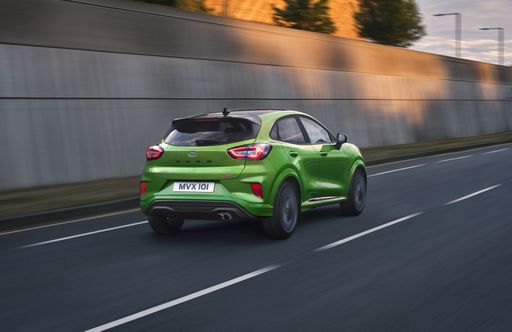
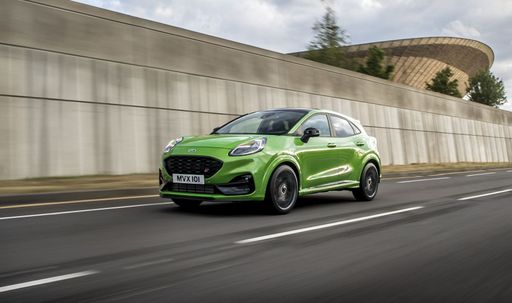
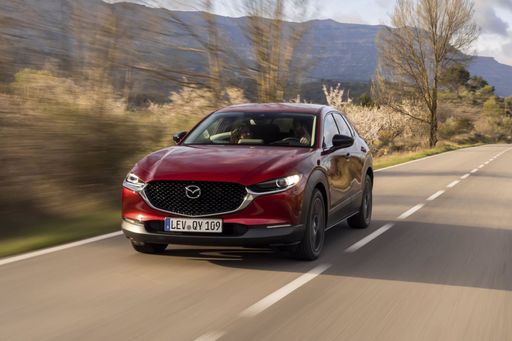
On one side there’s the Ford Puma, the cheeky, sporty compact that wants to turn grocery runs into small adventures; on the other is the Mazda CX-30, a more composed, design-led compact crossover that leans into presence and polish. This is less about class warfare and more about attitude: nimble, playful packaging versus calm, sculpted refinement. Think of it as a sparring match between a sprightly street fox and a poised urbanist — and your driveway is the ring.
Puma

Personality and presence

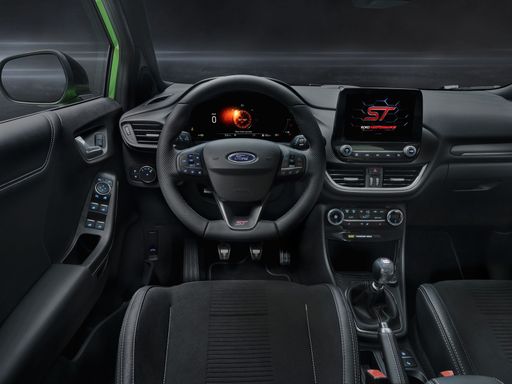
The Puma wears its intentions on its sleeve — perky lines, a hint of aggression, and a driving demeanor that prioritises engagement and city agility. The CX-30 plays the long game, with understated elegance, harmonious surfaces and an interior that feels like a small, grown-up refuge. One talks loudly with quick moves, the other whispers premium calm and asks you to notice the details rather than the drama.

CX-30

Daily life — who handles what better

In everyday use the Puma’s compact footprint and punchy character make it easy to hustle through traffic, park in tight bays and feel connected behind the wheel when the road tightens. The CX-30 rewards time spent on the road with a composed ride, a cabin that cocoons passengers and controls that are arranged for calm, longer stints away from the city. Families, commuters and weekend gear-haulers will find different strengths in each: one is built around agility and usability, the other around comfort and presence.

Puma

What it says about you

Pick the Puma and you’re signalling that practicality doesn't have to be boring — you want something that’s useful but still a bit cheeky, the car equivalent of a smart-casual outfit. Choose the CX-30 and you’re opting for crafted restraint: tastefully styled, quietly confident and less keen on flash than on lasting refinement. Neither choice is about proving anything dramatic — it’s about what you want your daily companion to feel like when you slide behind the wheel.

CX-30

If what matters to you is getting the most from everyday life, consider the Ford Puma

If what matters to you is compact agility, fuss-free packaging and a car that makes errands and tight-city driving feel like less of a chore, the Ford Puma is the one to examine closely. It suits buyers who prioritise sensible use of space, economical running and a lively driving character that keeps the commute interesting. This is the kind of car that rewards practical thinking with a bit of personality for free.

Puma

If what matters to you is crafted comfort and image, consider the Mazda CX-30

If what matters to you is a refined cabin, a composed on-road manner and a design that says you care about styling and interior quality, the Mazda CX-30 should be near the top of your list. It appeals to those who value comfort on longer journeys, a premium-feeling interior and a presence that feels a touch more grown-up. Still undecided? Scroll on and check the detailed figures to match your instincts with the facts.

Here’s where it gets real: The technical differences in detail

CX-30

Costs and Efficiency:

Price and efficiency are key factors when choosing a car – and this is often where the real differences emerge.

Ford Puma is very slightly cheaper – starting at 23,900 £ , while the Mazda CX-30 costs 25,200 £ . That’s a price difference of around 1,320 £.

Fuel consumption also shows a difference: the Ford Puma uses 5.4 L/100km and is very slightly more efficient than the Mazda CX-30 with 5.7 L/100km. The difference is about 0.3 L/100km.

Puma

Engine and Performance:

Power, torque and acceleration say a lot about how a car feels on the road. This is where you see which model delivers more driving dynamics.

When it comes to engine power, the Mazda CX-30 offers marginally more power – delivering 186 HP compared to 168 HP. That’s roughly 18 HP more horsepower.

When accelerating from 0 to 100 km/h, the Ford Puma is moderately quicker – completing the sprint in 7.4 s, while the Mazda CX-30 takes 8.3 s. That’s about 0.9 s quicker.

There’s also a difference in torque: the Ford Puma delivers moderately more torque with 290 Nm compared to 240 Nm. That’s about 50 Nm more.

CX-30

Space and Everyday Use:

Beyond pure performance, interior space and usability matter most in daily life. This is where you see which car is more practical and versatile.

Both vehicles offer seating for 5 people.

In terms of curb weight, Ford Puma is a bit lighter – 1,316 kg compared to 1,455 kg. The difference is around 139 kg.

When it comes to payload, the Mazda CX-30 carries very slightly more – 496 kg compared to 469 kg. That’s a difference of about 27 kg.

Who wins the race in the data check?

The Ford Puma comes out clearly ahead in the objective data comparison.
This result only shows which model scores more points on paper – not which of the two cars feels right for you.

from £23,900
Puma

Ford Puma

  • Engine Type : Petrol MHEV, Electric
  • Transmission : Manuel, Automatic
  • Drive Type : Front-Wheel Drive
  • Power HP : 125 - 168 HP
  • Consumption L/100km : 5.4 - 5.9 L/100km
  • Consumption kWh/100km : 13 - 13.7 kWh/100km
  • Electric Range : 404 - 417 km
Mazda CX-30
Ford Puma

Costs and Consumption

View detailed analysis

Engine and Performance

View detailed analysis

Dimensions and Body

View detailed analysis

Mazda CX-30

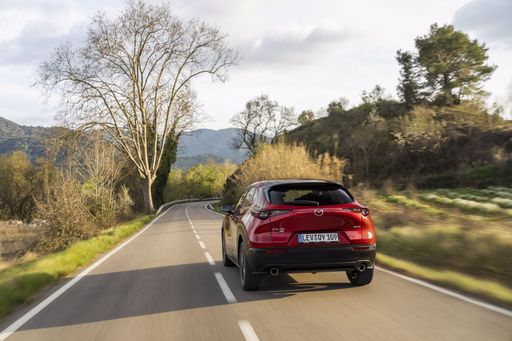
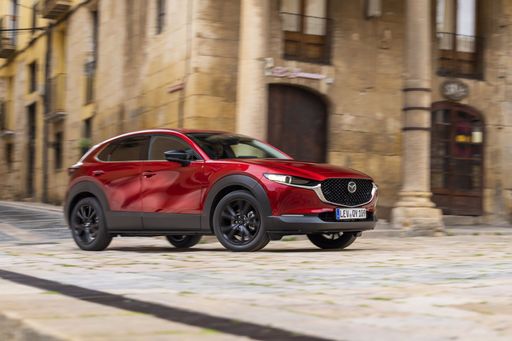
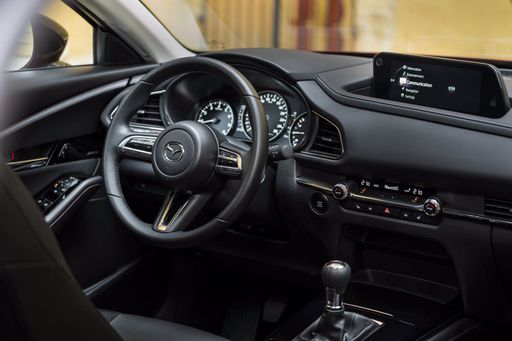
The Mazda CX-30 blends sleek coupe-like lines with the practicality of a compact crossover, feeling more premium than its price tag suggests. It’s a joy to drive for anyone who likes a taut chassis and an interior that treats daily commutes like a small luxury escape.

details

Ford Puma

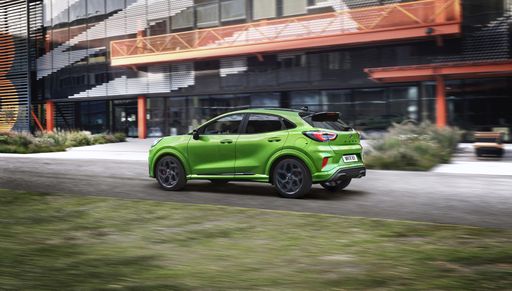
The Ford Puma is a cheeky compact crossover that blends sporty styling with city-friendly practicality, giving drivers a surprisingly fun and composed ride. With clever storage tricks and a lively personality, it’s a smart pick for buyers who want enjoyment without fuss.

details
Mazda CX-30
Ford Puma

Costs and Consumption

Price
25,200 - 36,800 £
Price
23,900 - 36,300 £
Consumption L/100km
5.7 - 6.6 L/100km
Consumption L/100km
5.4 - 5.9 L/100km
Consumption kWh/100km
-
Consumption kWh/100km
13 - 13.7 kWh/100km
Electric Range
-
Electric Range
404 - 417 km
Battery Capacity
-
Battery Capacity
-
co2
129 - 148 g/km
co2
0 - 135 g/km
Fuel tank capacity
-
Fuel tank capacity
-

Dimensions and Body

Body Type
SUV
Body Type
SUV
Seats
5
Seats
5
Doors
-
Doors
-
Curb weight
1,455 - 1,587 kg
Curb weight
1,316 - 1,563 kg
Trunk capacity
422 - 430 L
Trunk capacity
-
Length
-
Length
-
Width
1,795 mm
Width
1,805 mm
Height
-
Height
-
Max trunk capacity
-
Max trunk capacity
-
Payload
458 - 496 kg
Payload
367 - 469 kg

Engine and Performance

Engine Type
Petrol MHEV
Engine Type
Petrol MHEV, Electric
Transmission
Manuel, Automatic
Transmission
Manuel, Automatic
Transmission Detail
Manual Gearbox, Automatic Gearbox
Transmission Detail
Manual Gearbox, Dual-Clutch Automatic, Reduction Gearbox
Drive Type
Front-Wheel Drive, All-Wheel Drive
Drive Type
Front-Wheel Drive
Power HP
140 - 186 HP
Power HP
125 - 168 HP
Acceleration 0-100km/h
8.3 - 10.3 s
Acceleration 0-100km/h
7.4 - 9.8 s
Max Speed
-
Max Speed
-
Torque
238 - 240 Nm
Torque
170 - 290 Nm
Number of Cylinders
4
Number of Cylinders
3
Power kW
103 - 137 kW
Power kW
92 - 124 kW
Engine capacity
1,998 - 2,488 cm3
Engine capacity
999 cm3

General

Model Year
2,025
Model Year
2,025 - 2,026
CO2 Efficiency Class
D, E
CO2 Efficiency Class
D, A
Brand
Mazda
Brand
Ford
DriveDuel uses data analysis and artificial intelligence to evaluate vehicle data and create content. Content is regularly reviewed and improved. The displayed prices are estimates based on German list prices, adjusted to the respective country’s VAT. Country-specific registration taxes are not included. This information is not legally binding.