VS

Omoda 5 vs Toyota C-HR+ comparison

Compare performance (224 HP vs 343 HP), boot space and price (24,800 £ vs 36,000 £ ) at a glance. Find out which car is the better choice for you – Omoda 5 or Toyota C-HR+?

Omoda 5 vs Toyota C-HR+: Key differences

Omoda 5

4.9 (5 Reviews)
rate
  • clearly cheaper
  • slightly lighter
details

Toyota C-HR+

  • visibly more power
  • somewhat more efficient
  • markedly more electric range
  • considerably quicker 0–100 km/h
  • moderately more trunk space
details

All details on performance, efficiency, range and trunk space can be found in the technical comparison below – including user reviews for both models.

By Achim Sedelmaier

5

Omoda 5 and Toyota C-HR+: a quick primer

Omoda 5 and Toyota C-HR+ come at the compact‑crossover market from opposite directions: one leans hard on equipment and value, the other on refinement and efficient electrified driving. In a nutshell, the Omoda 5 trades a lower purchase price and a long factory warranty for compromises in rear packaging and driving finesse, while the Toyota C‑HR+ demands a premium but rewards you with a tidier cabin feel and markedly better real‑world efficiency. If you type these names into a search you'll often see the pairing framed as Omoda 5 vs Toyota C-HR+ because the choice is rarely about features alone — it's about what you prioritise day to day. Read on to see where each car actually feels at home, not just how they line up on spec sheets.
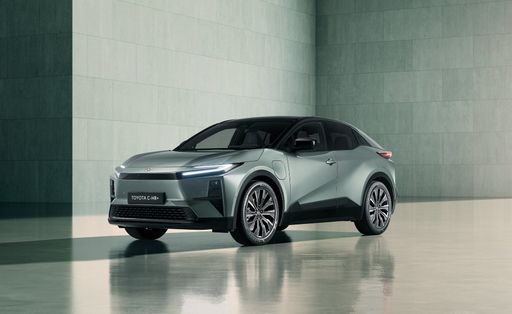
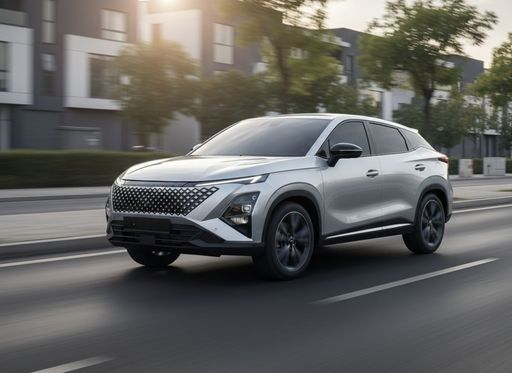
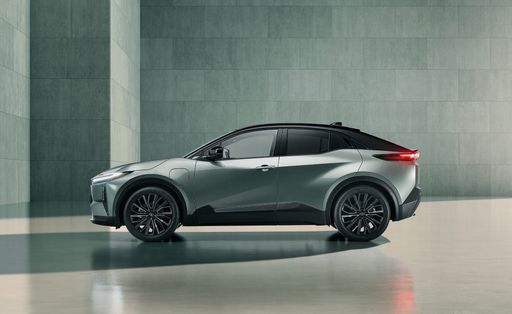
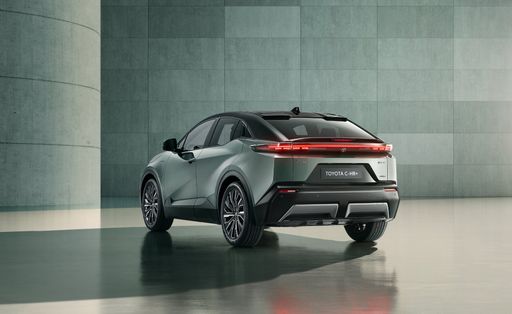
C-HR+

Character and driving feel

Driving the Omoda 5 feels like being in a well‑equipped newcomer: it cruises calmly, but the steering lacks precision and the body can wobble over uneven surfaces, so it never quite rewards enthusiastic cornering. The Toyota C‑HR+ feels more composed and purposeful in everyday driving, with powertrain options that prioritise steady, efficient progress rather than sporty excitement, although the CVT character can become audible under strong acceleration. In town the Omoda’s hybrid versions quiet things down and smooth stop‑start life, while the C‑HR+ is at its best when you keep a steady foot and let its hybrid systems do the work. The trade‑off is clear: choose the Omoda if you accept a softer, less incisive chassis for the money, pick the C‑HR+ if you want a more assured, efficiency‑focused character even at a higher price.

Comfort, cabin feel and perceived quality

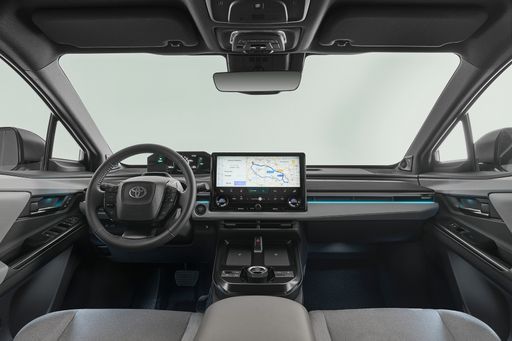
The Toyota C‑HR+ presents a noticeably more polished interior — better materials, cleaner ergonomics and physical climate controls that make daily use less fiddly, which raises confidence on longer trips. The Omoda 5 fights back with a generous kit list and comfortable front seats, but its touchscreen‑centric controls, small touch targets and some budget plastics leave the cabin feeling a touch less refined. Both cars are quiet at motorway speeds in typical use, though the Omoda hybrid is particularly relaxing in town and the C‑HR+ can sound strained under hard acceleration. If you prize perceived quality and intuitive controls, the C‑HR+ nudges ahead; if you prioritise sheer equipment and a cushioned front‑seat experience for the money, the Omoda makes stronger sense.

Practicality and family usability

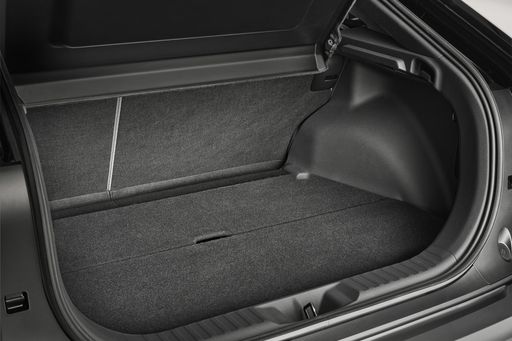
Practical use exposes the clearest trade‑offs: the Omoda 5 gives you a well‑equipped package out of the gate but sacrifices rear headroom and a roomy, deep boot, so adults in the back and bulky luggage are noticeable compromises. The Toyota C‑HR+ similarly tightens headroom and, in its plug‑in form, leaves you with a cramped, awkwardly shaped luggage area and a high loading lip that frustrates day‑to‑day hauling. Both are workable for couples or small families, but if you regularly ferry tall passengers, bulky child seats or holiday baggage you’ll feel the pinch in either car — the choice is between slightly better perceived interior quality and usability in the C‑HR+ versus better headline equipment and warranty reassurance in the Omoda. In short, neither is a conventional spacious family hauler; they appeal more to buyers who accept compromises for style, tech or value.

City friendliness versus long‑distance behavior

In the city the Toyota C‑HR+ often wins on manners: its hybrid modes and compact turning make it easy to live with in stop‑start traffic and tight parking, and the cabin layout is less distracting when you’re multitasking. The Omoda 5 remains competitive thanks to compact dimensions and generous camera systems, but its rear visibility and some hesitancy in low‑speed automatic responses can make urban chores feel a touch more effortful. On longer drives both cars settle down — the C‑HR+ favors steady, economical cruising while the Omoda can be wonderfully composed in its hybrid guise, though it shows its softer chassis on wavey roads. So for urban commuters who value fuel economy and calm, the C‑HR+ is the nicer daily companion; for buyers who want motorway calm plus a strong equipment list at a lower price, the Omoda is persuasive if you can live with its quirks.

Buyer fit: who should pick which one

Choose the Omoda 5 if your priority is headline value — a long warranty, lots of standard kit and strong crash‑test credentials at a lower outlay — and you’re willing to accept tighter rear space and a softer, less precise driving feel. Opt for the Toyota C‑HR+ if you place a premium on real‑world efficiency, a more polished cabin and a composed long‑distance cruiser, even though you’ll pay more and lose some luggage versatility. The decision is a classic trade‑off between purchase‑price and perceived refinement versus ongoing economy and interior quality; neither car is the obvious all‑rounder, but each suits a clearly different buyer. The technical comparison that follows will unpack powertrains, range and cargo differences to help you match those real‑world impressions to hard numbers.

Here’s where it gets real: The technical differences in detail

5

Costs and Efficiency:

Looking at overall running costs, both models reveal some interesting differences in everyday economy.

Omoda 5 is clearly cheaper – starting at 24,800 £ , while the Toyota C-HR+ costs 36,000 £ . That’s a price difference of around 11,220 £.

In terms of energy consumption, the Toyota C-HR+ is somewhat more efficient: consuming 13.4 kWh/100km compared to 15.9 kWh/100km for the Omoda 5. That’s a difference of about 2.5 kWh/100km.

As for electric range, the Toyota C-HR+ offers markedly more range – reaching up to 607 km, about 177 km more than the Omoda 5.

C-HR+

Engine and Performance:

Power, torque and acceleration say a lot about how a car feels on the road. This is where you see which model delivers more driving dynamics.

When it comes to engine power, the Toyota C-HR+ offers visibly more power – delivering 343 HP compared to 224 HP. That’s roughly 119 HP more horsepower.

When accelerating from 0 to 100 km/h, the Toyota C-HR+ is considerably quicker – completing the sprint in 5.2 s, while the Omoda 5 takes 7.6 s. That’s about 2.4 s quicker.

There’s also a difference in torque: the Omoda 5 delivers very slightly more torque with 340 Nm compared to 338 Nm. That’s about 2 Nm more.

Space and Everyday Use:

Cabin size, boot volume and payload all play a role in everyday practicality. Here, comfort and flexibility make the difference.

Both vehicles offer seating for 5 people.

In terms of curb weight, Omoda 5 is slightly lighter – 1,621 kg compared to 1,810 kg. The difference is around 189 kg.

Looking at boot space, the Toyota C-HR+ offers moderately more boot space – 416 L compared to 350 L. That’s a difference of about 66 L.

When it comes to payload, the Toyota C-HR+ carries moderately more – 655 kg compared to 536 kg. That’s a difference of about 119 kg.

Who wins the race in the data check?

The Toyota C-HR+ holds a decisive overall lead in the objective data comparison.
This result only shows which model scores more points on paper – not which of the two cars feels right for you.

from £36,000
C-HR+

Toyota C-HR+

  • Engine Type Electric
  • Transmission Automatic
  • Drive Type Front-Wheel Drive, All-Wheel Drive
  • Power HP 167 - 343 HP
  • Consumption kWh/100km 13.4 - 15.5 kWh/100km
  • Electric Range 458 - 607 km
Omoda 5
Toyota C-HR+

Costs and Consumption

View detailed analysis

Engine and Performance

View detailed analysis

Dimensions and Body

View detailed analysis

Omoda 5

The Omoda 5 is a stylish compact crossover that catches the eye with a bold, contemporary look and a tech-forward cabin. It offers a comfortable ride and a surprisingly spacious interior, making it a practical yet distinctive choice for buyers who want modern features and solid value.

details

Toyota C-HR+

The Toyota C‑HR is a distinctive crossover that pairs bold, coupe‑like styling with a comfortable, composed ride suited to daily city and suburban driving. It appeals to buyers who value standout design, practical cabin packaging and a refined, easy‑to‑use experience rather than outright performance or rugged off‑road ability.

details
Omoda 5
Toyota C-HR+

Costs and Consumption

Price
24,800 - 31,600 £
Price
36,000 - 46,300 £
Consumption L/100km
5.3 L/100km
Consumption L/100km
-
Consumption kWh/100km
15.9 kWh/100km
Consumption kWh/100km
13.4 - 15.5 kWh/100km
Electric Range
430 km
Electric Range
458 - 607 km
Battery Capacity
-
Battery Capacity
-
co2
0 - 120 g/km
co2
0 g/km
Fuel tank capacity
-
Fuel tank capacity
-

Dimensions and Body

Body Type
SUV
Body Type
SUV
Seats
5
Seats
5
Doors
-
Doors
-
Curb weight
1,621 - 1,710 kg
Curb weight
1,810 - 2,010 kg
Trunk capacity
300 - 350 L
Trunk capacity
416 L
Length
-
Length
-
Width
1,824 - 1,830 mm
Width
1,870 mm
Height
-
Height
-
Max trunk capacity
-
Max trunk capacity
-
Payload
431 - 536 kg
Payload
550 - 655 kg

Engine and Performance

Engine Type
Electric, Full Hybrid
Engine Type
Electric
Transmission
Automatic
Transmission
Automatic
Transmission Detail
Reduction Gearbox, Automatic Gearbox
Transmission Detail
Reduction Gearbox
Drive Type
Front-Wheel Drive
Drive Type
Front-Wheel Drive, All-Wheel Drive
Power HP
204 - 224 HP
Power HP
167 - 343 HP
Acceleration 0-100km/h
7.6 - 7.9 s
Acceleration 0-100km/h
5.2 - 8.4 s
Max Speed
-
Max Speed
-
Torque
295 - 340 Nm
Torque
268 - 338 Nm
Number of Cylinders
4
Number of Cylinders
-
Power kW
150 - 165 kW
Power kW
123 - 252 kW
Engine capacity
1,499 cm3
Engine capacity
-

General

Model Year
2026
Model Year
2026
CO2 Efficiency Class
A, D
CO2 Efficiency Class
A
Brand
Omoda
Brand
Toyota
DriveDuel uses data analysis and artificial intelligence to evaluate vehicle data and create content. Content is regularly reviewed and improved. The displayed prices are estimates based on German list prices, adjusted to the respective country’s VAT. Country-specific registration taxes are not included. This information is not legally binding.