VS

Renault Austral vs Nissan X-Trail comparison

Compare performance (200 HP vs 213 HP), boot space and price (29,900 £ vs 34,200 £ ) at a glance. Find out which car is the better choice for you – Renault Austral or Nissan X-Trail?

Renault Austral vs Nissan X-Trail: Key differences

Renault Austral

4.9 (4 Reviews)
rate
  • slightly cheaper
  • somewhat more efficient
  • marginally lighter

Nissan X-Trail

4.6 (5 Reviews)
rate
  • barely more power
  • noticeably quicker 0–100 km/h
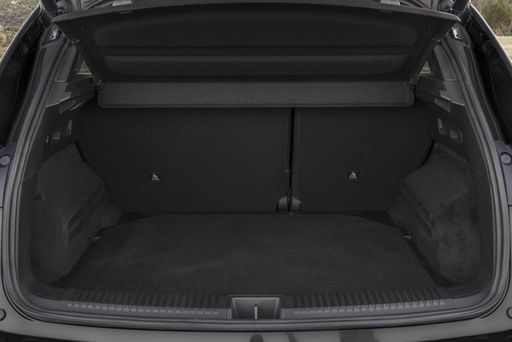
  • only slightly more trunk space

All details on performance, efficiency, range and trunk space can be found in the technical comparison below – including user reviews for both models.

Austral

When it comes to the competitive SUV market, the Nissan X-Trail and Renault Austral stand out as two noteworthy contenders, each bringing a unique blend of features, performance, and practicality. This comparison explores their technical specifications, innovations, and overall suitability for daily driving and adventure alike.
X-Trail

Design and Dimensions

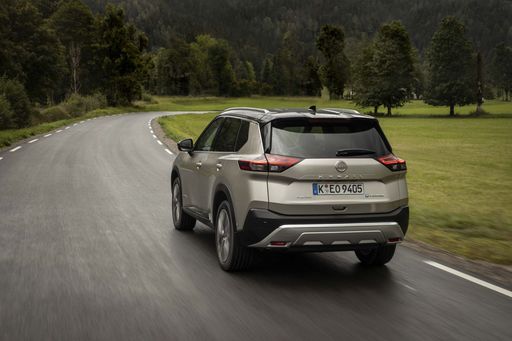
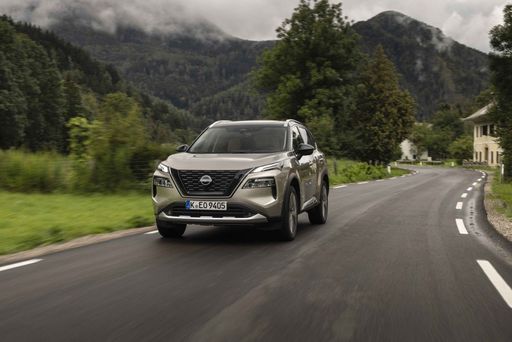
The Nissan X-Trail boasts a robust and bold exterior, measuring 4680 mm in length, 1840 mm in width, and standing 1720 mm tall, which gives it a commanding presence on the road. Its thoughtful design also includes ample trunk space, offering a maximum capacity of 585 liters, making it perfect for families and long journeys.

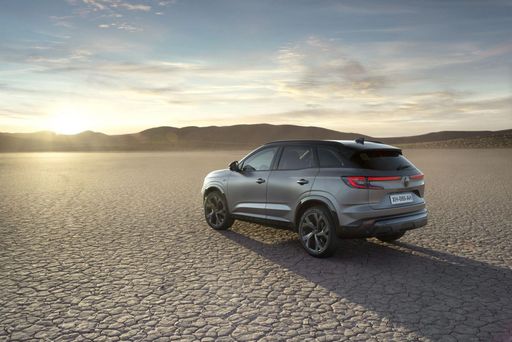
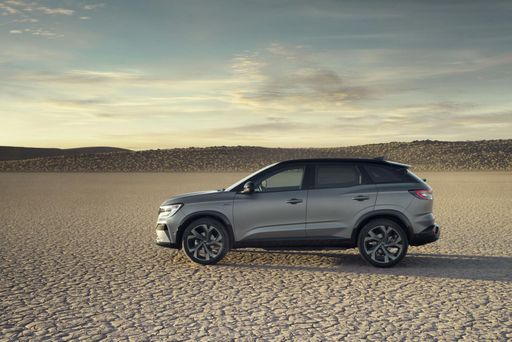
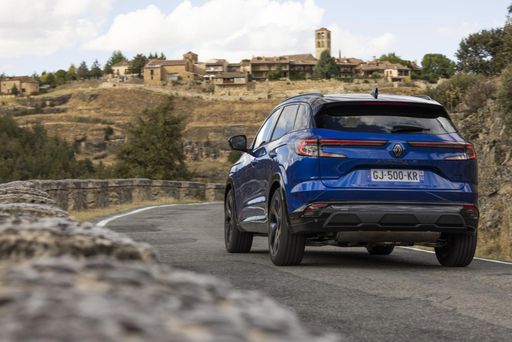
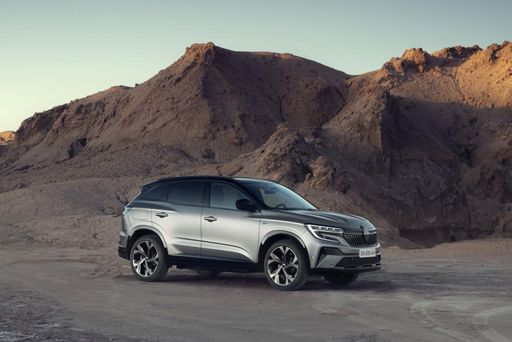
In contrast, the Renault Austral is slightly more compact, with dimensions of 4510 mm in length, 1825 mm in width, and 1618 mm in height. Its trunk capacity is also respectable but smaller at 500 liters. While the Austral may not have quite the same volume for cargo as the X-Trail, its design still emphasizes practicality for everyday use.

Austral

Powertrain and Performance

Both SUVs feature advanced engine options, with the Nissan X-Trail available in multiple configurations, including petrol MHEV and full hybrid models. The X-Trail's power ranges from 163 to 213 horsepower, with torque figures peaking at 525 Nm, ensuring it can handle a variety of driving conditions. Acceleration from 0-100 km/h is impressive, with times as quick as 7 seconds, depending on the variant.

The Renault Austral, while slightly less powerful, still delivers a competent performance with engines producing up to 200 horsepower and 270 Nm of torque. It achieves similar 0-100 km/h times, with the quickest variant reaching 8.4 seconds. Both models have automatic transmissions, but the X-Trail also offers a CVT setup along with a reduction gearbox for enhanced off-road capability.

X-Trail

Fuel Efficiency

In the race for efficiency, the Nissan X-Trail performs admirably, with fuel consumption ratings ranging from 5.7 to 6.9 L/100km depending on the variant. The capabilities of a hybrid system give it an edge in eco-friendliness, making it a great choice for environmentally conscious drivers.

The Renault Austral, however, excels in fuel efficiency with ratings as low as 4.7 L/100km, particularly in its hybrid variant, offering a potentially lower running cost for everyday driving. The lower emissions of 105 g/km also underscore its eco-friendly design ethos.

Austral

Interior and Technology

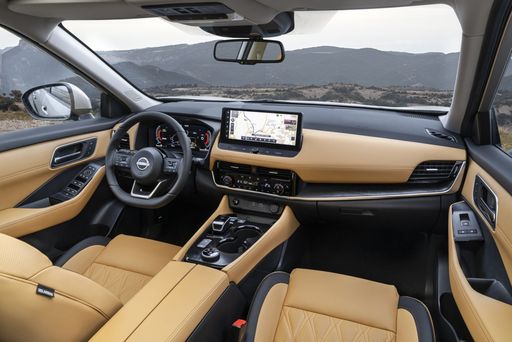
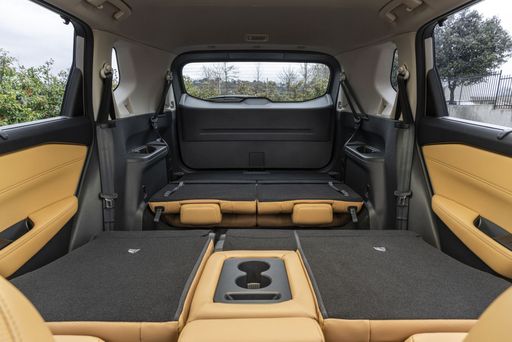
Inside the Nissan X-Trail, you'll find a spacious and technologically advanced cabin suitable for up to seven passengers in certain configurations. Features include advanced safety systems, a user-friendly infotainment system, and high-quality materials that enhance comfort and driving pleasure.

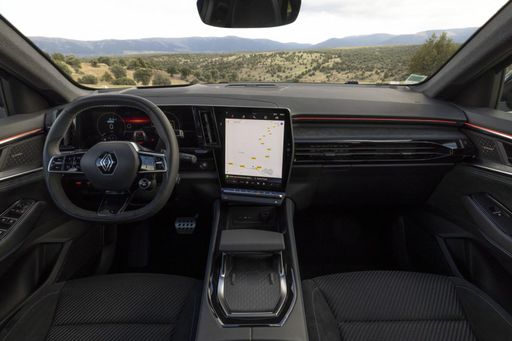
On the other hand, the Renault Austral focuses on tech-savvy solutions, boasting a sleek interior equipped with the latest in infotainment technology and driver-assistance features. Its cabin, while not as spacious as the X-Trail’s, offers a modern feel that appeals to younger audiences and tech enthusiasts.

X-Trail

Driving Experience and Handling

The Nissan X-Trail's all-wheel drive option gives it a significant advantage in terms of handling and stability, particularly in adverse weather conditions or off-road situations. Its well-tuned suspension provides a smooth ride, balancing comfort with sportiness.

Meanwhile, the Renault Austral’s front-wheel drive system, paired with its lighter curb weight of 1539 to 1592 kg, offers nimble handling and responsiveness. Its smaller footprint allows easy maneuverability in urban settings, making it quite practical for city dwellers.

Austral

Conclusion

The comparison between the Nissan X-Trail and Renault Austral reveals two strong contenders in the SUV segment, each perfectly suited to different driver needs. The X-Trail emerges as the choice for those needing space, a powerful engine, and all-wheel drive capabilities, while the Austral appeals to those who prioritize fuel efficiency, innovative technology, and a modern design.

Ultimately, both vehicles reflect their brands' commitment to innovation and quality, making them worthy options in today’s dynamic automotive landscape.

Here’s where it gets real: The technical differences in detail

Austral

Costs and Efficiency:

Looking at overall running costs, both models reveal some interesting differences in everyday economy.

Renault Austral is slightly cheaper – starting at 29,900 £ , while the Nissan X-Trail costs 34,200 £ . That’s a price difference of around 4,243 £.

Fuel consumption also shows a difference: the Renault Austral uses 4.8 L/100km and is somewhat more efficient than the Nissan X-Trail with 5.7 L/100km. The difference is about 0.9 L/100km.

X-Trail

Engine and Performance:

Power, torque and acceleration say a lot about how a car feels on the road. This is where you see which model delivers more driving dynamics.

When it comes to engine power, the Nissan X-Trail offers barely more power – delivering 213 HP compared to 200 HP. That’s roughly 13 HP more horsepower.

When accelerating from 0 to 100 km/h, the Nissan X-Trail is noticeably quicker – completing the sprint in 7 s, while the Renault Austral takes 8.4 s. That’s about 1.4 s quicker.

There’s also a difference in torque: the Nissan X-Trail delivers considerably more torque with 525 Nm compared to 270 Nm. That’s about 255 Nm more.

Austral

Space and Everyday Use:

Cabin size, boot volume and payload all play a role in everyday practicality. Here, comfort and flexibility make the difference.

Seats: Nissan X-Trail offers more seats – 7 vs 5.

In terms of curb weight, Renault Austral is marginally lighter – 1,548 kg compared to 1,668 kg. The difference is around 120 kg.

Looking at boot space, the Nissan X-Trail offers only slightly more boot space – 585 L compared to 527 L. That’s a difference of about 58 L.

When it comes to payload, the Nissan X-Trail carries a bit more – 574 kg compared to 477 kg. That’s a difference of about 97 kg.

Who wins the race in the data check?

The Nissan X-Trail is far ahead overall in the objective data comparison.
This result only shows which model scores more points on paper – not which of the two cars feels right for you.

from £34,200
X-Trail

Nissan X-Trail

  • Engine Type : Petrol MHEV, Full Hybrid
  • Transmission : Automatic
  • Drive Type : Front-Wheel Drive, All-Wheel Drive
  • Power HP : 163 - 213 HP
  • Consumption L/100km : 5.7 - 6.9 L/100km
Renault Austral
Nissan X-Trail

Costs and Consumption

View detailed analysis

Engine and Performance

View detailed analysis

Dimensions and Body

View detailed analysis

Renault Austral

The Renault Austral dresses the family SUV in elegant modern looks and a surprisingly grown-up cabin that feels thoughtful and livable. It balances comfort and clever technology with a relaxed road presence—an appealing choice for buyers who want style and everyday sense without fuss.

details

Nissan X-Trail

The Nissan X-Trail is a roomy, no-nonsense family SUV that mixes sensible practicality with a quietly modern look, making it an easy choice for busy lives and weekend escapes. It drives with calm confidence, delivers a comfortable ride and sensible tech, and won’t demand drama while doing the everyday heavy lifting.

details
Renault Austral
Nissan X-Trail

Costs and Consumption

Price
29,900 - 37,800 £
Price
34,200 - 50,500 £
Consumption L/100km
4.8 - 6.4 L/100km
Consumption L/100km
5.7 - 6.9 L/100km
Consumption kWh/100km
-
Consumption kWh/100km
-
Electric Range
-
Electric Range
-
Battery Capacity
-
Battery Capacity
-
co2
109 - 145 g/km
co2
131 - 161 g/km
Fuel tank capacity
55 L
Fuel tank capacity
-

Dimensions and Body

Body Type
SUV
Body Type
SUV
Seats
5
Seats
5 - 7
Doors
5
Doors
-
Curb weight
1,548 - 1,613 kg
Curb weight
1,668 - 1,961 kg
Trunk capacity
527 L
Trunk capacity
177 - 585 L
Length
4,533 mm
Length
-
Width
1,825 mm
Width
1,840 mm
Height
1,645 mm
Height
-
Max trunk capacity
1,736 L
Max trunk capacity
-
Payload
455 - 477 kg
Payload
432 - 574 kg

Engine and Performance

Engine Type
Full Hybrid, Petrol MHEV
Engine Type
Petrol MHEV, Full Hybrid
Transmission
Automatic
Transmission
Automatic
Transmission Detail
Automatic Gearbox, CVT
Transmission Detail
CVT, Reduction Gearbox
Drive Type
Front-Wheel Drive
Drive Type
Front-Wheel Drive, All-Wheel Drive
Power HP
148 - 200 HP
Power HP
163 - 213 HP
Acceleration 0-100km/h
8.4 - 9.9 s
Acceleration 0-100km/h
7 - 9.6 s
Max Speed
180 km/h
Max Speed
-
Torque
270 Nm
Torque
300 - 525 Nm
Number of Cylinders
3 - 4
Number of Cylinders
3
Power kW
109 - 147 kW
Power kW
120 - 157 kW
Engine capacity
1,199 - 1,332 cm3
Engine capacity
1,497 cm3

General

Model Year
2,025
Model Year
2,025
CO2 Efficiency Class
C, E
CO2 Efficiency Class
F, D, E
Brand
Renault
Brand
Nissan
DriveDuel uses data analysis and artificial intelligence to evaluate vehicle data and create content. Content is regularly reviewed and improved. The displayed prices are estimates based on German list prices, adjusted to the respective country’s VAT. Country-specific registration taxes are not included. This information is not legally binding.