VS

Renault Clio vs Kia Stonic comparison

Compare performance (158 HP vs 115 HP), boot space and price (17,100 £ vs 20,100 £ ) at a glance. Find out which car is the better choice for you – Renault Clio or Kia Stonic?

Renault Clio vs Kia Stonic: Key differences

Renault Clio

4.7 (1 Reviews)
rate
  • moderately cheaper
  • clearly more power
  • clearly more efficient
  • clearly quicker 0–100 km/h
  • barely lighter

Kia Stonic

4.6 (2 Reviews)
rate
  • only slightly more trunk space

All details on performance, efficiency, range and trunk space can be found in the technical comparison below – including user reviews for both models.

Clio

The automotive market is always buzzing with new contenders vying for the attention of consumers, and two models that stand out in the compact segment are the Kia Stonic and the Renault Clio. Both vehicles cater to urban drivers seeking style, efficiency, and modern features, yet they do so in unique ways. Let’s dive into the comparison of these two fascinating models, focusing on their technical aspects, innovations, and overall appeal.
Stonic

Design and Dimensions

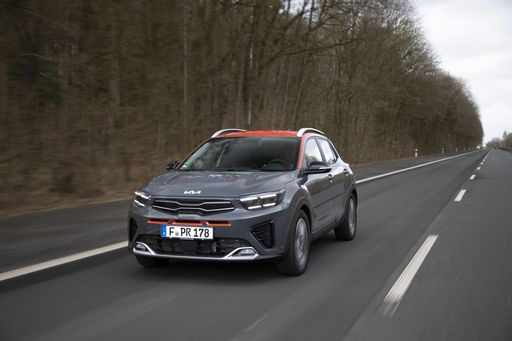
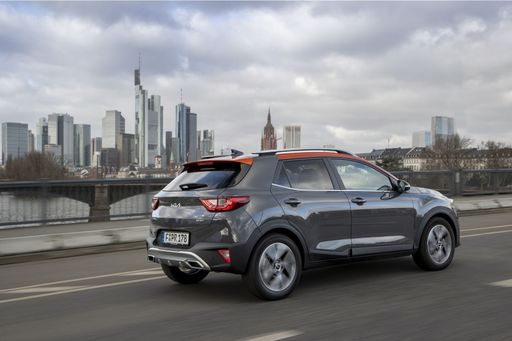
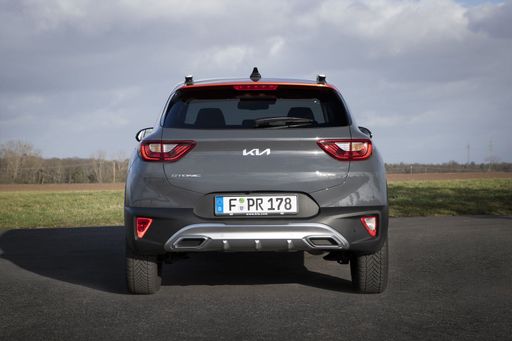
Starting with aesthetics, the Kia Stonic showcases a robust SUV-inspired design that offers a commanding presence on the road. Its dimensions include a length of 4140 mm, a width of 1760 mm, and a height of 1505 mm, providing a spacious interior for its five occupants.

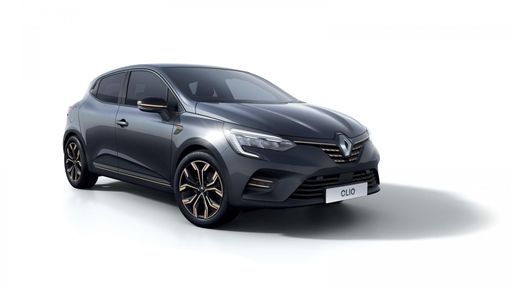
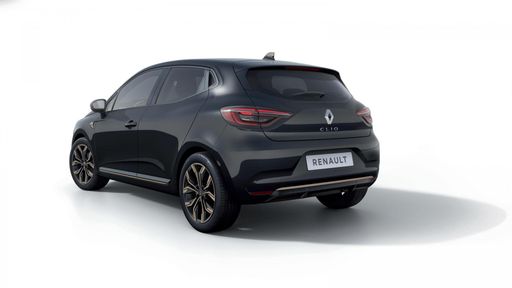
On the other hand, the Renault Clio adopts a hatchback profile that is sleek and stylish. Measuring 4053 mm in length, 1798 mm in width, and 1440 mm in height, the Clio presents a compact footprint, ideal for urban navigation while still accommodating five passengers comfortably.

Clio

Engine Options and Performance

When it comes to powertrains, the Kia Stonic offers a choice of petrol and MHEV options. With horsepower ranges from 79 to 100 HP, it strikes a balance between performance and efficiency. The Stonic's 1.0L engine has a torque output of 172 Nm, and it can accelerate from 0-100 km/h in a respectable 11.3 seconds, reaching a top speed of 179 km/h with a fuel consumption of around 5.5 L/100 km.

In contrast, the Renault Clio brings a more diverse lineup with options including full hybrid, petrol, and LPG engines, ranging from 67 HP to 143 HP. The Clio offers impressive acceleration, taking just 9.3 seconds to reach 0-100 km/h, thanks to its powerful 1.6L hybrid engine, while maintaining competitive fuel efficiency at approximately 4.3 L/100 km. Torque can go up to 205 Nm, making it quite lively in city conditions.

Stonic

Innovative Features

Looking at innovations, the Kia Stonic includes features such as a user-friendly infotainment system, advanced safety technologies, and ample cargo space of 352 liters. With a fuel tank capacity of 45 liters, the Stonic offers great range for city and highway driving.

The Renault Clio, however, sets itself apart with its advanced driver assistance systems and outstanding fuel efficiency due to hybrid technology. It also boasts a sophisticated infotainment system accompanied by a smaller yet versatile trunk space ranging from 301 liters to 391 liters depending on the variant. Its fuel tank capacity sits between 32 and 42 liters, tailored for urban commuting.

Clio

Comfort and Interior Quality

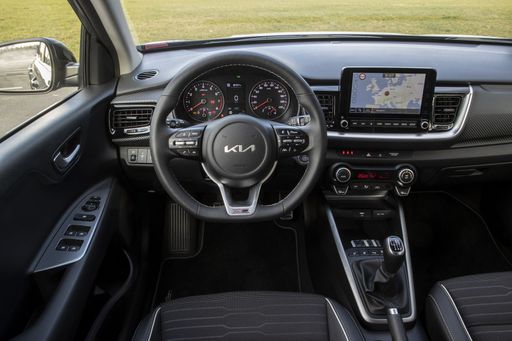
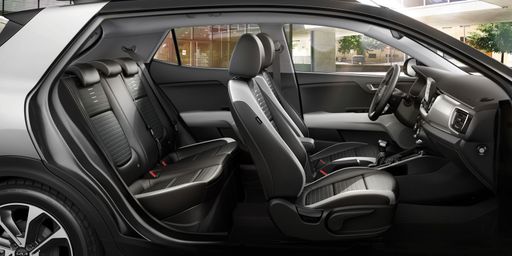
Inside the Stonic, passengers can expect a spacious cabin with modern aesthetics and quality materials, contributing to a comfortable ride, especially for long journeys. The seating capacity for five adults ensures that families and groups can traverse the cities in style.

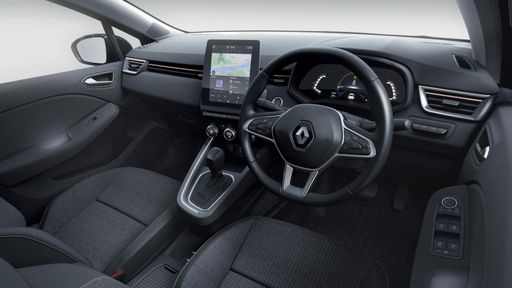
Meanwhile, the Renault Clio's interior is designed with a focus on comfort and style, offering an intuitive layout with high-quality finishes. It also provides several configurable options for seating and cargo layout, ensuring flexibility for varying needs.

Stonic

Environmental Considerations

When evaluating the CO2 emissions, the Kia Stonic maintains a range of 125 to 132 g/km, which is competitive within its segment. The Renault Clio, especially with its hybrid variant, performs better in this area, achieving emissions as low as 97 g/km, appealing to environmentally-conscious consumers.

Conclusion

In conclusion, both the Kia Stonic and Renault Clio offer compelling options in the compact car market. The Stonic excels in delivering SUV-like practicality with modern features, while the Clio stands out with its innovative engine choices and environmental efficiency. Ultimately, the choice will depend on individual preferences regarding performance, style, and technological needs. As both models continue to evolve, they will undoubtedly remain popular choices for savvy urban drivers.

Here’s where it gets real: The technical differences in detail

Clio

Costs and Efficiency:

Price and efficiency are often the first things buyers look at. Here it becomes clear which model has the long-term edge – whether at the pump, the plug, or in purchase price.

Renault Clio is moderately cheaper – starting at 17,100 £ , while the Kia Stonic costs 20,100 £ . That’s a price difference of around 3,077 £.

Fuel consumption also shows a difference: the Renault Clio uses 4.1 L/100km and is clearly more efficient than the Kia Stonic with 5.6 L/100km. The difference is about 1.5 L/100km.

Stonic

Engine and Performance:

Under the bonnet, it becomes clear which model is tuned for sportiness and which one takes the lead when you hit the accelerator.

When it comes to engine power, the Renault Clio offers clearly more power – delivering 158 HP compared to 115 HP. That’s roughly 43 HP more horsepower.

When accelerating from 0 to 100 km/h, the Renault Clio is clearly quicker – completing the sprint in 8.3 s, while the Kia Stonic takes 10.7 s. That’s about 2.4 s quicker.

Looking at top speed, the Kia Stonic is barely faster – reaching 182 km/h, while the Renault Clio tops out at 180 km/h. The difference is around 2 km/h.

There’s also a difference in torque: the Kia Stonic delivers only slightly more torque with 200 Nm compared to 190 Nm. That’s about 10 Nm more.

Clio

Space and Everyday Use:

Whether family car or daily driver – which one offers more room, flexibility and comfort?

Both vehicles offer seating for 5 people.

In terms of curb weight, Renault Clio is barely lighter – 1,202 kg compared to 1,205 kg. The difference is around 3 kg.

Looking at boot space, the Kia Stonic offers only slightly more boot space – 352 L compared to 327 L. That’s a difference of about 25 L.

For maximum load capacity, the Renault Clio offers marginally more capacity – up to 1,176 L, about 21 L more than the Kia Stonic.

When it comes to payload, the Renault Clio carries marginally more – 463 kg compared to 445 kg. That’s a difference of about 18 kg.

Who wins the race in the data check?

The Renault Clio is far ahead overall in the objective data comparison.
This result only shows which model scores more points on paper – not which of the two cars feels right for you.

from £17,100
Clio

Renault Clio

  • Engine Type : Petrol, Full Hybrid
  • Transmission : Manuel, Automatic
  • Drive Type : Front-Wheel Drive
  • Power HP : 115 - 158 HP
  • Consumption L/100km : 4.1 - 5.1 L/100km
Renault Clio
Kia Stonic

Costs and Consumption

View detailed analysis

Engine and Performance

View detailed analysis

Dimensions and Body

View detailed analysis

Renault Clio

The Clio punches above its weight with chic French styling and a surprisingly grown-up cabin that makes city driving feel effortlessly stylish. It's an easy-to-live-with choice that keeps ownership simple and even manages to put a grin on your face when the traffic gets dull.

details

Kia Stonic

The Kia Stonic is a sprightly compact crossover that mixes city-friendly agility with a cheeky, modern design — perfect for buyers who want style without sacrificing sense. Inside it serves up clever practicality and a bright, well-equipped cabin, making everyday driving feel a bit more fun than it has any right to be.

details
Renault Clio
Kia Stonic

Costs and Consumption

Price
17,100 - 23,700 £
Price
20,100 - 26,600 £
Consumption L/100km
4.1 - 5.1 L/100km
Consumption L/100km
5.6 - 5.9 L/100km
Consumption kWh/100km
-
Consumption kWh/100km
-
Electric Range
-
Electric Range
-
Battery Capacity
-
Battery Capacity
-
co2
92 - 115 g/km
co2
127 - 133 g/km
Fuel tank capacity
39 - 42 L
Fuel tank capacity
45 L

Dimensions and Body

Body Type
Hatchback
Body Type
SUV
Seats
5
Seats
5
Doors
5
Doors
5
Curb weight
1,202 - 1,316 kg
Curb weight
1,205 - 1,270 kg
Trunk capacity
301 - 327 L
Trunk capacity
352 L
Length
4,116 mm
Length
4,165 mm
Width
1,768 mm
Width
1,760 mm
Height
1,451 mm
Height
1,520 mm
Max trunk capacity
1,094 - 1,176 L
Max trunk capacity
1,155 L
Payload
453 - 463 kg
Payload
440 - 445 kg

Engine and Performance

Engine Type
Petrol, Full Hybrid
Engine Type
Petrol, Petrol MHEV
Transmission
Manuel, Automatic
Transmission
Manuel, Automatic
Transmission Detail
Manual Gearbox, Dual-Clutch Automatic, Automatic Gearbox
Transmission Detail
Manual Gearbox, Dual-Clutch Automatic
Drive Type
Front-Wheel Drive
Drive Type
Front-Wheel Drive
Power HP
115 - 158 HP
Power HP
100 - 115 HP
Acceleration 0-100km/h
8.3 - 10.1 s
Acceleration 0-100km/h
10.7 - 12.1 s
Max Speed
180 km/h
Max Speed
179 - 182 km/h
Torque
190 Nm
Torque
172 - 200 Nm
Number of Cylinders
3 - 4
Number of Cylinders
3
Power kW
84 - 116 kW
Power kW
74 - 85 kW
Engine capacity
1,199 - 1,789 cm3
Engine capacity
998 cm3

General

Model Year
2,026
Model Year
2,025
CO2 Efficiency Class
C, B
CO2 Efficiency Class
D
Brand
Renault
Brand
Kia
DriveDuel uses data analysis and artificial intelligence to evaluate vehicle data and create content. Content is regularly reviewed and improved. The displayed prices are estimates based on German list prices, adjusted to the respective country’s VAT. Country-specific registration taxes are not included. This information is not legally binding.