VS

Renault Symbioz vs Toyota Yaris Cross comparison

Compare performance (158 HP vs 130 HP), boot space and price (24,700 £ vs 23,700 £ ) at a glance. Find out which car is the better choice for you – Renault Symbioz or Toyota Yaris Cross?

Renault Symbioz vs Toyota Yaris Cross: Key differences

Renault Symbioz

4.5 (5 Reviews)
rate
  • somewhat more power
  • a bit quicker 0–100 km/h
  • clearly more trunk space
details

Toyota Yaris Cross

4.2 (15 Reviews)
rate
  • marginally cheaper
  • moderately lighter
details

All details on performance, efficiency, range and trunk space can be found in the technical comparison below – including user reviews for both models.

By Achim Sedelmaier

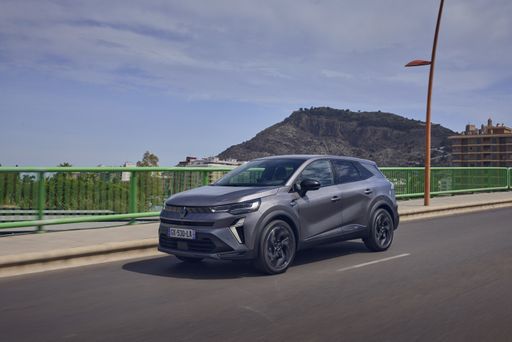
Symbioz

An In-Depth Comparison: Renault Symbioz vs. Toyota Yaris Cross

In the vibrant world of compact SUVs, both the Renault Symbioz and the Toyota Yaris Cross have carved out distinct niches for themselves. While the Symbioz presents a fresh take on hybrid technology, the Yaris Cross continues Toyota's legacy of reliable, fuel-efficient vehicles. Let's delve deeper into the specifics of these two contenders and see how they stack up against each other.

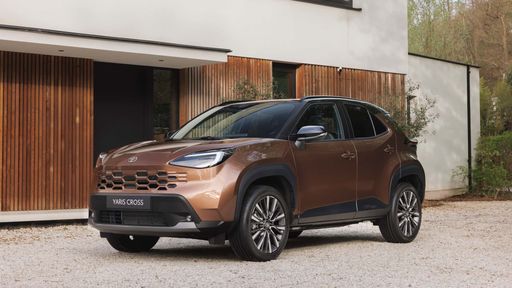
Yaris Cross

Technical Specifications: Power and Performance

When it comes to power, the Renault Symbioz boasts a respectable output of 143 HP from its 1.6-liter three-cylinder engine. This full hybrid model features a front-wheel-drive system complemented by an automatic gearbox, allowing it to sprint from 0 to 100 km/h in just 10.6 seconds. The maximum torque of 250 Nm ensures that drivers have sufficient pulling power whenever needed.

On the other hand, the Toyota Yaris Cross serves up three different power outputs, the highest being 130 HP with a 1.5-liter three-cylinder engine. The Yaris Cross also employs a front-wheel-drive system with a Continuous Variable Transmission (CVT), achieving 0 to 100 km/h times of between 10.7 and 11.3 seconds depending on the variant. This power variation provides buyers with options tailored to their driving preferences.

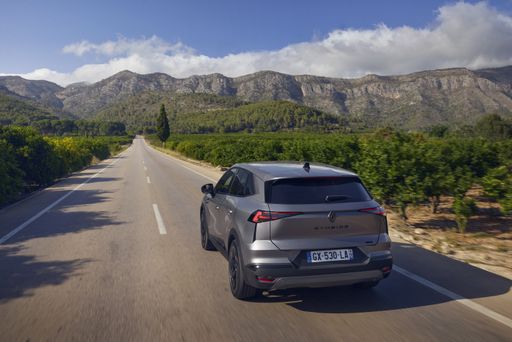
Symbioz

Fuel Efficiency and Environmental Impact

Fuel efficiency is a key consideration for most SUV buyers. The Renault Symbioz impresses with a fuel consumption rating of 4.8 L/100 km, producing 109 g/km of CO2 emissions, categorizing it in efficiency class C. With a fuel tank capacity of 48 liters, the Symbioz offers an extended range for those longer journeys.

The Toyota Yaris Cross, meanwhile, achieves slightly better efficiency on its more frugal variants, consuming as low as 4.5 L/100 km. Its CO2 emissions range from 101 to 108 g/km, also placing it in efficiency class C. Notably, the Yaris Cross has a smaller fuel tank at 36 liters, which may require more frequent refueling on longer trips.

Yaris Cross

Dimensions and Design: Styling Meets Functionality

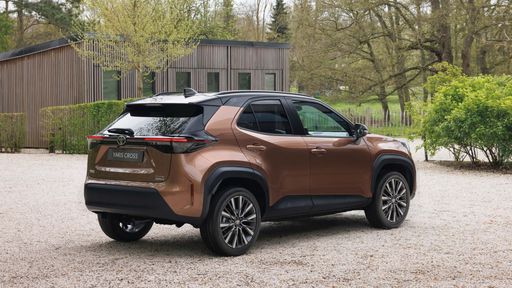
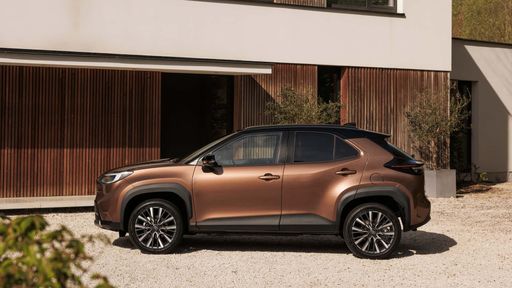
In terms of dimensions, the Renault Symbioz is slightly larger, measuring 4413 mm in length, 1797 mm in width, and 1575 mm in height. This gives it an advantage in trunk space, boasting a generous capacity of 492 liters. This spaciousness is complemented by a curb weight of 1498 kg, making it a sturdy option without being overly heavy.

The Toyota Yaris Cross, measuring 4180 mm in length and 1765 mm in width, offers a more compact form factor. Its trunk capacity varies from 320 to 397 liters depending on the variant, which may be less compared to the Symbioz, but still sufficient for everyday use. The Yaris Cross has a curb weight ranging from 1180 to 1290 kg, which contributes to its agile handling on the road.

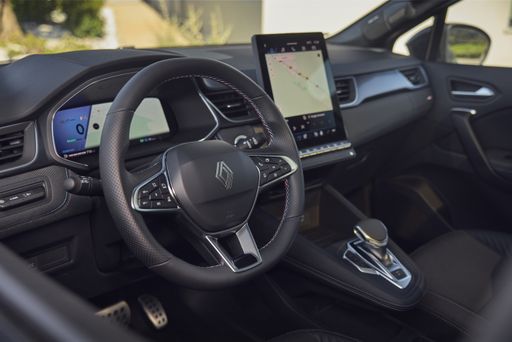
Symbioz

Interior and Innovations: Comfort and Tech

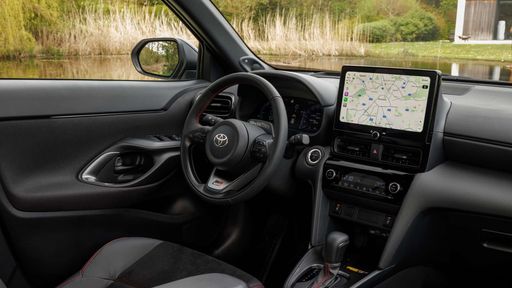
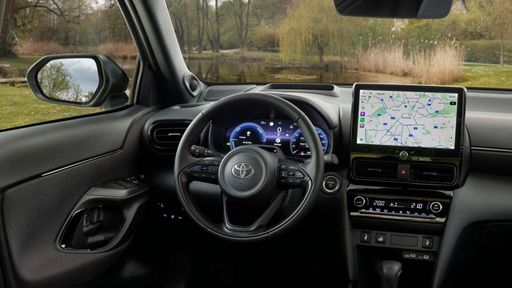
Both models focus on providing comfort and innovative technology. The Renault Symbioz features a modern interior with advanced infotainment options designed to enhance the driving experience. Its seating capacity for five ensures that family journeys are accommodating, while its emphasis on hybrid technology points toward Renault’s future-forward thinking.

The Toyota Yaris Cross showcases a similar commitment to passenger comfort and technology. Recognized for its reliability, Toyota’s model also integrates modern safety features and infotainment systems to keep everyone connected and safe while on the road. With similar seating capacity, both vehicles cater well to families or groups, although the choice may come down to individual preferences regarding technology interfaces.

Yaris Cross

Conclusion: Which SUV Reigns Supreme?

Both the Renault Symbioz and the Toyota Yaris Cross offer substantial benefits, be it performance, efficiency, or comfort. The Symbioz captures attention with its powerful engine and spacious trunk, while the Yaris Cross shines with slightly better fuel economy and a proven track record of reliability. Ultimately, your decision may hinge on personal preference regarding design, availability of tech features, or even brand loyalty.

Thus, whether you lean towards the innovative design of the Symbioz or the trusted legacy of the Yaris Cross, both vehicles represent excellent options in the burgeoning compact SUV market.

Here’s where it gets real: The technical differences in detail

Symbioz

Costs and Efficiency:

Price and efficiency are key factors when choosing a car – and this is often where the real differences emerge.

Toyota Yaris Cross is marginally cheaper – starting at 23,700 £ , while the Renault Symbioz costs 24,700 £ . That’s a price difference of around 994 £.

Both cars consume an average of 4.5 L/100km – no difference here.

Yaris Cross

Engine and Performance:

Power, torque and acceleration are the classic benchmarks for car enthusiasts – and here, some clear differences start to show.

When it comes to engine power, the Renault Symbioz offers somewhat more power – delivering 158 HP compared to 130 HP. That’s roughly 28 HP more horsepower.

When accelerating from 0 to 100 km/h, the Renault Symbioz is a bit quicker – completing the sprint in 9.1 s, while the Toyota Yaris Cross takes 10.7 s. That’s about 1.6 s quicker.

Symbioz

Space and Everyday Use:

Cabin size, boot volume and payload all play a role in everyday practicality. Here, comfort and flexibility make the difference.

Both vehicles offer seating for 5 people.

In terms of curb weight, Toyota Yaris Cross is moderately lighter – 1,180 kg compared to 1,359 kg. The difference is around 179 kg.

Looking at boot space, the Renault Symbioz offers clearly more boot space – 576 L compared to 397 L. That’s a difference of about 179 L.

When it comes to payload, the Toyota Yaris Cross carries only slightly more – 510 kg compared to 459 kg. That’s a difference of about 51 kg.

Who wins the race in the data check?

The Renault Symbioz holds a decisive overall lead in the objective data comparison.
This result only shows which model scores more points on paper – not which of the two cars feels right for you.

from £24,700
Symbioz

Renault Symbioz

  • Engine Type : Full Hybrid, Petrol MHEV
  • Transmission : Automatic, Manuel
  • Drive Type : Front-Wheel Drive
  • Power HP : 140 - 158 HP
  • Consumption L/100km : 4.5 - 6 L/100km
Renault Symbioz
Toyota Yaris Cross

Costs and Consumption

View detailed analysis

Engine and Performance

View detailed analysis

Dimensions and Body

View detailed analysis

Renault Symbioz

The Renault Symbioz is a forward-looking concept car that imagines a seamless link between vehicle and home, pairing a lounge-like cabin with striking, futuristic styling. More idea than production plan, it showcases Renault's vision for connected, autonomous and sustainable mobility while provoking debate about how we will live and travel.

details

Toyota Yaris Cross

The Toyota Yaris Cross blends the maneuverability of a small hatch with the higher driving position and practicality of a crossover, wrapped in Toyota's dependable build quality. It suits urban buyers who need easy parking, flexible cargo space and a comfortable, economical daily driver.

details
Renault Symbioz
Toyota Yaris Cross

Costs and Consumption

Price
24,700 - 30,700 £
Price
23,700 - 34,300 £
Consumption L/100km
4.5 - 6 L/100km
Consumption L/100km
4.5 - 4.8 L/100km
Consumption kWh/100km
-
Consumption kWh/100km
-
Electric Range
-
Electric Range
-
Battery Capacity
-
Battery Capacity
-
co2
102 - 136 g/km
co2
101 - 108 g/km
Fuel tank capacity
-
Fuel tank capacity
-

Dimensions and Body

Body Type
SUV
Body Type
SUV
Seats
5
Seats
5
Doors
-
Doors
-
Curb weight
1,359 - 1,465 kg
Curb weight
1,180 - 1,290 kg
Trunk capacity
492 - 576 L
Trunk capacity
320 - 397 L
Length
-
Length
-
Width
1,797 mm
Width
1,765 mm
Height
-
Height
-
Max trunk capacity
-
Max trunk capacity
-
Payload
455 - 459 kg
Payload
485 - 510 kg

Engine and Performance

Engine Type
Full Hybrid, Petrol MHEV
Engine Type
Full Hybrid
Transmission
Automatic, Manuel
Transmission
Automatic
Transmission Detail
Automatic Gearbox, Manual Gearbox, Dual-Clutch Automatic
Transmission Detail
CVT
Drive Type
Front-Wheel Drive
Drive Type
Front-Wheel Drive, All-Wheel Drive
Power HP
140 - 158 HP
Power HP
116 - 130 HP
Acceleration 0-100km/h
9.1 - 11 s
Acceleration 0-100km/h
10.7 - 11.3 s
Max Speed
-
Max Speed
-
Torque
250 - 265 Nm
Torque
-
Number of Cylinders
4
Number of Cylinders
3
Power kW
103 - 116 kW
Power kW
85 - 96 kW
Engine capacity
1,332 - 1,789 cm3
Engine capacity
1,490 cm3

General

Model Year
2025
Model Year
2026
CO2 Efficiency Class
C, D, E
CO2 Efficiency Class
C
Brand
Renault
Brand
Toyota
DriveDuel uses data analysis and artificial intelligence to evaluate vehicle data and create content. Content is regularly reviewed and improved. The displayed prices are estimates based on German list prices, adjusted to the respective country’s VAT. Country-specific registration taxes are not included. This information is not legally binding.