VS

Skoda Enyaq vs Volvo EX40 comparison

Compare performance (340 HP vs 442 HP), boot space and price (36,800 £ vs 45,200 £ ) at a glance. Find out which car is the better choice for you – Skoda Enyaq or Volvo EX40?

Skoda Enyaq vs Volvo EX40: Key differences

Skoda Enyaq

4.4 (6 Reviews)
rate
  • noticeably cheaper
  • slightly more efficient
  • barely more electric range
  • markedly more trunk space
details

Volvo EX40

4.5 (2 Reviews)
rate
  • visibly more power
  • somewhat quicker 0–100 km/h
  • barely lighter
details

All details on performance, efficiency, range and trunk space can be found in the technical comparison below – including user reviews for both models.

By Achim Sedelmaier

Enyaq

City Savvy or Scandinavian Calm?

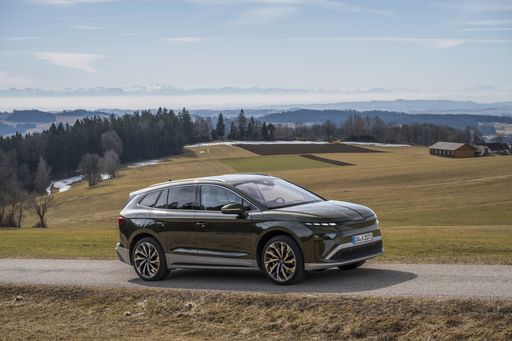
The Skoda Enyaq arrives with the pragmatic stance of a car designed to make everyday life easier, where function meets a touch of cleverness, while the Volvo EX40 projects a more reserved, refined temperament that leans into Scandinavian calm. In town, the Enyaq feels like the sensible friend who always knows the shortcut and packs an umbrella; the EX40 plays the part of the composed colleague who turns heads without shouting. Both are composed and polite in traffic, but their personalities give away who they’re aimed at — practical households versus those chasing a premium, understated statement. If you care about character over raw numbers, this is where your taste starts to pick sides.
EX40

Cabin Life: Family Room vs Minimalist Retreat

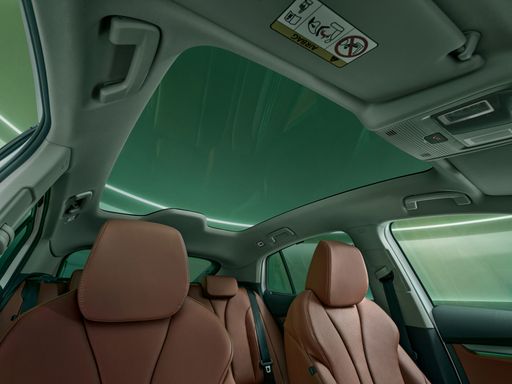
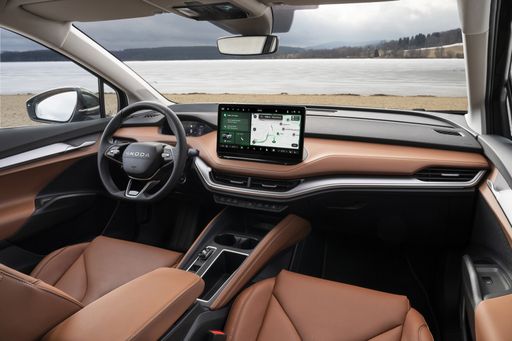
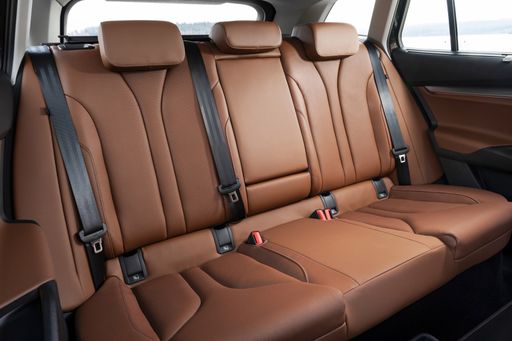
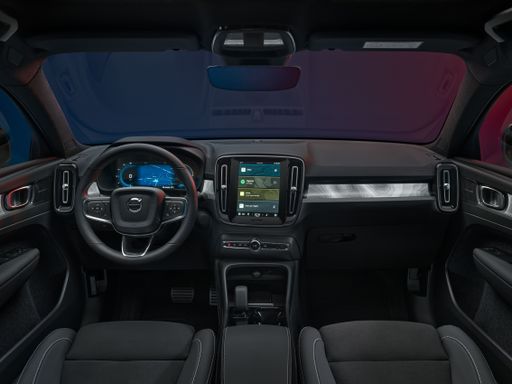
Step inside the Enyaq and you get the impression of a versatile living room — thoughtful storage nooks, straightforward controls and a sense that the layout was planned around real family life. The EX40 trades some of that utility for a quieter, more pared-back interior that emphasises materials and a soothing ambience; it’s the kind of cabin that makes long drives feel less taxing. Both cabins are comfortable and well put together, but their approaches differ: one prioritises everyday fuss-free usability, the other prioritises a calm, premium mood. For buyers who ferry kids, gear and groceries, practicality matters; for buyers who prize serenity and finish, the Volvo’s vibe may win hearts.

Enyaq

How They Drive: Relaxed Commuter or Alert Companion?

On the move the Enyaq tends to comfort-first handling, smoothing out urban imperfections and letting occupants arrive less frazzled, while the EX40 brings a bit more immediacy to steering and a firmer demeanour that rewards a more engaged driver. Neither is tense or harsh; think of the Enyaq as the composed cruiser and the EX40 as the attentive partner on twisty backroads. The difference is more about emotional tone than extremes — comfortable confidence versus polite sportiness — so your daily route and driving style will reveal which feels more natural. In short, choose the companion that matches how you like to spend your time behind the wheel.

EX40

Practicalities That Matter: Weekend Gear and Daily Groceries

When real life intrudes — bikes, prams, suitcases — the Enyaq shows its strength as a true family-friendly tool, with generous, straightforward load space and door apertures that make packing painless. The EX40 manages the same tasks with more of a premium finesse, though its architecture feels a touch more sculpted and less utilitarian than the Skoda’s. Both accommodate child seats, long weekends and supermarket sprees without drama, but the Enyaq is the one that makes those chores feel easiest. If you measure value by how little thought you have to give to packing, that practical streak becomes hard to ignore.

Enyaq

Design and Presence: Practical Charm vs Quiet Prestige

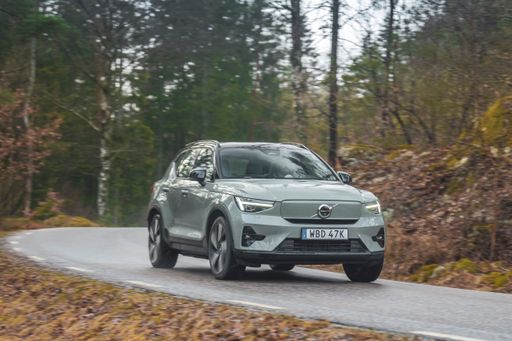
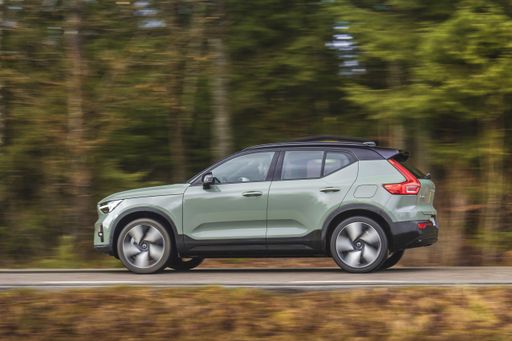
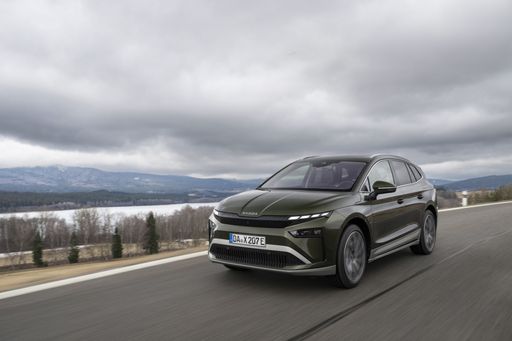
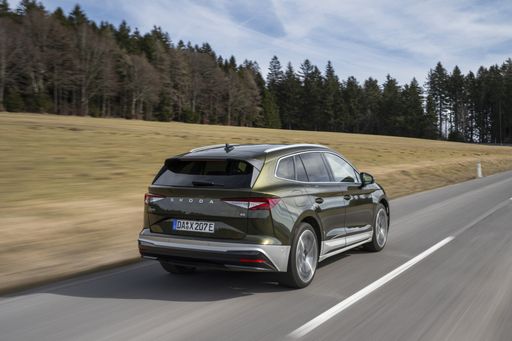
From the curb the Enyaq blends pragmatic proportions with friendly detailing that reads as approachable and sensible rather than flashy, while the EX40 speaks the language of modern Scandinavian design — restrained, elegant and quietly premium. Each has visual cues that telegraph its brand values: one says “useful and sensible,” the other says “crafted and considered.” Both will attract different sorts of buyers — families and value seekers for the Enyaq, style-conscious professionals for the EX40 — and both will earn approving glances for different reasons. Your preference will reveal whether you value function-first charm or understated luxury.

EX40

Who Should Consider Which?

If your life revolves around practicality — school runs, DIY hauls and a knack for squeezing the most out of a euro — the Skoda Enyaq will feel like a smart, sensible ally that reduces friction in day-to-day life, whereas the Volvo EX40 will appeal to buyers who prioritise cabin ambience, brand cachet and a slightly more refined driving tone. Commuters who crave comfort and families who need fuss-free flexibility will both find strong arguments for either car, depending on whether they lean toward utility or premium calm. Read on and weigh the atmospheres and everyday usability for yourself — the DriveDuel Champion will be revealed afterwards.

Here’s where it gets real: The technical differences in detail

Enyaq

Costs and Efficiency:

Looking at overall running costs, both models reveal some interesting differences in everyday economy.

Skoda Enyaq is noticeably cheaper – starting at 36,800 £ , while the Volvo EX40 costs 45,200 £ . That’s a price difference of around 8,400 £.

In terms of energy consumption, the Skoda Enyaq is slightly more efficient: consuming 14.9 kWh/100km compared to 16.6 kWh/100km for the Volvo EX40. That’s a difference of about 1.7 kWh/100km.

As for electric range, the Skoda Enyaq offers barely more range – reaching up to 589 km, about 13 km more than the Volvo EX40.

EX40

Engine and Performance:

Power, torque and acceleration say a lot about how a car feels on the road. This is where you see which model delivers more driving dynamics.

When it comes to engine power, the Volvo EX40 offers visibly more power – delivering 442 HP compared to 340 HP. That’s roughly 102 HP more horsepower.

When accelerating from 0 to 100 km/h, the Volvo EX40 is somewhat quicker – completing the sprint in 4.6 s, while the Skoda Enyaq takes 5.4 s. That’s about 0.8 s quicker.

There’s also a difference in torque: the Skoda Enyaq delivers only slightly more torque with 679 Nm compared to 670 Nm. That’s about 9 Nm more.

Enyaq

Space and Everyday Use:

Cabin size, boot volume and payload all play a role in everyday practicality. Here, comfort and flexibility make the difference.

Both vehicles offer seating for 5 people.

In terms of curb weight, Volvo EX40 is barely lighter – 2,040 kg compared to 2,074 kg. The difference is around 34 kg.

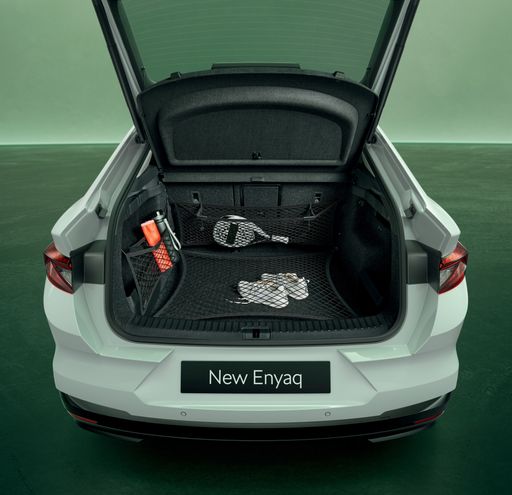
Looking at boot space, the Skoda Enyaq offers markedly more boot space – 585 L compared to 410 L. That’s a difference of about 175 L.

When it comes to payload, the Skoda Enyaq carries marginally more – 526 kg compared to 480 kg. That’s a difference of about 46 kg.

Who wins the race in the data check?

The Skoda Enyaq holds a slight edge in the objective data comparison.
This result only shows which model scores more points on paper – not which of the two cars feels right for you.

from £36,800
Enyaq

Skoda Enyaq

  • Engine Type Electric
  • Transmission Automatic
  • Drive Type Rear-Wheel Drive, All-Wheel Drive
  • Power HP 190 - 340 HP
  • Consumption kWh/100km 14.9 - 15.9 kWh/100km
  • Electric Range 449 - 589 km
Skoda Enyaq
Volvo EX40

Costs and Consumption

View detailed analysis

Engine and Performance

View detailed analysis

Dimensions and Body

View detailed analysis

Skoda Enyaq

The Skoda Enyaq is a practical and well-appointed electric SUV that blends a roomy interior and everyday usability with clean, understated design. It’s a comfortable, efficient choice for buyers who want a sensible electric family car without flash, backed by solid build quality and clever practicality.

details

Volvo EX40

The Volvo EX40 is a compact electric SUV that blends Scandinavian minimalism with a comfortable, high-quality interior suited to daily driving and longer trips. It prioritizes safety and intuitive technology, delivering a calm, refined experience that feels mature and easy to live with.

details
Skoda Enyaq
Volvo EX40

Costs and Consumption

Price
36,800 - 52,800 £
Price
45,200 - 56,000 £
Consumption L/100km
-
Consumption L/100km
-
Consumption kWh/100km
14.9 - 15.9 kWh/100km
Consumption kWh/100km
16.6 - 17.6 kWh/100km
Electric Range
449 - 589 km
Electric Range
477 - 576 km
Battery Capacity
-
Battery Capacity
-
co2
0 g/km
co2
0 g/km
Fuel tank capacity
-
Fuel tank capacity
-

Dimensions and Body

Body Type
SUV
Body Type
SUV
Seats
5
Seats
5
Doors
-
Doors
-
Curb weight
2,074 - 2,284 kg
Curb weight
2,040 - 2,170 kg
Trunk capacity
570 - 585 L
Trunk capacity
410 L
Length
-
Length
-
Width
1,879 mm
Width
1,863 mm
Height
-
Height
-
Max trunk capacity
-
Max trunk capacity
-
Payload
449 - 526 kg
Payload
430 - 480 kg

Engine and Performance

Engine Type
Electric
Engine Type
Electric
Transmission
Automatic
Transmission
Automatic
Transmission Detail
Reduction Gearbox
Transmission Detail
Reduction Gearbox
Drive Type
Rear-Wheel Drive, All-Wheel Drive
Drive Type
Rear-Wheel Drive, All-Wheel Drive
Power HP
190 - 340 HP
Power HP
238 - 442 HP
Acceleration 0-100km/h
5.4 - 8.6 s
Acceleration 0-100km/h
4.6 - 7.3 s
Max Speed
-
Max Speed
-
Torque
350 - 679 Nm
Torque
420 - 670 Nm
Number of Cylinders
-
Number of Cylinders
-
Power kW
140 - 250 kW
Power kW
175 - 325 kW
Engine capacity
-
Engine capacity
-

General

Model Year
2026
Model Year
2,024 - 2,026
CO2 Efficiency Class
A
CO2 Efficiency Class
A
Brand
Skoda
Brand
Volvo
DriveDuel uses data analysis and artificial intelligence to evaluate vehicle data and create content. Content is regularly reviewed and improved. The displayed prices are estimates based on German list prices, adjusted to the respective country’s VAT. Country-specific registration taxes are not included. This information is not legally binding.