VS

Suzuki Vitara vs Mazda CX-30 comparison

Compare performance (184 HP vs 186 HP), boot space and price (23,600 £ vs 25,700 £ ) at a glance. Find out which car is the better choice for you – Suzuki Vitara or Mazda CX-30?

Suzuki Vitara vs Mazda CX-30: Key differences

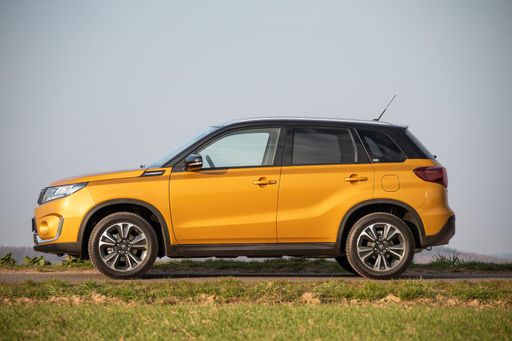
Suzuki Vitara

4.5 (9 Reviews)
rate
  • very slightly cheaper
  • only slightly more efficient
  • a bit quicker 0–100 km/h
  • somewhat lighter
details

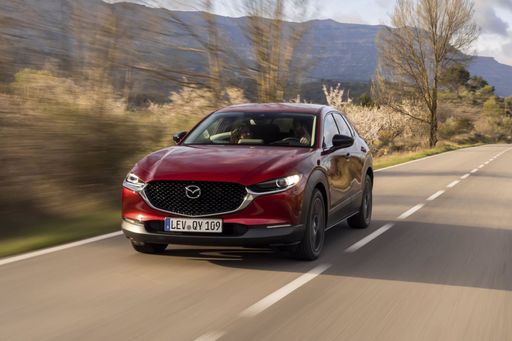
Mazda CX-30

4.5 (9 Reviews)
rate
  • only slightly more power
  • somewhat more trunk space
details

All details on performance, efficiency, range and trunk space can be found in the technical comparison below – including user reviews for both models.

By Achim Sedelmaier

Vitara

When comparing the Mazda CX-30 and the Suzuki Vitara, both compact SUVs bring distinct characteristics and performance to the market. In this article, we'll dive into their technical aspects, innovations, and overall driving experience to help potential buyers make an informed decision.
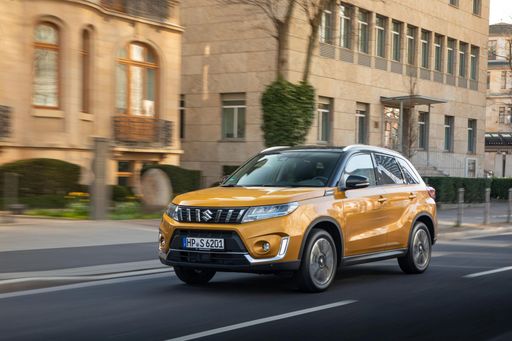
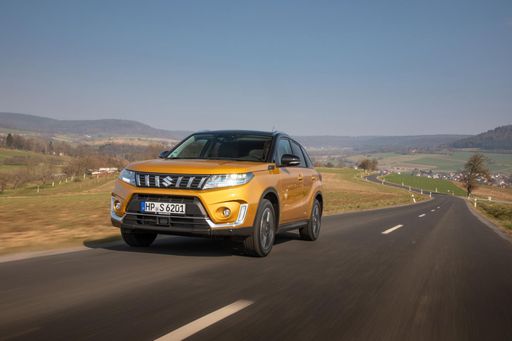
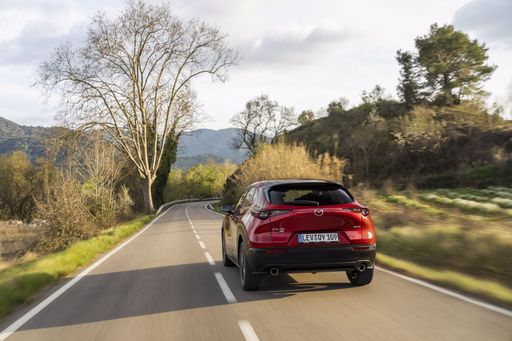
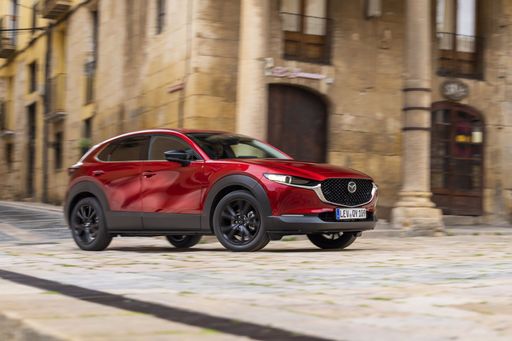
CX-30

Engine and Performance

The Mazda CX-30 is equipped with a petrol MHEV (mild hybrid electric vehicle) engine, offering a more powerful output of up to 186 HP and 240 Nm of torque. This combination allows for swift acceleration, reaching 0-100 km/h in as little as 8.3 seconds. The Vitara, on the other hand, offers a choice between petrol MHEV and full hybrid engines, with a maximum output of 129 HP and 235 Nm of torque, resulting in a slower acceleration of 9.5 seconds for the same distance.

Both models come with options for manual and automatic transmissions, enhancing the driving experience for enthusiasts and casual drivers alike. The CX-30 boasts a slightly higher top speed of 204 km/h compared to Vitara’s 190 km/h, which may appeal to those looking for a bit more thrill behind the wheel.

Vitara

Fuel Efficiency and Emissions

Fuel efficiency is critical in today's market, and both SUVs hold their own. The CX-30 has a consumption range of 5.7 to 6.6 L/100 km, while the Vitara boasts a slightly better performance, achieving 5.0 to 5.6 L/100 km. This difference may make the Vitara the more appealing choice for those focused on fuel economy.

In terms of carbon emissions, the CX-30 shows CO2 emissions ranging from 129 to 148 g/km, while the Vitara has a more efficient range of 113 to 129 g/km, indicating that the Vitara has a slight edge in environmental performance.

CX-30

Dimensions and Capacities

Size matters in the SUV segment, and the CX-30 measures 4395 mm in length, 1795 mm in width, and 1540 mm in height, making it a slightly larger vehicle compared to the Vitara, which stands at 4185 mm long, 1775 mm wide, and 1595 mm high. The CX-30 also offers a more spacious trunk capacity of 430 liters compared to the Vitara’s smaller 375 liters.

When it comes to curb weight, the CX-30 is noticeably heavier, ranging from 1485 kg to 1587 kg, whereas the Vitara maintains a lighter weight between 1255 kg and 1395 kg. This lighter weight may contribute to the Vitara's slightly improved fuel efficiency and maneuverability.

Vitara

Interior Features and Comfort

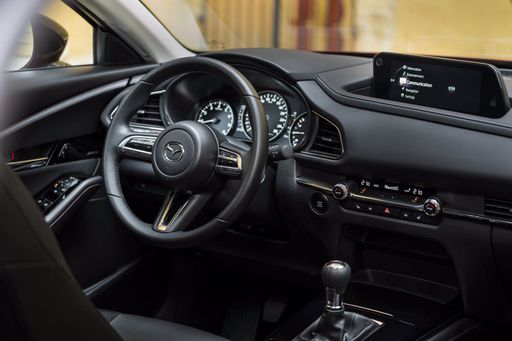
Both SUVs accommodate five passengers with equivalent seating arrangements, but the internal layouts and technology features can draw distinct preferences. The Mazda CX-30 is revered for its high-quality interior materials and advanced technological offerings, including a modern infotainment system with intuitive controls, while maintaining a sophisticated and elegant design.

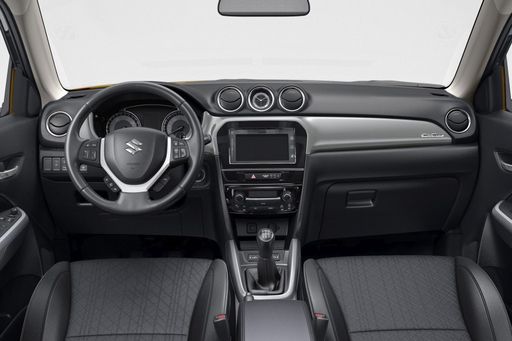
The Suzuki Vitara, while focusing on functionality over luxury, provides a practical dashboard with user-friendly controls and several essential safety features. However, it may not match the refined experience offered by the CX-30.

CX-30

Safety Innovations

Safety is paramount in today's automotive landscape, and both the Mazda CX-30 and Suzuki Vitara integrate numerous safety features to protect their occupants. The CX-30 comes equipped with advanced driver-assistance systems, including adaptive cruise control, lane departure warning, and automatic emergency braking, positioning it as a tech-savvy choice in terms of safety.

Similarly, the Vitara includes comprehensive safety features, but some may consider the enhancements available in the CX-30 more robust and innovative, making it a frontrunner in this crucial category.

Vitara

Conclusion

In conclusion, the Mazda CX-30 and Suzuki Vitara each cater to specific buyer preferences in the competitive compact SUV segment. The CX-30 shines with its powerful performance, upscale interior, and rich technological features. Conversely, the Vitara holds an edge in fuel efficiency and CO2 emissions, making it a practical choice for eco-conscious consumers. Ultimately, personal preferences in brand, design, and driving style will guide potential buyers in choosing between these two impressive SUVs.

Here’s where it gets real: The technical differences in detail

Vitara

Costs and Efficiency:

Looking at overall running costs, both models reveal some interesting differences in everyday economy.

Suzuki Vitara is very slightly cheaper – starting at 23,600 £ , while the Mazda CX-30 costs 25,700 £ . That’s a price difference of around 2,134 £.

Fuel consumption also shows a difference: the Suzuki Vitara uses 5.3 L/100km and is only slightly more efficient than the Mazda CX-30 with 5.7 L/100km. The difference is about 0.4 L/100km.

CX-30

Engine and Performance:

Under the bonnet, it becomes clear which model is tuned for sportiness and which one takes the lead when you hit the accelerator.

When it comes to engine power, the Mazda CX-30 offers only slightly more power – delivering 186 HP compared to 184 HP. That’s roughly 2 HP more horsepower.

When accelerating from 0 to 100 km/h, the Suzuki Vitara is a bit quicker – completing the sprint in 7.4 s, while the Mazda CX-30 takes 8.3 s. That’s about 0.9 s quicker.

There’s also a difference in torque: the Suzuki Vitara delivers visibly more torque with 307 Nm compared to 240 Nm. That’s about 67 Nm more.

Vitara

Space and Everyday Use:

Whether family car or daily driver – which one offers more room, flexibility and comfort?

Both vehicles offer seating for 5 people.

In terms of curb weight, Suzuki Vitara is somewhat lighter – 1,255 kg compared to 1,455 kg. The difference is around 200 kg.

Looking at boot space, the Mazda CX-30 offers somewhat more boot space – 430 L compared to 375 L. That’s a difference of about 55 L.

When it comes to payload, the Mazda CX-30 carries somewhat more – 496 kg compared to 425 kg. That’s a difference of about 71 kg.

Who wins the race in the data check?

The Suzuki Vitara is decisively ahead in the objective data comparison.
This result only shows which model scores more points on paper – not which of the two cars feels right for you.

from £23,600
Vitara

Suzuki Vitara

  • Engine Type Petrol MHEV, Electric
  • Transmission Automatic, Manuel
  • Drive Type Front-Wheel Drive, All-Wheel Drive
  • Power HP 110 - 184 HP
  • Consumption L/100km 5.3 - 5.8 L/100km
  • Consumption kWh/100km 14.9 - 16.6 kWh/100km
  • Electric Range 344 - 426 km
Suzuki Vitara
Mazda CX-30

Costs and Consumption

View detailed analysis

Engine and Performance

View detailed analysis

Dimensions and Body

View detailed analysis

Suzuki Vitara

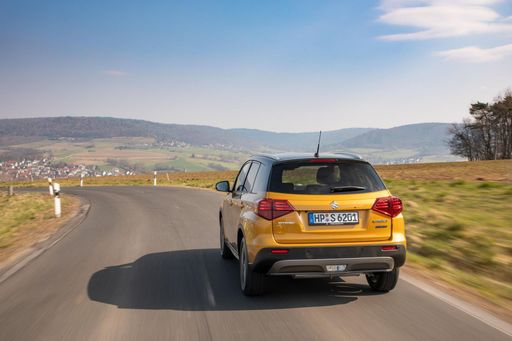
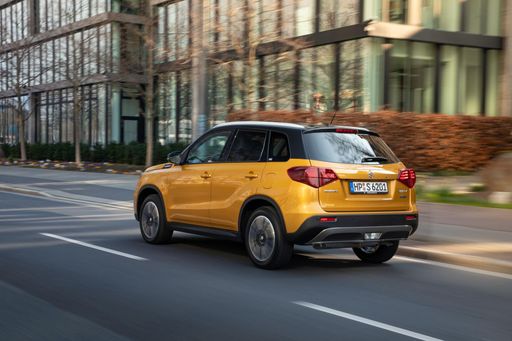
The Suzuki Vitara is a practical compact SUV that balances a comfortable, composed ride with easy-to-live-with interior space, making it well suited for daily driving and weekend getaways. It's widely praised for reliable engineering and sensible running costs, offering straightforward value to buyers who want a no-nonsense, economical crossover.

details

Mazda CX-30

The Mazda CX-30 blends Mazda’s upscale styling with a compact crossover body, offering a refined interior and engaging driving dynamics. It’s a practical choice for buyers who want a premium feel and agile handling in a city-friendly package.

details
Suzuki Vitara
Mazda CX-30

Costs and Consumption

Price
23,600 - 36,800 £
Price
25,700 - 37,200 £
Consumption L/100km
5.3 - 5.8 L/100km
Consumption L/100km
5.7 - 6.6 L/100km
Consumption kWh/100km
14.9 - 16.6 kWh/100km
Consumption kWh/100km
-
Electric Range
344 - 426 km
Electric Range
-
Battery Capacity
-
Battery Capacity
-
co2
0 - 137 g/km
co2
129 - 148 g/km
Fuel tank capacity
-
Fuel tank capacity
-

Dimensions and Body

Body Type
SUV
Body Type
SUV
Seats
5
Seats
5
Doors
-
Doors
-
Curb weight
1,255 - 1,935 kg
Curb weight
1,455 - 1,587 kg
Trunk capacity
310 - 375 L
Trunk capacity
422 - 430 L
Length
-
Length
-
Width
1,775 - 1,800 mm
Width
1,795 mm
Height
-
Height
-
Max trunk capacity
-
Max trunk capacity
-
Payload
395 - 425 kg
Payload
458 - 496 kg

Engine and Performance

Engine Type
Petrol MHEV, Electric
Engine Type
Petrol MHEV
Transmission
Automatic, Manuel
Transmission
Manuel, Automatic
Transmission Detail
Automatic Gearbox, Reduction Gearbox, Manual Gearbox
Transmission Detail
Manual Gearbox, Automatic Gearbox
Drive Type
Front-Wheel Drive, All-Wheel Drive
Drive Type
Front-Wheel Drive, All-Wheel Drive
Power HP
110 - 184 HP
Power HP
140 - 186 HP
Acceleration 0-100km/h
7.4 - 9.6 s
Acceleration 0-100km/h
8.3 - 10.3 s
Max Speed
-
Max Speed
-
Torque
193 - 307 Nm
Torque
238 - 240 Nm
Number of Cylinders
4
Number of Cylinders
4
Power kW
81 - 135 kW
Power kW
103 - 137 kW
Engine capacity
1,373 cm3
Engine capacity
1,998 - 2,488 cm3

General

Model Year
2,025 - 2,026
Model Year
2025
CO2 Efficiency Class
D, E, A
CO2 Efficiency Class
D, E
Brand
Suzuki
Brand
Mazda
DriveDuel uses data analysis and artificial intelligence to evaluate vehicle data and create content. Content is regularly reviewed and improved. The displayed prices are estimates based on German list prices, adjusted to the respective country’s VAT. Country-specific registration taxes are not included. This information is not legally binding.