
 Deutschland
 France
 Nederland
 Great Britain
 Sverige
 Danmark
 Suomi
Suomi Italia
 Polska
 Česko
Česko España
VS
Toyota Mirai vs Volvo EX60 comparison
Compare performance (182 HP vs 680 HP), boot space and price (58,700 £ vs 54,000 £ ) at a glance. Find out which car is the better choice for you – Toyota Mirai or Volvo EX60?
Mirai
Costs and Efficiency:
Price and efficiency are often the first things buyers look at. Here it becomes clear which model has the long-term edge – whether at the pump, the plug, or in purchase price.
Volvo EX60 is very slightly cheaper – starting at 54,000 £ , while the Toyota Mirai costs 58,700 £ . That’s a price difference of around 4,714 £.
As for electric range, the Volvo EX60 offers slightly more range – reaching up to 810 km, about 160 km more than the Toyota Mirai.
EX60
Engine and Performance:
Power, torque and acceleration say a lot about how a car feels on the road. This is where you see which model delivers more driving dynamics.
When it comes to engine power, the Volvo EX60 offers considerably more power – delivering 680 HP compared to 182 HP. That’s roughly 498 HP more horsepower.
When accelerating from 0 to 100 km/h, the Volvo EX60 is substantially quicker – completing the sprint in 3.9 s, while the Toyota Mirai takes 9.2 s. That’s about 5.3 s quicker.
There’s also a difference in torque: the Volvo EX60 delivers considerably more torque with 790 Nm compared to 300 Nm. That’s about 490 Nm more.
Space and Everyday Use:
Cabin size, boot volume and payload all play a role in everyday practicality. Here, comfort and flexibility make the difference.
Both vehicles offer seating for 5 people.
In terms of curb weight, Toyota Mirai is a bit lighter – 1,900 kg compared to 2,189 kg. The difference is around 289 kg.
Looking at boot space, the Volvo EX60 offers substantially more boot space – 523 L compared to 300 L. That’s a difference of about 223 L.
When it comes to payload, the Toyota Mirai carries somewhat more – 515 kg compared to 461 kg. That’s a difference of about 54 kg.
Who wins the race in the data check?
The Volvo EX60 is clearly superior overall in the objective data comparison.
This result only shows which model scores more points on paper – not which of the two cars feels right for you.
from £54,000
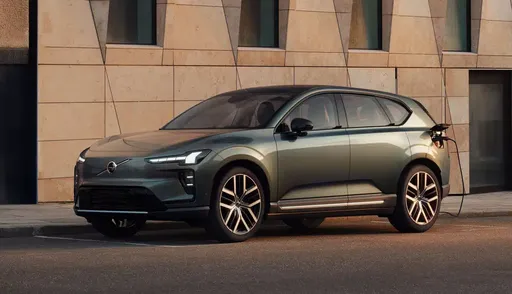
Volvo EX60
Toyota Mirai
Volvo EX60
Costs and Consumption
View detailed analysis
View detailed analysis
Engine and Performance
View detailed analysis
View detailed analysis
Dimensions and Body
View detailed analysis
View detailed analysis
Toyota Mirai
The Toyota Mirai arrives as a bold, futuristic saloon that turns heads with sleek, almost sci‑fi styling and a cabin that feels more lounge than cockpit. It trades petrol fuss for a whisper‑quiet hydrogen setup that delivers composed, effortless progress and makes long-distance cruising a relaxed pleasure — a compelling choice if you want cutting-edge eco tech without sacrificing comfort.
details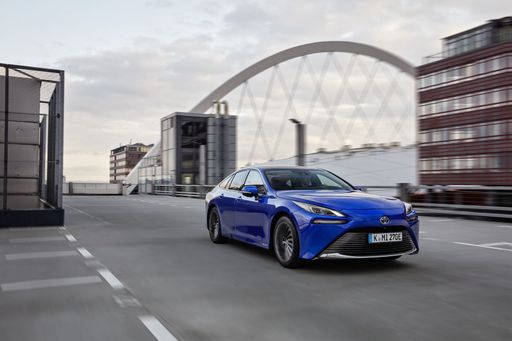
Volvo EX60
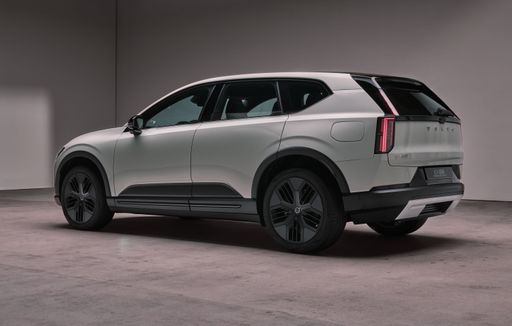
The Volvo EX60 is a stylish electric SUV that pairs Scandinavian minimalism with a high-quality, comfortable cabin and an intuitive infotainment experience. It delivers a composed, refined ride with advanced safety and driver-assist systems that make daily driving relaxed and confident.
details
Toyota Mirai
Volvo EX60
Costs and Consumption |
|
|---|---|
|
Price
58,700 - 66,700 £
|
Price
54,000 - 67,500 £
|
|
Consumption L/100km
-
|
Consumption L/100km
-
|
|
Consumption kWh/100km
-
|
Consumption kWh/100km
14.9 - 16.2 kWh/100km
|
|
Electric Range
650 km
|
Electric Range
611 - 810 km
|
|
Battery Capacity
-
|
Battery Capacity
-
|
|
co2
-
|
co2
0 g/km
|
|
Fuel tank capacity
-
|
Fuel tank capacity
-
|
Dimensions and Body |
|
|---|---|
|
Body Type
Sedan
|
Body Type
SUV
|
|
Seats
5
|
Seats
5
|
|
Doors
-
|
Doors
-
|
|
Curb weight
1,900 - 1,930 kg
|
Curb weight
2,189 - 2,405 kg
|
|
Trunk capacity
300 L
|
Trunk capacity
523 L
|
|
Length
-
|
Length
-
|
|
Width
1,885 mm
|
Width
1,899 mm
|
|
Height
-
|
Height
-
|
|
Max trunk capacity
-
|
Max trunk capacity
-
|
|
Payload
485 - 515 kg
|
Payload
455 - 461 kg
|
Engine and Performance |
|
|---|---|
|
Engine Type
Hydrogen
|
Engine Type
Electric
|
|
Transmission
Automatic
|
Transmission
Automatic
|
|
Transmission Detail
Reduction Gearbox
|
Transmission Detail
Reduction Gearbox
|
|
Drive Type
Rear-Wheel Drive
|
Drive Type
Rear-Wheel Drive, All-Wheel Drive
|
|
Power HP
182 HP
|
Power HP
374 - 680 HP
|
|
Acceleration 0-100km/h
9.2 s
|
Acceleration 0-100km/h
3.9 - 5.9 s
|
|
Max Speed
-
|
Max Speed
-
|
|
Torque
300 Nm
|
Torque
480 - 790 Nm
|
|
Number of Cylinders
-
|
Number of Cylinders
-
|
|
Power kW
134 kW
|
Power kW
275 - 500 kW
|
|
Engine capacity
-
|
Engine capacity
-
|
General |
|
|---|---|
|
Model Year
2,021 - 2,022
|
Model Year
2,026 - 2,027
|
|
CO2 Efficiency Class
-
|
CO2 Efficiency Class
A
|
|
Brand
Toyota
|
Brand
Volvo
|
DriveDuel uses data analysis and artificial intelligence to evaluate vehicle data and create content. Content is regularly reviewed and improved.
The displayed prices are estimates based on German list prices, adjusted to the respective country’s VAT. Country-specific registration taxes are not included. This information is not legally binding.