VS

Toyota Yaris Cross vs Honda HR-V comparison

Compare performance (130 HP vs 131 HP), boot space and price (23,700 £ vs 29,100 £ ) at a glance. Find out which car is the better choice for you – Toyota Yaris Cross or Honda HR-V?

Toyota Yaris Cross vs Honda HR-V: Key differences

Toyota Yaris Cross

4.1 (16 Reviews)
rate
  • noticeably cheaper
  • clearly more efficient
  • markedly lighter
  • somewhat more trunk space
details

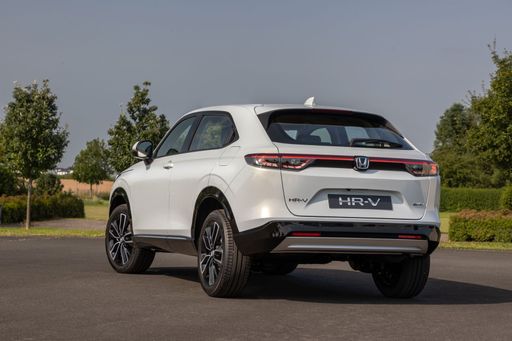
Honda HR-V

4.3 (15 Reviews)
rate
  • barely more power
  • only slightly quicker 0–100 km/h
details

All details on performance, efficiency, range and trunk space can be found in the technical comparison below – including user reviews for both models.

By Achim Sedelmaier

Yaris Cross

Honda HR-V vs Toyota Yaris Cross — which compact SUV fits your life?

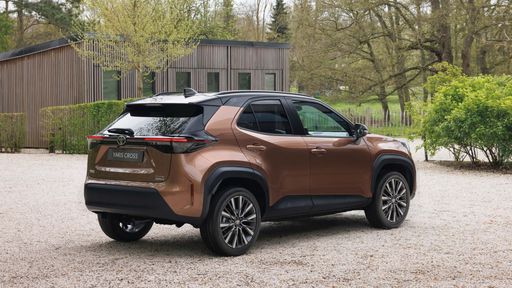
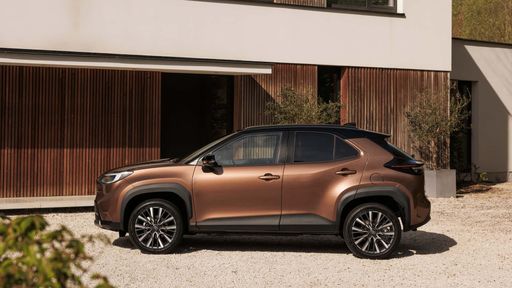
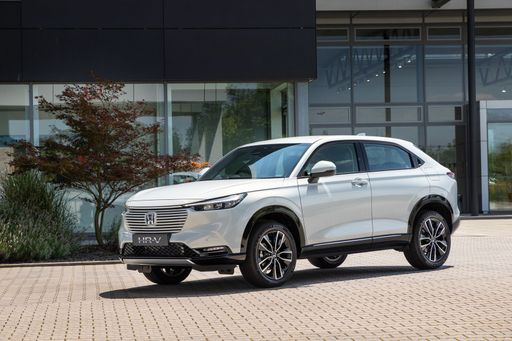
The Honda HR-V and the Toyota Yaris Cross meet where most buyers live: city streets, school runs and occasional family trips. The HR-V presents itself as a practical, slightly more spacious compact SUV with clever interior tricks, while the Yaris Cross plays the efficiency card hard and undercuts on cost of ownership. If you value flexible load-carrying and straightforward, tactile controls you’ll notice the HR-V right away; if you prioritise lowest running costs and a roomy boot for the class, the Yaris Cross will feel more sensible. This comparison focuses on how those differences matter day-to-day rather than on headline specs.
HR-V

Driving character: relaxed flexibility versus economical refinement

The Honda HR-V drives with a comfort-first temperament — smooth around town, willing but noticeably vocal when you ask for brisk acceleration, which emphasizes its pragmatic rather than sporty nature. The Toyota Yaris Cross feels more engineered around efficiency: eager to glide in electric-assisted phases, calm in traffic and engineered to keep fuel use down, with an optional mild-all-wheel drive for slippery roads. In short bursts and urban manoeuvres the Yaris Cross’s drivetrain feels more polished and relaxed; on winding country roads the HR-V settles in as a composed, if not thrilling, companion. Choose the HR-V if you want predictable, cushioned responses and space flexibility; pick the Yaris Cross if you want the quiet economy of daily commuting and an easier ownership bill.

Yaris Cross

Comfort and long-distance behavior: which stays pleasant after 200 kilometres?

On shorter trips the HR-V’s softer ride and generous rear legroom make it a comfortable everyday companion, but prolonged high‑speed runs reveal the engine’s character and a tendency to be louder under load. The Yaris Cross trades off a firmer set‑up — especially on larger wheels — for composed motorway stability and lower consumption, though its three‑cylinder drivetrain is also noticeable when working hard. If frequent long motorway stints and a desire for low fuel bills dominate your decision, the Yaris Cross will fatigue you less on kilometre-heavy weeks; if rear passenger space and a cushiony city ride matter more, the HR-V will suit family errands and school runs better. Both compromise in different ways: HR-V on noise and range, Yaris Cross on rear comfort and ride compliance with big wheels.

HR-V

Cabin feel and usability: tactile pragmatism versus modern polish

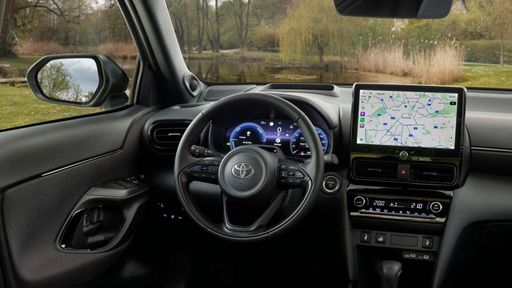
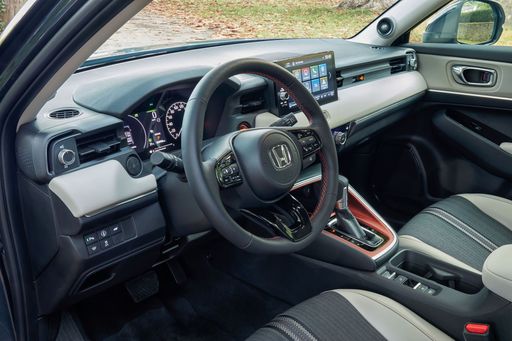
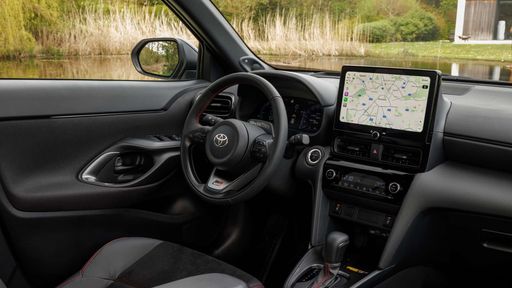
The Honda HR-V’s interior favors useful switches, clear ergonomics and a sense of robust practicality — its “Magic Seats” add an unmistakable layer of everyday cleverness that changes how you use the cabin. The Toyota Yaris Cross leans on a fresher software and touchscreen experience after recent updates, plus a clean, modern layout that feels slightly more contemporary in daily operation. In use, the HR‑V’s physical controls make quick adjustments easier without hunting through menus, while the Yaris Cross’s upgraded infotainment rewards those who appreciate snappier graphics and over‑the‑air refinements. Both cabins feel solid rather than premium, but the HR‑V delivers more adaptable space solutions and the Yaris Cross feels like the smarter tech trade-off for commuters.

Yaris Cross

Practicality and family usability: space trade-offs that matter on weekends

The Toyota Yaris Cross typically offers the larger, more usable boot and a straightforward flat load floor that makes grocery runs and mid‑size luggage simpler to load, whereas the Honda HR‑V arrives with a smaller nominal boot but a far more versatile cargo arrangement when you need odd shapes or a flat floor. Rear seat space is a clear dividing line: the HR‑V gives more legroom for taller passengers, while the Yaris Cross’s back seat is tighter and better suited to shorter trips or kids. If you often need to carry winter kit or fold odd-sized items, the HR‑V’s seating tricks reduce the pain of a small boot; if you want a lot of everyday boot volume without fiddling, the Yaris Cross is the more straightforward choice. Remember too that choosing the Yaris Cross with all‑wheel drive will shrink its luggage capacity, so the configuration you pick influences the trade-off heavily.

HR-V

Who should choose which: buyer fits and final trade-offs before the specs

Pick the Honda HR‑V if your life revolves around flexible cargo needs, rear passenger comfort and a tactile, no-nonsense cabin — it rewards practical families and pragmatic owners who value clever interior solutions over headline economy. Choose the Toyota Yaris Cross if you’re a city or suburban commuter chasing the lowest real-world running costs, a roomy everyday boot, and the option of light‑duty all‑wheel traction for winter months. If you do long motorway runs at high speed regularly, the Yaris Cross edges ahead on fuel economy but the HR‑V may feel more comfortable for passengers over distance; if tech responsiveness and modern infotainment matter more, the Yaris Cross’s update is persuasive. Below this practical portrait you’ll find the technical comparison that explains how those everyday differences — drivetrain tuning, boot packaging and suspension choices — create the trade-offs described here.

Here’s where it gets real: The technical differences in detail

Yaris Cross

Costs and Efficiency:

Price and efficiency are often the first things buyers look at. Here it becomes clear which model has the long-term edge – whether at the pump, the plug, or in purchase price.

Toyota Yaris Cross is noticeably cheaper – starting at 23,700 £ , while the Honda HR-V costs 29,100 £ . That’s a price difference of around 5,366 £.

Fuel consumption also shows a difference: the Toyota Yaris Cross uses 4.5 L/100km and is clearly more efficient than the Honda HR-V with 5.4 L/100km. The difference is about 0.9 L/100km.

HR-V

Engine and Performance:

Under the bonnet, it becomes clear which model is tuned for sportiness and which one takes the lead when you hit the accelerator.

When it comes to engine power, the Honda HR-V offers barely more power – delivering 131 HP compared to 130 HP. That’s roughly 1 HP more horsepower.

When accelerating from 0 to 100 km/h, the Honda HR-V is only slightly quicker – completing the sprint in 10.6 s, while the Toyota Yaris Cross takes 10.7 s. That’s about 0.1 s quicker.

Yaris Cross

Space and Everyday Use:

Beyond pure performance, interior space and usability matter most in daily life. This is where you see which car is more practical and versatile.

Both vehicles offer seating for 5 people.

In terms of curb weight, Toyota Yaris Cross is markedly lighter – 1,180 kg compared to 1,452 kg. The difference is around 272 kg.

Looking at boot space, the Toyota Yaris Cross offers somewhat more boot space – 397 L compared to 319 L. That’s a difference of about 78 L.

When it comes to payload, the Toyota Yaris Cross carries a bit more – 510 kg compared to 418 kg. That’s a difference of about 92 kg.

Who wins the race in the data check?

The Toyota Yaris Cross is decisively ahead in the objective data comparison.
This result only shows which model scores more points on paper – not which of the two cars feels right for you.

from £23,700
Yaris Cross

Toyota Yaris Cross

  • Engine Type Full Hybrid
  • Transmission Automatic
  • Drive Type Front-Wheel Drive, All-Wheel Drive
  • Power HP 116 - 130 HP
  • Consumption L/100km 4.5 - 4.8 L/100km
Toyota Yaris Cross
Honda HR-V

Costs and Consumption

View detailed analysis

Engine and Performance

View detailed analysis

Dimensions and Body

View detailed analysis

Toyota Yaris Cross

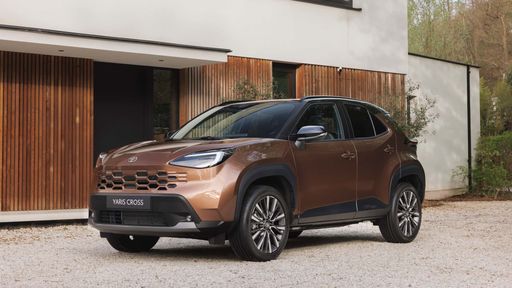
The Toyota Yaris Cross blends the maneuverability of a small hatch with the higher driving position and practicality of a crossover, wrapped in Toyota's dependable build quality. It suits urban buyers who need easy parking, flexible cargo space and a comfortable, economical daily driver.

details

Honda HR-V

The Honda HR-V is a compact crossover that blends practical versatility with a comfortable, refined cabin, making it a strong choice for daily driving and weekend trips. Its clever packaging and easy-to-use features give owners flexible cargo space and a confidence-inspiring driving experience without feeling fussy.

details
Toyota Yaris Cross
Honda HR-V

Costs and Consumption

Price
23,700 - 34,300 £
Price
29,100 - 34,700 £
Consumption L/100km
4.5 - 4.8 L/100km
Consumption L/100km
5.4 L/100km
Consumption kWh/100km
-
Consumption kWh/100km
-
Electric Range
-
Electric Range
-
Battery Capacity
-
Battery Capacity
-
co2
101 - 108 g/km
co2
122 g/km
Fuel tank capacity
-
Fuel tank capacity
-

Dimensions and Body

Body Type
SUV
Body Type
SUV
Seats
5
Seats
5
Doors
-
Doors
-
Curb weight
1,180 - 1,290 kg
Curb weight
1,452 kg
Trunk capacity
320 - 397 L
Trunk capacity
319 L
Length
-
Length
-
Width
1,765 mm
Width
1,866 mm
Height
-
Height
-
Max trunk capacity
-
Max trunk capacity
-
Payload
485 - 510 kg
Payload
418 kg

Engine and Performance

Engine Type
Full Hybrid
Engine Type
Full Hybrid
Transmission
Automatic
Transmission
Automatic
Transmission Detail
CVT
Transmission Detail
Automatic Gearbox
Drive Type
Front-Wheel Drive, All-Wheel Drive
Drive Type
Front-Wheel Drive
Power HP
116 - 130 HP
Power HP
131 HP
Acceleration 0-100km/h
10.7 - 11.3 s
Acceleration 0-100km/h
10.6 - 10.8 s
Max Speed
-
Max Speed
-
Torque
-
Torque
253 Nm
Number of Cylinders
3
Number of Cylinders
4
Power kW
85 - 96 kW
Power kW
96 kW
Engine capacity
1,490 cm3
Engine capacity
1,498 cm3

General

Model Year
2026
Model Year
2025
CO2 Efficiency Class
C
CO2 Efficiency Class
D
Brand
Toyota
Brand
Honda
DriveDuel uses data analysis and artificial intelligence to evaluate vehicle data and create content. Content is regularly reviewed and improved. The displayed prices are estimates based on German list prices, adjusted to the respective country’s VAT. Country-specific registration taxes are not included. This information is not legally binding.