VS

Toyota Yaris Cross vs Hyundai Kona comparison

Compare performance (130 HP vs 218 HP), boot space and price (23,700 £ vs 23,100 £ ) at a glance. Find out which car is the better choice for you – Toyota Yaris Cross or Hyundai Kona?

Toyota Yaris Cross vs Hyundai Kona: Key differences

Toyota Yaris Cross

4.1 (9 Reviews)
rate
  • marginally more efficient
  • moderately lighter

Hyundai Kona

5 (1 Reviews)
rate
  • only slightly cheaper
  • significantly more power
  • markedly quicker 0–100 km/h
  • a bit more trunk space

All details on performance, efficiency, range and trunk space can be found in the technical comparison below – including user reviews for both models.

Yaris Cross

Street Style and First Impressions

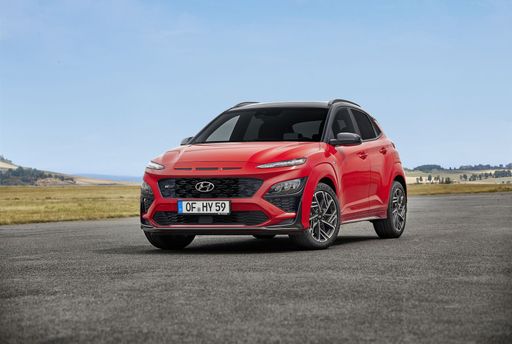
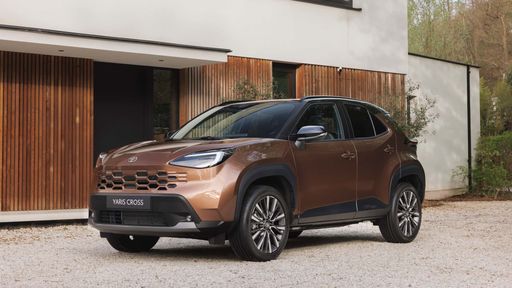
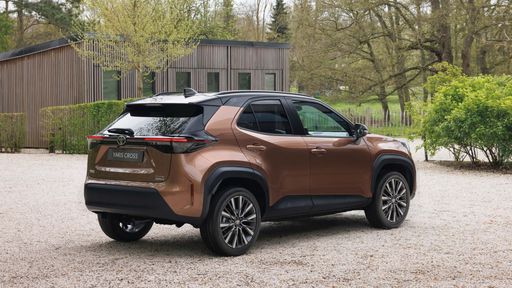
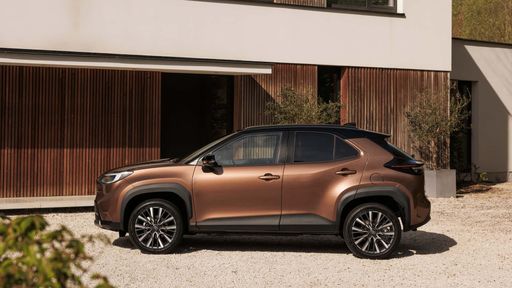
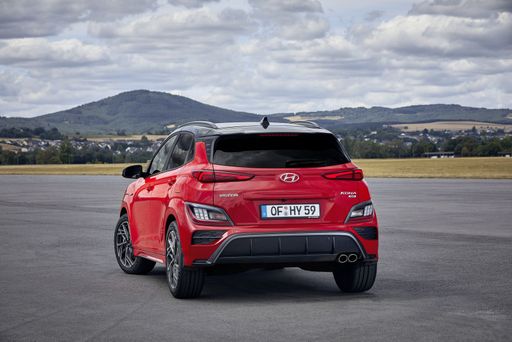
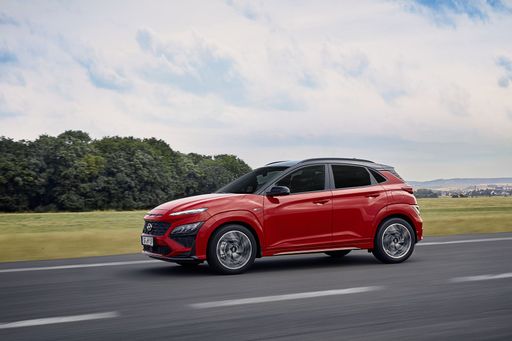
The little crossover duel starts with personalities: the Hyundai Kona strikes a more adventurous pose with sharper lines and a sportier stance, while the Toyota Yaris Cross plays the sensible-cool card with a compact, refined look that won’t offend the neighbours. Both feel modern, but they speak to different tastes — one loud enough to say “I like to drive,” the other whispering “I prefer tidy efficiency.” Design-wise it’s less about right or wrong and more about which story you want your car to tell on the driveway.

Kona

City Chops and Country Miles

In town the two offer distinct moods: the Kona leans towards a livelier character, making quick direction changes feel engaging, while the Yaris Cross rewards you with composed manners and a knack for smoothing out daily traffic stress. On longer runs the Kona’s tauter feel keeps things involving, whereas the Yaris Cross is the one you’d pick if low-effort cruising and predictable responses top your priority list. Neither is awkward to live with, but your route choices will reveal which temperament suits you best.

Yaris Cross

Practicality That Actually Matters

Both cabins are built around everyday usability, yet they arrive at it from different angles: the Kona prioritises flexible load-carrying and clever stowage, making it feel like the more accommodating of the two when you’re juggling groceries, sports kit, or a weekend swap. The Yaris Cross trades a bit of that bulk for clever packaging and easy access, which is a better fit if tight parking and rear-seat comfort are repeated concerns. In short, one feels roomier for stuff, the other feels smarter with space.

Kona

Inside: Materials and Interface

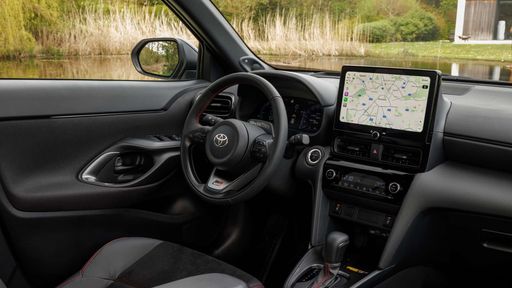
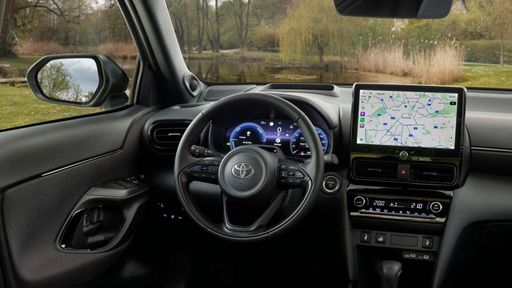
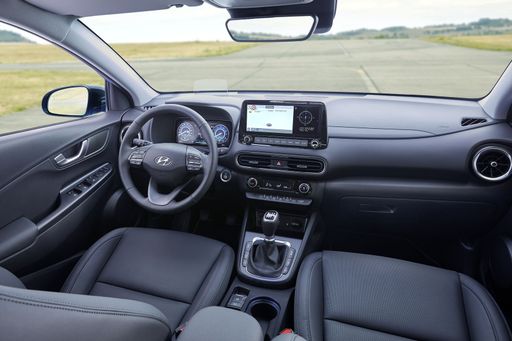
The interiors reinforce their personalities — the Kona brings sporty touches and emphatic detailing that make the cabin feel slightly more driver-focused, while the Yaris Cross leans into tidy ergonomics and a restraint that reads as durable and sensible. Touchpoints and controls are generally intuitive in both, though the Kona’s fresher design language gives it a subtle “special-edition” vibe. If you care about cabin flair, one will make you smile; if you want fuss-free operation, the other will quietly win your loyalty.

Yaris Cross

Running Costs, Peace of Mind and Practical Ownership

Beyond the showroom both cars are designed to be easy to live with: one aims to offer a slightly more economical, low-fuss ownership experience, while the other compensates with broader equipment choices and a bit more day-to-day versatility. Resale perceptions, dealer networks and reputations for reliability are all part of the ownership story here, so your local preferences and aftersales expectations will matter more than headline claims. Either way, both are sensible bets for people who want minimal headaches and maximum usability.

Kona

Who Should Park One in Their Drive?

If you’re a commuter with a taste for a nimble, sportier feel and like the idea of a compact car that behaves a bit bigger, the Hyundai Kona will appeal; if your priorities sit with easy urban living, a sensible layout and a calm, conservative character, the Toyota Yaris Cross is likely the smarter daily partner. Families, style-conscious buyers and frequent long-distance drivers will each find clear reasons to favour one over the other depending on how they balance comfort against character. Keep reading — the DriveDuel Champion will be revealed afterwards.

Here’s where it gets real: The technical differences in detail

Yaris Cross

Costs and Efficiency:

Looking at overall running costs, both models reveal some interesting differences in everyday economy.

Hyundai Kona is only slightly cheaper – starting at 23,100 £ , while the Toyota Yaris Cross costs 23,700 £ . That’s a price difference of around 634 £.

Fuel consumption also shows a difference: the Toyota Yaris Cross uses 4.5 L/100km and is marginally more efficient than the Hyundai Kona with 4.6 L/100km. The difference is about 0.1 L/100km.

Kona

Engine and Performance:

Power, torque and acceleration are the classic benchmarks for car enthusiasts – and here, some clear differences start to show.

When it comes to engine power, the Hyundai Kona offers significantly more power – delivering 218 HP compared to 130 HP. That’s roughly 88 HP more horsepower.

When accelerating from 0 to 100 km/h, the Hyundai Kona is markedly quicker – completing the sprint in 7.8 s, while the Toyota Yaris Cross takes 10.7 s. That’s about 2.9 s quicker.

Yaris Cross

Space and Everyday Use:

Beyond pure performance, interior space and usability matter most in daily life. This is where you see which car is more practical and versatile.

Both vehicles offer seating for 5 people.

In terms of curb weight, Toyota Yaris Cross is moderately lighter – 1,180 kg compared to 1,370 kg. The difference is around 190 kg.

Looking at boot space, the Hyundai Kona offers a bit more boot space – 466 L compared to 397 L. That’s a difference of about 69 L.

When it comes to payload, the Toyota Yaris Cross carries barely more – 510 kg compared to 490 kg. That’s a difference of about 20 kg.

Who wins the race in the data check?

The Hyundai Kona is decisively ahead in the objective data comparison.
This result only shows which model scores more points on paper – not which of the two cars feels right for you.

from £23,100
Kona

Hyundai Kona

  • Engine Type : Electric, Petrol, Full Hybrid
  • Transmission : Automatic, Manuel
  • Drive Type : Front-Wheel Drive, All-Wheel Drive
  • Power HP : 115 - 218 HP
  • Consumption L/100km : 4.6 - 7 L/100km
  • Consumption kWh/100km : 14.6 - 16.8 kWh/100km
  • Electric Range : 377 - 514 km
Toyota Yaris Cross
Hyundai Kona

Costs and Consumption

View detailed analysis

Engine and Performance

View detailed analysis

Dimensions and Body

View detailed analysis

Toyota Yaris Cross

The Toyota Yaris Cross takes the jaunty personality of the Yaris and gives it a taller stance and a bit more practicality, so you get city-friendly agility with added SUV presence. It’s easy to live with, economical on the daily grind, and smartly packaged — a sensible pick for buyers who want fuss-free transport with a touch of character.

details

Hyundai Kona

The Hyundai Kona wears its personality on the outside with bold styling and sprightly handling that turns city driving into something a little more fun than a commute. It blends practical space, modern tech and sensible running costs into a compact, stylish package — a smart pick if you want flair without paying luxury prices.

details
Toyota Yaris Cross
Hyundai Kona

Costs and Consumption

Price
23,700 - 34,300 £
Price
23,100 - 41,600 £
Consumption L/100km
4.5 - 4.8 L/100km
Consumption L/100km
4.6 - 7 L/100km
Consumption kWh/100km
-
Consumption kWh/100km
14.6 - 16.8 kWh/100km
Electric Range
-
Electric Range
377 - 514 km
Battery Capacity
-
Battery Capacity
48.4 - 65.4 kWh
co2
101 - 108 g/km
co2
0 - 163 g/km
Fuel tank capacity
-
Fuel tank capacity
-

Dimensions and Body

Body Type
SUV
Body Type
SUV
Seats
5
Seats
5
Doors
-
Doors
5
Curb weight
1,180 - 1,290 kg
Curb weight
1,370 - 1,773 kg
Trunk capacity
320 - 397 L
Trunk capacity
466 L
Length
-
Length
4,355 - 4,385 mm
Width
1,765 mm
Width
1,825 mm
Height
-
Height
1,580 mm
Max trunk capacity
-
Max trunk capacity
1,300 L
Payload
485 - 510 kg
Payload
420 - 490 kg

Engine and Performance

Engine Type
Full Hybrid
Engine Type
Electric, Petrol, Full Hybrid
Transmission
Automatic
Transmission
Automatic, Manuel
Transmission Detail
CVT
Transmission Detail
Reduction Gearbox, Manual Gearbox, Dual-Clutch Automatic
Drive Type
Front-Wheel Drive, All-Wheel Drive
Drive Type
Front-Wheel Drive, All-Wheel Drive
Power HP
116 - 130 HP
Power HP
115 - 218 HP
Acceleration 0-100km/h
10.7 - 11.3 s
Acceleration 0-100km/h
7.8 - 11.9 s
Max Speed
-
Max Speed
162 - 172 km/h
Torque
-
Torque
200 - 265 Nm
Number of Cylinders
3
Number of Cylinders
3 - 4
Power kW
85 - 96 kW
Power kW
85 - 160 kW
Engine capacity
1,490 cm3
Engine capacity
998 - 1,598 cm3

General

Model Year
2,026
Model Year
2,024 - 2,025
CO2 Efficiency Class
C
CO2 Efficiency Class
A, D, C, E, F
Brand
Toyota
Brand
Hyundai
DriveDuel uses data analysis and artificial intelligence to evaluate vehicle data and create content. Content is regularly reviewed and improved. The displayed prices are estimates based on German list prices, adjusted to the respective country’s VAT. Country-specific registration taxes are not included. This information is not legally binding.