VS

Toyota Yaris Cross vs Jeep Avenger comparison

Compare performance (130 HP vs 156 HP), boot space and price (23,700 £ vs 22,500 £ ) at a glance. Find out which car is the better choice for you – Toyota Yaris Cross or Jeep Avenger?

Toyota Yaris Cross vs Jeep Avenger: Key differences

Toyota Yaris Cross

4.2 (15 Reviews)
rate
  • barely more efficient
  • very slightly more trunk space
details

Jeep Avenger

4.1 (9 Reviews)
rate
  • very slightly cheaper
  • moderately more power
  • somewhat quicker 0–100 km/h
details

All details on performance, efficiency, range and trunk space can be found in the technical comparison below – including user reviews for both models.

By Achim Sedelmaier

Yaris Cross

City swagger or countryside grit?

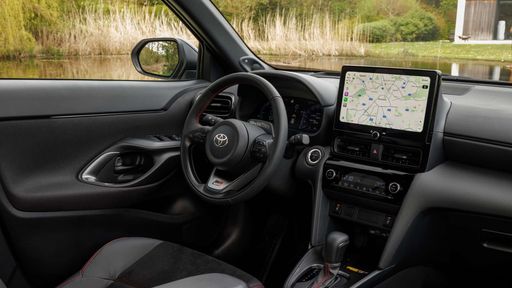
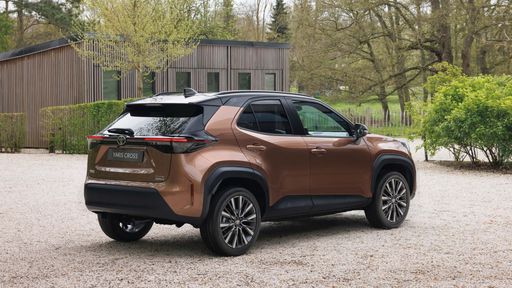
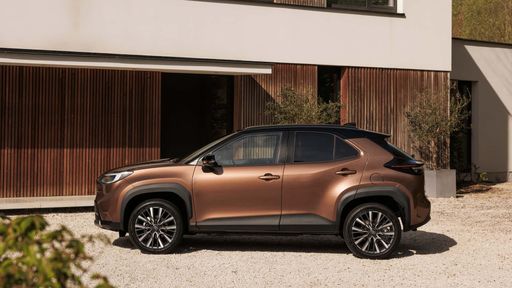
The Jeep Avenger arrives with a rugged wink, its styling leaning into the adventurous SUV archetype, while the Toyota Yaris Cross plays the part of the polished urban companion with tidy proportions and clever detailing. Both have character, but they speak to different personalities: one wants to look ready for a weekend escape, the other wants to make city life feel more composed. Pick based on mood rather than spreadsheets — one makes a bolder statement at the kerb, the other slips into tight streets with quiet confidence.
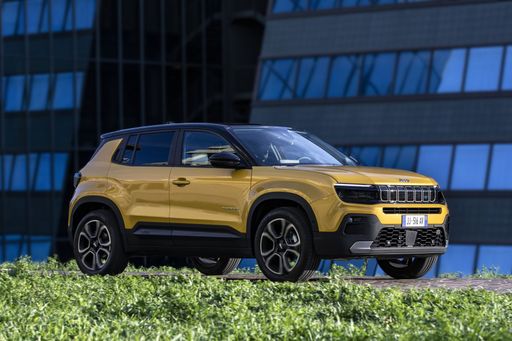
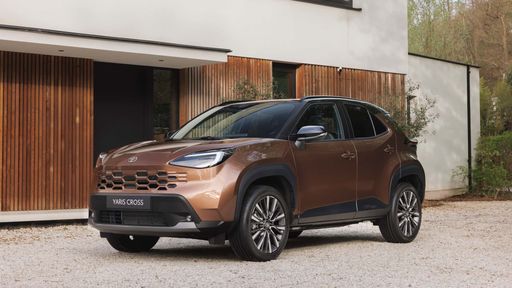
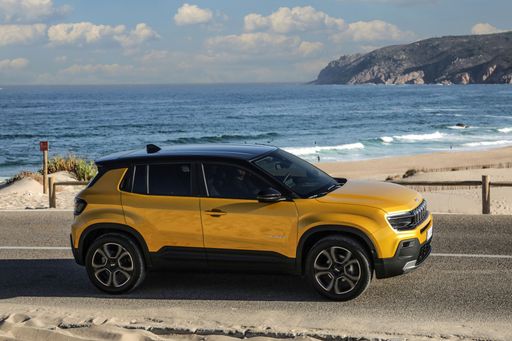
Avenger

Behind the wheel: mood and manners

Driving the Avenger feels like stepping into a small, confident SUV — there’s a sense of solidity and composure that suits longer runs and rougher surfaces, while the Yaris Cross rewards you with light-footed agility and eager turn-in around town. Neither is a sports car, but their personalities are clear: one favours a reassuring, planted ride, the other prioritises nimbleness and driver engagement in everyday traffic. That difference shapes how they behave on long trips versus quick commutes, and it’s the kind of thing you notice after a few corners.

Yaris Cross

Cabin comfort and everyday ergonomics

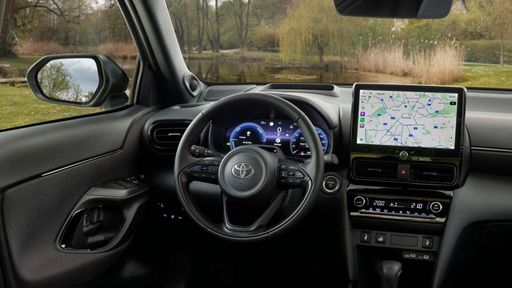
Inside, the Avenger leans on practical appointments and a straightforward layout that’s built to shrug off mud and grocery bags alike, while the Yaris Cross offers a more polished cabin feel with an intuitive switchgear arrangement that’s easy to live with daily. Seating comfort is pleasant in both, though their atmospheres diverge — one feels outdoorsy and robust, the other neat and considered. Overall it’s about whether you prefer a cozy, tidy cocoon or a tougher, more utilitarian interior that won’t fuss over the occasional spill.

Avenger

Living with the car: usefulness and load space

When it comes to day-to-day tasks, both cars handle the usuals—school runs, shopping, and weekend plans—with confidence, but in subtly different ways: one gives you that extra flexibility for awkward items and taller loads, the other is simply easier to manoeuvre into tight parking spots and tricky urban garages. Practicality won’t let you down either way, yet families who need flexible luggage options might appreciate one’s packaging while city dwellers will love the other’s tight-footprint convenience. Think about how you pack your life, not just how the car looks on the driveway.

Yaris Cross

Ownership feel: value and living costs

Beyond purchase price, the ownership experience is shaped by dealer networks, perceived reliability and how forgiving each car is in daily life; one projects a more adventurous, go-anywhere personality while the other brings a reputation for fuss-free, predictable ownership. Running nuances like servicing rhythms and perceived efficiency shape the long-term mood more than headlines — one delights with character, the other soothes with practicality. Both represent sensible buys, but they promise different kinds of ownership satisfaction.

Avenger

Who should be steering which?

If your life revolves around a mix of city errands and occasional country lanes, and you like a car that looks ready for impromptu escapes, the bolder choice will likely suit you; if you’re mostly urban, value a refined interior and fuss-free day-to-day practicality, the tidier alternative will probably fit better. Commuters who prize agility and easy parking will notice that one suits tighter streets, while families and weekend adventurers may prefer the other’s accommodating approach to cargo and comfort. Match the car to how you live, and the daily compromises will feel natural.

Yaris Cross

Curious which one takes the DriveDuel crown?

We’ve sketched the characters, handling quirks and everyday strengths — now stick around to see which car earns the title after our full test and ownership appraisal, because the DriveDuel Champion reveal is coming up next and you won’t want to miss it.

Here’s where it gets real: The technical differences in detail

Yaris Cross

Costs and Efficiency:

Price and efficiency are key factors when choosing a car – and this is often where the real differences emerge.

Jeep Avenger is very slightly cheaper – starting at 22,500 £ , while the Toyota Yaris Cross costs 23,700 £ . That’s a price difference of around 1,149 £.

Fuel consumption also shows a difference: the Toyota Yaris Cross uses 4.5 L/100km and is barely more efficient than the Jeep Avenger with 4.9 L/100km. The difference is about 0.4 L/100km.

Avenger

Engine and Performance:

Power, torque and acceleration are the classic benchmarks for car enthusiasts – and here, some clear differences start to show.

When it comes to engine power, the Jeep Avenger offers moderately more power – delivering 156 HP compared to 130 HP. That’s roughly 26 HP more horsepower.

When accelerating from 0 to 100 km/h, the Jeep Avenger is somewhat quicker – completing the sprint in 9 s, while the Toyota Yaris Cross takes 10.7 s. That’s about 1.7 s quicker.

Yaris Cross

Space and Everyday Use:

Whether family car or daily driver – which one offers more room, flexibility and comfort?

Both vehicles offer seating for 5 people.

Both models weigh roughly the same – around 1,180 kg.

Looking at boot space, the Toyota Yaris Cross offers very slightly more boot space – 397 L compared to 380 L. That’s a difference of about 17 L.

When it comes to payload, the Toyota Yaris Cross carries barely more – 510 kg compared to 502 kg. That’s a difference of about 8 kg.

Who wins the race in the data check?

The Jeep Avenger holds a decisive overall lead in the objective data comparison.
This result only shows which model scores more points on paper – not which of the two cars feels right for you.

from £22,500
Avenger

Jeep Avenger

  • Engine Type Petrol MHEV, Electric, Petrol
  • Transmission Automatic, Manuel
  • Drive Type Front-Wheel Drive, All-Wheel Drive
  • Power HP 100 - 156 HP
  • Consumption L/100km 4.9 - 5.7 L/100km
  • Consumption kWh/100km 15.5 kWh/100km
  • Electric Range 400 km
Toyota Yaris Cross
Jeep Avenger

Costs and Consumption

View detailed analysis

Engine and Performance

View detailed analysis

Dimensions and Body

View detailed analysis

Toyota Yaris Cross

The Toyota Yaris Cross blends the maneuverability of a small hatch with the higher driving position and practicality of a crossover, wrapped in Toyota's dependable build quality. It suits urban buyers who need easy parking, flexible cargo space and a comfortable, economical daily driver.

details

Jeep Avenger

The Jeep Avenger mixes rugged styling with a compact, city‑friendly footprint that makes it easy to maneuver while keeping Jeep’s adventurous character. Inside it offers a practical, modern cabin with sensible tech and comfort aimed at everyday driving and light weekend getaways.

details
Toyota Yaris Cross
Jeep Avenger

Costs and Consumption

Price
23,700 - 34,300 £
Price
22,500 - 36,800 £
Consumption L/100km
4.5 - 4.8 L/100km
Consumption L/100km
4.9 - 5.7 L/100km
Consumption kWh/100km
-
Consumption kWh/100km
15.5 kWh/100km
Electric Range
-
Electric Range
400 km
Battery Capacity
-
Battery Capacity
-
co2
101 - 108 g/km
co2
0 - 129 g/km
Fuel tank capacity
-
Fuel tank capacity
-

Dimensions and Body

Body Type
SUV
Body Type
SUV
Seats
5
Seats
5
Doors
-
Doors
-
Curb weight
1,180 - 1,290 kg
Curb weight
1,180 - 1,520 kg
Trunk capacity
320 - 397 L
Trunk capacity
325 - 380 L
Length
-
Length
-
Width
1,765 mm
Width
1,776 mm
Height
-
Height
-
Max trunk capacity
-
Max trunk capacity
-
Payload
485 - 510 kg
Payload
490 - 502 kg

Engine and Performance

Engine Type
Full Hybrid
Engine Type
Petrol MHEV, Electric, Petrol
Transmission
Automatic
Transmission
Automatic, Manuel
Transmission Detail
CVT
Transmission Detail
Dual-Clutch Automatic, Reduction Gearbox, Manual Gearbox
Drive Type
Front-Wheel Drive, All-Wheel Drive
Drive Type
Front-Wheel Drive, All-Wheel Drive
Power HP
116 - 130 HP
Power HP
100 - 156 HP
Acceleration 0-100km/h
10.7 - 11.3 s
Acceleration 0-100km/h
9 - 10.6 s
Max Speed
-
Max Speed
-
Torque
-
Torque
205 - 260 Nm
Number of Cylinders
3
Number of Cylinders
3
Power kW
85 - 96 kW
Power kW
74 - 115 kW
Engine capacity
1,490 cm3
Engine capacity
1,199 cm3

General

Model Year
2026
Model Year
2026
CO2 Efficiency Class
C
CO2 Efficiency Class
C, A, D
Brand
Toyota
Brand
Jeep
DriveDuel uses data analysis and artificial intelligence to evaluate vehicle data and create content. Content is regularly reviewed and improved. The displayed prices are estimates based on German list prices, adjusted to the respective country’s VAT. Country-specific registration taxes are not included. This information is not legally binding.