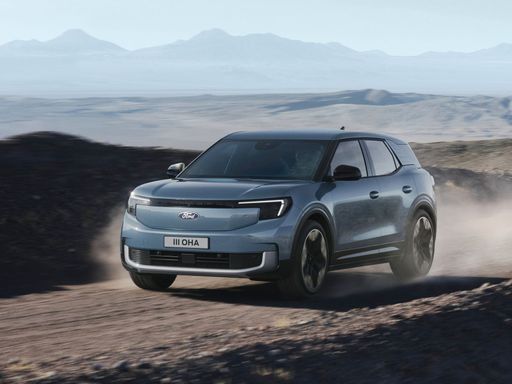
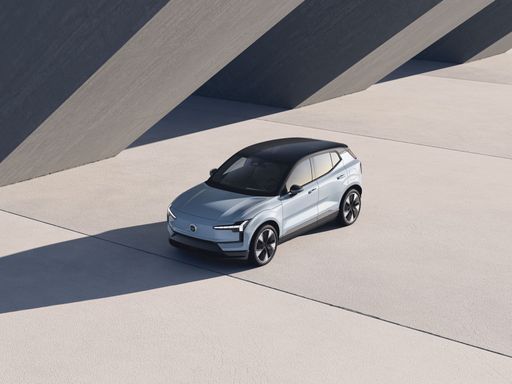
VS

Volvo EX30 vs Ford Explorer EV comparison

Compare performance (428 HP vs 340 HP), boot space and price (30,000 £ vs 34,200 £ ) at a glance. Find out which car is the better choice for you – Volvo EX30 or Ford Explorer EV?

Volvo EX30 vs Ford Explorer EV: Key differences

Volvo EX30

3.7 (6 Reviews)
rate
  • moderately cheaper
  • noticeably more power
  • substantially quicker 0–100 km/h
  • very slightly lighter
details

Ford Explorer EV

4.9 (3 Reviews)
rate
  • moderately more efficient
  • markedly more electric range
details

All details on performance, efficiency, range and trunk space can be found in the technical comparison below – including user reviews for both models.

By Achim Sedelmaier

EX30

An In-Depth Comparison: Ford Explorer EV vs. Volvo EX30

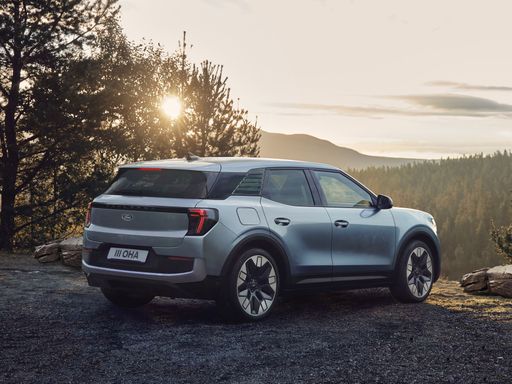
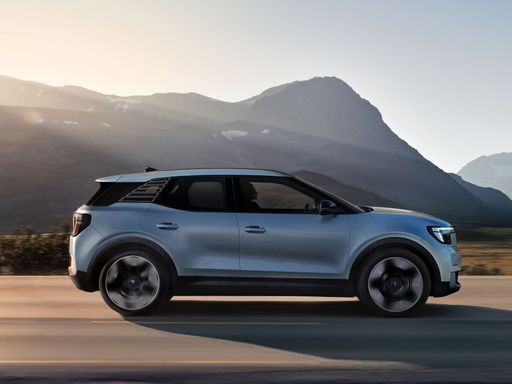
The automotive landscape is rapidly evolving, particularly in the realm of electric vehicles (EVs). This evolution has ushered in a wave of new models eager to meet diverse consumer demands. Among the standout contenders are the Ford Explorer EV and the Volvo EX30. Both SUVs blend innovation and performance, but they come from distinct philosophies and heritage. This article takes a closer look at their technical specifications and innovative features to determine which vehicle reigns supreme in this electric age.

Explorer EV

Design and Dimensions

The Ford Explorer EV measures 4468 mm in length, 1871 mm in width, and stands at a height of 1630-1639 mm. This robust size gives it a commanding road presence and ample space for occupants and cargo alike. With a trunk capacity of 450 liters, it's well-suited for family trips and adventurous getaways.

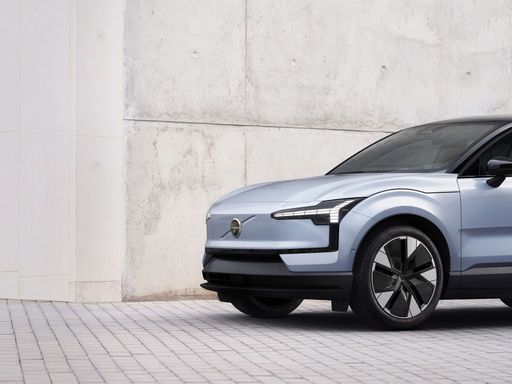
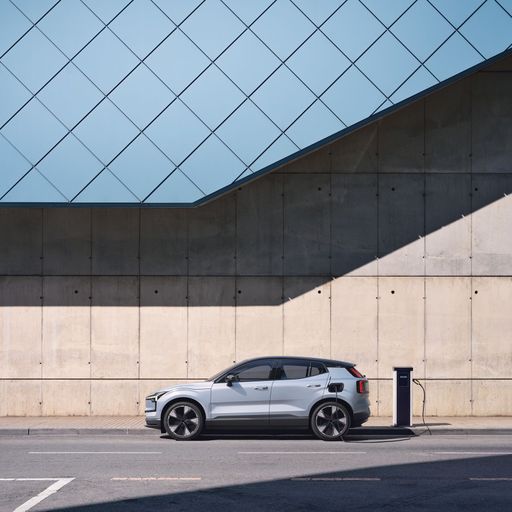
On the other hand, the Volvo EX30 is slightly more compact at 4233 mm in length and 1837 mm in width, with a height of 1549 mm. While it may have less trunk space at 318 liters, the stylish design and Scandinavian aesthetics draw immediate appeal. Volvo emphasizes a minimalist interior that's both functional and luxurious, enhancing the overall driving experience.

EX30

Powertrains and Performance

Under the hood, the Ford Explorer EV offers a range of performance options with power outputs of 204 HP (150 kW) to 340 HP (250 kW). It features both rear-wheel drive and all-wheel drive, catering to varying driver preferences. The Explorer EV also boasts impressive acceleration, with a 0-100 km/h time of as little as 5.3 seconds for the more powerful variants. With a maximum torque of 679 Nm, it ensures powerful towing capabilities and responsive handling.

The Volvo EX30 presents even more exciting performance metrics, especially with its top-tier variant producing a robust 428 HP (315 kW) and 543 Nm of torque. With acceleration capabilities as quick as 3.6 seconds from 0-100 km/h, the EX30 positions itself as a performance hotspot in the compact SUV category. Both vehicles have a maximum speed of 180 km/h, showing they are designed for exhilarating driving.

Explorer EV

Electric Efficiency and Range

When it comes to electric efficiency, the Ford Explorer EV shines with consumption rates ranging between 13.9 to 16.6 kWh/100 km. This impressive energy efficiency translates to a commendable electric range of up to 602 km, making it an excellent choice for long-distance journeys.

Conversely, the Volvo EX30 offers an electric range of up to 476 km, coupled with a consumption of 17 to 17.5 kWh/100 km. While this is slightly higher than the Explorer EV, the EX30's performance-oriented powertrains may justify the compromise for enthusiasts prioritizing spirited driving.

EX30

Battery and Charging Advancements

The Explorer EV comes with battery capacities ranging from 52 kWh to 79 kWh, delivering versatility in range and charging times. Ford's latest models focus on rapid charging technology, allowing drivers to recharge their vehicles quickly and efficiently.

In contrast, the EX30 features two battery options: a 49 kWh and a 65 kWh variant. Volvo’s advancements in battery technology ensure smart thermal management, providing not only efficiency but also a longer lifespan. Both manufacturers demonstrate a strong commitment to sustainable driving through enhanced battery technology.

Explorer EV

Safety and Technology

Safety is paramount in both models. The Ford Explorer EV incorporates Ford's latest driver-assistance technologies, including adaptive cruise control and lane-keeping assist. Meanwhile, the Volvo EX30 prides itself on its robust safety features, underscored by Volvo's reputation for prioritizing driver and passenger safety through innovative systems such as City Safety and Pilot Assist.

Moreover, both SUVs integrate advanced infotainment systems with seamless connectivity options, enhancing the driving experience for tech-savvy consumers. Ford Sync and Volvo's Google-based infotainment system provide intuitive interfaces for easy access to navigation, music, and vehicle settings.

EX30

Conclusion: Which SUV Takes the Crown?

Choosing between the Ford Explorer EV and Volvo EX30 ultimately boils down to individual preferences and priorities. If you value a longer electric range, spacious interiors, and versatile performance options, the Ford Explorer EV may be your best bet. However, if you seek an agile, performance-oriented SUV that excels in safety features and elegant design, the Volvo EX30 deserves your attention.

In this electric era, both vehicles showcase the future of automotive innovation, ensuring that eco-friendly driving does not compromise on power or luxury. Whether it's the dependable utility of the Explorer EV or the sporty appeal of the EX30, the future of electric SUVs is bright.

Here’s where it gets real: The technical differences in detail

EX30

Costs and Efficiency:

Price and efficiency are often the first things buyers look at. Here it becomes clear which model has the long-term edge – whether at the pump, the plug, or in purchase price.

Volvo EX30 is moderately cheaper – starting at 30,000 £ , while the Ford Explorer EV costs 34,200 £ . That’s a price difference of around 4,209 £.

In terms of energy consumption, the Ford Explorer EV is moderately more efficient: consuming 14.6 kWh/100km compared to 17 kWh/100km for the Volvo EX30. That’s a difference of about 2.4 kWh/100km.

As for electric range, the Ford Explorer EV offers markedly more range – reaching up to 602 km, about 127 km more than the Volvo EX30.

Explorer EV

Engine and Performance:

Power, torque and acceleration are the classic benchmarks for car enthusiasts – and here, some clear differences start to show.

When it comes to engine power, the Volvo EX30 offers noticeably more power – delivering 428 HP compared to 340 HP. That’s roughly 88 HP more horsepower.

When accelerating from 0 to 100 km/h, the Volvo EX30 is substantially quicker – completing the sprint in 3.6 s, while the Ford Explorer EV takes 5.3 s. That’s about 1.7 s quicker.

There’s also a difference in torque: the Ford Explorer EV delivers visibly more torque with 679 Nm compared to 543 Nm. That’s about 136 Nm more.

EX30

Space and Everyday Use:

Whether family car or daily driver – which one offers more room, flexibility and comfort?

Both vehicles offer seating for 5 people.

In terms of curb weight, Volvo EX30 is very slightly lighter – 1,840 kg compared to 1,996 kg. The difference is around 156 kg.

When it comes to payload, the Ford Explorer EV carries visibly more – 585 kg compared to 390 kg. That’s a difference of about 195 kg.

Who wins the race in the data check?

The Volvo EX30 has the upper hand in the objective data comparison.
This result only shows which model scores more points on paper – not which of the two cars feels right for you.

from £30,000
EX30

Volvo EX30

  • Engine Type : Electric
  • Transmission : Automatic
  • Drive Type : Rear-Wheel Drive, All-Wheel Drive
  • Power HP : 150 - 428 HP
  • Consumption kWh/100km : 17 - 18.3 kWh/100km
  • Electric Range : 339 - 475 km
Volvo EX30
Ford Explorer EV

Costs and Consumption

View detailed analysis

Engine and Performance

View detailed analysis

Dimensions and Body

View detailed analysis

Volvo EX30

The Volvo EX30 arrives as a compact electric with crisp Scandinavian design and a cheeky personality, proving you can be serious about safety and still enjoy a grin on your commute. Its cabin is cleverly packaged and delightfully easy to live with, offering smart tech and practical touches that make it feel like a grown-up's city car with a sense of fun.

details

Ford Explorer EV

The Ford Explorer EV translates the familiar big‑American SUV presence into whisper‑quiet electric motoring, offering roomy seating and a tech‑forward cabin that will please families and road‑trippers alike. It drives with more composure than its boxy looks suggest, blending a comfortable ride and eager acceleration while undercutting the guilt of gas stops — a practical, modern alternative for buyers who want Explorer space with electric charm.

details
Volvo EX30
Ford Explorer EV

Costs and Consumption

Price
30,000 - 47,800 £
Price
34,200 - 49,600 £
Consumption L/100km
-
Consumption L/100km
-
Consumption kWh/100km
17 - 18.3 kWh/100km
Consumption kWh/100km
14.6 - 17.3 kWh/100km
Electric Range
339 - 475 km
Electric Range
417 - 602 km
Battery Capacity
-
Battery Capacity
-
co2
0 g/km
co2
0 g/km
Fuel tank capacity
-
Fuel tank capacity
-

Dimensions and Body

Body Type
SUV
Body Type
SUV
Seats
5
Seats
5
Doors
-
Doors
-
Curb weight
1,840 - 1,960 kg
Curb weight
1,996 - 2,209 kg
Trunk capacity
-
Trunk capacity
472 L
Length
-
Length
-
Width
1,838 mm
Width
1,872 mm
Height
-
Height
-
Max trunk capacity
-
Max trunk capacity
-
Payload
370 - 390 kg
Payload
531 - 585 kg

Engine and Performance

Engine Type
Electric
Engine Type
Electric
Transmission
Automatic
Transmission
Automatic
Transmission Detail
Reduction Gearbox
Transmission Detail
Reduction Gearbox
Drive Type
Rear-Wheel Drive, All-Wheel Drive
Drive Type
Rear-Wheel Drive, All-Wheel Drive
Power HP
150 - 428 HP
Power HP
190 - 340 HP
Acceleration 0-100km/h
3.6 - 8.6 s
Acceleration 0-100km/h
5.3 - 8 s
Max Speed
-
Max Speed
-
Torque
343 - 543 Nm
Torque
350 - 679 Nm
Number of Cylinders
-
Number of Cylinders
-
Power kW
110 - 315 kW
Power kW
140 - 250 kW
Engine capacity
-
Engine capacity
-

General

Model Year
2026
Model Year
2026
CO2 Efficiency Class
A
CO2 Efficiency Class
A
Brand
Volvo
Brand
Ford
DriveDuel uses data analysis and artificial intelligence to evaluate vehicle data and create content. Content is regularly reviewed and improved. The displayed prices are estimates based on German list prices, adjusted to the respective country’s VAT. Country-specific registration taxes are not included. This information is not legally binding.