VS

Volvo EX40 vs Ford Explorer EV comparison

Compare performance (442 HP vs 340 HP), boot space and price (42,800 £ vs 34,200 £ ) at a glance. Find out which car is the better choice for you – Volvo EX40 or Ford Explorer EV?

Volvo EX40 vs Ford Explorer EV: Key differences

Volvo EX40

5 (1 Reviews)
rate
  • clearly more power
  • slightly quicker 0–100 km/h
details

Ford Explorer EV

4.9 (3 Reviews)
rate
  • clearly cheaper
  • slightly more efficient
  • marginally more electric range
  • barely lighter
  • a bit more trunk space
details

All details on performance, efficiency, range and trunk space can be found in the technical comparison below – including user reviews for both models.

By Achim Sedelmaier

EX40

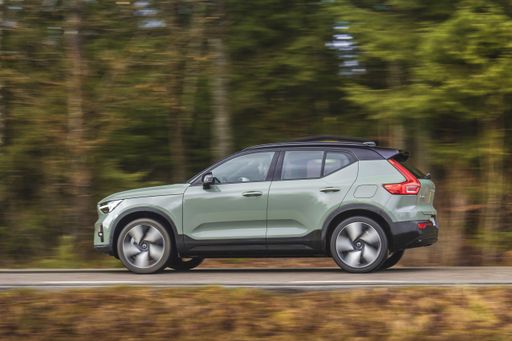
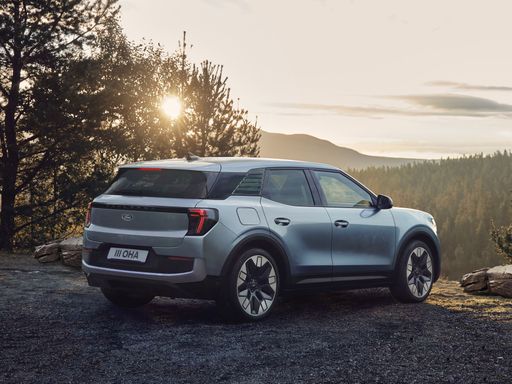
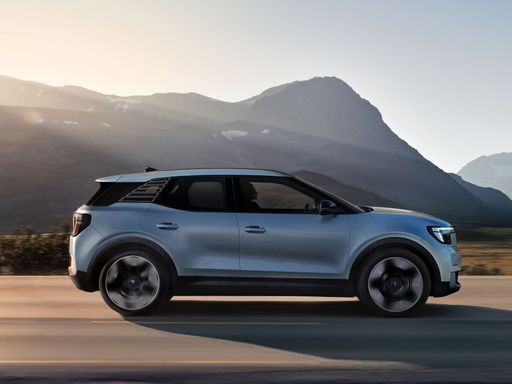
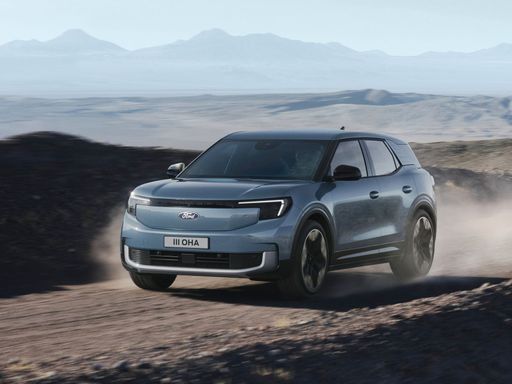
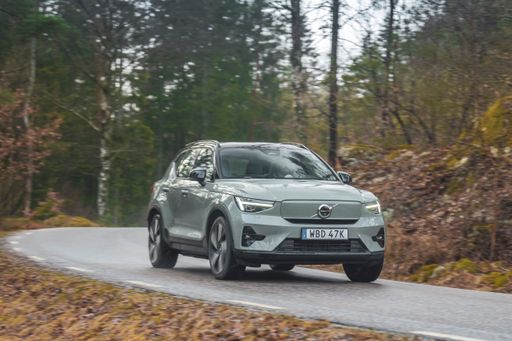
Street Presence: American brawn meets Scandinavian calm

The Ford Explorer EV arrives with a broad-shouldered attitude that reads as practical and purposeful, while the Volvo EX40 prefers a quieter, more refined kind of elegance that ages well. One feels more extroverted on the curb, the other more composed and considered, so your choice depends on whether you want to be noticed or admired. Both carry a clear design story that tells you immediately what kind of owner they’re courting.
Explorer EV

Behind the Wheel: relaxed long-haul cruiser vs taut city charmer

On the move the Explorer EV leans into a composed, reassuring character that favors comfort over theatrics, making motorway miles effortless and unflappable. The EX40, by contrast, rewards sharper inputs with a tauter, more energetic demeanor that suits twisty backroads and urban hustle alike. Each car has a distinct personality — one soothes, the other engages — and your driving mood will decide which fits better.

EX40

Life with luggage and little ones

Practicality is where the Explorer EV makes its presence felt: it’s the one that approaches family life with obvious accommodation and a fuss-free layout that eases loading and daily routines. The EX40 keeps things neat and clever in tighter spaces, with an interior that prioritizes thoughtful details over sheer volume. If your days revolve around school runs and weekend kit, both are competent, but they serve slightly different domestic philosophies.

Explorer EV

Cabin comfort and everyday controls

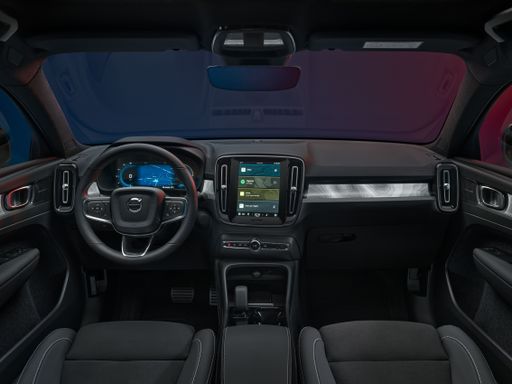
Step inside and you notice two different takes on modern cabin life: the Explorer EV opts for familiar ergonomics and user-friendly controls that feel intuitive from day one, while the EX40 leans into Scandinavian minimalism, with materials and finishes that aim for a premium, tactile experience. The ambience you prefer — warm and practical or sleek and serene — will shape how you relate to each car every morning. Either way, both are designed to make time behind the wheel feel less like work and more like a quietly curated experience.

EX40

Living with it: city chores to country runs

For everyday ownership the Explorer EV plays the versatile all-rounder, built to cope with mixed duties without drama and to slot into family life easily. The EX40 is arguably more at home in denser urban settings where its compact, polished manners and refined cabin come into their own. Both approachability and personality factor into running them day to day, so think about where most of your miles will be logged.

Explorer EV

Peace of mind: tech that helps, not hinders

Safety and assistance systems are prominent in both, but they’re packaged with different philosophies — one prioritises robust, intuitive aids that blend into the driving rhythm, the other emphasises a layered, premium approach that underscores refinement. The result is confidence in different flavors: steady and reassuring, or precise and quietly authoritative. Either way, the technology is more about calm reassurance than headline-grabbing gimmicks.

Who should test-drive which?

If your priority is roomy practicality, uncomplicated usability and a car that adapts to family life, the Explorer EV should be high on your list; if you’re drawn to Scandinavian design, a taut driving feel and a refined, premium cabin, the EX40 will appeal. Commuters, style-conscious buyers, and families will all find a fit but in subtly different ways. Take them both for a proper spin and let everyday impressions decide which aligns with your life.

Keep reading to see who takes the DriveDuel crown

We’ve laid out the real-world characters of each contender — now dive into our full test and detailed comparisons to find the nuances that matter to you, and stay tuned as the DriveDuel Champion will be revealed afterwards.

Here’s where it gets real: The technical differences in detail

EX40

Costs and Efficiency:

When it comes to price and running costs, the biggest differences usually appear. This is often where you see which car fits your budget better in the long run.

Ford Explorer EV is clearly cheaper – starting at 34,200 £ , while the Volvo EX40 costs 42,800 £ . That’s a price difference of around 8,648 £.

In terms of energy consumption, the Ford Explorer EV is slightly more efficient: consuming 14.6 kWh/100km compared to 16.6 kWh/100km for the Volvo EX40. That’s a difference of about 2 kWh/100km.

As for electric range, the Ford Explorer EV offers marginally more range – reaching up to 602 km, about 26 km more than the Volvo EX40.

Explorer EV

Engine and Performance:

Power, torque and acceleration say a lot about how a car feels on the road. This is where you see which model delivers more driving dynamics.

When it comes to engine power, the Volvo EX40 offers clearly more power – delivering 442 HP compared to 340 HP. That’s roughly 102 HP more horsepower.

When accelerating from 0 to 100 km/h, the Volvo EX40 is slightly quicker – completing the sprint in 4.6 s, while the Ford Explorer EV takes 5.3 s. That’s about 0.7 s quicker.

There’s also a difference in torque: the Ford Explorer EV delivers only slightly more torque with 679 Nm compared to 670 Nm. That’s about 9 Nm more.

EX40

Space and Everyday Use:

Cabin size, boot volume and payload all play a role in everyday practicality. Here, comfort and flexibility make the difference.

Both vehicles offer seating for 5 people.

In terms of curb weight, Ford Explorer EV is barely lighter – 1,996 kg compared to 2,040 kg. The difference is around 44 kg.

Looking at boot space, the Ford Explorer EV offers a bit more boot space – 472 L compared to 410 L. That’s a difference of about 62 L.

When it comes to payload, the Ford Explorer EV carries a bit more – 585 kg compared to 480 kg. That’s a difference of about 105 kg.

Who wins the race in the data check?

The Ford Explorer EV is barely ahead in the objective data comparison.
This result only shows which model scores more points on paper – not which of the two cars feels right for you.

from £34,200
Explorer EV

Ford Explorer EV

  • Engine Type : Electric
  • Transmission : Automatic
  • Drive Type : Rear-Wheel Drive, All-Wheel Drive
  • Power HP : 190 - 340 HP
  • Consumption kWh/100km : 14.6 - 17.3 kWh/100km
  • Electric Range : 417 - 602 km
Volvo EX40
Ford Explorer EV

Costs and Consumption

View detailed analysis

Engine and Performance

View detailed analysis

Dimensions and Body

View detailed analysis

Volvo EX40

The Volvo EX40 wraps Scandinavian calm and clever practicality into a compact electric package that feels both premium and refreshingly uncomplicated. It's the grown-up answer to flashier rivals — a safe, comfy, and city-friendly EV with thoughtful tech that makes everyday driving quietly satisfying.

details

Ford Explorer EV

The Ford Explorer EV translates the familiar big‑American SUV presence into whisper‑quiet electric motoring, offering roomy seating and a tech‑forward cabin that will please families and road‑trippers alike. It drives with more composure than its boxy looks suggest, blending a comfortable ride and eager acceleration while undercutting the guilt of gas stops — a practical, modern alternative for buyers who want Explorer space with electric charm.

details
Volvo EX40
Ford Explorer EV

Costs and Consumption

Price
42,800 - 58,200 £
Price
34,200 - 48,800 £
Consumption L/100km
-
Consumption L/100km
-
Consumption kWh/100km
16.6 - 17.6 kWh/100km
Consumption kWh/100km
14.6 - 17.3 kWh/100km
Electric Range
480 - 576 km
Electric Range
417 - 602 km
Battery Capacity
67 - 79 kWh
Battery Capacity
-
co2
0 g/km
co2
0 g/km
Fuel tank capacity
-
Fuel tank capacity
-

Dimensions and Body

Body Type
SUV
Body Type
SUV
Seats
5
Seats
5
Doors
5
Doors
-
Curb weight
2,040 - 2,170 kg
Curb weight
1,996 - 2,209 kg
Trunk capacity
410 L
Trunk capacity
472 L
Length
4,440 mm
Length
-
Width
1,863 mm
Width
1,872 mm
Height
1,647 mm
Height
-
Max trunk capacity
1,400 L
Max trunk capacity
-
Payload
430 - 480 kg
Payload
531 - 585 kg

Engine and Performance

Engine Type
Electric
Engine Type
Electric
Transmission
Automatic
Transmission
Automatic
Transmission Detail
Reduction Gearbox
Transmission Detail
Reduction Gearbox
Drive Type
Rear-Wheel Drive, All-Wheel Drive
Drive Type
Rear-Wheel Drive, All-Wheel Drive
Power HP
238 - 442 HP
Power HP
190 - 340 HP
Acceleration 0-100km/h
4.6 - 7.3 s
Acceleration 0-100km/h
5.3 - 8 s
Max Speed
180 km/h
Max Speed
-
Torque
420 - 670 Nm
Torque
350 - 679 Nm
Number of Cylinders
-
Number of Cylinders
-
Power kW
175 - 325 kW
Power kW
140 - 250 kW
Engine capacity
-
Engine capacity
-

General

Model Year
2024
Model Year
2026
CO2 Efficiency Class
A
CO2 Efficiency Class
A
Brand
Volvo
Brand
Ford
DriveDuel uses data analysis and artificial intelligence to evaluate vehicle data and create content. Content is regularly reviewed and improved. The displayed prices are estimates based on German list prices, adjusted to the respective country’s VAT. Country-specific registration taxes are not included. This information is not legally binding.