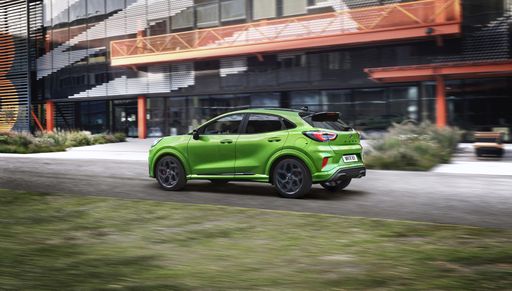
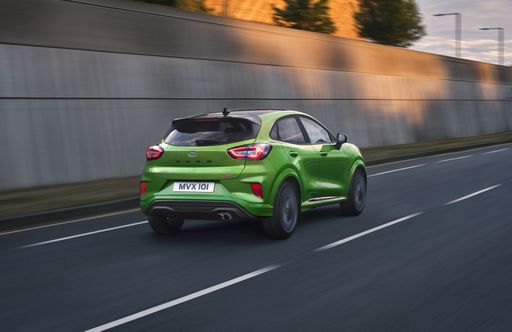
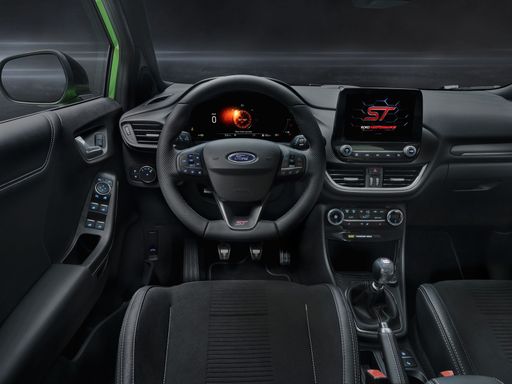
@ Ford Motor Company / Ford Media Center
VS

Ford Puma vs Omoda 5 – Differences & prices compared

Compare performance, boot capacity, efficiency and price at a glance.
Find out which car is the better choice for you – Ford Puma or Omoda 5?

Puma @ Ford Motor Company / Ford Media Center

Head-to-Head: Ford Puma vs Omoda 5

In the ever-evolving automotive landscape, compact SUVs have become a staple for modern consumers seeking a blend of performance, efficiency, and style. Today, we delve into a showdown between two intriguing contenders: the Ford Puma and the Omoda 5. With their unique offerings, both models promise a competitive drive. Let's explore their technical aspects and innovations.
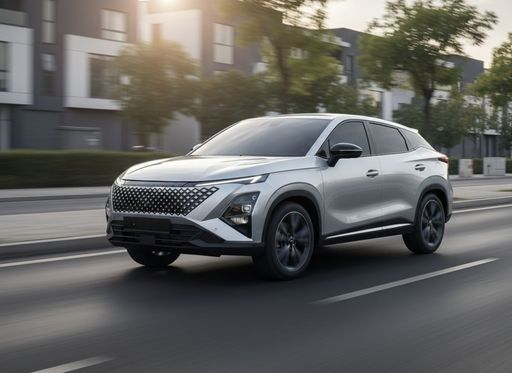
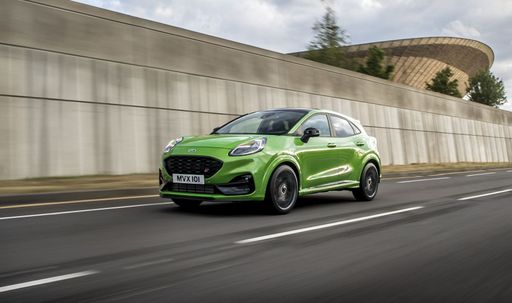
Puma @ Ford Motor Company / Ford Media Center

Under the Hood: Power and Performance

The Ford Puma presents a versatile range of engine options. Buyers can choose between the EcoBoost petrol mild-hybrid setup and a fully electric powertrain. The petrol variants offer between 125 to 168 HP, powered by a three-cylinder engine with a modest engine capacity of 999 cm³. Meanwhile, the electric variant delivers a peak output of 160 HP and a remarkable electric range of up to 376 km, thanks to its 43 kWh battery capacity.

On the other side of the ring, the Omoda 5 boasts a robust 204 HP from its 1.6-liter four-cylinder petrol engine. With a torque of 290 Nm, it promises exhilarating acceleration, clocking 0-100 km/h in just 7.8 seconds. This makes the Omoda 5 slightly faster off the line compared to some of the Puma's configurations.

Puma @ Ford Motor Company / Ford Media Center

Transmission and Drive Dynamics

Both vehicles employ front-wheel drive systems, enhancing their maneuverability and handling in urban settings. The Ford Puma offers flexibility with both manual and dual-clutch automatic transmissions, providing a personalized driving experience. The Omoda 5, while limited to a dual-clutch automatic transmission, ensures smooth and efficient gear transitions, well-suited for everyday city commutes and highway cruising.

Puma @ Ford Motor Company / Ford Media Center

Fuel Efficiency and Environment Impact

Efficiency is a critical factor for environmentally-conscious consumers. The Ford Puma's hybrid technology allows consumption figures ranging from 5.4 to 6 L/100km for the petrol versions, while the electric variant consumes approximately 13.1 to 13.7 kWh/100km. The Puma's CO2 emissions range from 121 to 136 g/km, with the electric model offering zero tailpipe emissions.

In comparison, the Omoda 5 registers a fuel consumption of 7.5 L/100km. While its higher engine capacity naturally results in greater consumption, its performance-oriented design focuses more on spirited driving and less on outright efficiency.

Size, Space, and Comfort

The Ford Puma offers compact dimensions with a length of up to 4226 mm and a width of 1805 mm. Its significant trunk capacity ranges from 456 to 523 liters, ensuring ample space for cargo and flexibility for family trips. With five seats and a comfortable interior layout, the Puma is designed for practical urban living.

Despite being slightly larger with a length of 4424 mm and a width of 1830 mm, the Omoda 5 does not divulge official trunk capacities. Yet, its spacious cabin and modern amenities cater to passengers seeking comfort and advanced in-car technology.

Final Thoughts: Choosing Your Companion

The Ford Puma and Omoda 5 each bring their strengths to the table. The Puma stands out with its versatile powertrain options, sleek efficiency, and practical design, appealing to eco-conscious drivers and those seeking adaptability in their drive. Meanwhile, the Omoda 5 offers robust power and rapid acceleration, perfect for enthusiasts who value performance without the compromise on everyday usability.

The choice comes down to personal priorities: performance vs. versatility and innovation. Both the Puma and Omoda 5 are vehicles that deserve a place in today's competitive SUV marketplace.

Here’s where it gets real: The technical differences in detail

Costs and Efficiency:

Price and efficiency are often the first things buyers look at. Here it becomes clear which model has the long-term edge – whether at the pump, the plug, or in purchase price.

Omoda 5 has a hardly perceptible advantage in terms of price – it starts at 23100 £, while the Ford Puma costs 24800 £. That’s a price difference of around 1629 £.

Fuel consumption also shows a difference: Ford Puma manages with 5.40 L and is therefore evident more efficient than the Omoda 5 with 7.50 L. The difference is about 2.10 L per 100 km.

Engine and Performance:

Power, torque and acceleration say a lot about how a car feels on the road. This is where you see which model delivers more driving dynamics.

When it comes to engine power, the Omoda 5 has a somewhat edge – offering 204 HP compared to 168 HP. That’s roughly 36 HP more horsepower.

In acceleration from 0 to 100 km/h, the Ford Puma is barely noticeable quicker – completing the sprint in 7.40 s, while the Omoda 5 takes 7.80 s. That’s about 0.40 s faster.

In terms of top speed, the Omoda 5 performs slight better – reaching 220 km/h, while the Ford Puma tops out at 210 km/h. The difference is around 10 km/h.

Both models offer the same torque – 290 Nm.

Space and Everyday Use:

Beyond pure performance, interior space and usability matter most in daily life. This is where you see which car is more practical and versatile.

Both vehicles offer seating for 5 people.

In terms of boot space, the Ford Puma offers clearly more room – 523 L compared to 0 L. That’s a difference of about 523 L.

In maximum load capacity, the Ford Puma performs somewhat better – up to 1283 L, which is about 208 L more than the Omoda 5.

Who wins the race?

The Ford Puma proves to be shows small but notable strengths and therefore becomes our DriveDuel Champion!
Ford Puma is the better all-rounder in this comparison.

from about £24,800
Puma @ Ford Motor Company / Ford Media Center

Ford Puma

  • Engine Type : Electric, Petrol MHEV
  • Transmission : Automatic, Manuel
  • Drive Type : Front-Wheel Drive
  • Power HP : 125 - 168 HP
  • Consumption L/100km : 5.4 - 5.9 L
  • Consumption kWh/100km : 13.1 - 13.9 kWh
  • Electric Range : 361 - 376 km

Ford Puma

5 (1)
rate

The Ford Puma is a cheeky compact crossover that blends sporty styling with city-friendly practicality, giving drivers a surprisingly fun and composed ride. With clever storage tricks and a lively personality, it’s a smart pick for buyers who want enjoyment without fuss.

details

Omoda 5

5 (1)
rate

The Omoda 5 arrives as a stylish, tech-forward compact crossover that punches above its class with bold design and a surprisingly premium cabin. It’s an attractive choice for buyers who want modern gadgets, confident road manners and value without the usual showroom drama.

details
Ford Puma
Omoda 5
Puma @ Ford Motor Company / Ford Media Center

Costs and Consumption

Price
24800 - 36300 £
Price
23100 £
Consumption L/100km
5.4 - 5.9 L
Consumption L/100km
7.50 L
Consumption kWh/100km
13.1 - 13.9 kWh
Consumption kWh/100km
-
Electric Range
361 - 376 km
Electric Range
-
Battery Capacity
43 kWh
Battery Capacity
-
co2
0 - 135 g/km
co2
-
Fuel tank capacity
42 L
Fuel tank capacity
51 L

Dimensions and Body

Body Type
SUV
Body Type
SUV
Seats
5
Seats
5
Doors
5
Doors
5
Curb weight
1316 - 1563 kg
Curb weight
-
Trunk capacity
456 - 523 L
Trunk capacity
0 L
Length
4186 - 4226 mm
Length
4424 mm
Width
1805 mm
Width
1830 mm
Height
1550 - 1555 mm
Height
1588 mm
Max trunk capacity
1216 - 1283 L
Max trunk capacity
1075 L
Payload
367 - 469 kg
Payload
-

Engine and Performance

Engine Type
Electric, Petrol MHEV
Engine Type
Petrol
Transmission
Automatic, Manuel
Transmission
Automatic
Transmission Detail
Reduction Gearbox, Manual Gearbox, Dual-Clutch Automatic
Transmission Detail
Dual-Clutch Automatic
Drive Type
Front-Wheel Drive
Drive Type
Front-Wheel Drive
Power HP
125 - 168 HP
Power HP
204 HP
Acceleration 0-100km/h
7.4 - 9.8 s
Acceleration 0-100km/h
7.80 s
Max Speed
160 - 210 km/h
Max Speed
220 km/h
Torque
170 - 290 Nm
Torque
290 Nm
Number of Cylinders
3
Number of Cylinders
4
Power kW
92 - 124 kW
Power kW
145 kW
Engine capacity
999 cm3
Engine capacity
1598 cm3

General

Model Year
2025
Model Year
2024
CO2 Efficiency Class
A, D
CO2 Efficiency Class
-
Brand
Ford
Brand
Omoda
Is the Ford Puma offered with different drivetrains?

The Ford Puma is offered with Front-Wheel Drive.

The prices and data displayed are estimates based on German list prices and may vary by country. This information is not legally binding.